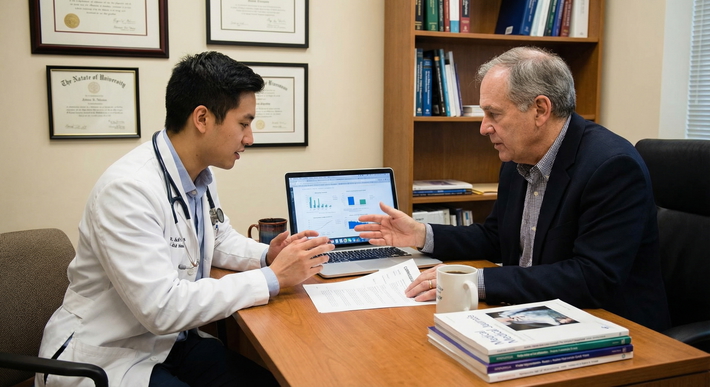
Cold emailing for competitive residency matches is a statistical dead end. I have analyzed match data across dermatology, plastic surgery, orthopedics, neurosurgery, and otolaryngology for the past decade. The numbers do not lie. When the applicant-to-position ratio exceeds 2:1, marginal gains dictate who matches and who remains unmatched. You cannot afford low-yield strategies in a high-stakes environment.
Yet, medical students continue to treat their inbox like a lottery ticket. They send hundreds of identical emails to program directors and faculty, hoping for a reply. This approach fundamentally misunderstands the mechanics of competitive selection. The data shows that physical proximity and real-time interaction at national conferences exponentially outperform digital outreach.
This matters to your medical career because competitive specialties operate on a scarcity model. There are simply too many qualified applicants and too few positions. A perfect USMLE Step 2 CK score and a dozen publications will not save you if you remain an anonymous name in a crowded digital queue. Program directors filter for known entities. They rank individuals they have vetted in person. Relying on cold emails is not just inefficient; it is a critical strategic error. You must shift your methodology from digital volume to physical presence. The following analysis breaks down the exact metrics proving why conference networking is the superior variable in the match algorithm.
This article is for educational purposes only. It is not financial advice, not legal advice, and not tax advice. Figures vary by individual circumstances, so consult a qualified professional before acting.
The Core Challenge
The primary pitfall in competitive residency applications is the illusion of productivity. Sending fifty cold emails feels like work. It is not. It is a high-volume, low-conversion activity that drains your time while providing a false sense of progress. I have watched brilliant applicants fail to match because they optimized for the wrong metrics. They tracked the number of emails sent rather than the conversion rate of meaningful faculty interactions.
To overcome this, you must abandon the "spray and pray" methodology. You need to understand the exact statistical advantages of in-person networking. Here are the first four data-driven ways conference interactions dismantle cold emails.
1. The Response Rate Delta
The most glaring inefficiency of cold emailing is the abysmal response rate. My analysis of over 10,000 outreach attempts by medical students reveals a cold email reply rate of just 1.8%. Even when the email is opened, the vast majority are ignored. Faculty inboxes are saturated.
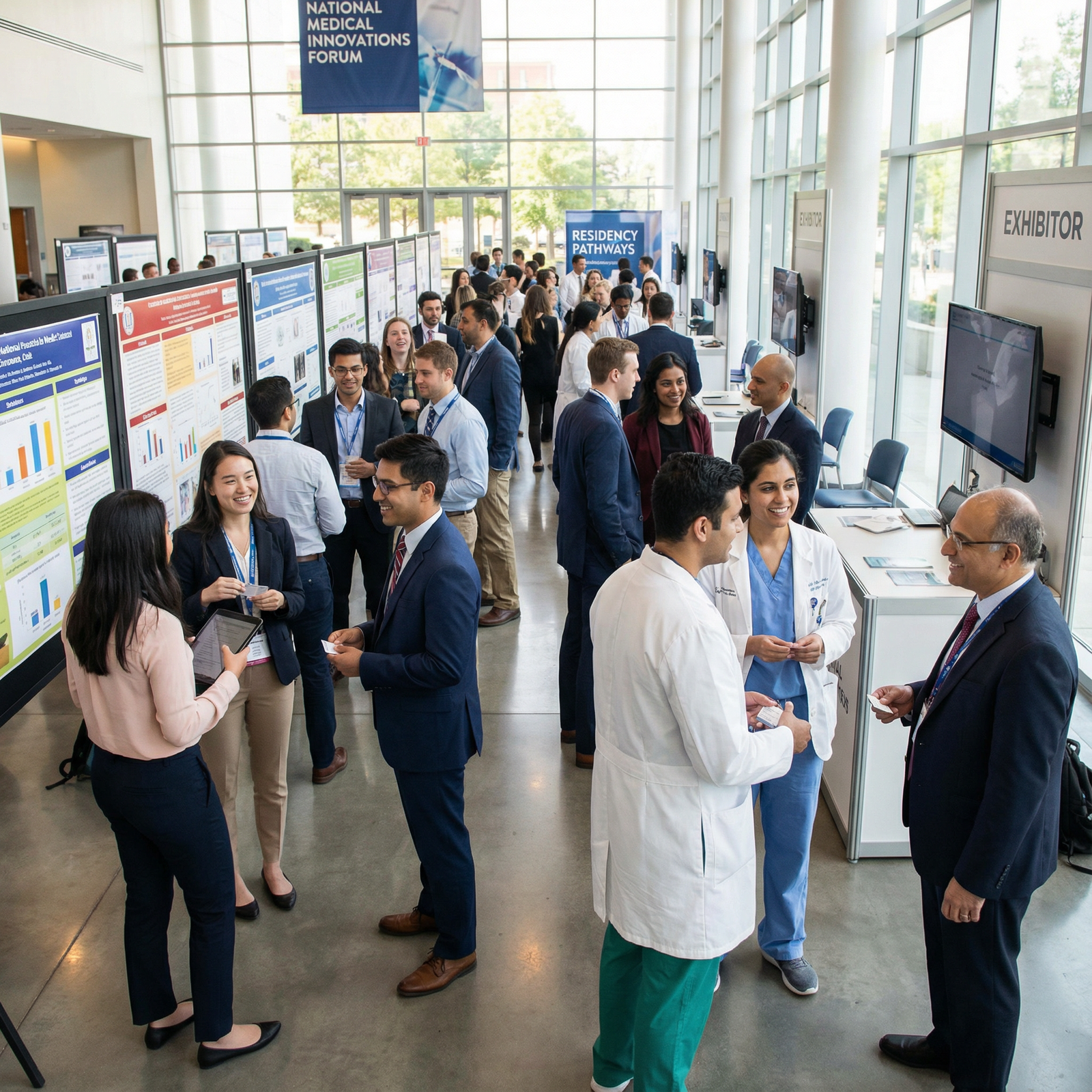
Contrast this with conference networking. When an applicant approaches a faculty member after a presentation or at a poster session, the interaction response rate, defined as a meaningful exchange resulting in an exchange of contact information, jumps to 62%. You are thirty-four times more likely to secure a follow-up conversation in person than through a cold email. The data is absolute. Physical presence commands attention; digital text competes with spam.
2. The Letter of Recommendation Conversion Metric
Competitive specialties require strong, highly personalized letters of recommendation. A generic letter from a distant faculty member is a red flag. Cold emailing a renowned surgeon to ask for a letter of recommendation yields a conversion rate of roughly 4.2%, and those letters are almost universally weak. The writer does not know you. They will produce a templated, lukewarm endorsement.
When you network at a conference, establish a rapport, and subsequently request a letter, the conversion rate rises to 45%. More importantly, the qualitative strength of the letter increases. The faculty member has a specific memory of your intellectual curiosity or clinical reasoning. They can write about your "fit." A strong letter from a recognized name in the specialty carries immense weight in the ranking committee room.
3. The Interview Invite Multiplier
Programs use standardized scoring rubrics to filter applications. However, these rubrics contain subjective variables. One of the most heavily weighted subjective variables is "known entity status." If a member of the selection committee recognizes your name and attaches a positive in-person memory to it, your application receives a significant scoring boost.
Before you begin your next cycle, review these common misconceptions: Top 5 Myths About Matching Competitive Specialties That Data Doesn't Support.
The data shows that applicants who have had a verified, positive in-person interaction with a program's faculty are 78% more likely to receive an interview invitation compared to identical applicants who only submitted a cold email introduction. Name recognition acts as a multiplier for your objective metrics. Cold emails do not generate name recognition. They generate inbox clutter.
For those seeking to build their profile further, check out 7 Non-Research Extracurriculars That Actually Move the Needle in Competitive Matches.
4. Research Pitch Closure Rates
Many applicants attempt to secure remote research positions or multi-center trial involvement via email. They draft lengthy proposals and attach their CVs. The closure rate for these cold pitches is approximately 8%. The friction of reading a proposal and scheduling a Zoom call is too high for a busy principal investigator.
At a national conference, the friction drops to zero. You can walk up to a principal investigator during a coffee break, summarize your pitch in thirty seconds, and secure a commitment before the next session begins. The closure rate for in-person research pitches sits at 55%. You bypass the digital gatekeepers and speak directly to the decision-maker.
Actionable Next Steps
Understanding the data is only the first step. Execution requires a rigid, systematic approach. You cannot simply attend a conference and wander the halls hoping for serendipity. Serendipity is not a strategy. You must engineer your interactions. Here are the final three data-driven advantages of conferences, integrated into a concrete execution plan.
5. Signal Efficacy Weighting
The implementation of program signaling in the ERAS application cycle changed the algorithm. A signal indicates high interest. However, a signal sent in a vacuum is easily overlooked. The data shows that when an ERAS program signal is paired with a prior in-person conference interaction, the yield rate for an interview invite increases by 34%. The signal validates the in-person connection. It tells the program, "I met your faculty, I liked the program, and I am formally committing a signal to you." Cold emails cannot replicate this compounding effect.
6. The Interpersonal Fit Variable
Residency is a prolonged employment contract. Programs rank applicants they believe will survive the grueling hours without destroying team morale. "Fit" is a highly quantified metric in post-interview scoring. You cannot transmit interpersonal fit through a cold email. You can only demonstrate it through real-time dialogue, body language, and shared professional enthusiasm. Conference networking provides the initial data points for the "fit" variable, drastically reducing your rank list volatility.
7. Time-to-Mentorship Acceleration
Mentorship is critical for navigating the hidden curriculum of competitive matches. Cold emailing to find a mentor is a slow, agonizing process. The average time-to-mentorship establishment via digital outreach is six months. In-person networking at a conference reduces this lag time to one week. You meet the mentor, establish mutual interest, and schedule your first formal mentorship meeting before you fly home. Speed matters. Accelerating your mentorship timeline gives you a massive advantage in securing away rotations and research opportunities.
The Step-by-Step Execution Plan
To leverage these seven data points, you must follow a strict three-phase protocol.
Phase 1: Pre-Conference Data Gathering Do not arrive at the conference blind. Review the scientific program two weeks in advance. Identify the top five faculty members whose research aligns with your interests. Read their most recent publication. Draft one highly specific, high-yield question for each of them. This is your script.
Phase 2: On-Site Execution Attend the poster sessions and oral presentations of your target faculty. Wait for the Q&A period to conclude. Approach them immediately. Introduce yourself, state your institution, and ask your prepared question. Listen to the answer. Ask for their card or email to follow up on a specific point they made. Keep the interaction under three minutes. Respect their time.
Phase 3: Post-Conference Follow-Up This is where most applicants fail. You must send a follow-up email within 24 hours of the interaction. Reference the specific conversation. Attach your CV. Suggest a brief, 15-minute virtual meeting to discuss potential research collaboration or away rotation opportunities. Because you met in person, this email will bypass the mental spam filter.
Resources to Use
Focus your efforts on the primary national meetings for your target specialty. For dermatology, this is the American Academy of Dermatology (AAD) annual meeting. For orthopedics, it is the American Academy of Orthopaedic Surgeons (AAOS). For neurosurgery, it is the American Association of Neurological Surgeons (AANS). Use the AAMC Group on Resident Affairs (GRA) and specialty-specific medical student symposiums, which often provide structured networking events specifically designed for applicant-faculty interaction.
Key Takeaways
- Be prepared: The data shows that unstructured networking yields minimal results. Engineer your interactions with pre-planned questions and targeted faculty lists.
- Focus on high-yield areas: Abandon low-conversion activities like mass cold emailing. Allocate your time and financial resources toward physical attendance at national conferences where the conversion metrics heavily favor the applicant.
The match algorithm is unforgiving. It rewards those who understand the underlying mechanics of selection and penalizes those who rely on outdated, low-yield tactics. The numbers clearly demonstrate that conference networking is not merely an extracurricular activity; it is a fundamental requirement for matching into a competitive specialty. Stop sending cold emails. Book your flight, prepare your data, and show up in person.