
Did I just ruin my career by taking a prelim year without an advanced spot?
That question keeps people up at night. I know because it's the exact kind of question that lands in my inbox after Match week, usually written at 1:17 a.m., with the tone of someone trying very hard not to spiral and failing anyway.
You went unmatched. Or half-matched. You grabbed a preliminary surgery year, a medicine prelim, or a transitional year because the alternative was staring into the abyss. And now the panic sets in. Hard. Am I now a "prelim-only applicant"? Am I branded? Will next year's programs look at me like a cautionary tale? Did I just sign up for 80-hour weeks, no interview flexibility, and a second chance that isn't really a second chance at all?
These fears aren't irrational. They're the natural response to a training system that's needlessly punishing and often weirdly opaque. But the good news is that this isn't guesswork. NRMP charting outcomes data, program director survey patterns, and specialty-specific reapplicant trends do give us something solid to stand on. Not perfect certainty. I wish. But real signal.
Here's the core truth: being in a prelim year is not the same as being completely unmatched and sitting outside training. Those two groups do not enter the PGY-2 reapplication cycle with equal risk, equal optics, or equal opportunity. And yes, the differences matter.
For a deeper dive into these options, read scared of being stuck after a prelim year realistic next-step options.
This article is for educational purposes only. It is not financial advice, not legal advice, and not tax advice. Figures vary by individual circumstances, so consult a qualified professional before acting.
Did I Make a Massive Mistake? The Terrifying Reality of Starting a Prelim Year Without a PGY-2 Spot
Let's not sugarcoat this. Starting a prelim year without a secured PGY-2 position is terrifying. It feels like surviving one disaster only to realize you've been dropped into a second one with less sleep and more pages.
The emotional logic goes like this:
- I didn't fully match.
- Therefore something is wrong with me.
- Programs will definitely notice.
- Therefore I'm damaged goods.
- Therefore next cycle will be worse.
- Therefore I might become a forever-prelim ghost haunting hospital call rooms.
That spiral is brutal. Also common.
I've seen applicants catastrophize immediately after SOAP: "I took a surgery prelim because it was the only offer. I want radiology. Have I now made myself less attractive to radiology because I'll be too busy retracting bowel at 3 a.m. to answer interview invites?" Honestly? Not a crazy concern. Prelim years can absolutely make reapplication harder logistically. You're working. You're exhausted. You're at the bottom of a hierarchy again. Sometimes your PD is supportive; sometimes your schedule is a hostile act.
But "harder" does not mean "doomed."
The first thing to separate is status from story. Your status is that you're in a one-year position without a guaranteed next step. Your story is what programs will believe that means. Those are not the same thing. A weak story is: didn't match, scrambled into a prelim, still seems disorganized, no fresh letters, no evidence of growth. A strong story is: took the hit, kept moving, performed well clinically, passed Step 3, earned strong letters, clarified specialty commitment, reapplied intelligently.
Programs care about story more than applicants realize. They don't love uncertainty. No one does. But they do respect proof. If you show up as an intern who can function under pressure, take ownership, and earn genuine support from attendings, you stop looking like a failed applicant and start looking like a tested one.
That's why the data matters so much. Anxiety lies. Numbers don't care about your 3 a.m. doom spiral. The central question isn't "Do I feel ruined?" It's "How do prelim-only applicants actually perform compared with unmatched grads when competing for PGY-2 positions?"
That's the right question. The survivable question.
Prelim-Only Applicants vs. Unmatched Grads: A Cold, Hard Look at the Numbers
Here's the broad pattern the available NRMP charting outcomes data and specialty match reports keep showing: applicants who are actively in training generally do better than those who are completely unmatched and out of the clinical stream, assuming they reapply effectively.
That advantage isn't magic. It comes from three things:
- Current clinical credibility
- Fresh letters from residency faculty
- Proof you can handle residency-level work
Programs love evidence. A prelim year gives them evidence. An unmatched grad may have research, observerships, or volunteering, which can help, but it's still not the same as hearing, "This intern is dependable on call, clinically sharp, and someone we'd keep if we had a categorical slot."
That said, don't turn this into false comfort. A prelim year is an advantage only if you use it well. Plenty of applicants waste the whole year just trying to survive. They never line up mentors. They don't update ERAS aggressively. They don't get Step 3 done. They ask for letters too late. Then they wonder why the "advantage" never materialized. Because exhaustion ate the strategy. That happens all the time.
At a high level, match rates for reapplicants to advanced specialties are lower than those for first-time U.S. MD seniors. That part is ugly and consistent. But among reapplicants, being a current prelim or TY resident usually compares favorably with being an unmatched graduate with no active training position.
Here's the practical version:
- Anesthesiology: prior prelim or TY residents often remain competitive if they have decent board scores, no professionalism concerns, and strong updated letters. This is one of the more forgiving advanced specialties for solid reapplicants.
- Diagnostic Radiology: programs absolutely scrutinize why you didn't match the first time, but a good intern year can help a lot, especially if your application weakness was interview strategy, school list, or lukewarm letters rather than catastrophic academics.
- PM&R: networking matters enormously here. A prelim year can help if you can build PM&R-specific relationships quickly, but a random surgery prelim with zero rehab exposure won't rescue you by itself.
- Dermatology: let's be blunt. This remains brutally difficult. A prelim year alone does not reset the board. If you're reapplying derm, research output, institutional connections, and elite letters matter far more than "I worked hard as a medicine intern." Hard work is expected. It's not special enough.
So does holding a prelim spot help, or does it trap you?
Both. That's the maddening truth.
It helps because:
- you stay clinically active,
- you can get new letters,
- you can show growth,
- you avoid the optics of being entirely out of training.
It traps you because:
- interview season collides with intern year,
- some prelim programs are inflexible,
- fatigue wrecks your strategic focus,
- you may have little specialty-specific exposure.
If I had to commit to a position, here it is: being in a prelim year is better than being completely unmatched for most PGY-2 reapplication scenarios, but only by a margin you can absolutely squander.
Treat those percentages as directional, not prophetic. Specialty reports differ, applicant pools change, and institutional ties skew outcomes. But the pattern is stable enough to matter: current trainees usually outperform disconnected reapplicants.
And that makes intuitive sense. If a program can choose between:
- a graduate who says they're still committed, and
- a current intern whose attendings say, "We trust this person with patients,"
they usually choose the second story.
The Scariest Variable: Why Did I End Up Here and Can I Fix It in Time?
This is the part everyone wants to avoid because it hurts. Why didn't you match the first time?
Not the soothing version. The real version.
Was it low Step 2? Weak interviews? A bloated rank list with no strategy? Geographic inflexibility? Barely any specialty-specific letters? Applying too narrowly? Red flags nobody addressed? Because if you don't identify the real failure point, your prelim year can become a very expensive exercise in denial.
The cause matters because some problems are fixable in months, and some are sticky.
Most fixable:
- weak or generic letters
- poor specialty signaling
- bad interview skills
- limited networking
- no Step 3 yet
- poor school advising
Harder to fix fast:
- repeated board failures
- serious professionalism concerns
- major unexplained gaps
- very weak academic record across the board
And yes, Step 3 matters. A lot more than people pretend. If your prior application had test-score anxiety hanging all over it, a clean Step 3 pass, especially an early and strong one, can calm programs down. It doesn't erase Step 1 or Step 2. Nothing erases anything in residency applications. But it can change the trajectory from "still risky" to "probably safe enough."
Letters matter just as much. Maybe more.
You need at least one person in your prelim year, preferably your PD, APD, chair, or a well-respected attending, who will go to bat for you and say something stronger than "pleasant intern." "Pleasant" is death. You want "outstanding work ethic," "trusted by seniors," "handles sick patients well," "we would gladly keep them." That language changes outcomes.
And yes, program directors do look favorably on hardworking prelims. Not all of them. Some are snobs. Some will always prefer a clean fourth-year med student pipeline and resent any applicant with a detour. Fine. You weren't going to win them anyway. But a lot of PDs respect resilience when it comes with receipts. Not self-pity. Not excuses. Receipts.
The shortest version? Your prelim year won't automatically fix your application. But it gives you a narrow, exhausting, very real chance to rebuild it before the next cycle closes.
Breathe: Actionable Steps to Beat the Odds and Secure Your Advanced Spot
If you're in a prelim year and trying to land a PGY-2 spot, this is not the year to "see how it goes." That's lazy thinking. You need a plan by August.
Here's the checklist I'd follow:
- Figure out exactly why you didn't match. Ask bluntly. Mentors. Advisors. Faculty who won't coddle you.
- Meet your prelim PD early. Tell them your goal. Don't spring this on them in October.
- Take Step 3 as early as realistically possible. Especially if your prior board profile was shaky.
- Secure new letters fast. Not in January. Early.
- Update ERAS aggressively. New role, new evaluations, new personal statement, cleaner specialty story.
- Network inside the target specialty. Email. Call. Ask for introductions. Use alumni.
- Protect interview time. Trade shifts early. Use electives wisely. Don't wait for miracles.
- Apply broader and smarter. Prestige obsession kills people in reapplication cycles.
And then there's the dreaded interview question:
"Why didn't you match last year?"
Do not blame the system. Even if the system deserves it. Do not sound bitter. Do not ramble. Do not perform fake cheerfulness either. The best answer is calm, brief, and specific:
"I underestimated how important a targeted application strategy and stronger specialty-specific mentorship were. During my intern year, I corrected that by earning strong clinical evaluations, building new faculty support, and clarifying why this field is the right fit for me."
That works because it shows insight without self-destruction.
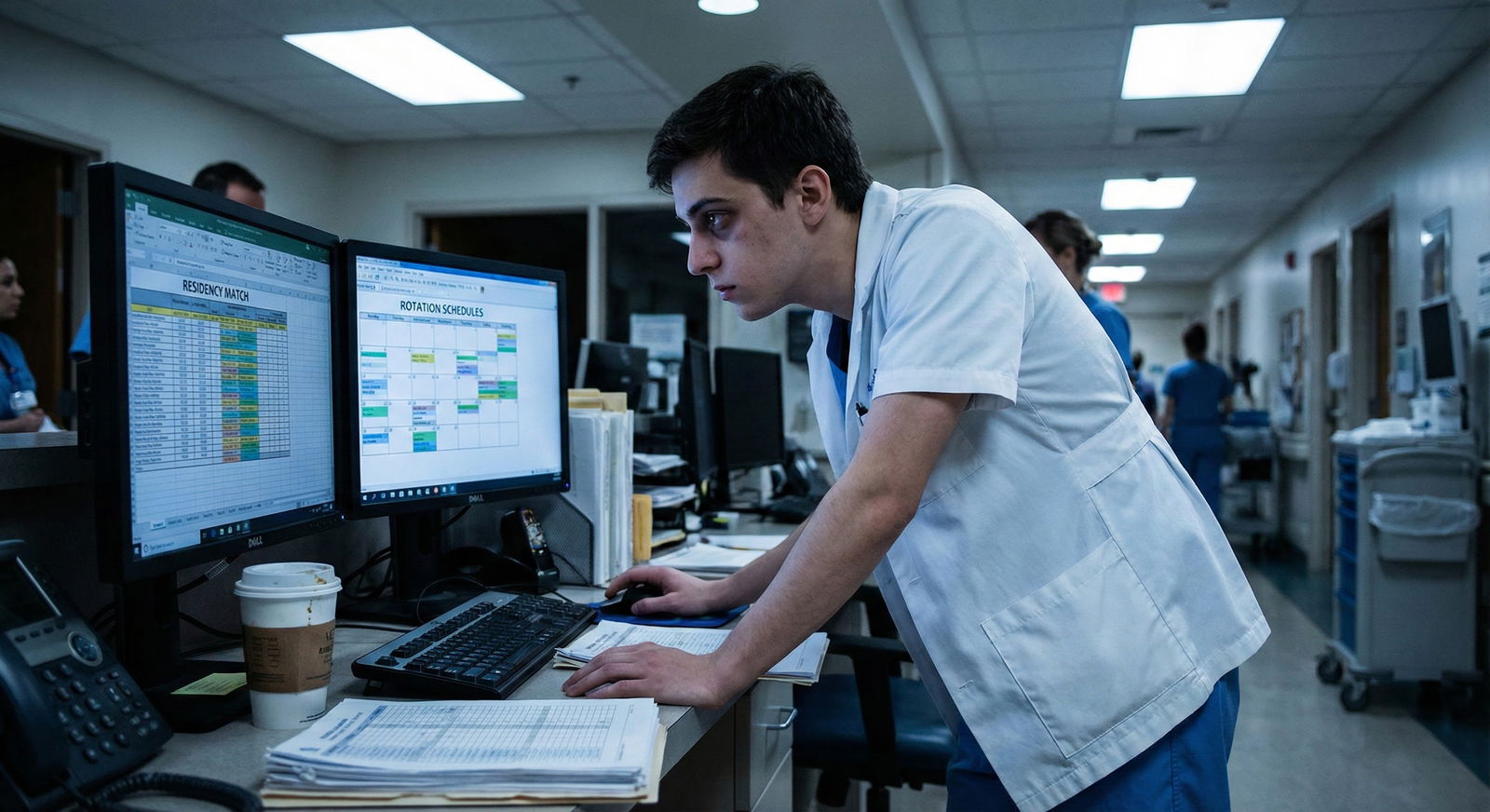
Here's what I want you to hear if your brain is screaming worst-case scenarios: this path is awful, but it is not rare. Every year, hundreds of doctors do this exact ugly detour. They patch together a prelim year, reapply while exhausted, answer awkward questions, collect fresh letters, and still land the advanced spot.
Not everyone. I won't lie to you. But many do.
So no, taking a prelim year did not automatically end your career. It gave you a brutally inconvenient second chance. That's different. And different is survivable.