
So you've spent three years in the same lab. Six publications, a handful of abstracts, a PI who thinks you're destined for greatness. But when you print out the ERAS application, it looks... flat. Everything comes from one place, one mentor, one narrow set of questions. The CV reads like a single long chapter, not a career arc.
You're not alone. I've seen applicants with ten papers from one lab get passed over for candidates with half the output but a clearer story of range and initiative. The problem isn't the research. It's the way the profile comes across when nobody adds context.
Have a Lab-Heavy CV? Why It Can Read as Narrow
Residency reviewers read hundreds of applications. They're not looking for the "most published" candidate. They want someone who will thrive in a clinical environment, work with lots of people, and bring a versatile mind. When almost every line on your CV traces back to the same lab, a few things happen in the reviewer's head.
First, they worry about range. They see a person who's been in one intellectual bubble. Sure, you know that one pathway inside out, but can you handle a patient who doesn't fit a protocol? Can you collaborate with a team that isn't your PI's? Second, they question independence. If all your projects are tightly tied to a senior investigator, it's hard to tell where your ideas end and the mentor's begin. Third, they might wonder if you simply took the path of least resistance, stayed comfortable, didn't push for broader experiences.
I'm not saying that's fair. Dedicated research years are a huge commitment. But the application doesn't interpret itself. You have to frame it.
Narrow doesn't mean bad. It means the profile needs deliberate explanation. A lab-heavy CV can be a massive strength, if you show the reviewer how to read it.
What Reviewers Are Actually Looking For
When a program director skims your research, they're weighing four things: intellectual range, independence, sustained commitment, and evidence you can function on a team outside your mentor's shadow.
A concentrated lab experience can hit all those notes. Depth and productivity are real. If you've led a project from hypothesis to manuscript, troubleshooted experiments, and mentored students, that's a growth story. The problem isn't specialization, it's over-reliance. A healthy specialization looks like you chose a lane and dominated it. A problematic one looks like you never ventured beyond the lab's walls because you didn't have to.
Here's how the reviewer's mental flowchart runs:
The takeaway? You control which branch of that flowchart the reviewer travels down. If you don't provide the narrative, they'll default to the suspicion of narrowness. But if you frame the work as a progression, from learning techniques to owning a question to producing independent results, you force the strength interpretation.
I've seen applicants with a single multi-year project outperform those who dabbled in three labs. Why? Because they owned something. They had a story with a beginning, middle, and next step. The key is to make that story unmissable.
How to Reframe the Profile So It Reads as Focused, Not Flat
Stop listing publications as if they're trophies on a shelf. Each entry on your application should show a new dimension of you. If you have five papers from the same project, don't describe them all the same way. Split them by role, skill, and impact.
For example, your first-author paper might highlight experimental design, data analysis, and scientific writing. Your second-author paper could emphasize team coordination, mentorship of junior students, or cross-departmental collaboration. The third might show you translating findings into a clinical context, something as simple as "This work led to a quality improvement project in the affiliated clinic" turns a bench paper into a bridge to patient care.
The personal statement is your best friend here. Use it to connect the lab work to larger themes: why you're a better clinician because you understand evidence generation, why your specialty choice grew out of the research questions you asked, or how you'll bring a research-informed lens to patient care. Don't just say you're passionate. Show the through-line.
Your experience descriptions need to do the same. Instead of "Conducted Western blots and analyzed data," try "Independently designed and optimized a protocol that reduced assay time by 40%, then trained three incoming lab members." That tells a reviewer you're not just a pair of hands, you're a problem solver and a teacher.

And if you're worried about looking too narrow, use the rest of the application to show breadth. One meaningful teaching experience, a leadership role in a student group, or a quality improvement project can counterbalance the research depth. The goal isn't to hide the lab work. It's to surround it with evidence that you're more than one thing.
What to Do Next If Your Profile Still Feels Too One-Track
Maybe you're reading this three weeks before submission. You can't suddenly run a clinical trial or start a nonprofit. But you can still control the story.
First, edit ruthlessly. Pick the three to five experiences that add the most diverse angles. If you've got five research entries that all say the same thing, collapse them into one strong entry with a compelling narrative, and free up space for teaching, service, or leadership. Every entry should answer the question: "What new thing do I learn about this applicant?"
Second, if you have a few months before the match, even a small addition can shift the impression. Volunteer to teach a clinical skills session. Offer to lead a journal club. Get involved in a quality improvement project that touches on your research area. These don't need to be huge, they just need to show you can function outside the lab.
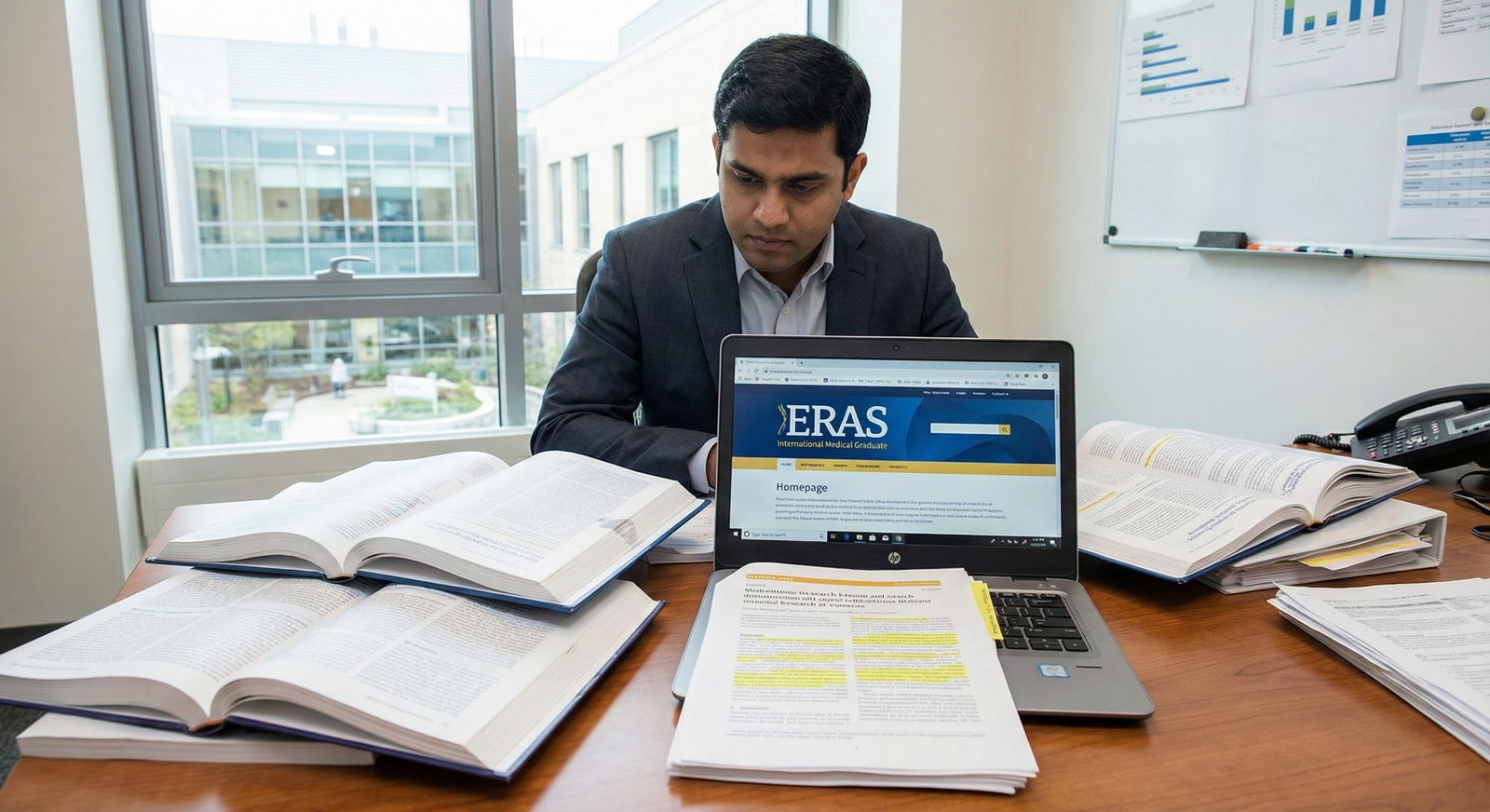
Third, prepare for interviews. If your profile is lab-heavy, you will be asked about it. Have a crisp, confident answer. "My research was deep, but I chose that depth deliberately. I wanted to see a problem from start to finish, and I can now bring that rigor to clinical questions. I'm not a one-note candidate, I'm someone who knows how to commit to something and deliver." That turns a perceived weakness into a statement of character.
You can't rewrite your past. But you can absolutely rewrite the way it's read. Your job is to make the reviewer see your focus as a feature, not a bug.
Key Takeaways
- A lab-dominated profile is not a weakness. It becomes a problem only when it looks like you have little range, little independence, or no clear story.
- Your job is to turn one deep research track into evidence of commitment, growth, and transferable skills, then use the rest of the application to show breadth where possible.
Your CV is a tool, not a verdict. Now go make it tell the story you actually lived, not the one a reviewer might assume.