
Clinical informatics attracts a specific kind of physician: systems thinkers who can bridge clinical practice, data, and technology. That same systems mindset is exactly what you need when addressing red flags in your residency or fellowship application. Rather than hoping program directors won’t notice, your goal is to anticipate concerns, surface them strategically, and show how you’ve learned, grown, and mitigated the underlying issues.
This guide focuses on addressing red flags within the context of clinical informatics fellowships and related health IT training pathways. Whether your concern lies in your academic record, professionalism, non‑traditional pathway, or prior career shifts into or out of tech, you can craft a coherent narrative that programs respect.
Understanding Red Flags in Clinical Informatics Applications
Clinical informatics fellowship programs are typically small, tightly knit, and highly selective. Each fellow often touches sensitive data, high‑impact projects, and organization‑wide systems. As a result, trust, reliability, and professionalism weigh at least as heavily as exam scores.
Common Red Flags for Informatics-Focused Applicants
While many red flags overlap with other specialties, some are particularly relevant to clinical informatics:
Academic performance and exams
- USMLE/COMLEX failures or multiple attempts
- Inconsistent performance in core clinical clerkships
- Poor performance in biostatistics, epidemiology, or data-related courses (seen as proxies for analytic skills)
Professionalism and behavioral concerns
- Disciplinary actions, remediation, or professionalism citations
- Conflicts with supervisors or teammates (especially troubling for team‑based, project‑heavy informatics work)
- Allegations related to privacy, documentation, or data handling
Gaps and discontinuity in training or work
- Unexplained or poorly explained time away from medicine or residency
- Frequent job or program changes with minimal rationale
- Large gaps between residency completion and application to a clinical informatics fellowship
Career pivots and non‑traditional backgrounds
- Long stints in industry (e.g., tech, startups, pharma) before or after residency
- Leaving prior fellowship or residency programs early
- Significant time in pure IT or engineering roles with limited recent clinical activity
Research and project concerns
- Withdrawn publications or questions about research integrity
- Patterns of incomplete projects, especially QI/IT implementations
- Overstated technical skills (e.g., claiming mastery of machine learning with minimal evidence)
Communication and collaboration issues
- Poor interpersonal feedback from 360 evaluations
- Strained interdepartmental relationships on multi‑stakeholder projects
- Negative narrative comments in MSPE or prior program letters
Program directors do not necessarily reject an application solely because a red flag exists. What matters is how you recognize it, explain it, and demonstrate change.
Framework: How Programs Evaluate Red Flags
Clinical informatics leaders—many of whom have both clinical and technical backgrounds—often approach red flags like they would a root cause analysis:
- Context: What was happening around the time of the issue?
- Pattern: Is this a one‑time event or part of a recurring pattern?
- Insight: Does the applicant accurately understand what went wrong?
- Remediation: What concrete changes did they make afterward?
- Durability: Is there evidence that the changes are stable and lasting?
- Relevance: Does this raise concern about performance as a future informatics fellow and faculty member?
Leveraging that mindset, you can structure your explanations like a quality improvement (QI) case:
- State the issue transparently.
- Provide concise context without over‑justification.
- Own your role; avoid blame shifting.
- Describe what you did to address it (specific actions).
- Show measurable outcomes (grades, evaluations, certifications, project completion).
- Connect your growth to the responsibilities of a clinical informatician.
This approach works across multiple application elements: personal statement, interview responses, ERAS fields, and letters of recommendation.
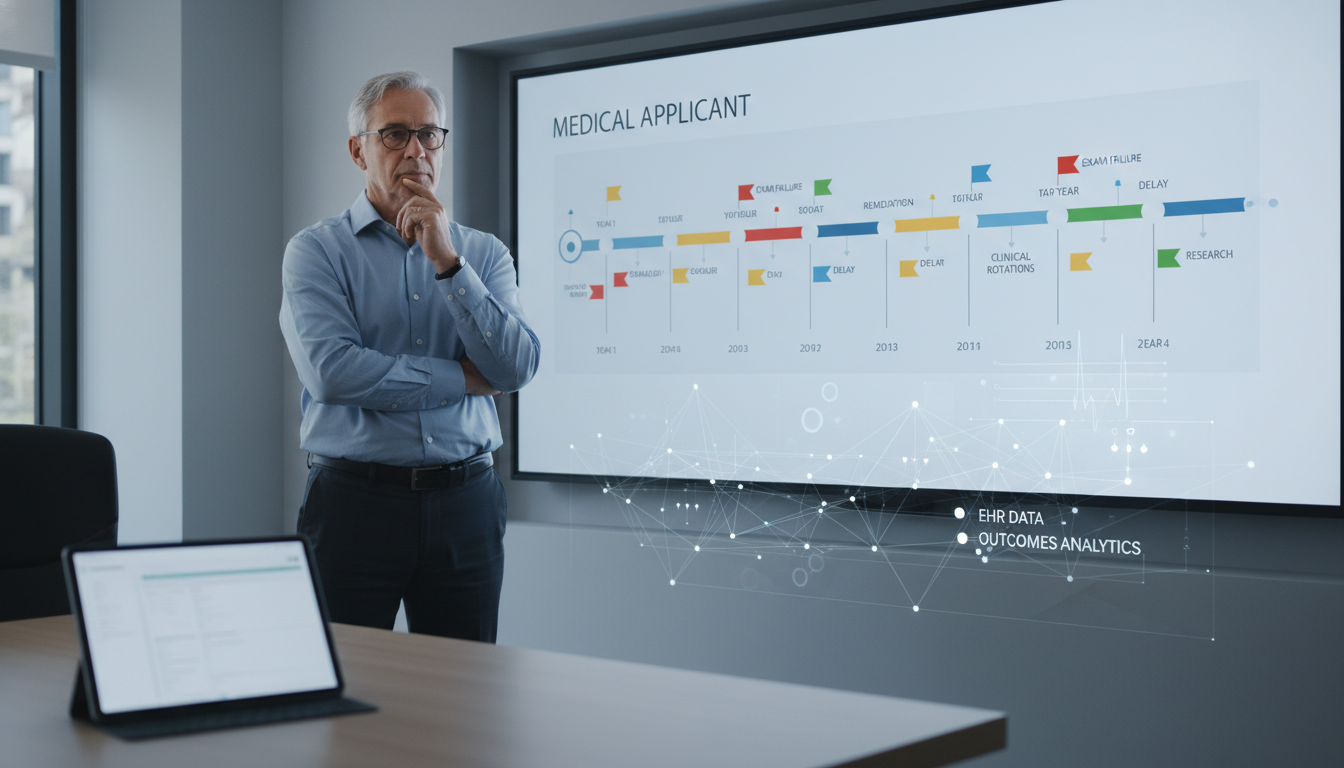
Common Red Flags and How to Address Them Effectively
1. Exam Failures and Academic Struggles
Why this matters in clinical informatics:
While informatics is not an exam-heavy fellowship, program directors use prior performance as a proxy for discipline, adaptability, and baseline knowledge—especially important when you’ll be interpreting clinical data, leading decision‑support projects, and advising on safety‑critical systems.
How to explain exam failures
If you have USMLE/COMLEX failures or multiple attempts, you must address them directly. This is a classic situation of addressing failures in a way that reassures programs.
Structure your explanation:
Own it plainly
- “I failed Step 1 on my first attempt.”
- Avoid euphemisms like “I did not meet the minimum passing threshold.”
Provide focused context (not excuses)
- Serious health issues, family crises, or misjudging the exam are acceptable context if described briefly.
- Avoid overly emotional or detailed accounts.
Describe concrete changes
- Changed study strategies (question banks, spaced repetition, group study).
- Sought academic coaching, mentoring, or disability accommodations.
- Implemented structured schedules and accountability systems.
Show improved outcomes
- Subsequent passing scores (especially with clear improvement).
- Strong in‑training exam performance during residency.
- Completion of informatics‑relevant coursework or certifications (e.g., health informatics certificate, data science courses).
Sample language (for personal statement or supplemental essay):
During my second year of medical school, I failed Step 1 on my first attempt. I underestimated the volume and depth of material and relied too heavily on passive review. After this failure, I worked closely with an academic coach to redesign my approach, incorporating daily question-based learning, spaced repetition, and a structured study schedule. I passed on my second attempt and subsequently scored in the top quartile of my residency in-training exams. This experience increased my respect for disciplined systems of learning—a mindset that I now apply to my work in clinical informatics, where thoughtful workflows and feedback loops are essential for safe, sustainable change.
Addressing struggles in quantitative or data-related courses
If you did poorly in biostatistics, epidemiology, or informatics electives but are applying for a clinical informatics fellowship, you must counterbalance that signal.
Action steps:
- Complete recent, relevant coursework (e.g., Coursera/edX health informatics, data analytics, R/Python for healthcare, AMIA 10x10 course).
- Highlight performance: “Completed [course] with distinction / certificate of completion.”
- Demonstrate application: QI projects, dashboard development, basic analytics work with your institution’s data team.
2. Professionalism Concerns and Disciplinary Actions
In a field where you will manage protected health information, interact with multidisciplinary teams, and influence organization‑wide policies, professionalism red flags are critical.
These might include:
- Formal professionalism citations during medical school or residency.
- Remediation for communication, reliability, or teamwork issues.
- Conflicts documented in the MSPE or prior program letters.
- Investigations related to privacy, data misuse, or documentation irregularities.
How to approach professionalism red flags
State the concern in clear terms
- “I received a professionalism citation during my PGY‑2 year related to delayed documentation and communication with my team.”
Acknowledge impact
- On patients, colleagues, and learning environment.
- Show awareness of how this may appear to an external reviewer.
Detail the remediation process
- Meetings with program leadership, professionalism courses, communication coaching.
- Mentored reflective exercises, 360 evaluations, or direct observation.
Provide evidence of sustained change
- Improved end‑of‑rotation evaluations, especially around teamwork and communication.
- Letters of recommendation explicitly describing your growth.
- Leadership roles in committees or projects that depend on collaboration (e.g., EHR steering groups, QI teams).
Sample language:
In my intern year, I received a professionalism remediation plan after multiple delayed notes and missed pages during a busy ICU rotation. This feedback was difficult but important. I worked with my program director to implement practical changes, including structured time blocks for documentation, escalation protocols with nursing staff, and use of task management tools. Over the following year, my evaluations in communication and reliability improved to “exceeds expectations,” and I was later selected to represent our program on the EHR optimization committee. This experience has shaped how I approach informatics work: I am highly attentive to communication workflows and the real-world impact of reliability on patient safety and team trust.
If the concern relates even loosely to privacy, security, or data handling, you must explicitly address why it will not recur in an informatics role. Consider formal training (HIPAA refreshers, security awareness, institutional certifications) and highlight those.
3. Gaps in Training and How to Explain Them
Program directors will scrutinize any unexplained gap of more than a few months. In a data‑intensive specialty, they are especially wary of applicants whose timelines are unclear or appear inconsistent.
Examples of gaps:
- Time between medical school and residency.
- Leaves of absence from residency.
- Periods working outside of medicine (e.g., in tech or non‑clinical roles).
- Long intervals between residency and applying to a clinical informatics fellowship.
How to explain gaps effectively
When thinking about how to explain gaps, use a similar structure:
Define the timeframe
- “From July 2020 to January 2021, I took an approved leave of absence from residency.”
Name the primary reason succinctly
- Personal health, family caregiving, visa issues, research, industry role, burnout recovery, etc.
- Avoid overly vague phrasing like “personal reasons” if it invites unnecessary doubt. You can be honest while maintaining boundaries.
Describe constructive activities during the gap (when appropriate)
- Clinical research, informatics projects, part‑time work, certifications, volunteer work.
- For serious health or caregiving, the primary activity may simply be recovery or caregiving—that is legitimate; just be clear and professional.
Reassure about stability and readiness
- Indicate that the issue is resolved or well‑managed.
- Highlight stable performance since returning to training or work.
- Connect this back to your current capacity to fully participate in a fellowship.
Example (health‑related gap):
From January to August 2021, I took an approved leave from my residency program to address a health condition that required intensive treatment. With the support of my program and physicians, I completed treatment and have been stable since returning to full-time clinical duties in September 2021. Since then, I have completed all rotations without restriction and have received strong evaluations. This period has also deepened my appreciation for patient-facing technologies that support continuity of care, which I now explore through my work on our patient portal optimization project.
Example (industry/IT gap relevant to informatics):
After finishing internal medicine residency in 2019, I spent two years working as a clinical lead for a health IT startup focusing on medication reconciliation tools. I recognize that, on paper, this appears as a gap from traditional clinical practice. However, I remained clinically active through moonlighting in urgent care and hospital medicine, and my startup role gave me first-hand experience in EHR integration, FHIR APIs, and cross-functional collaboration with engineers. These experiences confirmed that clinical informatics is the right long-term path for me and prepared me to contribute meaningfully to fellowship-level projects from day one.
The key is to transform a “gap” into a cohesive and purposeful part of your trajectory.

4. Non‑Traditional Paths, Career Pivots, and Leaving Prior Programs
Clinical informatics often attracts applicants with complex professional histories: software engineers turned physicians, clinicians who left industry, or trainees who switched specialties or left prior programs. These can be assets—but only if framed coherently.
Leaving a prior residency or fellowship
Program directors worry about trainees who may leave their program mid‑stream. If you have withdrawn from a prior residency or fellowship, your application must clearly address:
- Why you left.
- What you learned about fit, goals, and decision‑making.
- Why you are confident this will not recur.
Example framing:
During my PGY‑2 year in general surgery, I realized that while I enjoyed clinical problem-solving, my long-term interests centered on systems, workflows, and using data to prevent errors rather than procedural practice. After extended discussions with my mentors and program leadership, I made the difficult decision to transition out of surgical training and complete a categorical internal medicine residency instead. This transition clarified that my passion lies in clinical informatics, where I can combine my appreciation for detail-oriented workflows with a broader, system-level impact. Having successfully completed my internal medicine residency and led multiple EHR optimization projects, I am confident that a clinical informatics fellowship is both a stable and authentic next step.
Prior industry or pure tech experience
For applicants with substantive tech or engineering backgrounds, the red flag is often perceived lack of clinical identity or concern that you may be “too tech‑focused” without balancing patient care.
To address this:
- Emphasize your ongoing clinical engagement and skills.
- Demonstrate clinical reasoning in your projects (e.g., designing CDS that reflects guidelines and human factors).
- Show that you understand the socio‑technical nature of healthcare, not just technology.
Actionable moves:
- Highlight projects where you translated clinical needs into technical requirements.
- Obtain letters from clinicians who can attest to your bedside skills and patient-centered perspective.
- In your personal statement, explicitly commit to a career that integrates clinical care and informatics, rather than leaving medicine behind.
Strategically Integrating Explanations Across Your Application
Addressing red flags is not about a single paragraph; it’s about a coordinated communication strategy.
1. ERAS / Application Fields
Use designated sections (e.g., “Additional Information” or “Education/Training Interruptions”) to briefly and factually explain gaps, leaves, and dismissals.
- Keep it neutral and concise; save interpretation and reflection for your personal statement and interviews.
- Use consistent dates and terminology to avoid confusion.
2. Personal Statement
Your personal statement is the best place to integrate the red flag into your narrative—not as the centerpiece, but as one informative chapter.
Tips:
- Do not open with the red flag; open with your authentic interest in clinical informatics and health IT training.
- Include a short, purposeful paragraph acknowledging the issue and what you learned.
- Emphasize how this experience now positively shapes your approach to informatics: resilience, systems thinking, empathy, reliability.
3. Letters of Recommendation
Ask at least one letter writer who:
- Is aware of the red flag.
- Has observed your growth afterward.
- Can credibly state that the prior concern has been addressed and is not predictive of future problems.
Programs give substantial weight to third‑party validation of improvement.
4. Interview Strategy
Expect direct questions about:
- Exam failures or multiple attempts.
- Gaps and non‑linear career paths.
- Professionalism or disciplinary issues.
- Reasons for switching tracks or leaving prior programs.
Practice concise, structured responses:
- Name the issue.
- Give brief context.
- Describe what you changed.
- Highlight your current performance and how this informs your informatics practice.
Avoid defensiveness, oversharing, or minimizing. Your demeanor—calm, reflective, accountable—often matters more than the specific event.
Final Thoughts: Turning Red Flags into Signals of Growth
Clinical informatics is fundamentally about learning from system failures and near-misses and designing safer, smarter processes. Your red flags, handled honestly and thoughtfully, can demonstrate exactly those skills in your own career.
If you:
- Acknowledge issues directly,
- Show clear evidence of growth and changed behavior, and
- Align your story with a sustained, authentic interest in informatics,
then many programs will see your application not as risky, but as resilient and self‑aware—exactly the temperament they need in physicians who will help reshape their digital infrastructure.
FAQ: Addressing Red Flags in Clinical Informatics Applications
1. Should I mention every red flag in my personal statement, or only the biggest one?
Focus on issues that are clearly visible in your application: exam failures, formal leaves, program changes, or documented professionalism concerns. Minor issues that are not explicitly noted elsewhere do not need to be elevated. If you have multiple serious red flags, prioritize the ones most likely to worry informatics programs (e.g., professionalism, large gaps) and address others briefly in ERAS “Additional Information.”
2. How much detail should I share about health or mental health issues causing a gap or performance problem?
You do not need to disclose diagnoses. A professional level of detail is sufficient:
- General description (“a health condition requiring treatment,” “a family member’s serious illness,” etc.).
- Confirmation that you are now able to meet the demands of training.
- Evidence of stable recent performance.
Protect your privacy while providing enough information to reassure program directors of your readiness.
3. I had academic struggles, but now I have strong informatics projects and industry experience. Will programs still care about old grades and scores?
Programs look at the trajectory more than any single metric. For clinical informatics fellowships, strong, recent performance on:
- Well-designed EHR or CDS projects,
- QI initiatives using data,
- Health IT training or formal informatics coursework,
can outweigh earlier academic struggles. You must still address the earlier issues, but you can confidently shift the focus toward your demonstrated, up‑to‑date capabilities.
4. Do red flags automatically disqualify me from a clinical informatics fellowship?
No. Many successful fellows have histories that include exam failures, non‑traditional paths, or past difficulties. What tends to be disqualifying is:
- Dishonesty, omission, or inconsistency,
- Lack of insight or responsibility,
- Ongoing patterns of the same issue without evidence of change.
Handled well, red flags can become part of a compelling, mature application narrative that resonates strongly with informatics program directors who value systems thinking, resilience, and growth.