
What actually happens when your application with a failed Step, a professionalism concern, or a leave of absence hits the inbox of a community program coordinator? Do they really shrug and say, “We’re community, we’re more flexible,” while the university programs slam the door?
Let me ruin the comforting narrative quickly: “Community = forgiving” is one of the most persistent myths in residency advising. And it burns applicants every year.
You do not need hope. You need an accurate picture of who will actually read your file, what they screen out automatically, and where red flags sometimes get a second look.
Let’s dismantle the myth properly.
The Core Myth: “Community Programs Take the Red-Flag People”
The story you hear in group chats and from panicked classmates goes like this:
- University programs are hyper-competitive and only want perfect Step scores and AOA.
- Community programs have trouble filling, so they’re grateful for any warm body with a pulse and ECFMG certification.
- Therefore, if you have red flags—failed Step, gap years, probation—you can just “aim for community” and you’ll be fine.
Reality: some community programs are more forgiving of certain red flags. Many are not.
The real rules are uglier and less comforting:
- Some community programs are more rigid than universities because their only filter is numbers.
- Some academic programs quietly take chances on red-flag candidates who bring research, unique skills, or strong internal advocates.
- The type of red flag matters far more than “community vs university.”
I’ve watched applicants with failed Step 1 match at solid university programs. I’ve also seen community programs auto-reject them without a human ever opening the PDF.
So let’s talk data and patterns, not wishful thinking.
What Programs Actually Screen First (And Why “Community” Doesn’t Save You)
Before anyone looks at your personal statement about resilience, there’s an ugly first pass: filters.
Most programs—community and academic—use hard filters in ERAS to reduce the pile. Often set by a PD or, frankly, by whoever is tired of reading 3,000 apps.
Common filters:
- USMLE/COMLEX attempts and minimum scores
- YOG (year of graduation)
- Visa requirement
- Medical school country
- Prior US clinical experience
Here’s the part nobody tells you loud enough: many community programs use these filters more rigidly than academic centers because they do not have the time or faculty bandwidth to do holistic review.
Academic programs sometimes have large committees, residents helping screen, and pressure to consider diversity in background. Community programs may have:
- 1 PD
- 1 APD
- 1 coordinator
- 2–3 faculty willing to read apps
…and clinic starting at 8:00 AM.
Guess what that means? Filters do the heavy lifting.
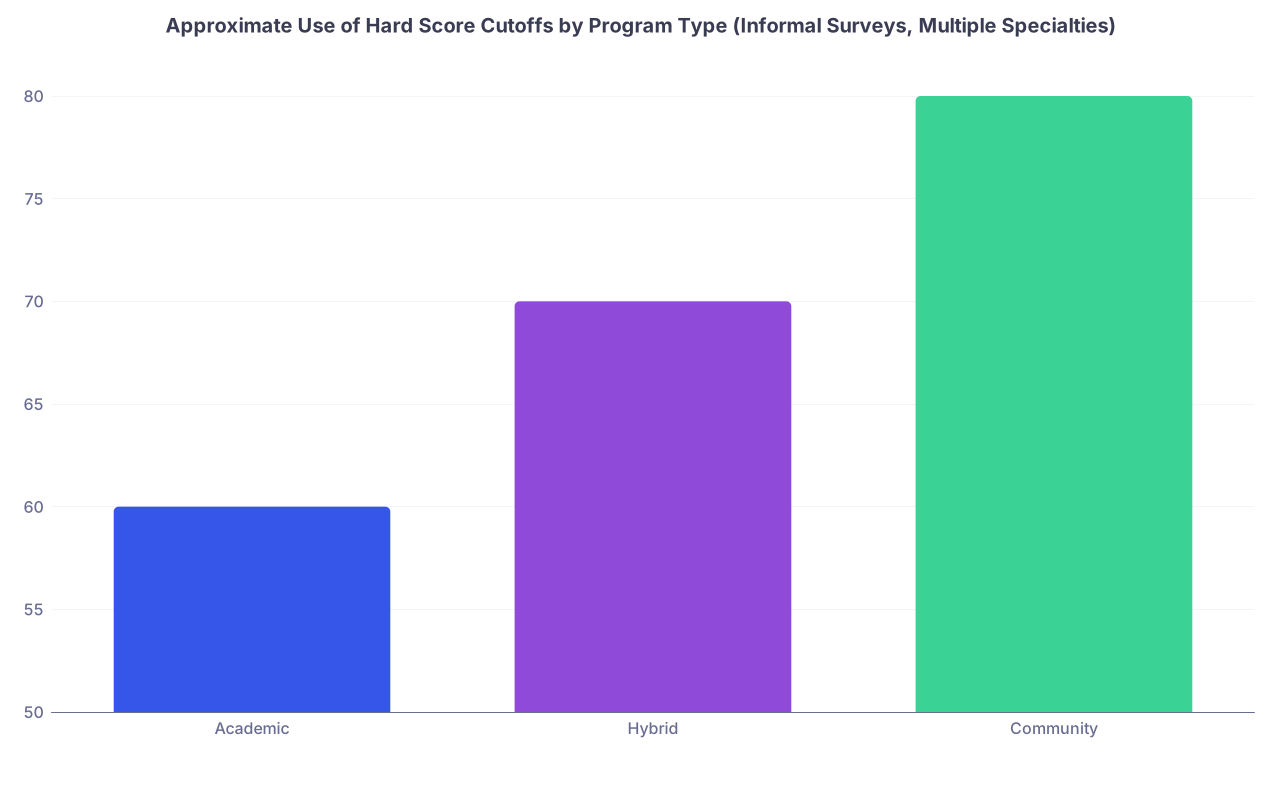
| Category | Value |
|---|---|
| Academic | 60 |
| Hybrid | 70 |
| Community | 80 |
No, this is not an NBME-quality dataset. These are ballpark numbers from program director surveys and specialty meetings. The pattern is consistent: community programs often lean more heavily on blunt cutoffs.
So if your red flag is:
- Failed Step 1 or 2
- Multiple exam attempts
- Very low score (e.g., Step 2 CK < 210 in competitive fields)
A lot of community programs will never see your explanation, because their filter already threw your file out.
“Community = forgiving” fails right there.
Red Flags Are Not All Equal: What Actually Gets a Second Look
You cannot talk about forgiveness without separating types of red flags. Programs think about them differently, and that drives whether community programs are more lenient.
Let’s break this into buckets.
| Red Flag Type | Community Programs | Academic Programs |
|---|---|---|
| USMLE/COMLEX failure | Often rigid | Slightly more nuance |
| Low but passing scores | Sometimes flexible | Varies by specialty |
| Gap / non-traditional path | Moderately open | Moderately open |
| Probation / professionalism | Rarely forgiving | Rarely forgiving |
| Legal/criminal issues | Very restrictive | Very restrictive |
1. Exam Failures & Multiple Attempts
This is where the myth is most wrong.
Many community programs have simple rules like:
- “No Step failures.”
- “No more than two attempts on any USMLE.”
- “No interviews if Step 2 < 220.”
Academic programs also have rules, but I’ve seen more of them make exceptions when:
- There’s strong home institution advocacy.
- The applicant has standout research in their department.
- There’s a compelling timeline (major illness, documented crisis) and then strong recovery (high Step 2, strong clerkship evals).
Community programs sometimes don’t have this “political capital” structure. No one is saying, “I know them, I’ll take responsibility for this applicant.” So they stick to the rule.
If your red flag is a failed Step: community ≠ safe harbor. It’s often the opposite.
2. Low But Passing Scores
Different story here.
A lot of solid community internal medicine, family medicine, psych, and peds programs will look at:
- Step 1: 205–215
- Step 2: 215–225
and say, “Okay, not ideal, but let’s see the rest.”
This is where community can be “more forgiving.” They may not need a 240+ to protect their brand or fellowship match-rate slide deck.
Academic programs in competitive specialties (or at big-name places) sometimes screen out these scores automatically, especially for non-US grads. But in less competitive fields, even academic programs know they need residents who actually show up and work, not just high-test-score ghosts.
So: low but passing scores? Many community programs will genuinely read your file. That’s real.
3. Gaps, Non-Traditional Paths, and YOG
Here’s one area where community programs can be more open.
You’ve got:
- A prior career
- Several-year gap doing research or working abroad
- Older year of graduation (5–10+ years out)
Academic brand-name programs often shy away because they want fast pipelines to fellowship and K-awards. But a community program that just wants solid residents to care for patients in their city may be more open to:
- Prior nurses transitioning to MD/DO
- Late grads who have been clinically active abroad
- People who took time for family, military service, or another career
Caveat: many community programs still have a YOG cutoff (like “within 5 years of graduation”). Once again, blunt rules. But sometimes they’ll break these for a great story + strong current clinical performance.
This is one of the few areas where the “more forgiving” label sometimes matches reality.
The Red Flags Almost No One Forgives—Community or Not
Let me be blunt: some red flags are radioactive everywhere.
Community or academic, the answer is usually no.
- Repeated professionalism issues on MSPE (multiple comments about disrespect, dishonesty, boundary violations)
- Dismissal from another residency without a very clean, documented resolution and strong advocacy
- Ongoing or recent legal issues involving violence, drugs, or fraud
- Pattern of unstable behavior: repeated leaves, unprofessional email communication, unpredictable engagement
Programs—especially small community ones—do not have the bandwidth to manage a high-maintenance, unstable trainee. In a 6–8 resident per class program, one disaster resident can poison the entire environment and crush morale.
So when students ask: “Will community programs overlook my professionalism probation?” the short answer is: usually no, and often they’re more nervous than big academic centers because they can’t absorb the collateral damage.
The Hidden Factor: Supply and Demand by Specialty
A more useful question than “Are community programs more forgiving?” is:
“In my specialty, who is desperate, who is selective, and where do I stand in that market?”
Some community programs in high-supply fields (radiology, dermatology, ortho, plastics, ENT, etc.) can be ruthless. They get flooded with high-score applicants who didn’t match at big-name places. Why would they take someone with glaring red flags when they can fill with 240s and 250s?
On the flip side, some community programs in chronically unfilled specialties (Family Med in rural areas, some Psych, certain IM in less desirable locations) may absolutely be more willing to:
- Overlook a Step 1 failure with a strong Step 2 and solid letters
- Consider older grads
- Take a chance on someone with a non-traditional path
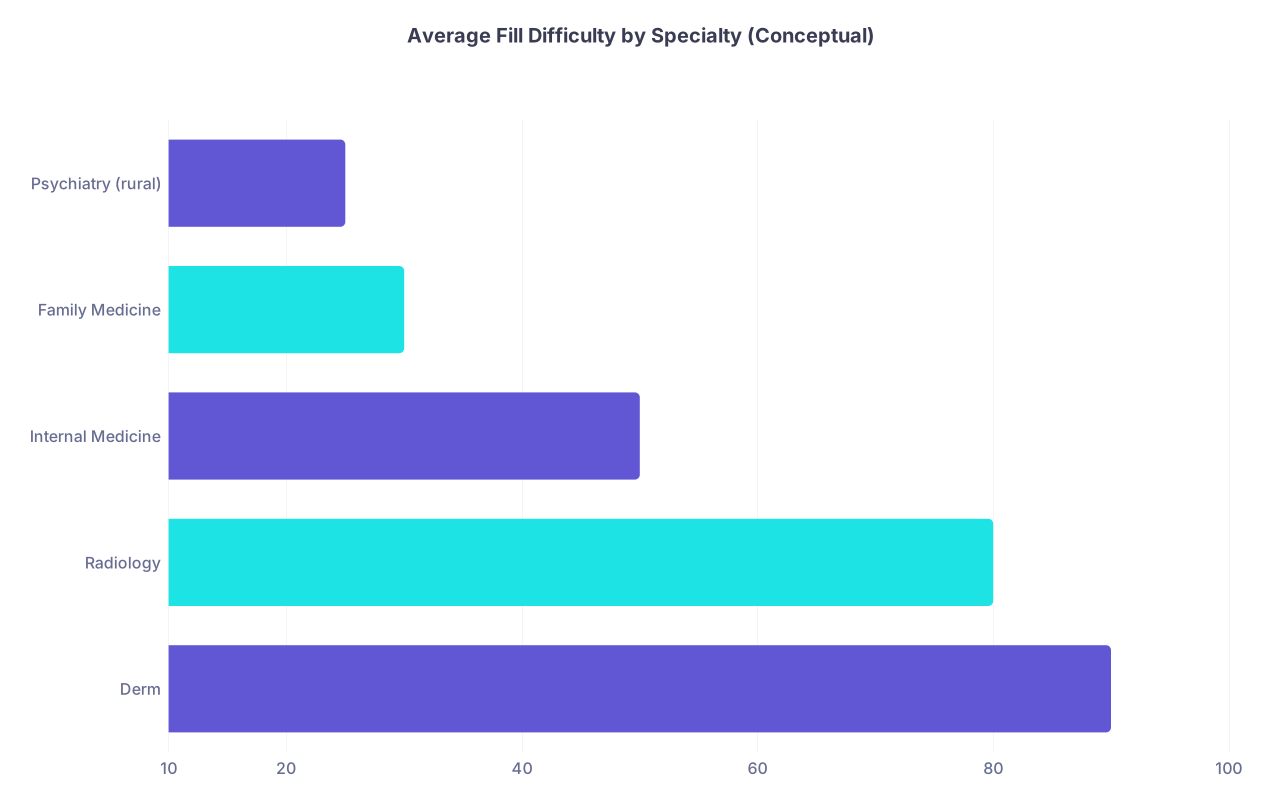
| Category | Value |
|---|---|
| Derm | 90 |
| Radiology | 80 |
| Internal Medicine | 50 |
| Family Medicine | 30 |
| Psychiatry (rural) | 25 |
Left side (higher numbers) = easier to fill, more selective.
Right side (lower numbers) = harder to fill, more likely to accept some red flags for solid, reliable bodies.
Specialty matters more than “community vs academic.” A community derm program will still laugh at your failed Step. A rural FM program might not.
Where Community Programs Really Can Be an Advantage
So if the blanket myth is wrong, what’s the more accurate version?
Here’s where community programs may be more open-minded than many academic programs:
Non-Traditional Backgrounds
Prior careers, older age, unique life paths. They don’t always want cookie-cutter research bots; they want people who can relate to real patients and actually show up to work.Low but Passing Scores with Strong Clinical Performance
If your red flag is modest scores—but your evaluations, letters, and hands-on performance are excellent—community programs sometimes put more weight on “Are you a good worker?” than “Are you a 250?”Clear Clinical Commitment to Their Setting
Rotations at their hospital, strong sub-I performance, or long-standing ties to the community. If they know you, they’re more willing to ignore a less-than-perfect record.
This is where having done an audition rotation at a community program can actually override some numeric red flags. The PD who watched you handle cross-cover without melting down will trust that more than your one botched exam.

| Step | Description |
|---|---|
| Step 1 | ERAS Application Arrives |
| Step 2 | Auto-Reject |
| Step 3 | Coordinator Initial Sort |
| Step 4 | Faculty/PD Takes Closer Look |
| Step 5 | Screened Mostly by Numbers |
| Step 6 | Consider Interview |
| Step 7 | Fails Hard Filter? |
| Step 8 | Known to Program? |
| Step 9 | Red Flag Explained & Improved? |
| Step 10 | Scores & Letters Strong? |
Notice what matters:
- Not “community vs academic”
- But “Did you survive the filters?” and “Do they know you and trust your story?”
How to Play This Smart If You Do Have Red Flags
You cannot change your past. You can change how strategically you apply and how honestly you confront the reality of your situation.
Here’s the blunt playbook:
Stop assuming “community = safe.”
Look up actual program requirements. Many community programs list:- Required minimum USMLE scores
- “No failures accepted” policies
- YOG cutoffs
If you apply blindly, you’re just paying ERAS for auto-rejections.
Target programs that fit your specific type of red flag.
- USMLE failure: focus on programs that do not explicitly state “no failures,” especially in shortage specialties and less desirable locations.
- Low but passing scores: broad community-heavy list in less competitive fields.
- Gaps / older grad: programs that explicitly mention “welcoming non-traditional applicants” or that have prior residents with similar paths (you can often see this on their website bios).
Use auditions/aways tactically.
Community programs are much more likely to bend if:- You rotated there
- Their residents and faculty liked working with you
- They saw you’re reliable at 3 a.m., not just on paper
Clean, specific explanations in your application.
“I failed Step 1 due to personal reasons” is useless.
“During Step 1 dedicated, I was undergoing treatment for X (now resolved, no ongoing accommodations), and my performance suffered. After that period, I scored ___ on Step 2 and ___ on shelf exams, reflecting my true ability” is better.Get PD-level advocacy where you can.
A call or email from a PD who knows you > 10 generic LORs.
This is sometimes how exceptions happen, especially in community settings where PD-to-PD communication carries a lot of weight.
So, Myth or Fact?
“Community programs are more forgiving of red flags.”
- As a blanket statement: Myth.
- As a nuanced, heavily qualified statement:
- Sometimes true for specific red flags (low but passing scores, non-traditional paths)
- Often false for others (USMLE failures, professionalism concerns)
- Always dependent on specialty, geography, and local applicant volume
Stop thinking in lazy categories like “community vs academic.” Start thinking like someone matching supply and demand in a very distorted labor market:
- What exactly is my red flag?
- What does this specific program publicly filter on?
- How desperate is this specialty and this location for applicants like me?
- Can anyone who matters vouch for me there?
Years from now, you will not remember which of your programs were labeled “community” or “academic.” You’ll remember who actually gave you a chance—and whether you were honest enough with yourself to aim where that chance was real, not just comforting.