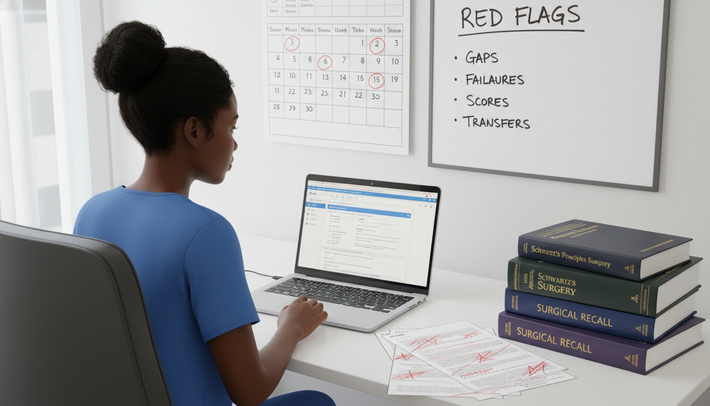
Understanding Red Flags for Caribbean IMGs in Neurology
For a Caribbean medical school graduate targeting neurology residency in the US, “red flags” are not automatic rejections—but they do demand thoughtful strategy. Programs worry about risk: Will you struggle with exams? Have difficulty with clinical duties? Fail to adapt to a high-acuity neurology service?
Your job is to show that:
- You understand why something is a concern.
- You have addressed the underlying issue.
- You are now a lower risk than your peers because you’ve learned from adversity.
This article focuses specifically on Caribbean IMGs applying to neurology: how to identify your red flags, how to explain gaps, how to handle addressing failures, and how to reframe your story in a way that improves your neuro match chances—even from a Caribbean medical school residency path.
Common Red Flags for Caribbean IMGs in Neurology
Programs view Caribbean IMGs as a heterogeneous group: some outstanding, some high-risk. Red flags amplify that scrutiny. The most common include:
1. USMLE/COMLEX Concerns
Typical issues:
- Step 1 or Step 2 CK failures
- Very low first-time scores
- Multiple exam attempts
- Big score drop from Step 1 to Step 2 CK
Why this matters for neurology:
Neurology is increasingly competitive, and programs rely on exams as a proxy for your ability to handle:
- Complex neuroanatomy
- Stroke protocols and emergent decision-making
- ICU-level neurology (status epilepticus, neurocritical care)
- Board exams and in-service exams during residency
How a Caribbean IMG can reframe it:
- Strong Step 2 CK or Step 3 score can partially offset a Step 1 failure.
- Solid neurology and medicine clerkship grades show you perform well clinically.
- Evidence of systematic improvement (tutoring others, formal study plans, strong faculty comments about clinical reasoning).
2. Academic Difficulties and Remediation
- Course failures in pre-clinicals or clinicals
- Repeating a semester or year
- Being placed on academic probation
Caribbean schools may have more structured remediation, so these issues are common. Programs want to know:
- Was this a one-time event or a pattern?
- Was it due to adjustment (new system, language, stress) or persistent ability issues?
- What changed afterward?
A single early failure followed by consistent honors and standardized patient praise is very different from multiple later failures.
3. Gaps in Medical Education or Career Timeline
Gaps raise questions about reliability and currency of knowledge.
Common types:
- Time off between basic sciences and clinical rotations
- Delays between graduation and application
- Repeating rotations leading to extended graduation date
- Family, health, or visa-related interruptions
If you have gaps, programs want to know: did you grow during this time or simply disappear?
4. Disciplinary or Professionalism Issues
Possible red flags:
- Formal professionalism write-ups
- Disciplinary actions (cheating, boundary violations, unprofessional behavior)
- Negative or vague comments in MSPE or letters (“had occasional professionalism concerns,” “required close supervision”)
For neurology—where sensitive conversations, capacity evaluations, and ethical decisions are daily tasks—professionalism concerns are taken seriously. These must be addressed with particular care and humility.
5. Limited or Weak US Clinical Experience in Neurology
Not a classic “red flag,” but for a Caribbean IMG aiming for neurology:
- No neurology rotations in the US
- Only observerships, no hands-on electives
- Weak or generic neurology letters
This can make programs doubt your commitment to neurology and your understanding of US systems.
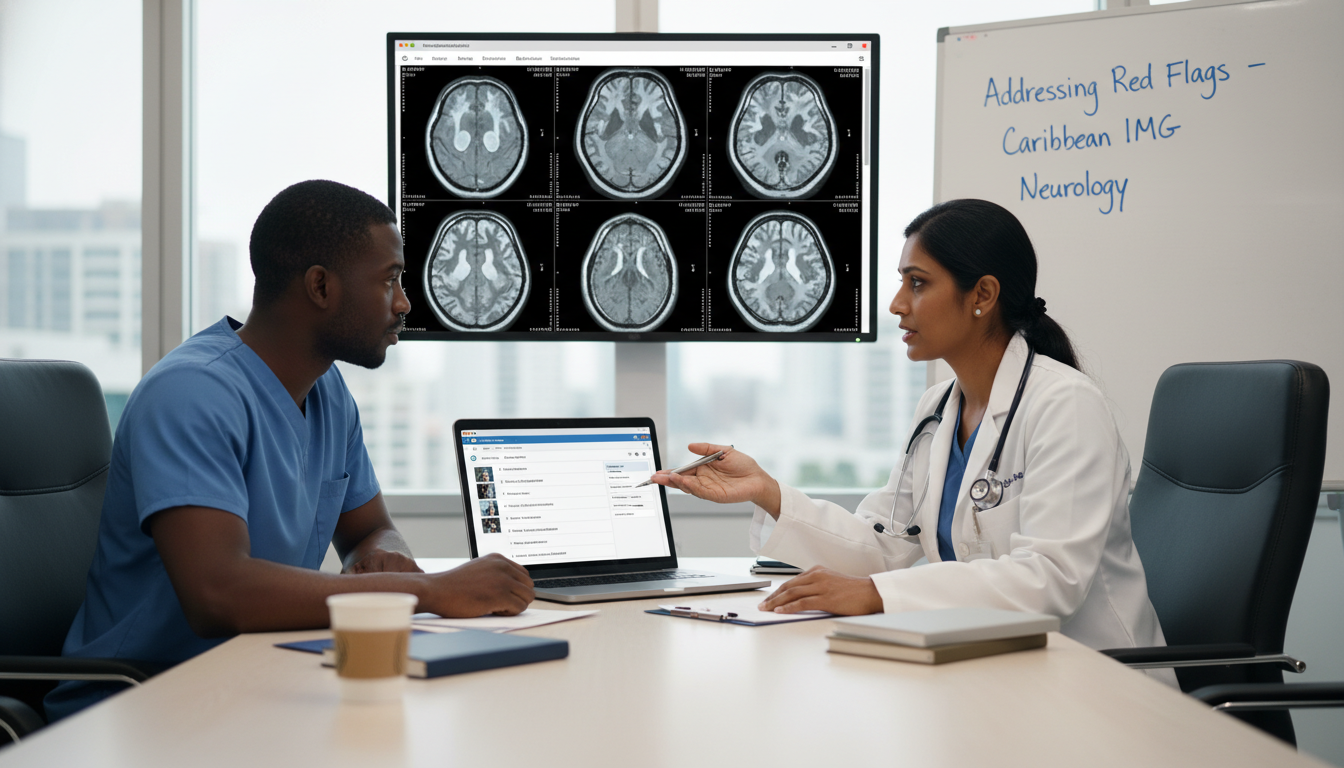
Strategic Mindset: How Programs Actually Think About Red Flags
Before crafting explanations, you need to align with how program directors and selection committees approach risk.
Programs Ask Three Key Questions
When they see a red flag, they implicitly ask:
Is this applicant likely to struggle in our program?
- Fail in-service exams?
- Need repeated remediation?
- Struggle with high-stakes stroke calls overnight?
Will this issue create extra work or risk for the residency?
- Extra monitoring from GME or the DIO?
- Risk of patient safety incidents?
- Potential for professionalism complaints?
Has the applicant demonstrably changed?
- Not just words, but objective evidence: later grades, exams, responsibilities, faculty trust.
Your narrative must hit all three questions, especially as a Caribbean IMG where scrutiny is already higher.
The “Before – Event – After” Framework
For any red flag (exam failure, gap, remediation), structure your explanation:
- Before – Briefly describe context leading up to the problem.
- Event – State the red flag clearly and take responsibility.
- After – Spend most of your time on what you changed, how you improved, and what concrete results followed.
This keeps your tone accountable and future-focused.
Example (Step 1 failure, Caribbean IMG, neurology applicant):
- Before: “I struggled to adapt to the volume and pace of basic sciences during my first year in a Caribbean medical school.”
- Event: “I failed Step 1 on my first attempt, which was a significant wake-up call regarding my study habits and exam approach.”
- After: “I restructured my study method with a faculty mentor, used NBME assessments to monitor progress, and adopted spaced repetition. I passed on my second attempt, then improved further with a Step 2 CK score of 240, and have since performed at the top of my neurology and medicine clerkships, receiving strong clinical evaluations for diagnostic reasoning.”
Notice the emphasis on what changed and the measurable results.
Addressing Specific Red Flags: Practical Scripts and Tactics
This section gives concrete examples and language you can adapt for your personal statement, ERAS comments, and interviews.
1. USMLE or COMLEX Failures and Low Scores
What programs worry about
- Struggling with neurology’s cognitive load
- Difficulty with in-service exams and board certification
- Inability to synthesize complex information in emergencies
Your strategy as a Caribbean IMG
Show objective improvement.
- Strong Step 2 CK or Step 3 score
- Good neurology shelf score (if reported)
- Honors in neurology and internal medicine rotations
Describe a specific, structured change in your approach.
- Study system (Anki/spaced repetition, UWorld, NBME self-assessments)
- Time management and test-taking strategies
- Seeking help (learning specialist, faculty mentor, peer group)
Link improvement to neurology.
- Neurology requires pattern recognition and disciplined study—show that you now excel at these.
Sample explanation for ERAS (Additional Info section)
I failed Step 1 on my first attempt after relying too heavily on passive study methods. Recognizing this, I met with our academic support team and developed a structured plan focused on active learning using question banks, spaced repetition, and weekly self-assessments. I passed Step 1 on my second attempt and continued to apply this approach to Step 2 CK (score: ___) and my clinical rotations. In neurology and internal medicine, I consistently received strong evaluations for my clinical reasoning and preparation, reflecting the effectiveness of these changes.
How to discuss this in a neurology interview
- Be concise.
- Own the failure without blaming others.
- Pivot to your growth and recent successes.
Example response:
During my first attempt at Step 1, I underestimated how much I needed to shift from memorization to active application. Failing that exam was humbling, but it forced me to rebuild my entire approach to learning. I started using question-based learning daily, incorporated spaced repetition, and scheduled routine self-assessments with NBME practice exams. That structure led to a passing Step 1 on my second attempt and a stronger performance on Step 2 CK. On neurology rotations, attendings commented on my preparation and ability to integrate imaging, localization, and pathophysiology—skills I attribute to that new approach.
2. Academic Probation, Course Failures, or Remediation
Why neurology programs care
- Worries about reliability and consistency
- Concern that complex neuro concepts or call responsibilities might overwhelm you
How to explain academic issues
Use the “Before – Event – After” model, but be especially specific about:
- The root causes: transition stress, family crisis, health issue, poor time management, learning disability.
- The corrective measures: counseling, academic coaching, therapy, time management tools, formal remediation.
- The evidence of durability: years of solid performance afterward.
Example: Early pre-clinical failure
In my first semester of basic sciences, I failed my physiology course and was placed on academic probation. Moving from my home country to a Caribbean medical school, I underestimated the adjustment needed for a new educational system and was reluctant to ask for help. After this, I worked with our academic advisor to develop a weekly schedule, joined a small-group review session, and started meeting regularly with faculty during office hours. Since that semester, I successfully completed all courses and clinical rotations without further academic difficulty, often receiving above-average scores. This experience taught me to be proactive about seeking help and to approach challenges early, which I have carried into my neurology rotations and patient care.
Key principles
- Do not minimize or dodge the issue. Programs see it; pretending it’s minor makes you look evasive.
- Avoid oversharing personal details; protect your privacy while being honest about the academic impact.
- Always end by emphasizing what changed and proof that it worked.
3. Explaining Gaps: How to Explain Gaps Without Raising More Concerns
Gaps are highly scrutinized in Caribbean medical school residency applications, particularly for neurology where currency of knowledge is important.
Step 1: Define the gap clearly
- Exact dates (month/year to month/year)
- Your primary status during that time (e.g., “awaiting rotations,” “family caregiver,” “research,” “USMLE preparation”)
Step 2: Show productivity and growth
Programs are more comfortable if you can show that you:
- Stayed clinically engaged (observerships, volunteering, telehealth support)
- Maintained or improved your knowledge (courses, CME, research)
- Developed skills relevant to neurology (stroke research, EEG exposure, data analysis)
Example: Gap between graduation and application (Caribbean IMG targeting neuro match)
After graduating in June 2023, I experienced a delay in my ECFMG certification and subsequently had a gap year before applying for neurology residency. During this time, I remained clinically and academically active by working as a neurology research volunteer at [institution/clinic], where I assisted with data collection for a stroke outcomes project and attended weekly case conferences. I also completed an online course in neuroimaging interpretation and volunteered with a local community health program, providing education on stroke prevention and hypertension. This period reinforced my interest in neurology, kept my clinical knowledge current, and strengthened my research and communication skills.
Notice: clear dates, meaningful activities, and a direct link back to neurology.
Important: Don’t label “studying only” as your entire year
If a gap is exclusively for “exam prep,” you appear less efficient and less engaged. Add:
- Part-time clinical or research exposure
- Teaching/tutoring roles
- Structured volunteering (especially stroke or neuro-related)

Professionalism and Communication Red Flags
Neurology requires high-level communication with patients and families coping with life-altering conditions. Any hint of professionalism issues is a significant concern.
Common Professionalism Red Flags
- Negative comments in MSPE (“required close supervision for punctuality”)
- Issues documented by your school (attendance, ethics violations)
- Poor or generic letters (no specific praise, very short)
How to Address Professionalism Concerns
Acknowledge and own the issue.
- Don’t attack your school, preceptor, or system.
- Avoid defensive language.
Demonstrate insight.
- What did the situation teach you about patient care, teamwork, or responsibility?
Show concrete behavioral changes.
- New organizational systems (calendar, task management tools)
- Feedback from later rotations highlighting punctuality, teamwork, or communication
- Leadership roles that require reliability (chief of a student group, teaching assistant, research coordinator)
Example explanation (if raised in interview)
In my second-year clerkships, I received feedback that my time management and documentation habits were inadequate for the pace of the rotation. Initially, I struggled to prioritize tasks and underestimated how much lead time I needed to complete notes. My clerkship director placed me on a performance improvement plan that required daily check-ins and specific time goals for note completion. Although this was difficult to hear at the time, it led me to adopt a more structured approach: I now maintain a detailed to-do list, use templates appropriately, and ask for clarification about expectations at the start of rotations. On my subsequent neurology and internal medicine rotations, attendings commented positively on my responsiveness and organization, and I consistently completed notes on time.
If your professionalism issue is more serious (e.g., cheating or boundary violation), you need:
- Clear, unambiguous ownership of the mistake
- Evidence of remediation (ethics course, counseling, close supervision with documented improvement)
- Strong later letters that explicitly affirm your professionalism
Building a Strong Neurology Application Around Red Flags
To overcome red flags as a Caribbean IMG, you need to make the rest of your application exceptionally coherent and strong.
1. Leverage Strong Neurology Rotations in the US
Aim for:
- At least one neurology core or elective rotation in the US with hands-on patient care
- If possible, a stroke service or inpatient neurology rotation
- A sub-internship (acting intern) if offered
During these rotations:
- Be early, prepared, and engaged every day—your red flag means your margin for error is smaller.
- Ask for mid-rotation feedback and act on it.
- Take ownership of patients: follow labs, imaging, consult notes, and be proactive.
These rotations are your opportunity to demonstrate that whatever happened in the past is no longer who you are clinically.
2. Secure Strong, Specific Letters of Recommendation (LORs)
For neurology residency, especially with Caribbean IMG status and red flags:
- Prioritize US-based neurology attendings who saw you closely.
- Ask them explicitly if they can write a strong, supportive letter for your neurology residency application; give them an easy way to decline if they cannot.
What you want in these letters:
- “I would be happy to have this individual as a resident in our program.”
- Concrete examples of your clinical reasoning, work ethic, reliability, and communication.
- Any mention of overcoming challenges or showing resilience in a positive light.
Strong letters can counterbalance earlier exam mishaps or academic issues because they are current and clinically focused.
3. Use Your Personal Statement Strategically
Your neurology personal statement is not a place to rehash your entire record, but it is a tool for:
- Briefly acknowledging major red flags if they are not explained elsewhere.
- Framing your journey as one of resilience and growth, not damage control.
- Demonstrating your authentic interest in neurology (cases, mentors, research, patient experiences).
Structure suggestion for Caribbean IMG with red flags:
- Opening story – A meaningful neurology patient encounter that shaped your interest.
- Development of interest – Rotations, mentors, specific aspects you enjoy (stroke, epilepsy, neuroimmunology, neurocritical care).
- Acknowledgment of key red flag – Two to four sentences with responsibility and growth.
- Current strengths – Clinical skills, exam improvements, research, teaching, language skills.
- Program fit and goals – Type of neurology training you seek and your long-term plans.
4. Target Programs Thoughtfully
Not every neurology program weighs Caribbean IMG status and red flags the same way. Increase your neuro match odds by:
- Prioritizing programs known to take Caribbean grads and IMGs (look at current residents’ profiles).
- Considering community-based or university-affiliated programs rather than ultra-competitive academic centers if your red flags are significant.
- Applying broadly enough (often 60+ neurology programs, depending on your profile and budget).
Look at SGU residency match and other Caribbean medical school residency outcomes to identify neurology programs that have historically accepted graduates from Caribbean schools. This doesn’t guarantee an interview, but it does show that they’re open to IMGs and may be more willing to look beyond red flags if the rest of your application is strong.
Interview Day: Talking About Red Flags With Confidence
Being invited to interview means programs already know about your red flag and still see potential value in speaking with you. Your goal is to reinforce that they were right to give you that chance.
Key Principles for Red Flag Questions
- Be concise and matter-of-fact.
- Take responsibility; avoid blaming.
- Focus on what you learned and what changed.
- Connect your growth to the skills needed for neurology.
Common Interview Prompts and Sample Approaches
“I noticed you have multiple attempts on Step 1. Can you tell me about that?”
- Acknowledge the attempts.
- Explain your previous ineffective approach.
- Describe the specific, structured improvements you made.
- Highlight your subsequent success (Step 2 CK, clinical performance).
“You took extra time to finish medical school—what happened during that period?”
- Clarify the circumstances (administrative issues, family obligations, illness, visa delays).
- Emphasize any clinical, research, or community involvement.
- Highlight how you stayed engaged with neurology and medicine.
“Tell me about a time you received difficult feedback.”
Use your red flag situation (exam failure, remediation, or professionalism concern) if appropriate:
- Show humility.
- Emphasize how you sought guidance and changed behavior.
- Conclude with a positive outcome and what you do differently now.
Practicing Your Answers
- Write out short scripts for your key red flags (150–200 words).
- Practice aloud with mentors, friends, or a mirror.
- Aim for a calm, reflective tone—not defensive, not overly emotional.
Final Thoughts: Turning Red Flags Into a Story of Resilience
As a Caribbean IMG applying for neurology residency, your path is inherently more scrutinized. Red flags—exam failures, academic issues, or gaps—can feel like permanent marks against you. They are not. What matters most is:
- Clear insight into what happened
- Demonstrable change in behavior and performance
- Strong, recent evidence of reliability, clinical competence, and commitment to neurology
Programs want residents who can handle neurologic emergencies, communicate difficult news, and persist through intense learning curves. If you can show that you’ve already faced adversity, learned from it, and come out stronger, your red flags can become part of a compelling, credible narrative rather than a barrier.
FAQ: Red Flags for Caribbean IMGs in Neurology Residency Applications
1. Can I match into neurology residency in the US with a failed Step 1 as a Caribbean IMG?
Yes, it’s possible, especially if you:
- Pass Step 1 on a subsequent attempt with clear score improvement
- Score solidly on Step 2 CK (ideally above average for neurology applicants)
- Perform strongly on neurology and internal medicine rotations
- Obtain strong US-based neurology letters.
You must directly address the failure, show what changed, and demonstrate sustained success afterward.
2. How should I prioritize explaining gaps versus red flags in my personal statement?
Focus the personal statement mainly on your journey to neurology and your strengths. Address major red flags or significant gaps briefly if they are not clearly explained elsewhere in ERAS. Use the Additional Information section or program-specific questions to give more detail. Avoid letting the personal statement become a long explanation of problems; keep it primarily about your interest in neurology and your current readiness.
3. Are multiple attempts on Step exams automatically disqualifying for neurology?
Not automatically, but they significantly narrow your options. Some programs will screen them out, while others may still consider you if:
- You show marked improvement on later attempts and Step 2 CK
- You have strong neurology rotations with excellent evaluations
- Your letters and interview demonstrate that you can handle the cognitive demands of neurology.
You’ll likely need to apply broadly and target IMG-friendly programs where Caribbean medical school residency graduates have matched before.
4. How can I reassure programs about older graduation dates or long gaps before application?
Show that you remained engaged with clinical work and neurology specifically. This can include:
- Observerships or hands-on roles (where allowed) in neurology or internal medicine
- Research or quality-improvement projects (especially stroke, epilepsy, or neurocritical care)
- Teaching or tutoring in medical subjects
- CME courses or certifications (e.g., neuroimaging, EEG basics, stroke management).
Provide a clear, honest timeline and emphasize how your experiences during the gap improved your readiness for neurology training.