
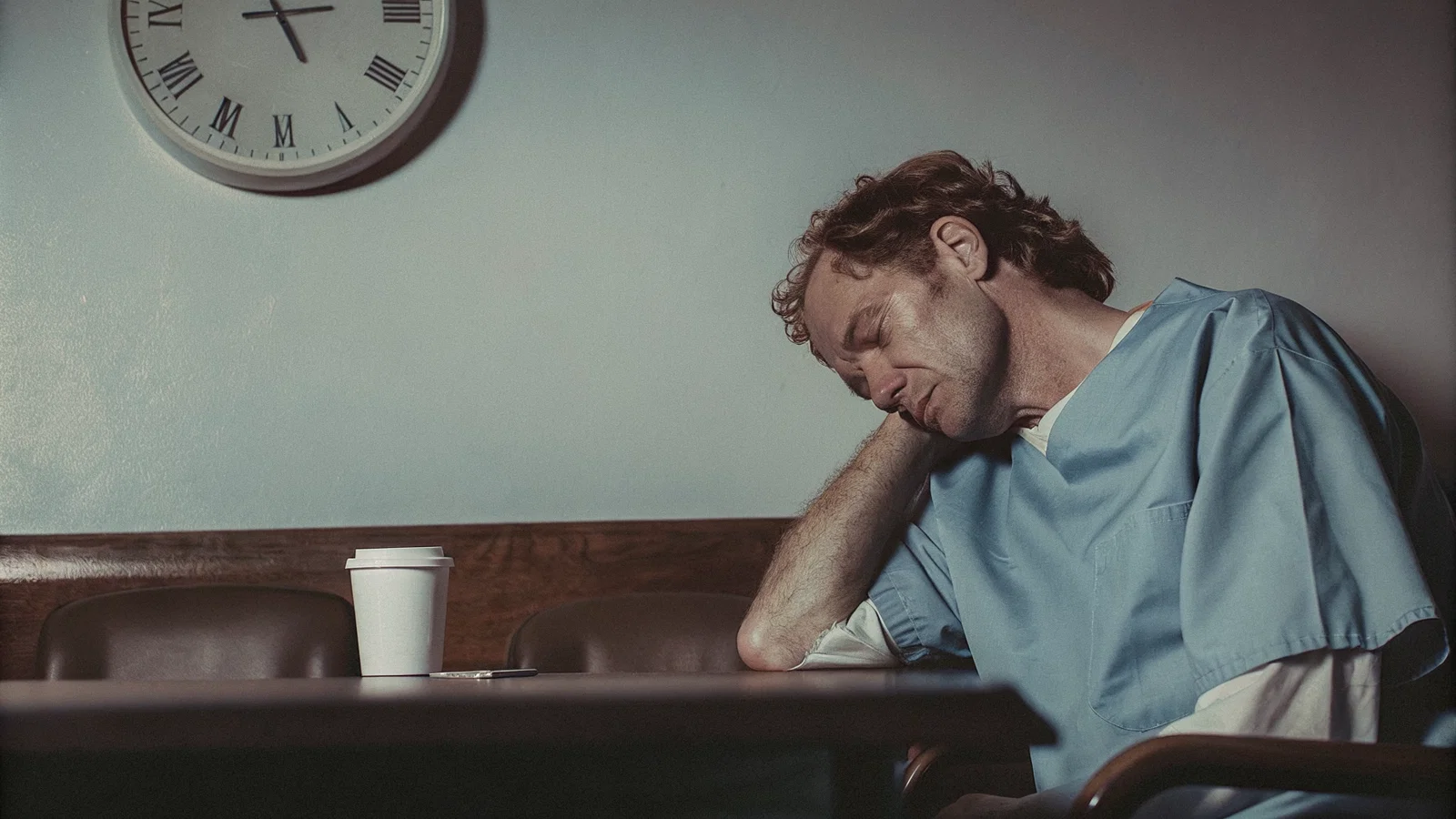
Everyone assumes the same thing: if a meeting is about quality, and the program says you have to be there, it must count toward duty hours. Makes sense. Feels fair. Sounds like the kind of rule a rational system would write.
It isn't that simple. And that fuzzy "must count because it's good for patients" logic is exactly how programs and residents both get duty-hour reporting wrong.
QI Meetings and Duty Hours: The Myth vs. the Rule
Here's the myth I keep hearing on wards, in GME offices, and in late-night group chats: If it improves care, it counts. Or the slightly more polished version: If it's mandatory and educational, of course it's duty hours.
Wrong starting point.
Duty hours aren't a moral scorecard for how valuable your time felt. They're a defined bucket of time the ACGME framework treats as work: patient care, clinical duties, education that the program requires, and other program-mandated activities tied to training. Not every gathering with a noble title. Not every optional committee. Not every "you should really come" Zoom that happens to mention sepsis bundles.
The first-pass rule is blunt and useful: mandatory does not automatically equal countable, but mandatory strongly raises the likelihood that the time belongs in your log. The real test is whether the program scheduled or required the activity as part of your residency obligations or clinical work, not whether the slide deck had a QI logo on it.
I've watched residents sit through 90-minute "quality summits," skip logging them because "it wasn't clinical," then get dinged later when a site visitor asks why mandated educational time never appears in the reports. I've also watched programs treat every committee like free labor and act shocked when residents correctly count it.
The framework captures required work and required learning. It does not capture vibes.
If attendance is optional, voluntary, purely extracurricular, or a wellness-adjacent hangout with no consequence for missing it, you're usually outside duty hours. If missing it can affect evaluations, progress, or clinical operations, and the program put it on your calendar as required, you're almost certainly inside them.
That distinction matters more than whether the meeting "felt like work."
What the ACGME Actually Says About Required Educational Activities
Strip away the folklore and the policy logic is fairly direct. Required educational and programmatic activities generally belong in duty hours when they are mandatory and scheduled by the program. Protected conference time, required didactics, mandated M&M when it's part of the curriculum, those aren't freebies the institution gets outside the clock.
What doesn't automatically qualify: voluntary journal clubs you choose for your CV, optional research interest groups, pure social wellness events, or side projects nobody required you to join. Calling something "educational" doesn't launder it into duty hours if the program never made it obligatory.
QI meetings sit in a gray-looking zone that isn't actually that gray once you ask the right questions.
- Is attendance required by the residency program?
- Is it scheduled as an educational or programmatic activity?
- Is it required for patient care or clinical operations (for example, a unit QI huddle you're expected to join as part of the team's workflow)?
If yes to those, the default interpretation is reportable time unless a clear, written exception says otherwise. "We don't usually count those" is not an exception. Tradition is not a policy.
Protected educational time still counts as duty hours when it's required, it isn't a separate magical category that vanishes from the log. Protected means you shouldn't be pulled to the floor during it; it doesn't mean the clock stops.
Here's the decision path I want residents and coordinators to use instead of hallway folklore:
That flowchart is intentionally unromantic. It doesn't ask whether the meeting was inspiring. It asks whether you were required to be there as part of training or clinical duty.
If your program mandates a monthly QI conference, puts it on the block schedule, and tracks attendance, log it. If a faculty member casually invites you to an optional system-wide improvement council and missing it has zero training consequence, don't contort yourself into counting it, and don't let anyone guilt you into free labor under the banner of "professionalism," either.
Where Programs Get It Wrong: Common Gray Areas and Documentation Pitfalls
The dumbest myth in this whole space: only bedside time counts.
No. Administrative work, mandated meetings, required committee service, and program-required activities can count. Duty hours were never limited to hands-on patient contact. If they were, half of residency would be invisible to the system that claims to regulate workload.
Where things go sideways in practice:
QI huddles before rounds. If you're expected on the unit at 6:40 for a safety/QI board review before official rounds, that isn't "optional culture." It's clinical operations time. Log it.
Morbidity and mortality conference tied to QI. When M&M is required and framed as quality education, it counts. Rebranding it as "QI" doesn't remove it from the clock; it often confirms it belongs there.
Committee work. Sitting on a falls committee or CLABSI working group because your program assigned you there? Countable. Volunteering because you love process maps? Usually not, unless the program later makes continued participation a requirement.
Off-site or virtual meetings. Location is a red herring. A mandatory Zoom QI review from home still counts if the program required your presence. "But I was in sweatpants" is not a regulatory category.
The "everyone knows we don't log that" problem. I've seen entire cohorts omit mandated QI blocks because a chief said it "looks bad" on the hours report. That's not compliance. That's cooking the books with peer pressure. If you can be disciplined, scored lower, or labeled unprofessional for missing it, treat it as duty time and log it consistently.
Documentation pitfalls are usually cultural, not technical. Residents under-report to "help the program." Coordinators quietly exclude meetings to keep averages pretty. Faculty schedule "required" sessions and then act surprised the hours move. None of that survives a serious review, and none of it protects trainees.
If attendance is mandatory and absence has teeth, it's duty time. Full stop. Argue about scheduling load after you stop misclassifying reality.

How Residents and Program Leaders Should Handle QI Meetings in Practice
Stop relying on vibes and what your co-residents did last year. Use a short checklist and apply it the same way every time.
For residents:
- Confirm whether attendance is mandatory, in writing if possible (schedule, handbook, email, MedHub assignment).
- Ask how the program classifies the activity: required education, clinical operations, optional enrichment.
- If it's required or tied to training/clinical duties, log start and end times accurately.
- Don't mirror under-reporting just because the culture rewards looking "efficient" on paper.
- If leadership says a clearly mandatory session "doesn't count," ask for the written policy basis, not a shrug.
For program leaders: Align local policy with ACGME expectations in plain language. Train faculty and coordinators to classify QI meetings consistently. If you require it, resource it inside the hours framework. If you truly want it optional, say so and mean it, no soft coercion, no evaluation side-eye.
Accurate logging isn't hostility toward the program. It's the only way the duty-hour system reflects actual workload. Programs that hide mandated QI time aren't protecting anyone; they're manufacturing fake compliance and then wondering why burnout and violations still show up.
One more practical point: log when it happens. Don't reconstruct a week of 6:45 a.m. huddles from memory on Sunday night. That's how "I think it was about an hour" becomes fiction.
The Bottom Line
Mandatory QI meetings often count as duty hours when the residency program requires them or schedules them as educational or programmatic activity. The question isn't whether the meeting feels important or improves care. Importance is irrelevant to the clock. Requirement and role are what matter.
If attendance is required and tied to your training or clinical responsibilities, log it. If it's truly voluntary, don't. Programs should apply that rule consistently instead of improvising case by case when the hours report starts looking ugly. Residents should report mandated time instead of guessing from tradition, convenience, or whoever talked loudest in the workroom.
Myth: quality work lives outside duty hours because it's virtuous. Data-shaped reality: required work is required work. Put it in the log.


