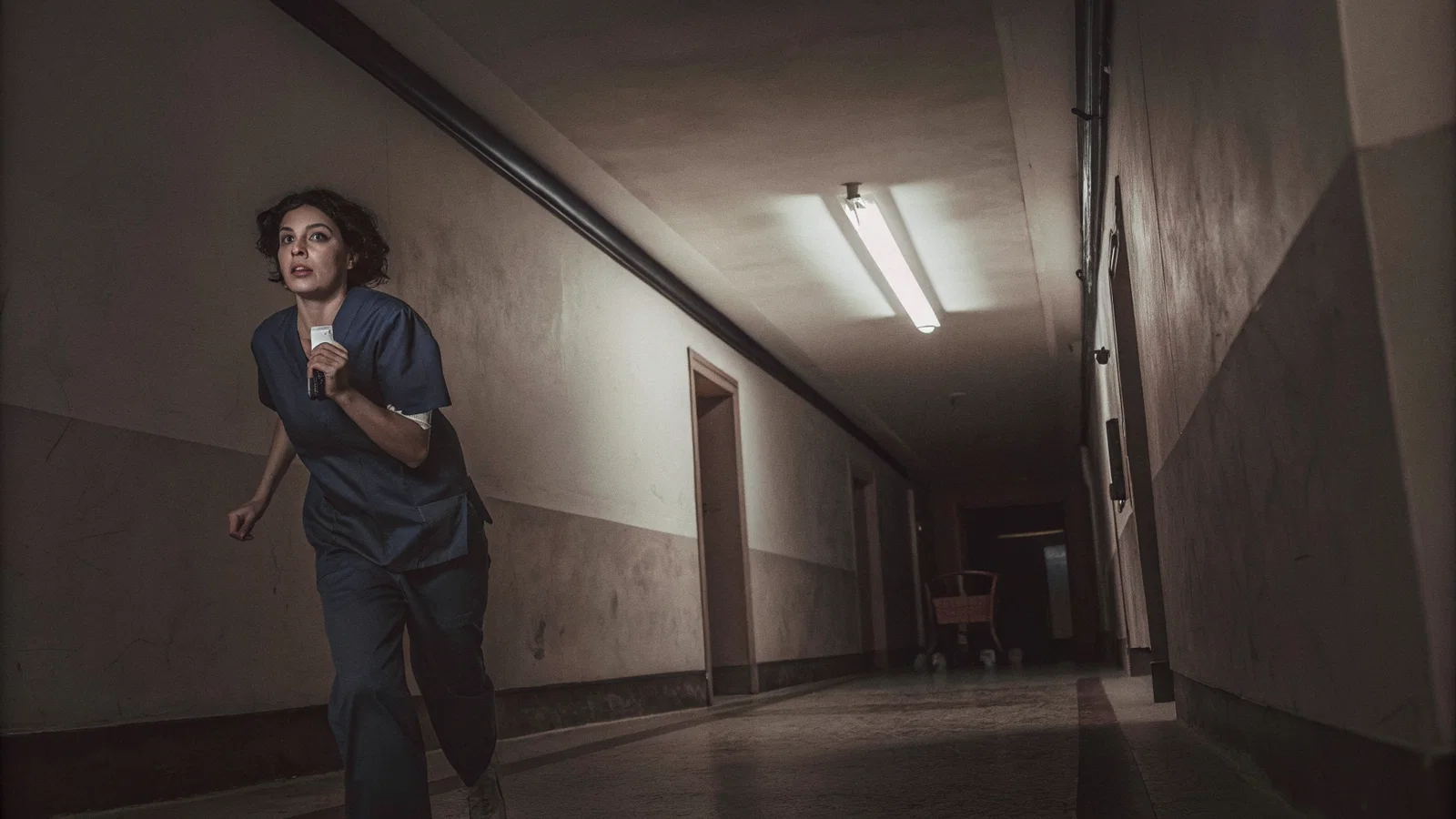
The overnight hypotension page is not the code yet. But it might be in twenty minutes.
At this point you should stop, stabilize your own thinking, and assume the patient could deteriorate while you are walking to the room. That's not paranoia. That's preparation. The residents who get burned overnight aren't the ones who panic, they're the ones who assume a single blood pressure reading tells the whole story.
Your immediate goal is narrow and concrete: determine whether this is true shock, a measurement error, or a reversible issue, before you call the attending or escalate to a code. You have minutes, not hours.
First-minute priorities are simple. Verify the blood pressure. Assess mental status. Confirm airway, breathing, circulation. Look for obvious life threats. If you walk in and the patient is gray and gasping, the triage is over. You're in resuscitation mode. But most pages aren't that. Most pages are a tired nurse, a bad cuff reading, and a patient who slept through their own hypotension. Your job is to figure out which one you're walking into, fast.
Step 1: Recheck the number and confirm the patient is real-time unstable
At this point you should verify the blood pressure manually or by repeat automated cuff before you anchor on one bad reading. I've seen residents trigger rapid responses based on a number that disappeared on repeat. Don't be that resident.
Check the cuff size. Check patient position, arm above the heart gives you falsely low readings. Check for pain, movement, or arrhythmia distorting the cycle. If there's an arterial line, look at the waveform. A dampened A-line or a transducer at the wrong height will lie to you all night.
Use a quick mental filter: if the patient is awake, talking, and perfusing, the page may be urgent but not yet a crash. A BP of 82/40 in a relaxed, conversational patient is a different animal than 82/40 in someone who's mottled and barely arousable. Context dominates the number.

Step 2: Assess perfusion in 60 seconds
At this point you should scan for shock markers. Altered mentation. Cool extremities. Weak or thready pulses. Delayed cap refill. Low urine output. Chest pain. Dyspnea. Syncope. You're looking for end-organ evidence that the pressure number actually means something.
Decide whether this is compensated or decompensated hypotension. A patient with a "normal-looking" pressure can still be crashing if mentation is worsening or perfusion is failing. The number is a snapshot. Perfusion is the movie.
Prioritize bedside clues over perfection. Mental status, work of breathing, skin temperature and color, pulse quality, and urine output trends often matter more than a single vital sign. A patient whose MAP is 70 but who is confused, cold, and making 10 cc of urine an hour is sick. Trust the perfusion exam.
Step 3: Run the first-pass differential in parallel
At this point you should sort causes into fast buckets. Volume loss. Pump failure. Vasodilation or sepsis. Obstruction. Medication effect. That's it. Five buckets. You can hold five things in your head at 3 AM, not fifteen.
Look immediately for bleeding, dehydration, recent diuresis, GI losses, fever, new infection, arrhythmia, PE, tamponade, pneumothorax, adrenal crisis, or anaphylaxis. You don't need to confirm every possibility. You need to rank them.
Treat the page like a branching tree. If there's obvious hemorrhage or airway compromise, act first, fluids running, blood typed, compression if needed. If there's no obvious immediate life threat, continue focused bedside triage while help is on the way. Don't stand at the foot of the bed building a differential while the patient bleeds out internally.
Step 4: Pull the chart like a detective, not a historian
At this point you should review the last 24 hours for trends. Blood pressure, heart rate, oxygenation, fever, fluid balance, urine output. Trends tell you direction. A BP that's drifted from 130s to 90s over six hours is a very different story than one that dropped from 120 to 80 in ten minutes.
Check recent meds that commonly precipitate overnight hypotension. Antihypertensives. Opioids. Sedatives. Diuretics. Beta-blockers. Nitrates. Antihypertensive drips. Insulin, because hypoglycemia mimics shock and kills people. If someone got 40 of IV metoprolol at 10 PM and is now bradycardic and hypotensive at 2 AM, the chart just handed you the answer.
Look for lab and procedure context. Hemoglobin drop. Lactate rise. Creatinine bump. Fever curve. Post-op status. Recent dialysis. Documented blood loss. New antibiotics that suggest a new infection. The chart is not a narrative, it's evidence. Read it like one.
Step 5: Decide what to do before you leave the room
At this point you should choose the immediate intervention that matches the likely cause. Fluids. Blood. Pressors. Medication hold. Oxygen. Antibiotics. Glucose. Escalation. Pick one. Then reassess.
Hypotension is dynamic. Your first intervention is a test as much as a treatment. A liter of fluid that bumps the MAP from 55 to 70 tells you volume was the problem. A liter that does nothing tells you to look harder at the pump or the vessels. Don't just order fluids and walk away, that's the most common overnight mistake I see.
If the patient is unstable, call for help early. Involve ICU or rapid response per local policy. When you call, communicate the working diagnosis plus what you've already done. "I have a post-op patient with MAP 55, HR 120, lactate 4, I've given a liter of fluids with no response, I'm concerned about septic shock versus bleed, I need ICU to evaluate" is infinitely better than "Patient is hypotensive, can you come?"
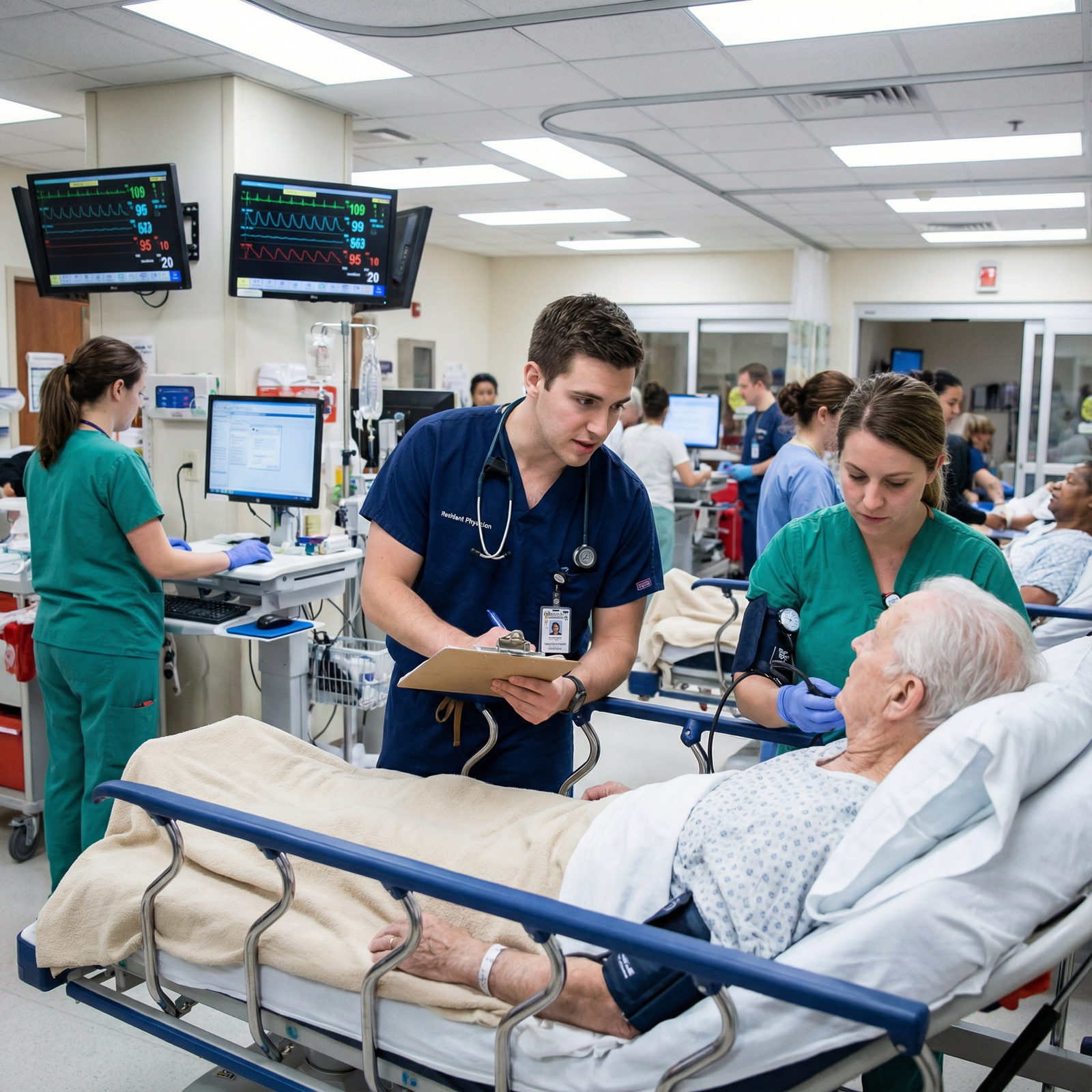
Step 6: Document the sequence like a handoff tool
At this point you should write a brief timeline. Page time. Bedside assessment. Repeat vitals. Likely cause. Interventions. Response. Who was notified. That's the note. It doesn't need to be elegant, it needs to be accurate and actionable.
Include the objective data that justify your reasoning. Mental status. Repeat blood pressure. Pulse. Oxygenation. Urine output. Labs. Exam findings. A note that says "patient hypotensive, gave fluids, will monitor" is useless to the morning team. A note that says "MAP 55 at 0214, alert but cool extremities, lactate 3.2, given 1L LR, MAP 65 at 0240, holding metoprolol, repeat lactate pending" is a handoff.
Leave a handoff-ready summary for the morning team: what changed, what remains uncertain, and what to watch in the next few hours. They're walking into your night. Make it easy for them to pick up where you left off.
Step 7: Use the next 15 minutes to prevent the second page
At this point you should set a short reassessment interval. Define exactly what would trigger escalation: repeat hypotension, worsening mentation, rising lactate, increasing oxygen needs. Write it down. Tell the nurse. Make the threshold explicit, not "call me if he looks worse" but "call me if MAP drops below 65 or urine output stays under 30 cc/hr."
Confirm orders, follow-up labs, and monitoring are actually in place. Many overnight hypotension events worsen because the plan was written but not operationalized. The order is in the chart but the fluid isn't hanging. The lab is drawn but not resulted. The ICU consult was "requested" but nobody actually called.
Before moving on, make sure the bedside team knows the plan, the nurse knows the red flags, and you know who to call if the patient changes. Communication closes the loop. Charts don't save patients, people do.
Key Takeaways
- A sudden hypotension page overnight is a bedside triage problem first. Verify the number, assess perfusion, and decide whether the patient is actually crashing, don't just react to a single vital sign.
- Think in fast buckets. Bleeding, sepsis, cardiogenic, obstructive, medication-related, or measurement error. Act on the most dangerous plausible cause before you finish the full workup.
- Your safest overnight workflow is simple. Confirm, assess, intervene, reassess, document, and set a clear threshold for escalation. That's the loop. Run it every time.
Your Next Steps
- Before your next call night, review your institution's rapid response and ICU escalation criteria. Know the numbers, what MAP triggers a call, what lactate triggers concern, who you contact first.
- Memorize the five buckets. Volume loss, pump failure, vasodilation/sepsis, obstruction, medication. If you can hold five buckets in your head, you can triage any hypotension page.
- Practice the 60-second perfusion exam. Mental status, skin, pulses, cap refill, work of breathing. Do it on stable patients during the day so it's automatic at 3 AM.
- Build a handoff template. Page time, assessment, vitals, likely cause, interventions, response, notified parties. Use it every overnight event. The morning team will thank you.
- Set explicit reassessment thresholds every time. Never leave a hypotension page with "call me if they get worse." Always leave with a number, a timeframe, and a named escalation pathway.