
Residents are not the heroic lone wolves of code blues. When they are, patients do worse.
The fantasy is familiar: overhead call, doors swing open, and a single exhausted resident storms in, barking orders, throwing in lines, pushing drugs, interpreting rhythms, and saving the day while everyone else just “helps.” That’s not how high-performing code teams work. It is, however, how preventable mistakes happen at 3 a.m.
Let me be blunt. The culture that glorifies the resident who “runs every code” and “does everything” is lazy leadership masquerading as toughness. It ignores two things we actually have data on:
- Resuscitation is a team sport.
- Overloaded leaders make more errors.
You want survival from in-hospital cardiac arrest? You do not get it by dumping every task on the most sleep-deprived, least supported person in the room.
Let’s dismantle a few myths.
Myth #1: “The Resident Should Run the Whole Code”
Reality: No one should “run the whole code.” Not the resident, not the attending, not the ICU fellow, not the star nurse. A code is a set of simultaneous tasks that must be coordinated, not a monologue performed by the loudest person.
What the best resuscitation data and simulation studies actually support is role clarity and cognitive offloading. The American Heart Association and multiple hospital quality studies emphasize:
- A clear team leader
- Defined roles (compressor, airway, meds, recorder, runner)
- Minimal task switching for the leader
What do most hospitals do at 2 a.m.? Drop a PGY-1 or PGY-2 into the center of chaos and let them sink or swim.
I’ve watched this play out over and over:
- Resident tries to lead, but also:
- Pushes epi
- Swaps out compressions
- Places an IO
- Holds the ultrasound probe
- Documents the whole thing afterward
Meanwhile, the nurse who’s done 2000 more codes than that intern is just waiting for a half-clear order.
The problem isn’t residents. The problem is a culture that treats codes like a learning gauntlet instead of a clinical emergency with real mortality attached.
Here’s what actually improves outcomes:
| Role | Primary Focus |
|---|---|
| Team Leader | Decisions, timing, big picture |
| Compressor | High quality CPR |
| Airway | Ventilation, airway device |
| Meds/Defibrill. | Drugs, shocks, access |
| Recorder | Time, events, doses |
Notice what’s missing: “Team Leader + everything else.”
A competent resident can absolutely lead a code. A competent system does not force them to also do three other jobs at the same time.
Myth #2: “If You’re the Resident, You’re Automatically the Code Leader”
Reality: You might be the leader. Or you might not be the most qualified person in the room. Rank on the org chart is not the same thing as skill in resuscitation.
At 7 p.m. in a major academic center, sure, the MICU fellow or ED attending runs things. At 3 a.m. on a community medicine floor, the most experienced person in resuscitation might be:
- The rapid response nurse
- The ICU charge nurse
- The respiratory therapist who’s bagged through more codes than you’ve rotated weeks
- The nocturnist who actually likes critical care
The smart move? Explicitly assign leadership based on experience and situational awareness, not ego.
You know what I’ve heard in debriefs after bad codes?
- “We weren’t clear who was actually leading.”
- “I assumed the resident was in charge.”
- “I thought the ICU nurse was calling the shots.”
- “No one called out times or cycles.”
Leadership in a code is not “who talks the loudest.” It’s who:
- Maintains global awareness
- Doesn’t touch the patient unless absolutely necessary
- Delegates tasks clearly and succinctly
- Verbalizes the plan and next steps
If you’re the resident, your job is not to cosplay a TV-hero leader because you feel you’re supposed to. Your job is to make sure there is a leader, roles are assigned, and the patient gets competent care.
Sometimes that’s you. Sometimes it’s you explicitly saying: “ICU nurse, you’ve got more code experience—can you run this while I manage meds and communication with the attending?”
That’s not weakness. That’s safe medicine.
Myth #3: “If You’re Not Doing Procedures in the Code, You’re Wasting Learning”
Reality: Codes are terrible times to learn procedures from scratch, and the evidence on procedure success rates under cognitive overload is ugly.
Residents are pushed into this false dichotomy:
- Be “hands on” and intubate during a chaotic floor code you have no business intubating.
- Or be seen as “useless” because you stood back and ran the algorithm.
I’ve watched junior residents fumble airways for 3–4 minutes because they felt they had to “get the tube” while the RT with 15 years’ airway experience stood two feet away. That’s not learning. That’s ego-endorsed hypoxia.
High-performance teams use a different model:
- The most experienced proceduralist does the critical procedure.
- The resident learns:
- How to direct compressions
- How to time meds
- How to think cycles, not chaos
- How to decide when to shock, when to call it, when to pivot from ACLS to diagnosis
Those skills are portable. They make you safer when you’re finally the most experienced person in the room.
And you still get plenty of procedures. Just not all at once while pretending to keep big-picture control.
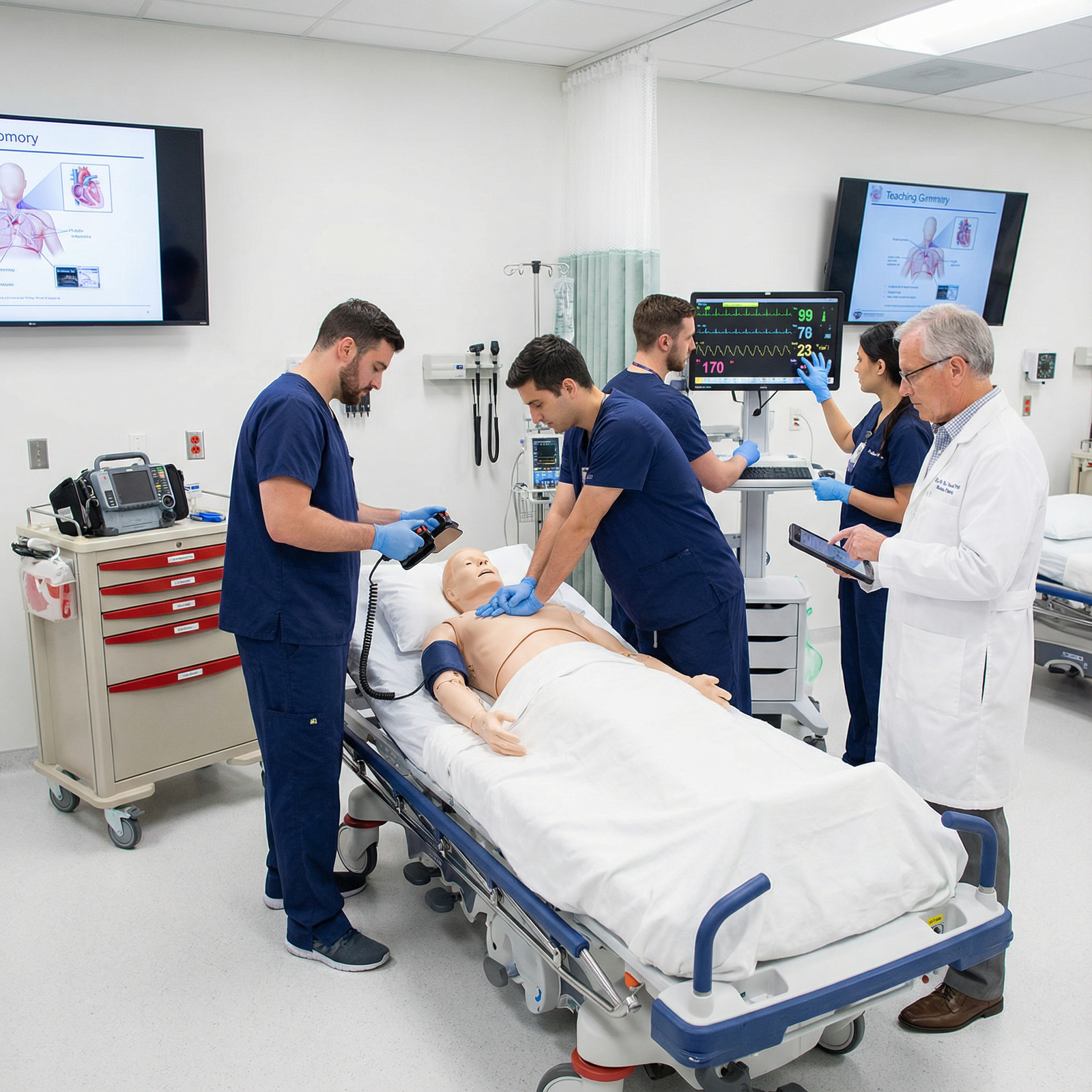
Myth #4: “If You Ask for Help or Call the Rapid Response Team Early, You’ve Failed”
Reality: Early escalation reduces cardiac arrest rates and ICU transfers. The data are very clear on this; rapid response systems weren’t invented as a feel-good exercise.
In many hospitals, residents internalize a toxic message:
- “You should be able to manage sick patients by yourself.”
- “Don’t be that resident who calls RRT all the time.”
- “They’re just hypotensive, just give some fluids and recheck.”
Then you get the 4 a.m. rhythm:
- RRT was never called.
- Patient decompensates to a code.
- Everyone asks why no one escalated earlier.
Published work on rapid response teams shows:
- Increased use of RRTs is associated with:
- Lower rates of in-hospital cardiac arrest on the floor
- Better recognition of deterioration
- Many pre-code patients had warning signs hours before the event: tachypnea, hypotension, AMS
But culturally? Residents are shamed for calling too often. So they wait. Or they try to “fix” the patient solo. And then the same system that pressured them to stay quiet turns around and asks why they did not escalate.
As a resident, your job is not to be the last line of defense. You are one layer in a safety net. A thin one. You’re sleep-deprived, often undertrained in real-world resuscitation, and juggling multiple patients.
Use the system:
- Call RRT early.
- Involve ICU early.
- Page your attending without apologizing.
You are not supposed to be the sole barrier between “mildly sick” and “full code blue.”
What High-Functioning Code Systems Actually Look Like
Let’s talk about what good looks like—not fantasy, but what I’ve seen in hospitals that take this seriously and what the literature backs up.
- Structured team roles posted on code carts and drilled during simulation.
- Pre-briefs during sign-out:
- “These two patients are soft. Low threshold to call RRT.”
- Clear leadership default rules, but with flexibility:
- Nights: resident leads unless ICU attending present.
- If highly experienced code nurse present, leadership can be explicitly delegated.
- Debriefing after codes, even for five minutes:
- What went well.
- What confused people.
- What to fix next time.
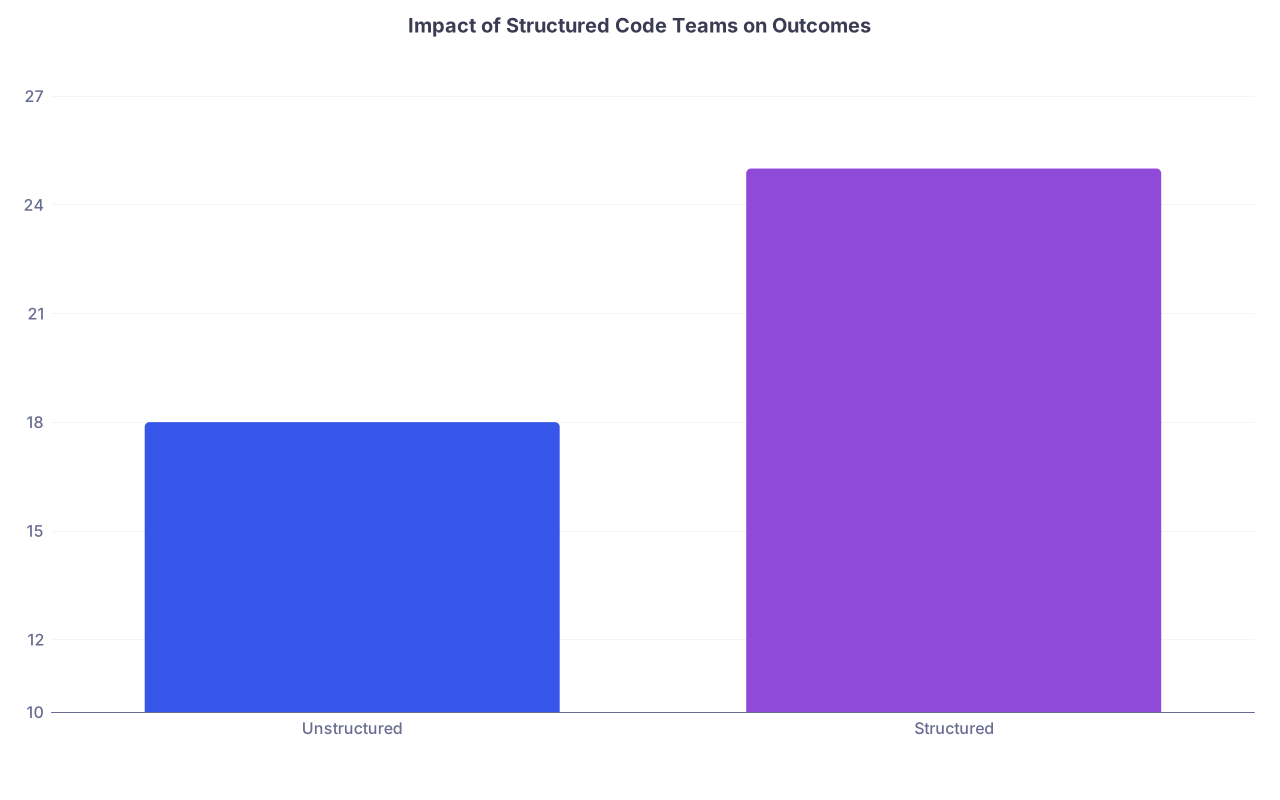
| Category | Value |
|---|---|
| Unstructured | 18 |
| Structured | 25 |
(Example: survival to discharge from in-hospital cardiac arrest in published series—numbers vary by study, but the pattern is consistent: structured processes beat “everyone just show up and try hard.”)
In these environments, residents are important, but they’re not martyrs. The code brings together:
- Nursing expertise
- Respiratory expertise
- Pharmacy (yes, having a pharmacist at codes is associated with fewer med errors)
- RT who can manage airway and ventilation safely
- Someone not involved at the bedside whose only job is timing and documentation
The resident is part of that system. Not the whole system.
How Residents Can Survive Code Blues Without Doing It All
None of this helps if you’re still the person standing in the doorway when “Code Blue, room 437” drops on the overhead. So let’s get practical.
Here’s how you protect both your patient and your own brain.
1. Walk in and assign roles out loud.
Even if people roll their eyes.
“Okay, I’ll run the code. You on compressions. RT on airway. Nurse at the med cart. Recorder, please track times and call out every 2 minutes.”
That alone de-clutters half the chaos.
2. Stop touching the patient unless absolutely necessary.
Your job is cycles and decisions. If you’re leading:
- Don’t do compressions.
- Don’t push drugs.
- Don’t hold the ultrasound yourself if someone else can.
You’re the conductor. If you’re playing the violin and the trumpet, the orchestra falls apart.
3. Use the algorithm out loud.
Not because you don’t know it. Because it externalizes your thinking.
“Pulseless VT. We shock, resume compressions, give epi every 3–5 minutes, amio after next shock if still VT. Next pulse and rhythm check will be in about 2 minutes.”
Verbalizing:
- Keeps you on track.
- Helps others anticipate.
- Reduces your cognitive load.
4. Offload thinking to the team.
Yes, you’re allowed to say:
- “Recorder, call out time since last epi.”
- “Nurse, please watch the clock for 2-minute cycles.”
- “RT, tell me if you’re having trouble bagging or oxygenating.”
You’re not the only brain in the room—stop acting like it.
5. Be aggressive about calling for backup.
If you’re on the floor and the patient is truly crashing:
- Call ICU or the hospitalist.
- Call your attending.
- Ask specifically: “Can you come to the bedside now?”
Stop pre-filtering for the system. That’s not your job.

| Step | Description |
|---|---|
| Step 1 | Noticing deterioration |
| Step 2 | Call Code Blue |
| Step 3 | Call Rapid Response |
| Step 4 | Call ICU or Attending |
| Step 5 | Close monitoring and plan |
| Step 6 | Assign roles and lead or delegate |
| Step 7 | Immediate threat? |
| Step 8 | Stabilizing? |
The Psychological Trap: Hero Culture vs. Safe Medicine
Let’s call out the emotional piece, because it quietly drives a lot of bad decisions in codes.
You’ve probably heard variations of:
- “She runs all the codes; she’s so solid.”
- “He never calls RRT; he just handles it.”
- “Don’t bother the attending unless they’re dying.”
That’s not mentorship. That’s hazing dressed up as toughness.
The “hero resident” myth:
- Rewards unsafe autonomy.
- Punishes appropriate escalation.
- Normalizes sleep-deprived, unsupported high-stakes decision making.
The reality: hero culture is strongly correlated with burnout and moral injury. You remember the codes that went badly. You remember the family you had to face after. And you remember being alone in that room, trying to “do it all” because that’s what you thought competence looked like.
Competence looks very different:
- Anticipating deterioration early.
- Getting more experienced eyes on the patient.
- Running a clean, structured code where everybody knew their job.
- Knowing when to say, “I need help.”
That’s the mindset that actually keeps people alive.
FAQ: Code Blues and Resident Roles
1. As an intern, am I really expected to lead codes?
Sometimes, yes—but you’re not expected to do everything. Your priorities: assign roles, follow basic ACLS, call for backup early, and communicate clearly. If a more experienced person arrives and is better suited to lead, it’s fine to hand off leadership explicitly.
2. Is it wrong to let the ICU nurse or rapid response nurse run the code?
No. In many hospitals, those nurses have more real-world code experience than junior residents. The safest move may be: “You run, I’ll handle meds and communication with the attending.” That’s not abdication; it’s intelligent delegation.
3. When should I call a rapid response instead of waiting for a code?
Any time a patient is clearly trending the wrong way and you’re uncertain you can stabilize them on your own—worsening vitals, rising oxygen needs, new confusion, unexplained hypotension or tachypnea. RRTs exist precisely to prevent codes, not to punish you for “overreacting.”
4. How do I practice for codes without real patients?
Simulation matters. Ask your program for mock codes on the floor, not just in a sim center. Practice role assignment, speaking out loud, and using the algorithm under pressure. Even running mental drills on rounds (“If this patient coded right now, what’s my first sentence walking in?”) helps.
5. What if my hospital culture shames residents for calling for help?
Document objectively, and prioritize the patient. Quietly find allies—ICU nurses, RTs, a few attendings who “get it.” Use institutional policies (like early warning scores or RRT triggers) as cover: “Their MEWS score was high; per protocol, I called RRT.” You’re not there to protect fragile egos. You’re there so the patient lives.
Key points:
- Code blues are designed to be team events; any system that expects the resident to “do it all” is unsafe and out of date.
- Your real job in a code is coordination and escalation, not solo heroics and multitasking.