
What do you do when the floor nurse calls you at 2:14 AM to report that a patient in Bed 12 is burning up with a temperature of 103.5°F, completely uncooperative, and locked up stiff as a board?
You stumble out of the call room, rub the sleep from your eyes, and head down the hallway. You've got two major killers competing for the top spot on your differential: Neuroleptic Malignant Syndrome (NMS) and Severe Sepsis. Pick the wrong one, delay the right intervention, or talk yourself into a neat single diagnosis before you've stabilized the room, and your night goes south in a hurry.
Here is how you handle this exact call without losing your cool or missing a life-threatening cause.
This article is for educational purposes only. It is not financial advice, not legal advice, and not tax advice. Figures vary by individual circumstances, so consult a qualified professional before acting.
You're on call at 2 AM and the patient is rigid, NMS vs sepsis: first 5 minutes
Stop thinking about rare syndromes for thirty seconds. When you walk into that room, run the basics before you let your brain wander into board-exam differentials.
First: Airway, Breathing, Circulation. Is this patient actually protecting their airway? Severe rigidity combined with hyperthermia and encephalopathy is an immediate aspiration risk. Next, get eyes on the monitor. Check the blood pressure, heart rate, oxygen saturation, and get an immediate fingerstick blood glucose. Hypoglycemia mimics almost everything, and missing a glucose of 28 mg/dL while debating dantrolene versus vancomycin is an embarrassing, preventable disaster.
Once you know the patient isn't in immediate arrest, perform a five-second rapid risk stratification. You need to look for the "tells" of each condition:
- Sepsis Tells: Markedly low blood pressure (SBP < 90 mmHg), tachypnea (RR > 22), cool or mottled extremities, a dirty surgical wound, a cloudy foley bag, or a history of worsening cough and purulent sputum. Sepsis distorts tone, but true lead-pipe muscle rigidity is rare.
- NMS Tells: True "lead-pipe" or "cogwheel" rigidity across major joint groups, hyperthermia (often soaring past 102°F/39°C), wide swings in autonomic status (heart rate jumping from 70 to 140 bpm, blood pressure bouncing between 90/60 and 180/110 mmHg within minutes), drenching diaphoresis, and a patient who moved from mild agitation to profound mutism or stupor over the last 24-72 hours.
Do not sit at the nurse's station arguing with yourself about which one it is. If you see signs of septic shock or respiratory failure, you start aggressive resuscitation while you gather the rest of your story.
NMS checklist (what you must ask and examine right now)
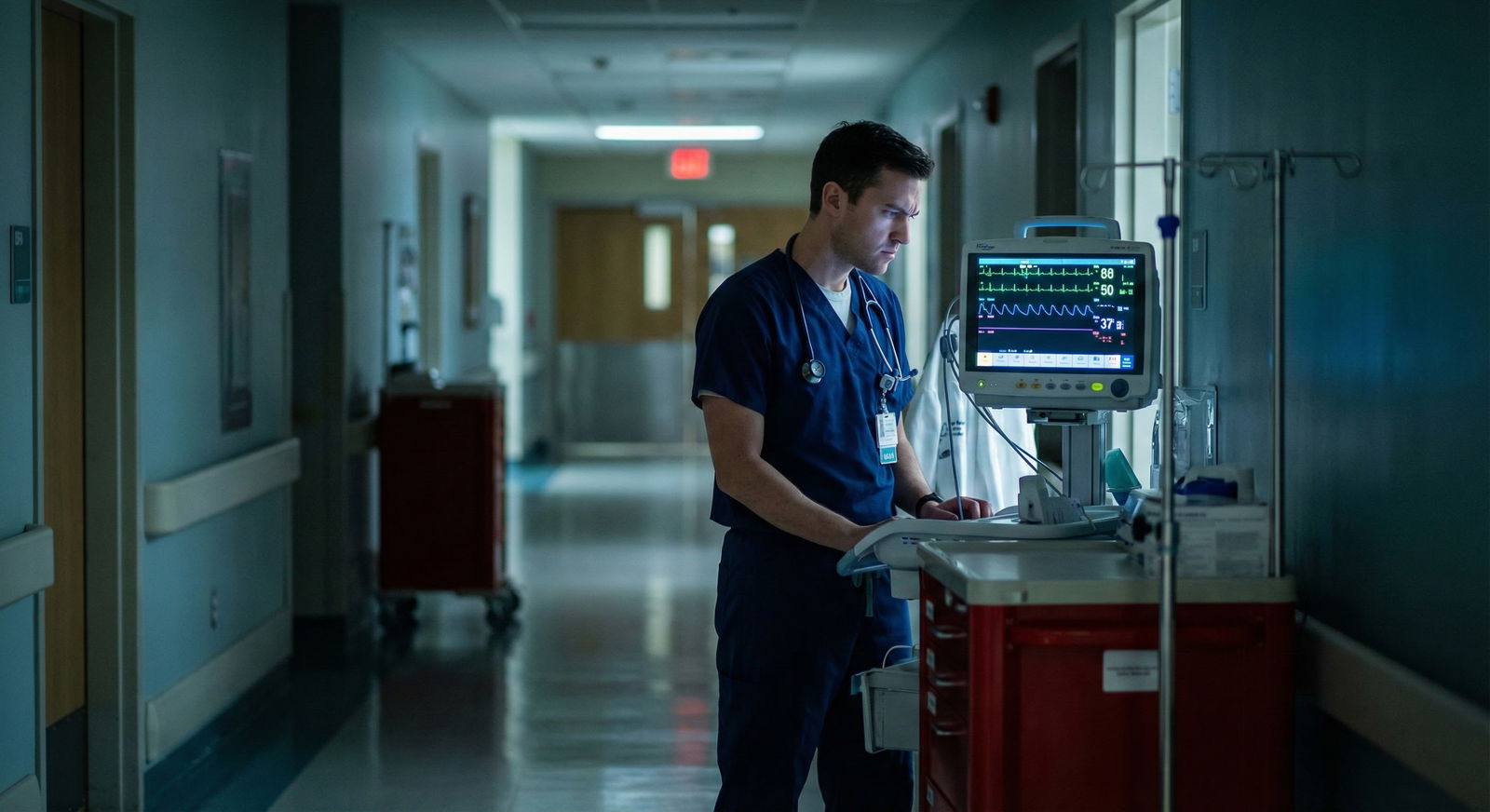
If your physical exam reveals a patient whose arms and legs feel like bending heavy lead pipes, pull up the Medication Administration Record (MAR) immediately. NMS is almost always an iatrogenic disaster driven by central dopamine receptor blockade or rapid withdrawal of dopaminergic stimulation.
1. Check the Triggers
- High-potency first-generation antipsychotics: Haloperidol, fluphenazine. Did someone give IV or IM Haldol for agitation on the previous shift?
- Second-generation antipsychotics: Olanzapine, risperidone, quetiapine, aripiprazole. Newer drugs carry lower risk, but they still cause NMS.
- Antiemetics and Prokinetics: Metoclopramide (Reglan) or prochlorperazine (Compazine). Residents miss these constantly because they don't think of antiemetics as dopamine blockers.
- Dose Escalations & Formulations: Look for recent dose increases, switches between agents, or depot long-acting injectables given in the past month.
- Dopamine Agonist Withdrawal: Did someone suddenly hold a Parkinson's patient's carbidopa/levodopa or dopaminergic meds (like pramipexole) because they were NPO for a procedure? Abrupt withdrawal of dopamine agonists triggers an NMS-like state that is just as lethal.
2. Verify the Clinical Pattern
True NMS is a quad of symptoms: hyperthermia, muscular rigidity, altered mental status, and autonomic instability.
Check muscle tone yourself. Don't take a report secondhand. Move the elbows, wrists, and knees. "Lead-pipe" means uniform, smooth resistance in all directions throughout the entire range of motion. "Cogwheel" means a jerky resistance, like pulling a ratchet.
Differentiate this from other hypermetabolic tox syndromes:
- Serotonin Syndrome: Look for hyperreflexia and spontaneous clonus (especially ocular and ankle clonus), rather than lead-pipe rigidity. Bowel sounds are usually hyperactive (diarrhea), not silent.
- Catatonia: May show "waxy flexibility" (where the patient holds a posture you place them in), but typically lacks the extreme muscle breakdown and severe hyperthermia seen in full-blown NMS.
Sepsis checklist (don't miss the treat-now-before-tests diagnosis)
The single biggest mistake you can make at 2 AM is getting so fascinated by an unusual presentation of NMS that you overlook an infected central line or an acute abdomen. Sepsis is far more common. Elderly or critically ill patients with severe sepsis can present with paratonic rigidity (gegenhalten), where they involuntarily resist your movements, which a weary resident can easily confuse with true NMS lead-pipe tone.
1. Identify the Infection Focus
Systematically search the body:
- Pulmonary: Listen to lung fields. Is there focal crackles or consolidation? Check recent room-air oxygen requirements.
- Urinary: Inspect the urine bag. Is it turbid, foul, or dark? Is there suprapubic or costovertebral angle tenderness?
- Abdominal: Palpate the abdomen. Is it rigid from muscular guarding secondary to peritonitis, rather than central extrapyramidal hypertonia?
- Skin/Soft Tissue/Lines: Pull back the sheets. Inspect sacral ulcers, surgical incisions, and all indwelling vascular access sites for erythema, induration, or purulent drainage.
2. Immediate Diagnostic Actions
If you suspect sepsis, execute these steps immediately. Do not wait for round-the-clock labs to come back before setting the process in motion:
- Cultures First: Draw two sets of blood cultures (and urine/sputum cultures if indicated). However, if getting cultures is delayed past 45 minutes, do not withhold antibiotics.
- Stat Order Panel: Order a stat serum lactate, Complete Blood Count (CBC) with differential, Comprehensive Metabolic Panel (CMP), coagulation panel, and blood gas.
- Empiric Coverage & Fluid Resuscitation: If the patient is hypotensive or lactate is elevated (≥ 2.0 mmol/L), initiate broad-spectrum IV antibiotics targeted to the suspected source (or broad IV coverage like Vancomycin + Cefepime if unknown) and deliver a fluid bolus if not contraindicated by heart failure.
The overlap problem: what to do when both could be true (or you can't tell yet)
Here is the nightmare scenario: A patient with schizoaffective disorder on high-dose Haldol develops a urinary tract infection, becomes septic, gets dehydrated, and that acute systemic stress triggers NMS. Now you have both.
Or worse: you simply cannot tell them apart at 2 AM because the exam is ambiguous and the patient is too encephalopathic to give a history.
What do you do? You run both tracks simultaneously.
Never delay sepsis treatment to "see if the muscle tone improves." Sepsis kills faster via cardiovascular collapse. At the exact same time, stop all potential neuroleptic or antiemetic triggers immediately. Holding a dose of Haldol or Reglan for six hours while you sort out the diagnostic picture will not harm the patient. Administering broad-spectrum antibiotics to an NMS patient while you wait for a stat Creatine Kinase (CK) to return will not ruin their care.
Targeted Workup and Order Set
When you step out to place orders, fire off this exact bundle:
- Serum Creatine Kinase (CK): This is your most critical laboratory discriminator for NMS. A CK in the thousands (or tens of thousands) confirms massive muscle breakdown from extreme rigidity. Sepsis can elevate CK, but massive hyperCKemia overwhelmingly points toward NMS or rhabdomyolysis.
- Comprehensive Metabolic Panel: Pay attention to Renal Function (BUN/Cr) and Potassium. Rhabdomyolysis causes rapid acute kidney injury and hyperkalemia that will kill a patient via cardiac dysrhythmias faster than the fever will.
- Lactate & CBC with Differential: Look for marked bandemia (left shift) in sepsis, though NMS often presents with impressive leukocytosis (WBC 10,000 to 30,000) even without active infection.
- Urine Myoglobin & Urinalysis: A dipstick positive for "blood" but negative for microscopic Red Blood Cells on micro-analysis equals myoglobinuria.
- 12-Lead ECG: Check for prolonged QTc (common with antipsychotics) and tall, peaked T-waves (hyperkalemia from acute rhabdomyolysis).
- Active Cooling Protocols: If core temp is >103°F, start physical cooling (cooling blankets, ice packs to axillae/groin) regardless of the diagnosis. Hyperthermia damages tissue natively once it breaches critical thresholds.
Night-before-terrible outcomes: communication, consults, and documentation (so you're covered at 2 AM)
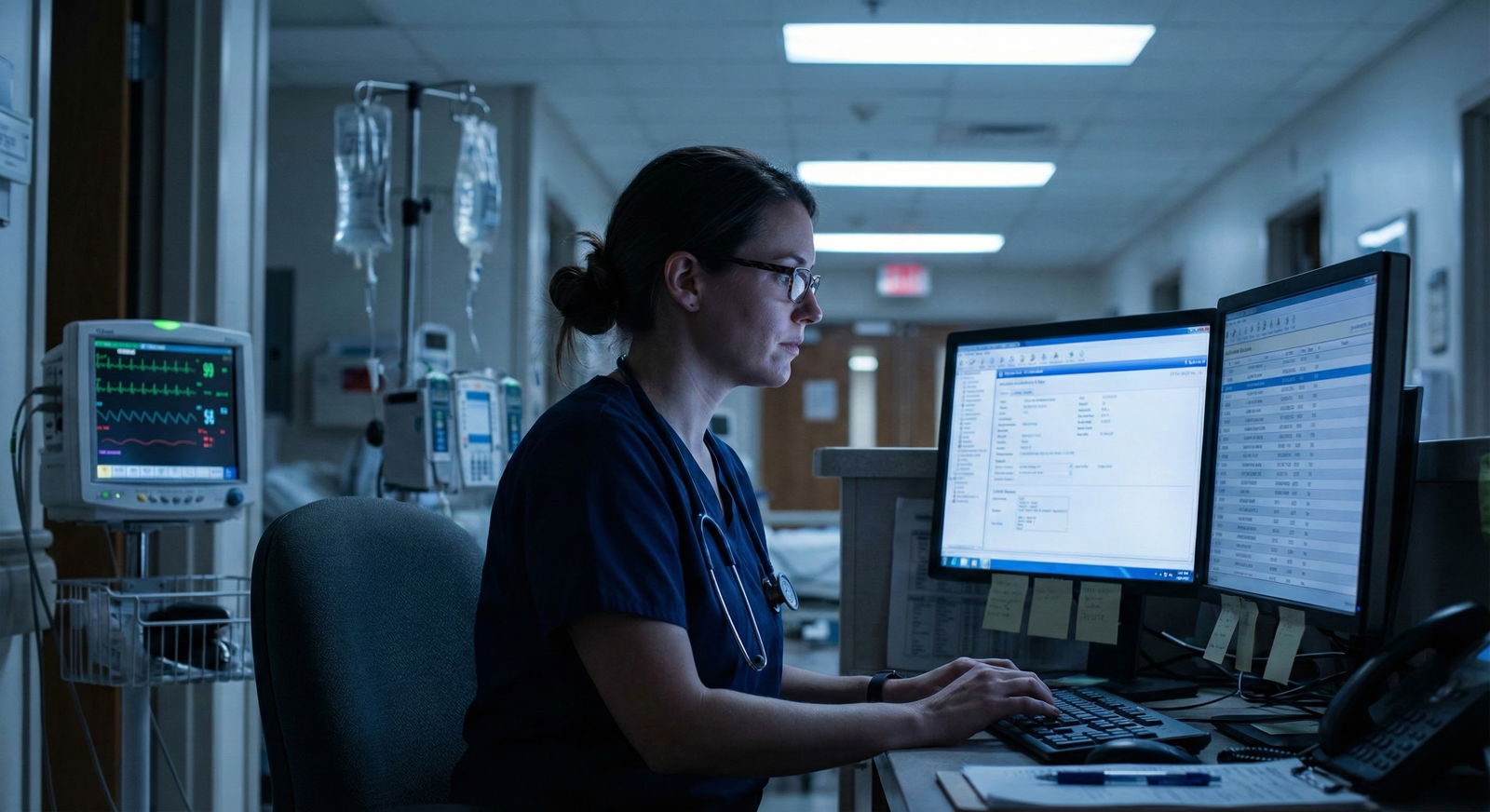
You cannot manage a crashing, rigid, hyperthermic patient completely alone at 2 AM while covering 60 other cross-cover floor patients. You need to know when and how to escalate.
1. Escalation Thresholds
- Call the ICU / Rapid Response Team if: Core body temperature exceeds 104°F (40°C), the patient has severe dyspnea/hypoxia, blood pressure remains unstable despite fluid challenges, or the patient has severe renal impairment with hyperkalemia.
- Consult Medical Toxicology or Psychiatry: If NMS is strongly suspected, consult tox or psych early to discuss targeted pharmacotherapy. Specific therapies like dantrolene (a direct-acting muscle relaxant) or bromocriptine (a dopamine agonist) carry real risks (hepatotoxicity, hypotension) and should ideally be initiated in consultation with specialists or ICU attending physicians.
- Consult Neurology: If muscle rigidity is atypical, or if you suspect non-convulsive status epilepticus, severe parkinsonian crisis, or central nervous system pathology.
2. Documentation Essentials
In these high-acuity, ambiguous overnight cases, your documentation must clearly reflect your clinical reasoning. If the patient deteriorates, your note needs to demonstrate that you recognized the danger, evaluated competing hypotheses, and took aggressive action on both fronts.
Your overnight progress note should state:
- Objective Baseline: Document exact vitals, temperature measurement method (core/rectal vs axillary), and exam findings using precise medical terminology. Write "marked lead-pipe resistance to passive extension in bilateral upper extremities" instead of "patient feels stiff."
- Medication Reconciliation Summary: Explicitly list all dopamine-blocking agents, dose changes in the last 14 days, and whether these medications have now been held.
- Parallel Differential Justification: Write out your reasoning directly: "Patient presents with severe hyperthermia, encephalopathy, and extreme motor rigidity following recent haloperidol administration. Given concomitant tachycardia and borderline blood pressure, differential includes NMS versus Severe Sepsis secondary to suspect UTI/pneumonia. Initiating empirical antibiotics and fluid resuscitation while holding all neuroleptics and obtaining stat CK, myoglobin, and sepsis labs."
- Time-Stamped Escalation: Note the exact time you notified the senior resident, ICU fellow, or attending physician, and document the agreed-upon plan.
Summary
When you are called to a rigid, febrile, encephalopathic patient overnight, your immediate priority is stabilization over diagnostic perfection. Take control of the scenario by keeping these core principles in mind:
- Assess and Protect: Secure the airway, stabilize vitals, check a point-of-care glucose, and start active external cooling if temperatures exceed 103°F.
- Evaluate for Dual Traps: Audit the medication record for dopamine antagonists or suddenly stopped Parkinsonian drugs to evaluate for NMS. Perform a head-to-toe physical search for infection sources to evaluate for sepsis.
- Run Parallel Tracks: If the diagnosis is unclear, treat for sepsis with blood cultures and empirical antibiotics, while simultaneously holding all potentially causative psychotropic medications and checking a stat serum Creatine Kinase.
- Escalate Early: Call for ICU assistance and specialty consults as soon as autonomic instability, extreme hyperthermia, or rhabdomyolysis become apparent, and document your differential reasoning clearly.