Am I going to miss a fatal diagnosis completely alone on night one?
That question sits on my chest at 3 AM like a lead apron. Not the polite version you rehearse for interviews. The raw one. The one where the pager goes off, the senior is "available by phone," and you realize the only person standing between a crashing patient and a bad outcome is you, the person who still double-checks how to order potassium.
This is for educational purposes only. It is not legal advice and not financial advice. Figures vary; consult a qualified professional for program-specific supervision or liability questions.
Are We Actually Putting Patients at Risk on Night One?
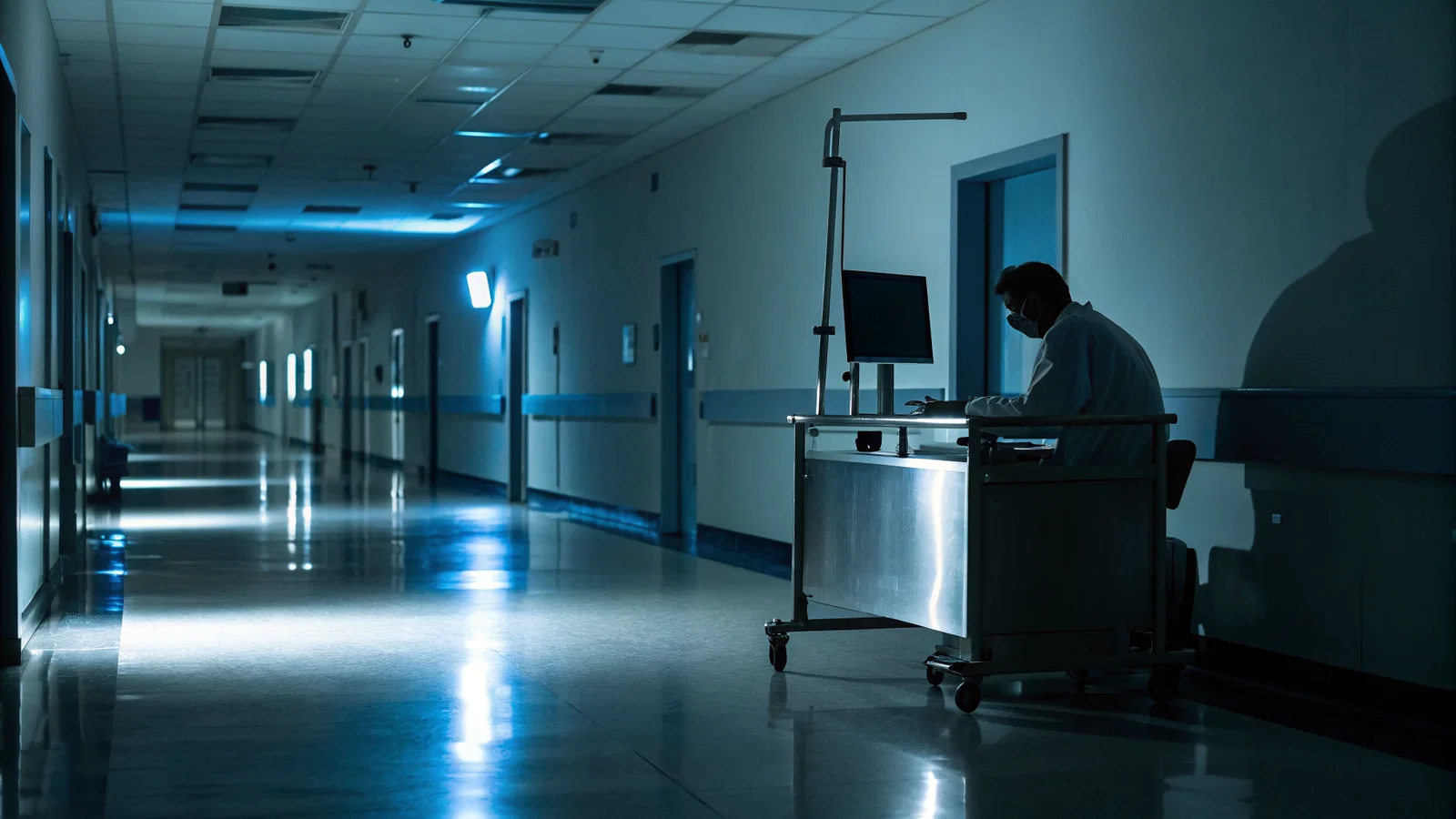
I've lived the handoff. Day team smiles, dumps the list, and says the line that still makes my stomach drop: "Just call if you need anything." Then they leave. Seniors go home or crawl into the call room. You're left with a glowing screen, a vibrating pager, and the sickening knowledge that every decision for the next twelve hours is yours until someone decides you're panicking enough to deserve help.
The guilt hits before any actual error. You start catastrophizing the second the hallway gets quiet. What if that soft blood pressure is the start of sepsis and I call it "a little dry"? What if the new oxygen requirement is a PE and I write it off as atelectasis because I'm tired and the chest x-ray looked "okay-ish"? I've watched interns freeze over exactly those moments. I've been that intern.
Early-career error data doesn't sugarcoat it. Solo night float in the first months shows higher rates of missed deterioration and delayed escalation compared with shifts that keep a senior physically present or immediately reachable. The vulnerability isn't mysterious. Competence hasn't caught up to autonomy yet. Your pattern recognition is still under construction while the census and the acuity don't care. Baseline studies on July-December cohorts keep showing the same ugly curve: more near-misses, more failure-to-rescue events, more of those quiet "thank God it wasn't worse" stories that never make the morbidity conference slides.
None of this is abstract for me. It's the reason I rehearse SBAR in the shower. It's why I still feel like a fraud every time someone hands me the code pager and walks away.
Solo Intern Night Shifts vs. Senior-Backed On-Call: What Does the Literature Say?
I needed numbers, not vibes. So I dug into the retrospective cohort work comparing pure solo intern night models against tiered supervision systems, senior resident in-house or tightly backed attending coverage.
The pattern is consistent and ugly. Adverse event rates climb hard under solo intern structures, especially in the first two quarters of the academic year. Senior-backed models flatten that spike. Not perfectly. But enough that you can see the difference without squinting.
Failure-to-rescue metrics tell the sharper story. When autonomy outruns competence, classic first six months, those metrics spike. You don't just make more small mistakes. You miss the window where a small mistake becomes salvageable. A senior who can walk to the bedside in three minutes changes the entire trajectory. A senior who is "available by phone" and half-asleep does not.
Worst-case scenarios live rent-free in my head. Litigation. A preventable morbidity that follows you into every future job interview. The specific terror of being completely unbacked while a family asks why no one came sooner. Programs love to say "we have a robust backup system." Then July hits and the backup is a phone that rings six times before anyone answers. I've seen that movie. The ending is never clean.
The literature doesn't say solo nights are automatically malpractice. It says the risk is measurably higher when you leave the least experienced physician alone with the highest decision density of the day. That's not anxiety talking. That's the data validating the anxiety.
The Psychological Toll: Imposter Syndrome, Burnout, and the Midnight Panic
Nobody prepared me for how loud the panic gets when you're deciding pressors and you still feel shaky ordering a simple fluid bolus. High-stakes decisions with a half-built knowledge base is psychological warfare. Imposter syndrome stops being a buzzword and becomes the operating system.
Chronic anxiety eats cognitive bandwidth. You burn working memory on "am I missing something catastrophic" instead of actually seeing the patient in front of you. That leftover bandwidth is exactly where medication errors and sloppy charting live. I've watched my own note quality collapse at 4 AM because half my brain was still replaying the last page I almost didn't escalate. Burnout doesn't wait until year three. It shows up in month two when every night feels like a coin flip between "I got away with it" and "I almost killed someone."
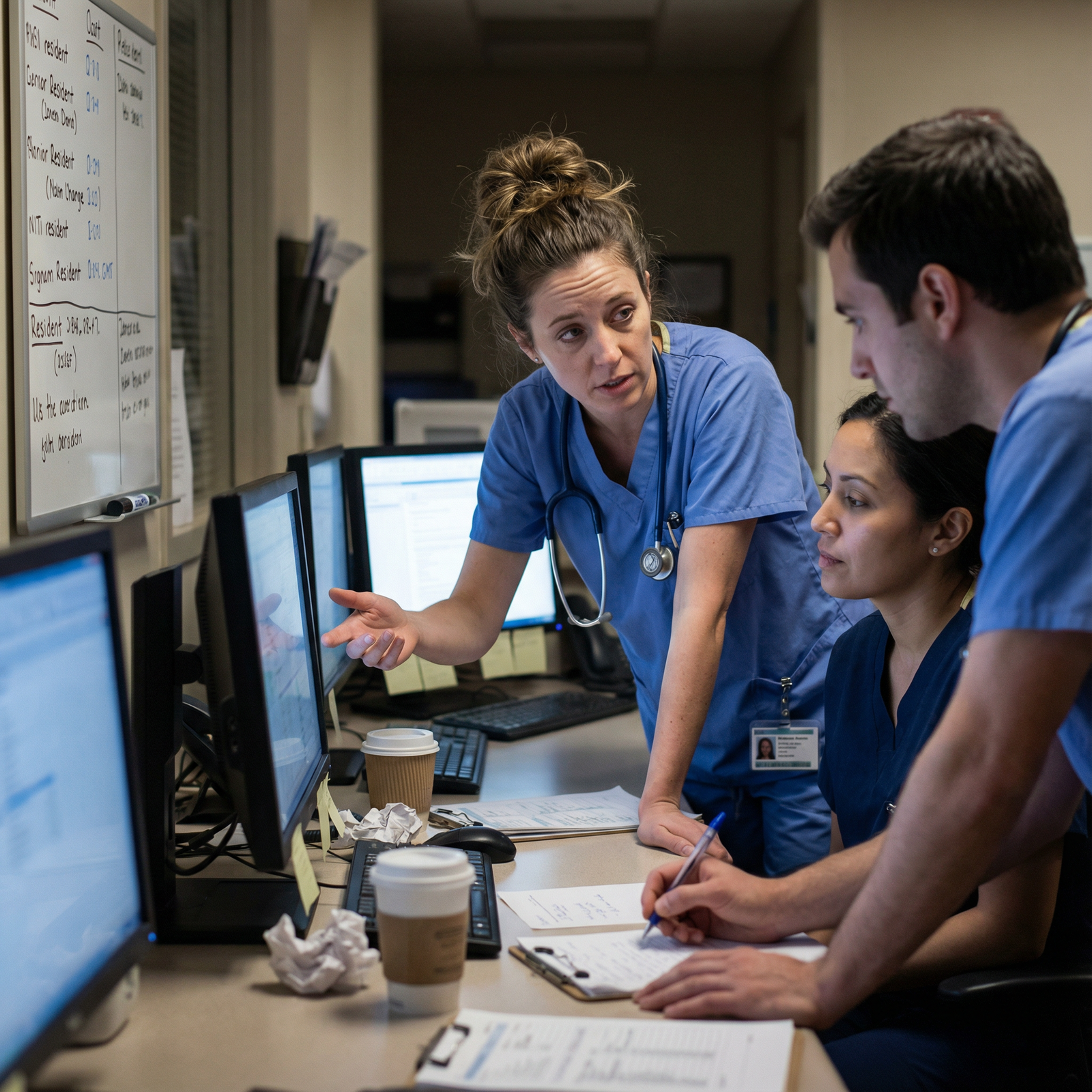
Survival isn't motivational posters. It's mechanical. Pre-round the sickest three patients in your head before the night even starts. Write the "if this, then that" triggers on a scrap of paper so you don't have to invent them under adrenaline. Use the nurses, the ones who have seen twenty Julys, as your early warning system. When the list hits twelve and you feel the water rising past your nose, you don't power through on pride. You call. Early. Often. The data on cognitive load and error rates is clear enough that protecting your bandwidth is patient safety, not weakness.
Navigating the System: How to Protect Yourself When Supervision is Thin
Some programs push the legal edges of supervision compliance until the paper looks fine and the reality is you, alone, with a crashing floor. You need tactics, not hope.
Know your red lines before the shift. Hypotension that doesn't respond. New altered mental status. Any airway worry. Rising lactate with a soft story. Those are not "maybe I'll recheck in an hour" moments. Those are wake-the-senior moments. Fear of their annoyance is real, I've felt the sigh through the phone, but a pissed-off senior is infinitely cheaper than a dead patient or a lawsuit. Wake them. Document the time you called and what you said. If they brush you off, escalate to the attending. Your license and the patient's life outrank their sleep.
Build the informal net. Night nurses who have been there fifteen years will save you if you treat them like partners instead of order-takers. Upper-levels who still remember their own terror will often take a quiet side call even when they're not officially on. Keep a short list of people who answer. Use it.
Document like someone will read it in a deposition, because someday someone might. Time stamps. What you saw. Who you called. What they said. It's tedious and it feels paranoid until the day it isn't.
Here's the decision skeleton I actually use when my brain shorts out:
Print it. Tape it inside your badge holder. When cortisol spikes, you won't invent a perfect algorithm. You'll follow the one you already trust.
The data is not subtle. Solo intern nights carry higher adverse event rates. The July-to-competent night-float transition is a statistical bottleneck that too many programs still treat as character-building instead of a safety problem. And the single most protective skill you can build is the willingness to break the unspoken "don't bother them" culture and wake someone up, annoyance be damned.
If you're staring down your first solo stretch, stop waiting for the fear to feel rational to everyone else. It already is. Protect the patients. Protect yourself. Call early.
Now go ask the hard questions at your next social or town hall. Demand clarity on who is actually in the building. Your future 3 AM self is counting on it.