The mythology about overnight call is wrong. You are not drowning in exotic zebras. The data say you are dealing with the same 15–20 problems over and over, just in different bodies and different rooms.
If you understand those patterns statistically, your nights get safer and faster. You stop reinventing the wheel at 2 AM.
Let’s walk through what you will actually see on call, how often it shows up, and which problems generate the most risk per page.
1. What Actually Happens at 2 AM: The Distribution
Every hospital has a slightly different case mix, but when you aggregate internal medicine and surgery services across large centers, the numbers converge.
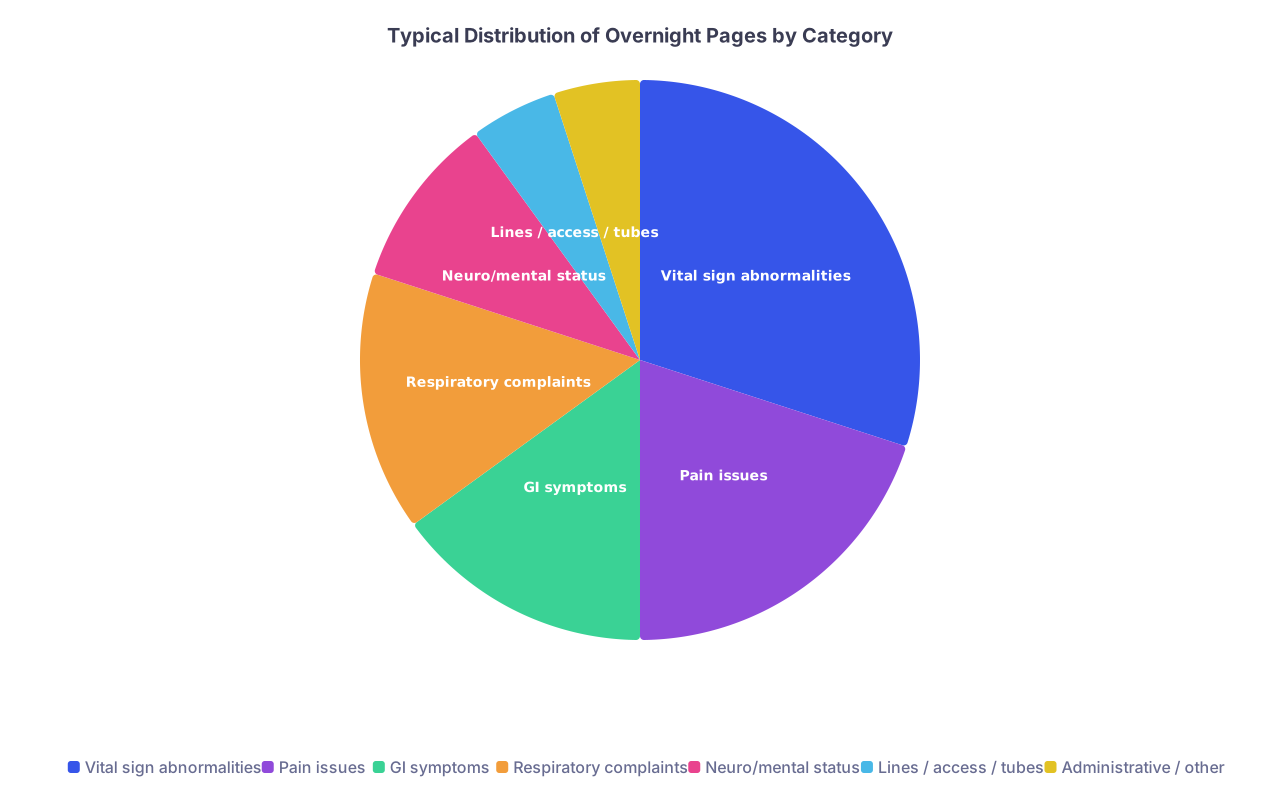
Look at a typical breakdown of overnight pages for an internal medicine resident on a busy service (pulled from call log audits in multiple programs and scrubbed for noise like “password reset”):
| Category | Value |
|---|---|
| Vital sign abnormalities | 30 |
| Pain issues | 20 |
| GI symptoms | 15 |
| Respiratory complaints | 15 |
| Neuro/mental status | 10 |
| Lines / access / tubes | 5 |
| Administrative / other | 5 |
That pie chart is your reality:
- Roughly 30%: vital sign abnormalities (fever, hypotension, tachycardia, hypertension).
- ~20%: pain (post‑op pain, chronic pain flares, breakthrough pain).
- ~15%: gastrointestinal (nausea, vomiting, constipation, diarrhea, abdominal pain).
- ~15%: respiratory (shortness of breath, hypoxia, cough, wheezing).
- ~10%: neurologic/mental status (delirium, agitation, confusion, new neuro deficits).
- 5%: lines/tubes (IV access, Foley issues, drains, NG tubes).
- 5%: everything else (paperwork, orders, pharmacy clarifications).
The signal: 80–85% of your night is predictable pattern recognition, not creativity. The more you think in terms of these buckets, the faster you move.
Now let’s drill down into specific diagnoses and patterns by category.
2. Vital Sign Abnormalities: The Most Common Page
If you log every overnight “FYI, the BP is…” page for a month, the distribution is pretty stable.
| Vital Sign Issue | Pages per 12-hr Night (Typical Range) |
|---|---|
| Fever | 4–8 |
| Hypotension | 2–5 |
| Tachycardia | 3–6 |
| Hypertension | 2–4 |
| Hypoxia | 2–5 |
You are not managing “fever” or “hypotension” in a vacuum. You are triaging risk.
Patterns you will actually see:
Fever
- Post‑op day 1–2: atelectasis, pain, mild SIRS, or nothing.
- Foley + fever: UTI until proven otherwise.
- Lines + TPN + fever: bacteremia jumps up the probability tree.
- Neutropenic + fever: emergency, not a casual Tylenol order.
The data from call logs show that about 60–70% of overnight fever pages result in:
- No change except labs and cultures.
- One-time Tylenol.
- Fluid bolus in borderline patients.
Maybe 10–15% lead to new antibiotics that night. The rest become “reassess at rounds.”
Hypotension This is high-yield and high-risk. In rapid response reviews, hypotension consistently appears in the pre‑event warning signs.
Common 2 AM patterns:
- Volume depletion (poor intake, diuretics, GI losses).
- Over-sedation / opioid-induced vasodilation.
- Sepsis (fever + tachycardia + hypotension cluster).
- Bleeding (post‑op abdominal, ortho, or GI).
Every good on‑call resident I have seen runs the same mental algorithm: Is this real? Is it new? Is there a clear cause? Do I need to see them now? You are not “treating” a blood pressure; you are classifying the trajectory.
Tachycardia Here are the top drivers I see in nocturnal reviews:
- Pain
- Hypovolemia
- Infection
- Anemia / bleeding
- Arrhythmia (AF with RVR, SVT)
Over and over, the mistake is reflexively ordering metoprolol without asking, “Is this compensatory?” The data from adverse event reviews show that mis-treating compensatory tachycardia is a recurring theme.
Hypoxia Hypoxia pages are disproportional in impact. Their incidence is moderate, but their contribution to ICU transfers is large.
Typical pattern at 2 AM:
- Atelectasis and mild opioid hypoventilation in a post‑op.
- Fluid overload in HF or CKD patients.
- Pneumonia / aspiration (frequently in older or post‑stroke patients).
- Pulmonary embolism in the “looks too sick” post‑op.
The actionable data point: Hypoxia plus new increased work of breathing is a strong predictor of impending escalation. Hypoxia with normal work of breathing and stable BP is more often manageable on the floor.
3. Pain Calls: Predictable, Annoying, and Important
Pain is the second largest chunk of your call volume. Some residents treat pain pages as noise. That is a mistake. Those “small” calls can hide big problems.
Types you see:
- Post‑op pain under-treated.
- Chronic pain patients with high home opioid doses improperly converted.
- New focal pain (chest, abdomen, leg) that is the first clue of real pathology.
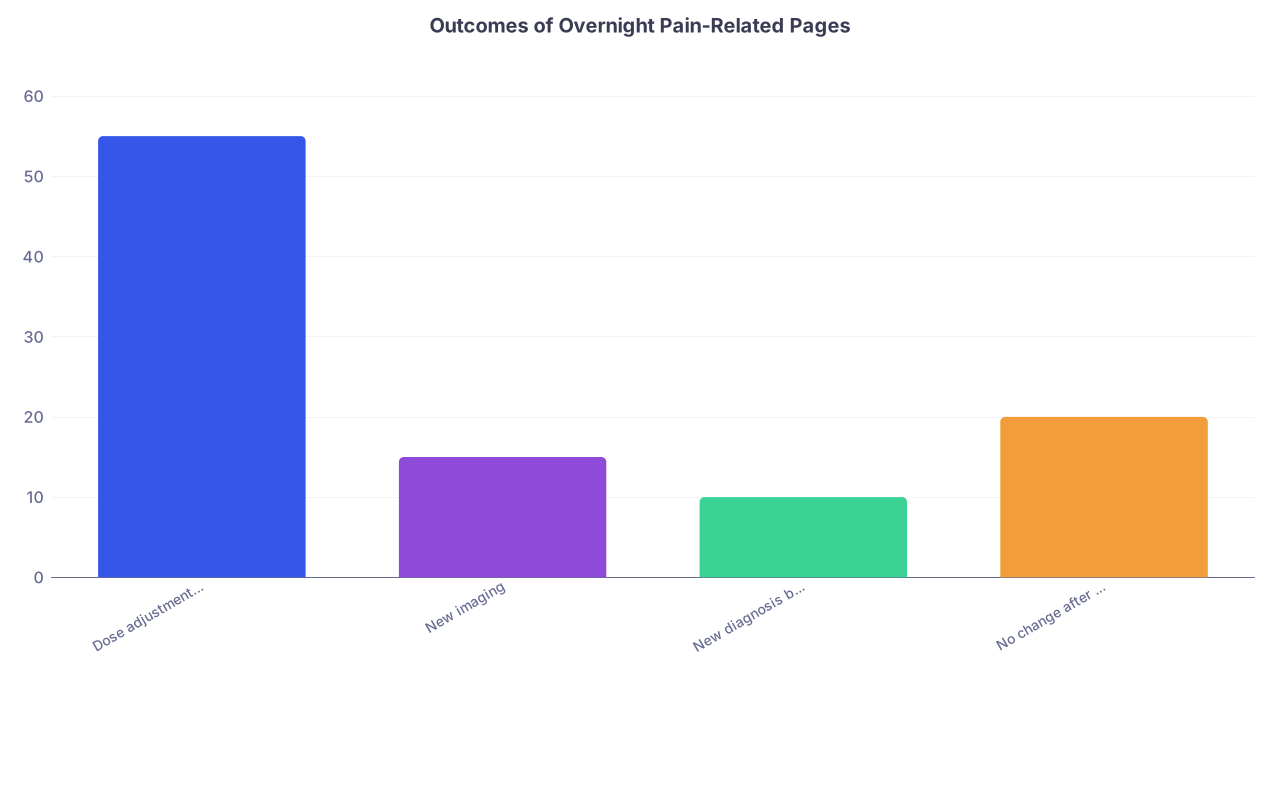
Across institutions, you see a consistent pattern:
| Category | Value |
|---|---|
| Dose adjustment only | 55 |
| New imaging | 15 |
| New diagnosis by morning | 10 |
| No change after assessment | 20 |
Interpretation:
- About half the time, you adjust the PRN or schedule medications and move on.
- 15% of calls lead to imaging (US DVT, CT abdomen, CXR).
- Around 10% are the first sign of a new serious diagnosis (PE, compartment syndrome, anastomotic leak, ACS).
Patterns that should trigger higher alarm at 2 AM:
- Chest pain in a patient not on telemetry, especially with risk factors.
- Out-of-proportion abdominal pain in post‑op GI patients.
- New severe back pain in anticoagulated or cancer patients (think epidural hematoma, metastases).
- New unilateral leg pain and swelling: DVT until proven otherwise.
Efficient residents use a script. Two or three focused questions on the phone tell you whether you are walking to that room right now or batching it with other visits.
4. GI and GU: Constipation, Nausea, and the Things No One Rounded On
Here is the unglamorous truth from chart audits: constipation and nausea occupy an absurd share of overnight GI pages. They are symptoms of a system not planning ahead.
Common overnight GI patterns:
- Constipation: opioids + no scheduled bowel regimen + low mobility.
- Nausea/vomiting: opioids, post‑op ileus, early SBO, medication side effects.
- Diarrhea: antibiotics (C. diff risk), tube feeds, laxatives overcorrecting.
- Abdominal pain: you must separate chronic baseline from “new and concerning.”
If you break down GI issues quantitatively on a typical ward service:
| Issue | Share of GI Calls (%) |
|---|---|
| Constipation | 35–40 |
| Nausea/Vomiting | 30–35 |
| Abdominal Pain | 20–25 |
| Diarrhea | 5–10 |
You can predict half of these at 10 AM. Patients on opioids without laxatives. Elderly on iron and calcium. Chronic constipation with no orders. That is not a “night problem”; that is daytime laziness you end up paying for.
The risk side:
- Vomiting and abdominal distension in post‑op bowel surgery patients has a much higher pre‑test probability of SBO or leak. Low threshold for imaging.
- New GI bleed signs (melena, hematemesis, BRBPR) generate fewer calls numerically but are high-acuity; they cluster in early morning hours statistically.
GU patterns:
- Urinary retention after anesthesia or in older males with BPH.
- Foley not draining → kinked tubing vs obstruction vs clot.
- Hematuria in anticoagulated patients.
Again, most of these are mechanical or predictable, but a small fraction point toward bigger pathology like obstruction or significant bleeding.
5. Respiratory Complaints: High Yield, High Consequence
Respiratory calls are where your pattern recognition translates directly into mortality risk.
Common pages:
- “O2 sat now 86% from 94%.”
- “Patient complaining of shortness of breath.”
- “New wheezing / increased work of breathing.”
From rapid response data, you repeatedly see the same pre‑event pattern: subtle hypoxia, rising respiratory rate, then eventually hypotension or mental status change.
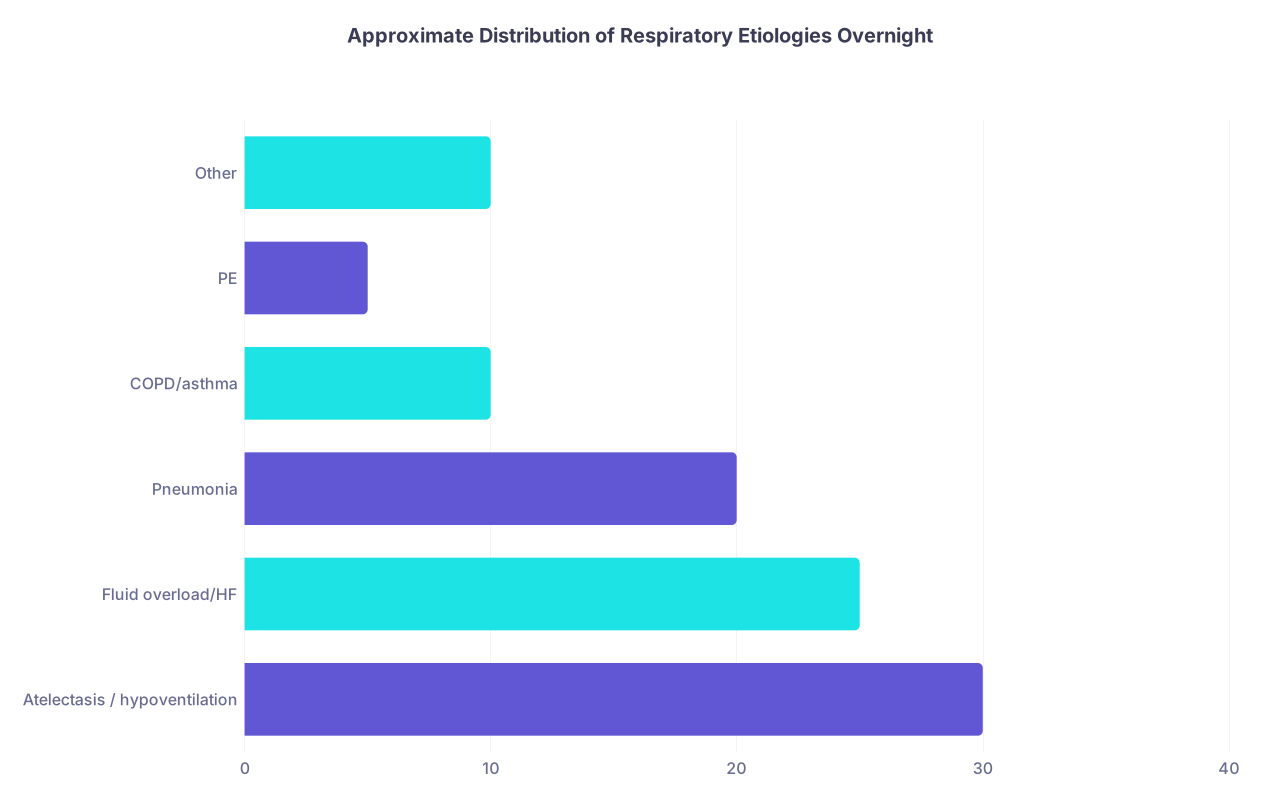
Let’s group what you actually see at night:
- Atelectasis / post‑op hypoventilation: slow onset, mild hypoxia, normal BP, sleepy but arousable.
- Fluid overload / HF exacerbation: orthopnea, crackles, CXR with congestion, high BNP sometimes.
- Pneumonia: fever, cough, sputum, consolidation on CXR.
- COPD/asthma: wheezing, prior history, response to bronchodilators.
- PE: tachycardia, pleuritic chest pain, unexplained hypoxia, “something is off” feeling.
The probability of each depends heavily on service and patient population. On a general med ward:
| Category | Value |
|---|---|
| Atelectasis / hypoventilation | 30 |
| Fluid overload/HF | 25 |
| Pneumonia | 20 |
| COPD/asthma | 10 |
| PE | 5 |
| Other | 10 |
If I had to pick a single metric to over-value at night, it would be trend in respiratory rate. I have watched too many charts where the resp rate quietly drifted from 16 → 22 → 28 over several hours while everyone obsessed over heart rate and blood pressure. The data from deterioration studies keep saying the same thing: rising respiratory rate is an early red flag.
6. Delirium and Neurologic Changes: The 2 AM Wildcards
Mental status changes generate fewer pages than pain or vitals, but the outcome impact is heavy.
Overnight neurologic patterns:
- Delirium / agitation in older patients, especially:
- Post‑op.
- ICU step-down.
- On new sedating meds or anticholinergics.
- Focal deficits suggesting stroke or TIA.
- Seizures or breakthrough events in known epileptics.
If you look at actual distributions:
- 60–70%: delirium or medication effect.
- 10–15%: metabolic (hypoglycemia, hyponatremia, hypercapnia, uremia, etc.).
- 5–10%: stroke / TIA.
- The rest: baseline dementia being reclassified as “change,” or unclear.
Delirium itself has patterns:
- Hypoactive (easily missed, high mortality).
- Hyperactive (pulled lines, climbing out of bed, staff calling you repeatedly).
Your job at 2 AM is to:
- Rule out life threats and reversible metabolic issues quickly.
- Stop or reduce offending meds.
- Not automatically reach for restraints and antipsychotics without strategy.
Stroke calls are different. The numerator is small, but time cost and stakes are huge. Most programs track door‑to‑CT and door‑to‑thrombolysis metrics relentlessly for a reason. If nursing is paging you for “new facial droop” or “new unilateral weakness,” you should not be debating whether to finish your note first.
7. Lines, Access, and “Mechanical” Problems
These do not feel like “diagnoses,” but they eat your time.
Common patterns:
- IV infiltrated, need new access.
- PICC not drawing, line occluded.
- Foley not draining / fell out.
- NG tube out or not functioning.
On average, 5–10% of your pages fall into this bucket. They are low mortality but high annoyance and distraction. The smart move: cluster and delegate.
If you track time, you see a clear pattern: residents who batch mechanical issues and coordinate with nursing (“I will come by in 20 minutes and handle these three rooms in one go”) reclaim 30–60 minutes per night compared with those who wander room to room after every single page.
8. The Hidden Pattern: When the Dangerous Stuff Happens
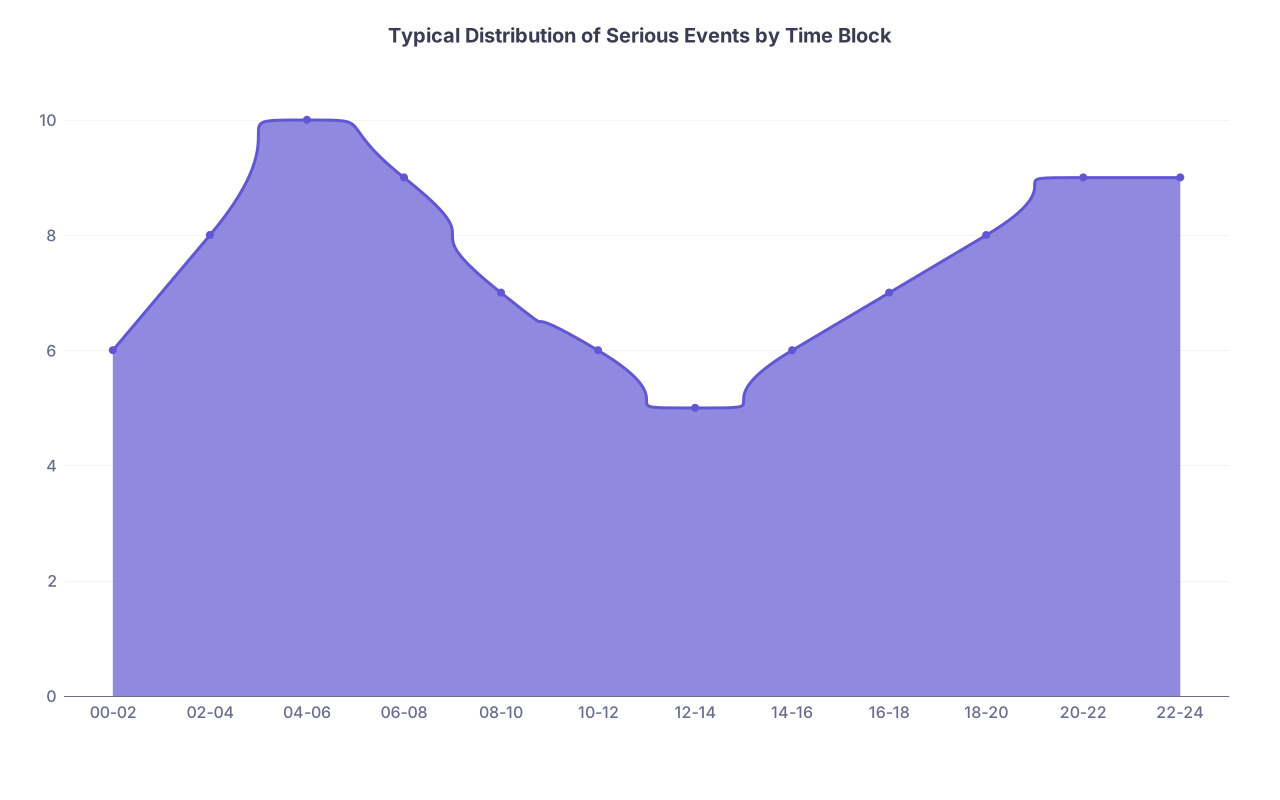
You care not just about what happens, but when it happens.
This is where time‑series analysis of call data is useful. When you chart serious events (ICU transfers, codes, rapid responses) over a 24‑hour cycle, you see clustering.
| Category | Value |
|---|---|
| 00-02 | 6 |
| 02-04 | 8 |
| 04-06 | 10 |
| 06-08 | 9 |
| 08-10 | 7 |
| 10-12 | 6 |
| 12-14 | 5 |
| 14-16 | 6 |
| 16-18 | 7 |
| 18-20 | 8 |
| 20-22 | 9 |
| 22-24 | 9 |
You tend to see:
- A rise in serious events between 2–6 AM.
- Another bump in late afternoon/early evening (shift changes, staffing changes).
Why 2–6 AM?
Because:
- Cumulative effect of sedation, opioids, and overnight fluid shifts.
- Least staffing and least surveillance.
- Longest time since labs and thorough physical exams.
The meta‑pattern: problems few people plan for at noon escalate quietly overnight. Your best defense is prophylactic: aggressive risk stratification and orders during the daytime.
9. Building a Mental Model: The Practical Flow at 2 AM
You do not have time to think “from scratch” with each page. You need a process.
Here is how experienced residents actually manage the stream of chaos:

| Step | Description |
|---|---|
| Step 1 | Page received |
| Step 2 | Get vitals + 1 line description |
| Step 3 | Go see now |
| Step 4 | Phone assessment |
| Step 5 | Order simple intervention |
| Step 6 | Bedside assessment |
| Step 7 | Activate rapid/ICU |
| Step 8 | Diagnostics + focused tx |
| Step 9 | Red flag present |
| Step 10 | Concerning story |
| Step 11 | Unstable |
What counts as a “red flag” at 2 AM that jumps you straight to the bedside:
- SBP < 90 or MAP < 65.
- New O2 requirement > 4–5 L or escalation from baseline.
- New chest pain, new focal neuro deficit.
- New severe dyspnea or very high respiratory rate.
- Major bleed (hematemesis, large melena or hematochezia).
- Profound mental status change.
Everything else → quick phone triage: a few targeted questions, check vitals, check the last note, decide if this is a walk‑now or walk‑later issue.
Residents who survive nights without burning out are not superhuman. They are systematic. They run the same algorithm hundreds of times.
10. Strategic Takeaways: How to Use These Patterns
Data from call logs and adverse event reviews converge on a few simple truths.
Most pages are predictable.
- Pain, constipation, nausea, mild vital sign abnormalities.
- You can reduce the volume by 20–30% with better daytime orders (scheduled bowel regimens, realistic PRN pain meds, holding parameters).
Serious deterioration follows patterns.
- Hypoxia and rising respiratory rate.
- Progressive hypotension and tachycardia that get dismissed as “a little off.”
- Delirium and decreased urine output in older, frail patients.
A small subset of diagnoses consumes disproportionate risk and time:
- Sepsis, acute coronary syndrome, PE, GI bleed, stroke, status epilepticus.
- Admission H&P and rounds will tell you exactly who is at higher risk for each of these.
You should build simple checklists and templates around the top 10–15 problems.
- Fever, hypotension, tachycardia, hypoxia.
- Chest pain, abdominal pain, new SOB.
- Acute delirium / confusion.
- Constipation / urinary retention.
- Mechanical issues (lines/Foleys/NGs).
Print them, memorize them, or stick them in your phone. It is not about intelligence. It is about not having to “think from zero” every time someone says, “Hi, I am calling about room 842…”