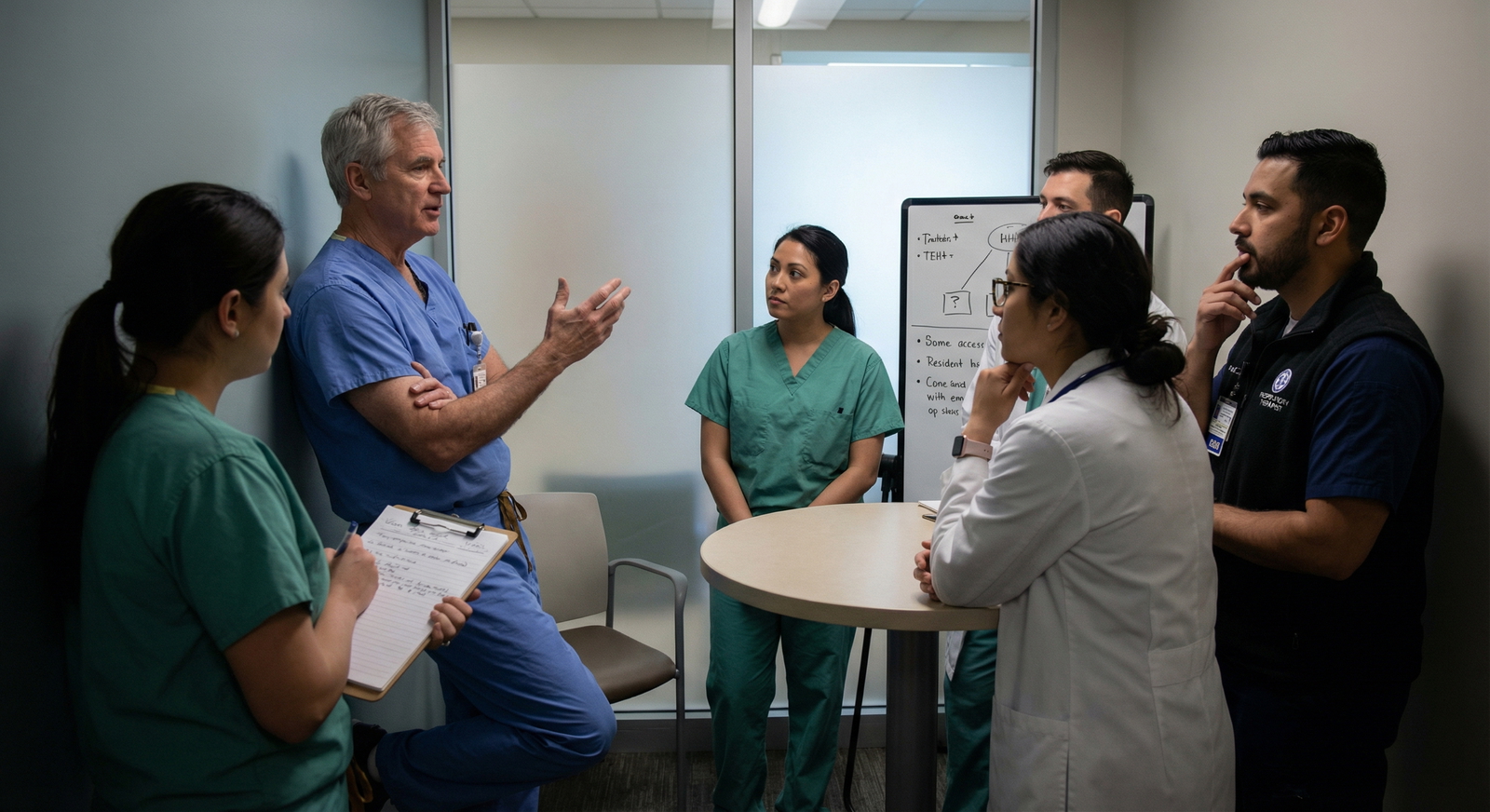
Effective Time Management Skills for Residents: Juggling On-Call Duties with Confidence
Residency compresses a career’s worth of learning into a few intense years. Add overnight calls, cross-coverage, pages from multiple floors, and looming academic deadlines, and time can feel like your scarcest resource. Yet your ability to manage time effectively is not just a “nice to have”—it directly affects patient safety, your learning, your productivity, and your long-term work-life balance.
This expanded guide builds on core time management strategies and adapts them specifically to residency and on-call life. You’ll find practical, real-world tactics you can use starting with your next shift—along with frameworks to help you grow these skills over the course of your medical training.
Why Time Management Matters So Much in Residency
Direct Impact on Patient Care and Safety
During busy on-call shifts, you may be responsible for dozens of patients across multiple services. Effective time management allows you to:
- Triaging efficiently: Rapidly determine which pages, consults, or new admissions require immediate attention versus those that can safely wait 10–30 minutes.
- Preventing errors: Fatigue, interruptions, and rushing are key contributors to medical errors. Structured workflows and thoughtful scheduling help buffer against these risks.
- Ensuring continuity of care: Finishing critical tasks before sign-out and leaving clear plans reduce missed labs, delayed interventions, and confusion for the next team.
Preserving Work-Life Balance and Mental Health
Residency is demanding by design, but poor time management can make it unsustainable. When you manage your time well:
- You protect small pockets of rest, food, and recovery during and between shifts.
- You’re more likely to leave on time or only slightly late on non-call days.
- You reduce the buildup of chronic stress and fatigue that leads to burnout, depersonalization, and emotional exhaustion.
A realistic, structured approach to your day is one of the most powerful tools you have to maintain a functional work-life balance during residency.
Supporting Learning and Professional Growth
Residency is both a job and an educational program. Good time management helps you:
- Build regular study habits for board exams and in-training exams.
- Make time for research, quality improvement, or teaching.
- Capture and review learning points from cases instead of letting them disappear into the chaos of the shift.
Residents who manage time well can say “yes” to growth opportunities without completely overwhelming themselves.
Reducing Stress and Improving Sense of Control
Part of what makes residency stressful is the sense that your schedule is dictated entirely by others. When you actively manage your time:
- Your day feels more predictable and intentional, even with unpredictability built in.
- You have a realistic sense of what is and is not possible in a given shift.
- You spend less mental energy on constantly reprioritizing and more on patient care and learning.
Core Time Management Frameworks for On-Call Residents
1. Using the Eisenhower Matrix to Prioritize in Real Time
The Eisenhower Matrix is especially powerful in residency because it gives you a mental model to triage not just patients, but tasks. It categorizes tasks by urgency and importance:
Urgent and Important
- Examples: Code situations, unstable vital signs, new chest pain, sepsis alerts, STAT consults, rapid response calls, critical lab abnormalities.
- Action: Do these immediately. Everything else pauses until these are addressed.
Important but Not Urgent
- Examples: Reviewing imaging in depth, reading around complex cases, working on research, preparing for morning presentations, long-term QI projects, studying for boards.
- Action: Schedule these. Put them into your calendar or to-do list with specific time blocks so they don’t disappear.
Urgent but Not Important
- Examples: Routine pages that could be handled by nursing protocols, noncritical administrative tasks, calls that can be redirected (e.g., pharmacy refills with clear existing orders).
- Action: Delegate or streamline when possible. Clarify protocols with nursing, use order sets, and batch similar tasks.
Not Urgent and Not Important
- Examples: Excessive checking of social media during short breaks, low-yield meetings you’re not required to attend, perfectionistic rewriting of notes without added clinical value.
- Action: Minimize or eliminate during shifts. Reserve these for true downtime if you enjoy them, not as procrastination.
Applying the Matrix on Call
On a busy night with multiple pages, you can rapidly mentally classify each new task:
- “SOB with O2 sat 88%” → Urgent & Important
- “Routine daily lab follow-up at 11 pm on stable patient” → Urgent but less important; can be delayed safely for 20–30 min if managing instability elsewhere.
- “Research abstract due in 10 days” → Important, Not Urgent; protect time this weekend or on a lighter day.
The goal is not perfection but situational awareness—knowing what actually deserves your attention right now.
2. Designing a Realistic Daily Structure in Residency
Time management in residency is not about rigid schedules that ignore clinical reality. It’s about building a flexible framework that you adapt throughout the day.
Elements of an Effective Resident Schedule
- Time Blocking: Group activities by type—rounding, documentation, calls, teaching—into dedicated blocks. This reduces mental switching costs.
- Protected Mini-Blocks: Reserve short 10–20 minute windows for documentation, reviewing imaging, or checking labs before they pile up.
- Contingency Time: Intentionally leave “white space” for unexpected admissions or deteriorating patients.
- End-of-Shift Ritual: A 10–15 minute review and planning period to close the loop before sign-out or post-call.
Sample On-Call Day Schedule (Adaptable Across Specialties)
- 6:00–7:00 AM – Morning report, patient handoff, urgent overnight updates.
- 7:00–9:30 AM – Pre-rounds and formal rounds: prioritize sick and new patients first.
- 9:30–10:00 AM – Documentation mini-block: key updates, critical orders, sign important notes.
- 10:00 AM–12:00 PM – Admissions, consults, responding to high-priority pages.
- 12:00–12:30 PM – Lunch and quick learning: eat, skim one short article or guideline, or attend noon conference if feasible.
- 12:30–3:00 PM – Follow-up on labs/imaging, procedures, cross-cover tasks.
- 3:00–3:30 PM – Documentation mini-block: complete pending notes, refine plans for complex patients.
- 3:30–5:00 PM – Teaching sessions, family meetings, complex care coordination.
- 5:00–6:00 PM – Pre-call preparation or pre-handoff organization: to-do list, pending studies, contingency plans.
At night, the pattern may shift more toward rapid triage + brief task batching:
- Cluster pages every 15–20 minutes when safe.
- After handling a cluster, sit down for 10–15 minutes to update orders and notes in batches before the next wave.
The important point is to intentionally design your day rather than letting it fully happen to you.
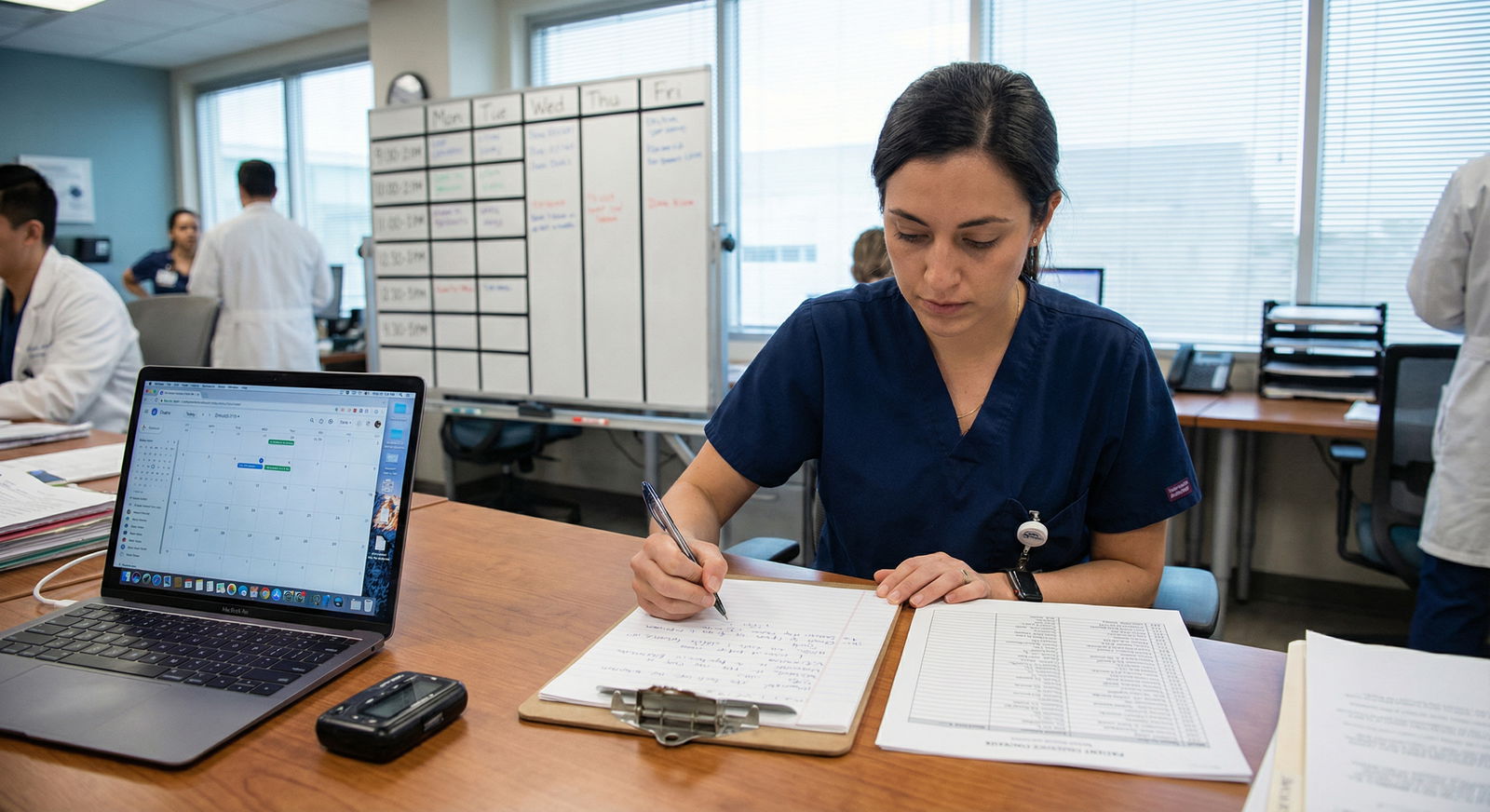
Technology and Tools to Boost Productivity on Call
3. Smart Use of Digital Tools (Without Getting Distracted)
Digital tools can dramatically improve your productivity if used thoughtfully.
Task Management Apps
- Examples: Todoist, Trello, Notion, Microsoft To Do.
- How to use as a resident:
- Create lists for “Today,” “This Week,” and “Long-Term Projects.”
- Add tasks like finishing discharge summaries, reviewing a challenging case, or preparing a talk.
- Use priority flags to mirror the Eisenhower Matrix categories (e.g., high priority = urgent & important).
Calendar and Scheduling Apps
- Google Calendar, Outlook, Apple Calendar:
- Block out clinical duties, conferences, and academic deadlines.
- Add recurring blocks for board study, wellness activities, and project time.
- Use reminders for infrequent but important tasks (credentialing, license renewal, committee deadlines).
Focus Techniques: Pomodoro and Variations
The Pomodoro Technique can be adapted for residency:
- Classic: 25 minutes of focused work + 5-minute break, 4 times, then a longer break.
- Residency-friendly adaptation:
- Use 15–20 minute focus bursts for notes or studying between pages.
- If you’re interrupted by a page, pause the timer, handle the issue, then resume.
- During breaks: hydrate, stretch, do a quick mindfulness exercise instead of immediately checking your phone.
The goal is intentional attention—not just squeezing in tasks, but doing them with focus.
Communication, Teamwork, and Delegation: Hidden Time Levers
4. Communication Skills That Save You Time
Clear, proactive communication is an underappreciated time management tool in residency.
Asking for Help Early
- If you’re drowning in tasks on call, tell your senior or attending early, not at 4:30 am.
- Use specific language: “I have six new admissions pending and two unstable patients; I need help prioritizing and possibly splitting the admissions.”
- Early escalation prevents last-minute crises and protects patient safety.
Setting Realistic Expectations
- When you’re given a new task, clarify:
- “When do you need this by?”
- “Is this urgent for patient care or can it wait until the morning/after rounds?”
- This helps you order tasks appropriately instead of treating everything as equally urgent.
Minimizing Back-and-Forth
- Use structured communication:
- SBAR (Situation, Background, Assessment, Recommendation) for pages and consults.
- Clear, concise sign-outs with pending tests, active problems, and specific if-then plans.
- The more structured your communication, the fewer clarifying calls and pages you’ll receive.
5. Building Strong Team Relationships
A supportive team can transform your time management reality.
Check-Ins and Micro-Huddles
- Briefly huddle once or twice per shift with your team to:
- Identify sickest patients.
- Divide tasks logically.
- Adjust plans as acuity changes.
- These 5-minute check-ins can save hours of duplicated work and confusion.
Sharing Tips and Workflow Tricks
- Ask peers:
- “How do you keep up with notes on call?”
- “What’s your system for tracking cross-cover tasks?”
- Adopt tested strategies:
- Shared patient lists with standardized columns (tasks, pending labs, follow-up).
- Color-coding by urgency.
- “One-touch rule” for tasks: when safe, complete tasks fully when you first encounter them instead of deferring repeatedly.
Protecting Work-Life Balance and Preventing Burnout
6. Intentional Self-Care as a Productivity Strategy
Rest and recovery are not indulgences; they are performance requirements in residency.
Sleep: The Non-Negotiable Foundation
- Aim for protected sleep windows between shifts—often 6–7 hours is realistic.
- After a 24-hour call:
- Prioritize a post-call nap rather than pushing through the entire day.
- Communicate with family/friends about your limited availability post-call to protect recovery time.
- Use simple sleep hygiene techniques when possible:
- Dark, cool room
- Limiting caffeine late in the day
- Short naps (20–30 minutes) on call if your program culture and workload allow
Nutrition and Hydration on Call
- Pack quick, nonperishable options: nuts, protein bars, instant oatmeal, dried fruit.
- Use natural pauses (waiting for labs or imaging) as prompts to drink water or have a quick snack.
- Even one 10-minute meal break can dramatically improve cognitive function during a long shift.
Mental Health and Mindfulness
- Short mindfulness exercises (2–5 minutes of guided breathing) in a call room can reset your stress level.
- Many institutions offer resilience or wellness programs—consider actively using them rather than seeing them as add-ons.
- Recognize early signs of burnout (irritability, cynicism, emotional exhaustion) and seek support from mentors, program leadership, or counseling services.
7. Boundaries and Saying “No” Thoughtfully
Time management also involves deciding what not to do.
- It’s reasonable to say:
- “I’d like to be involved in this project, but my current schedule means I can only contribute in X limited way.”
- “I can take this on after my ICU rotation, not during.”
- Thoughtful boundaries protect your long-term productivity and well-being, which ultimately benefits your patients and your career.

Real-World Resident Scenarios: Applying Time Management Strategies
Case Study 1: Dr. Smith – From Constantly Behind to In Control
Problem: Dr. Smith, a second-year internal medicine resident, was consistently leaving 1–2 hours late. Documentation piled up, and she often felt rushed during patient encounters.
Interventions:
Eisenhower Matrix Audit
She reviewed a typical day and sorted tasks:- Urgent & Important: unstable patients, new admissions, critical labs.
- Important, Not Urgent: quality improvement project, in-training exam study.
- Urgent, Not Important: noncritical pages for issues nurses could often handle with clear standing orders.
- Not Urgent, Not Important: over-editing notes to perfection.
Workflow Changes
- Implemented two documentation mini-blocks (late morning and mid-afternoon).
- Created a “good enough” note template to save time.
- Met with nursing leadership to clarify when to use standing orders versus paging.
Outcome: Within two weeks, Dr. Smith was leaving 30–45 minutes earlier on most days, felt less behind, and reported less anxiety about documentation.
Case Study 2: Dr. Ahmad – Surviving the Night Float
Problem: Dr. Ahmad, a first-year surgical resident, was struggling on night float. He felt overwhelmed by pages, forgot pending lab follow-ups, and lost track of cross-cover tasks.
Interventions:
Pomodoro Adaptation
- Used 20-minute focus intervals for cross-cover notes and orders between pages.
- During breaks, he did quick stretching or a walk down the hall to stay awake.
Task Tracking System
- Created a simple night task list divided into:
- “Must do in next hour”
- “Before 3 am”
- “Before sign-out”
- Checked the list every 60–90 minutes and before any sit-down break.
- Created a simple night task list divided into:
Team Check-In
- Started 2-minute check-ins with the night nurse leads at the start of each shift to get a sense of the sickest patients and likely trouble spots.
Outcome: Within a week, he felt more in control, rarely missed pending tasks, and even carved out short windows to read about interesting cases.
Putting It All Together: A Personal Time Management Plan
To make this real for your own residency:
- Identify Your Top Two Pain Points
- Is it documentation? Studying? Cross-cover chaos? Frequent late departures?
- Pick One Framework or Tool
- Eisenhower Matrix, time blocking, a task manager app, or Pomodoro sessions.
- Test for One Week
- Apply intentionally. Reflect briefly at the end of each shift: What helped? What didn’t?
- Refine and Add
- Add one more strategy only after the first feels natural.
- Revisit Quarterly
- As rotations change, your time management needs will change. Reassess and adjust.
Time management in residency is not a one-time fix—it’s a skill set you’ll hone across your training and into your attending life. Start small, be consistent, and treat every shift as data for refining your system.
FAQs: Time Management, Residency, and On-Call Life
How can I realistically maintain productivity during very busy on-call shifts?
Focus on prioritization and triage rather than trying to do everything at once. Use the Eisenhower Matrix mentally to decide what’s truly urgent and important. Batch similar tasks (e.g., answering non-urgent pages, writing several quick notes in a row) when you find a lull. Protect micro-breaks for food, water, and a brief reset—these improve your productivity and clinical judgment during the rest of the shift.
What are some practical ways to build study time into a demanding residency schedule?
- Block small, consistent chunks (15–30 minutes) after sign-out or before bed on non-call days.
- Use commute time (if you’re not driving) and short breaks for flashcards or quick question sets.
- Connect studying to your current rotation: read about the patients you’re actively managing.
- Protect one longer session on a weekend day and treat it like a nonnegotiable appointment.
How do I balance residency responsibilities with personal life and relationships?
- Share your schedule and call pattern with family and friends so they understand your constraints and availability.
- Plan small but regular touchpoints: a shared meal once a week, a short phone call on post-call days.
- Combine self-care and connection: for example, exercising with a partner or friend.
- Be honest about when you are too depleted to commit, and reschedule rather than overextending yourself.
What can I do if my workload feels unmanageable despite using time management strategies?
First, distinguish between a skills issue (time management, efficiency) and a systems issue (chronic understaffing, unsafe workloads). Do the following:
- Talk to a trusted senior resident, chief, or mentor about your workload and ask for specific advice.
- Share patterns (e.g., “I consistently have six new admissions after midnight on call”) with leadership.
- Use your program’s established channels (chief residents, program director) if patient safety or wellness is at risk.
- Continue refining your individual strategies, but recognize that some problems require system-level solutions.
How can I prevent burnout while still being a high-performing, productive resident?
- Align your time with your core values: patient care, learning, research, teaching—whatever matters most to you.
- Protect non-negotiables: baseline sleep, some form of movement, and at least one meaningful non-work activity.
- Use time management not just to get more done, but to create space for rest, relationships, and growth.
- Seek mentorship and peer support early; talking openly about the challenges of residency is itself protective against burnout.
By combining structured time management techniques with realistic self-compassion and boundaries, you can navigate on-call duties, maintain productivity, and still protect your long-term well-being throughout residency and beyond.