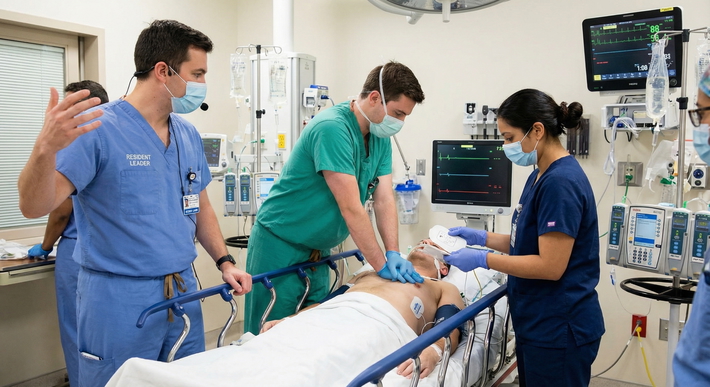
Problem: It is 3 AM, the patient is collapsing, and you have seconds, not time to debate
This is the real problem. Not the board-style version. The real one.
The nurse says, "They just got ceftriaxone." Or maybe "They ate something family brought." Or worse: "I do not know, but they are dropping their pressure." The room is half-staffed. Respiratory therapy is covering three units. Your senior is tied up in another rapid response. The chart is a mess. The patient is vomiting, wheezing, and fading right in front of you.
That is when people get in trouble. Not because they do not know what anaphylaxis is, but because they start negotiating with uncertainty. They want the rash. They want the perfect trigger. They want tryptase. They want someone else to say the word first.
Wrong move.
At 3 AM, your goal is not diagnostic elegance. Your goal is a fixed pathway you can run fast:
- Recognize the syndrome.
- Give IM epinephrine immediately.
- Support airway, breathing, and circulation.
- Reassess in minutes, not hours.
- Escalate early if the response is incomplete.
I have seen the miss. The patient who "just looked flushed" and got diphenhydramine first. Ten minutes later: stridor, pressure in the 70s, chaos. Delay kills. Diagnostic uncertainty is normal at night. Treating suspected anaphylaxis early is still the right call.
This is a treatment diagnosis. Act like it.
Recognition in 30 seconds: Suspect anaphylaxis when ANY of the following clusters appear
Do not wait for the classic textbook picture. At the bedside, especially overnight, anaphylaxis is a syndrome. Acute onset over minutes to hours, plus trouble in airway, breathing, circulation, skin, mucosa, or gut. That is enough to move.
Use this bedside rule:
Suspect anaphylaxis if there is acute deterioration plus one of these patterns
Airway involvement
- Hoarseness
- Stridor
- Throat tightness
- Tongue or lip swelling
- Progressive facial angioedema
Breathing involvement
- Wheeze
- Increased work of breathing
- Hypoxia
- Chest tightness
- Silent chest in severe bronchospasm
Circulatory involvement
- Hypotension
- Syncope or near-syncope
- Collapse
- Weak pulses
- Altered mental status from poor perfusion
Skin or mucosal findings
- Urticaria
- Flushing
- Itching
- Periorbital swelling
- Diffuse erythema
GI involvement after likely exposure
- Repetitive vomiting
- Crampy abdominal pain
- Diarrhea
High-risk presentations deserve zero hesitation:
- Hypotension after medication exposure
- Sudden syncope after food or drug exposure
- Hoarseness or stridor, even before hypotension appears
- Wheeze plus hives
- Refractory vomiting and collapse after a likely trigger
And here is the trap residents fall into: skin findings can be absent. No hives does not mean no anaphylaxis. I have seen severe anaphylactic shock with nothing more than hypotension, wheeze, and a bad story.
Do not wait for labs. Tryptase can be normal early. It can also be normal after treatment. None of that helps you in the first five minutes anyway.
If the patient acutely decompensates after an exposure and the pattern fits, treat first. You can tidy up the diagnosis later.
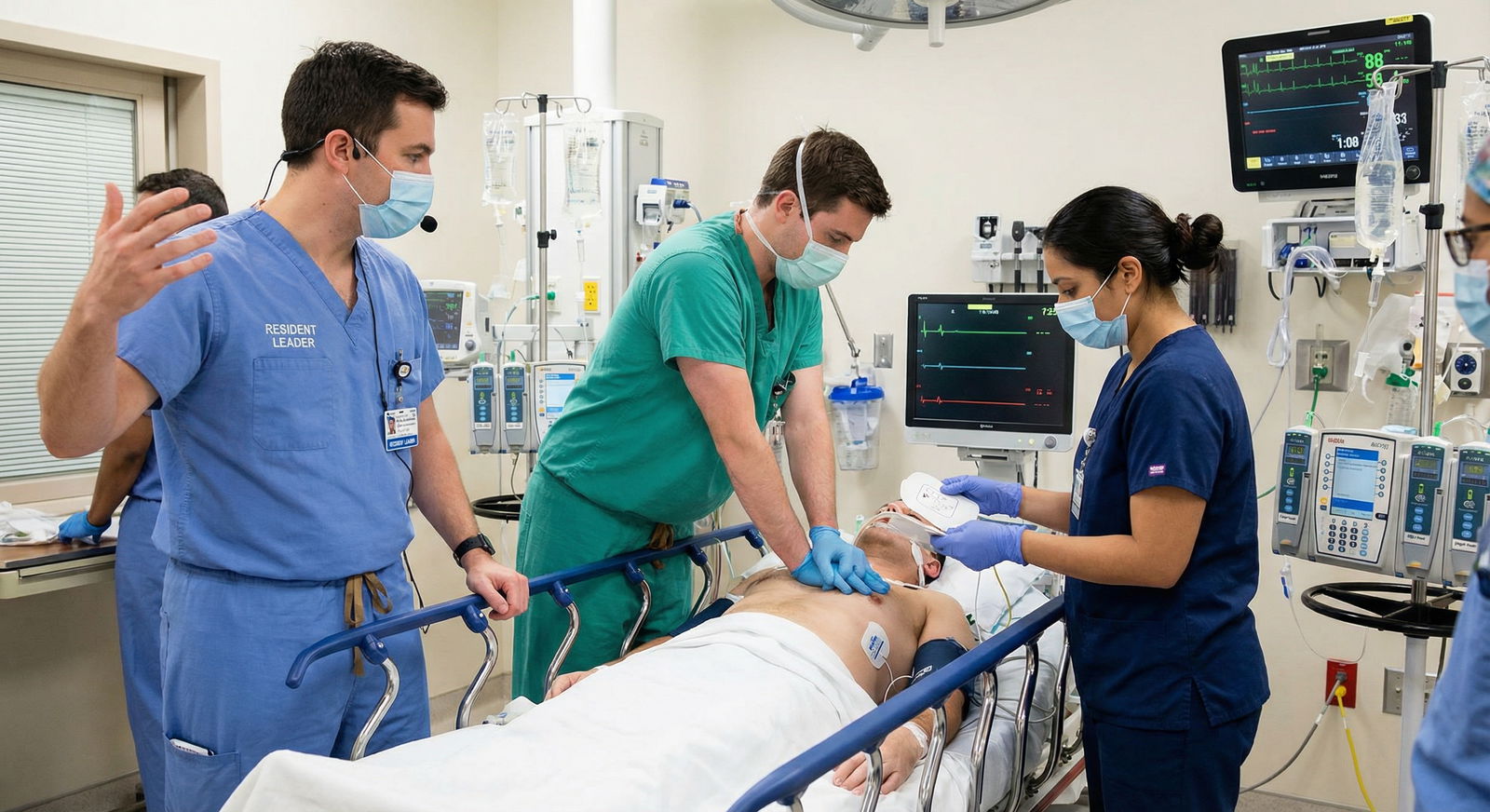
Fixed Orders Set (First 10 minutes): the protocol you can run without thinking
This is the part that should be automatic. Not creative. Not improvised. Fixed.
Minute 0: Call the problem what it is
Say it out loud: "Suspected anaphylaxis." That changes everyone's posture immediately.
Minute 0 to 1: Immediate actions
Call for help
- Notify senior resident/attending
- Pull in nursing support
- Alert respiratory therapy
- Consider rapid response/ICU help early if unstable
Move to monitored care
- Continuous pulse ox
- Cardiac monitor
- Frequent blood pressure cycling, or arterial line later if crashing
Position the patient
- Supine with legs elevated if hypotensive
- Left lateral if vomiting or pregnant
- Do not sit a hypotensive patient upright unless airway mechanics force you to
High-flow oxygen
- Non-rebreather if needed
- Escalate oxygen support based on work of breathing and saturations
IV access
- Two large-bore IVs if possible
- If one line is all you can get fast, use it and keep moving
Minute 1: Give epinephrine first
This is the life-saving drug. Everything else is support.
Adults
- IM epinephrine 0.3 to 0.5 mg of 1 mg/mL solution
- Give in the anterolateral thigh
Pediatrics
- IM epinephrine 0.01 mg/kg of 1 mg/mL solution
- Max per dose commonly 0.3 mg in many protocols
Repeat every 5 to 15 minutes as needed if symptoms persist or worsen.
My view is simple: if the patient is still hypotensive, still wheezing hard, still stridulous, or clearly not turning the corner, do not get cute. Repeat the IM epinephrine.
Minute 2 to 5: Add what matters
Order the support package alongside epinephrine:
For hypotension or shock
- Isotonic crystalloid bolus
- Adults: often start with 1 to 2 liters rapidly
- Pediatrics: typically 20 mL/kg
- Reassess perfusion after each bolus
- Anaphylaxis is distributive shock until proven otherwise. Under-resuscitation is common and dumb.
For bronchospasm
- Albuterol neb or MDI with spacer
- Use oxygen-driven nebs if available
- If severe distress persists, repeat or run continuous bronchodilator therapy per local practice
Antihistamines: adjunct only
- H1 antihistamines may help itch and hives
- They do not fix airway edema, shock, or life-threatening bronchospasm
- Never give these before epinephrine in a true anaphylaxis picture
Corticosteroids: delayed adjunct
- Order them after epi is underway and the patient is stabilizing
- They are not first-line rescue therapy
- They do not belong at the top of your mental stack at 3 AM
Prepare the room for the next five minutes, not the last five
While treatment starts, set up for failure to respond:
- Suction at bedside
- Bag-valve-mask in room
- Airway cart nearby
- Video laryngoscopy if available
- Backup airway plan
- Personnel assigned before the patient fully crashes
If there is stridor, voice change, progressive tongue swelling, or rapidly worsening edema, do not "watch a little longer." That is how you lose the airway while everybody is still pretending there is time.
Reassess every few minutes
Your repeat check is focused:
- Blood pressure trend
- Heart rate
- SpO2
- Work of breathing
- Voice quality
- Degree of wheeze/air movement
- Mental status
- Response after each epi dose and fluid bolus
You are looking for one thing: Are they clearly improving? If not, you escalate.
Escalation Triggers: When to switch from "repeat IM" to "infusion + airway"
This is where hesitation causes harm. Residents often keep repeating the same plan long after it has failed. If the patient is not responding adequately, the answer is not endless optimism. It is escalation.
Concrete escalation triggers
Move beyond simple repeat-IM management if you see:
- Persistent hypotension despite IM epinephrine and fluids
- Need for repeated epinephrine doses with only partial or brief response
- Ongoing hypoxia or severe bronchospasm
- Worsening airway edema
- Stridor, hoarseness, voice change, drooling
- Recurrent symptoms after initial improvement
- Any trajectory toward respiratory failure
A practical bedside trigger: if you are on the second or third IM dose and the blood pressure still stinks, the wheeze is still bad, or the airway is getting uglier, it is time to move to infusion-level thinking and ICU-level support.
Stepwise escalation
- Continue IM epinephrine while setting up the next step if needed.
- Start an epinephrine infusion per institutional protocol for ongoing shock or inadequate response.
- Prepare for airway management early if there is progressive edema or respiratory fatigue.
- Call ICU/critical care and make the ask clearly.
Do not call and say, "Can you come see this patient?" That wastes time.
Say this instead:
- "Suspected anaphylaxis."
- "Two IM epi doses given at 03:14 and 03:21."
- "BP remains 78/42 after 2 liters."
- "Still wheezing and now hoarse."
- "We are starting epinephrine infusion and need airway/ICU backup now."
That is a useful call. It tells the receiving team the pattern, the timing, and the urgency.
Epinephrine infusion basics for residents: safe targeting and common mistakes
Infusion is not failure. It is the correct next move when IM dosing is not enough.
What you are trying to fix
- Perfusion
- Blood pressure
- Air movement
- Oxygenation
- Work of breathing
Not the hives. Not the itching. Those are distractions if the patient is in shock.
Practical setup
Follow your institutional concentration and pump protocol. That matters more than memorizing one universal recipe from a blog article. Use pharmacy if available. If not, use the standard emergency department or ICU protocol you have been trained on.
General approach:
- Document baseline vitals before starting.
- Start at the protocolized initial infusion rate.
- Reassess every 2 to 5 minutes.
- Titrate to improved perfusion and respiratory status.
- Continue fluid resuscitation in parallel.
Monitoring essentials
- Continuous cardiac monitoring
- Frequent blood pressure checks
- Continuous pulse oximetry
- Mental status trend
- Urine output if relevant and available
Common resident mistakes
- Under-dosing IM epinephrine
- Waiting too long between doses
- Stopping vigilance because the patient looked better for five minutes
- Delaying fluids
- Focusing on rash while missing shock
- Starting adjuncts and forgetting the actual problem
The patient who briefly improves and then crashes again is common. Believe the physiology, not the false reassurance.
Adjunct therapies: Use them correctly (and in the right order)
Here is the clean hierarchy.
1. Epinephrine
First. Always first.
2. Oxygen and fluids
If they are hypoxic or hypotensive, this is not optional.
3. Bronchodilator for wheeze
- Albuterol for bronchospasm
- Repeat or continue based on distress and response
4. Antihistamines
Useful for:
- Hives
- Itching
- Comfort
Not useful as primary rescue for:
- Shock
- Airway edema
- Severe bronchospasm
5. Corticosteroids
Reasonable as a delayed adjunct once the patient is stabilized enough for it to matter. They are not the acute save.
The wrong sequence is common:
- Diphenhydramine first
- Steroid first
- "Let us see if they settle"
- Then epinephrine after the patient is clearly crashing
That sequence is bad medicine. Fix it.
And on fluids: give them promptly in hypotension. People chronically under-resuscitate anaphylaxis because they think the whole answer is epinephrine. It is not. This is distributive physiology, often with major third-spacing. Reassess after each bolus, but start early.

After the initial event: observation, discharge criteria, and preventing bounce-backs
If the patient stabilizes, the job is not over.
Why observation matters
Biphasic reactions happen. The risk is higher after:
- Severe initial presentation
- Delayed epinephrine
- Recurrent symptoms
- Need for multiple epinephrine doses
- Infusion-level care
Observation time depends on severity and local policy, but severe cases do not belong in a rushed discharge pipeline.
Practical discharge safety steps
Before discharge, make sure you have:
- Clarified likely trigger if possible
- Reviewed avoidance instructions
- Prescribed or ensured access to epinephrine auto-injector(s) per local protocol
- Taught the patient how and when to use it
- Given return precautions that are actually understandable
If the patient cannot explain back to you when to use epinephrine, the teaching was not good enough.
Documentation checklist
Write the timeline. This matters for safety, allergy follow-up, and handoff. Include:
- Suspected exposure and time
- First symptom and progression
- Airway, breathing, circulation, skin, and GI findings
- Exact times and doses of epinephrine
- Number of repeat doses
- Fluid volume given
- Adjuncts used
- Response after each intervention
- Need for infusion, oxygen escalation, or airway planning
Night-shift handoff protocol
Use SBAR and give the timeline, not just the diagnosis.
Example:
- Situation: Suspected anaphylaxis after IV antibiotic at 02:58.
- Background: No prior reaction documented. Developed flushing, wheeze, vomiting, then hypotension.
- Assessment: Received IM epi x2, 2 liters crystalloid, albuterol, now BP improving but still hoarse.
- Recommendation: Continue monitored observation, watch for recurrent symptoms, airway risk remains, ICU aware.
If an infusion is running, include:
- Current rate
- Last titration
- Most recent vitals
- Airway concerns
- Pending labs only if they actually matter
Communication templates: How to talk to seniors, ICU, pharmacy, and nursing at 3 AM
Good communication saves time. Vague communication burns it.
Use this fixed script
"Suspected anaphylaxis. IM epinephrine given at 03:12. Repeated at 03:19. BP fell from 92/58 to 76/40, now 80/44 after 1 liter. Wheezing persists, voice is hoarse, SpO2 is 89% on non-rebreather. We are giving fluids, albuterol, preparing infusion, and need ICU plus airway backup now."
That is crisp. Keep it.
Assign roles immediately
- Airway lead
- Medication lead
- Documentation/timekeeper
- Family liaison
The room gets calmer when roles are explicit. I have seen the opposite too. Five smart people, nobody assigned, everybody assuming someone else gave the second epi dose. That is how errors happen.
What pharmacy needs to hear
- Suspected anaphylaxis
- Number of IM doses already given
- Current hemodynamics
- Need for epinephrine infusion setup now
Summary: Your checklist is the antidote to 3 AM panic
At 3 AM, you do not need brilliance. You need a sequence.
Recognize fast. Treat suspected anaphylaxis as a clinical syndrome. Give IM epinephrine immediately. Reassess within minutes. Repeat it when the response is incomplete. Add oxygen, fluids, and bronchodilator support without delay. Escalate to epinephrine infusion and airway preparation when hypotension, hypoxia, or airway compromise persists.
This is what you control:
- Speed
- Dose
- Reassessment frequency
- Escalation timing
- Clear communication
Do not wait for labs. Do not let the lack of rash fool you. Do not hide behind uncertainty. Suspected anaphylaxis is a treatment diagnosis. At 3 AM, that mindset saves patients.