
The first three months of intern year will make or break your on‑call confidence. Most people drift through them. You will not.
Below is a month‑by‑month plan to go from “terrified to pick up the pager” to “I’ve got this” by the end of PGY‑1. No fluff. Just what you should be doing, and when.
Big Picture: Your Intern‑Year On‑Call Timeline
At this point you need to see the whole year before you zoom in.
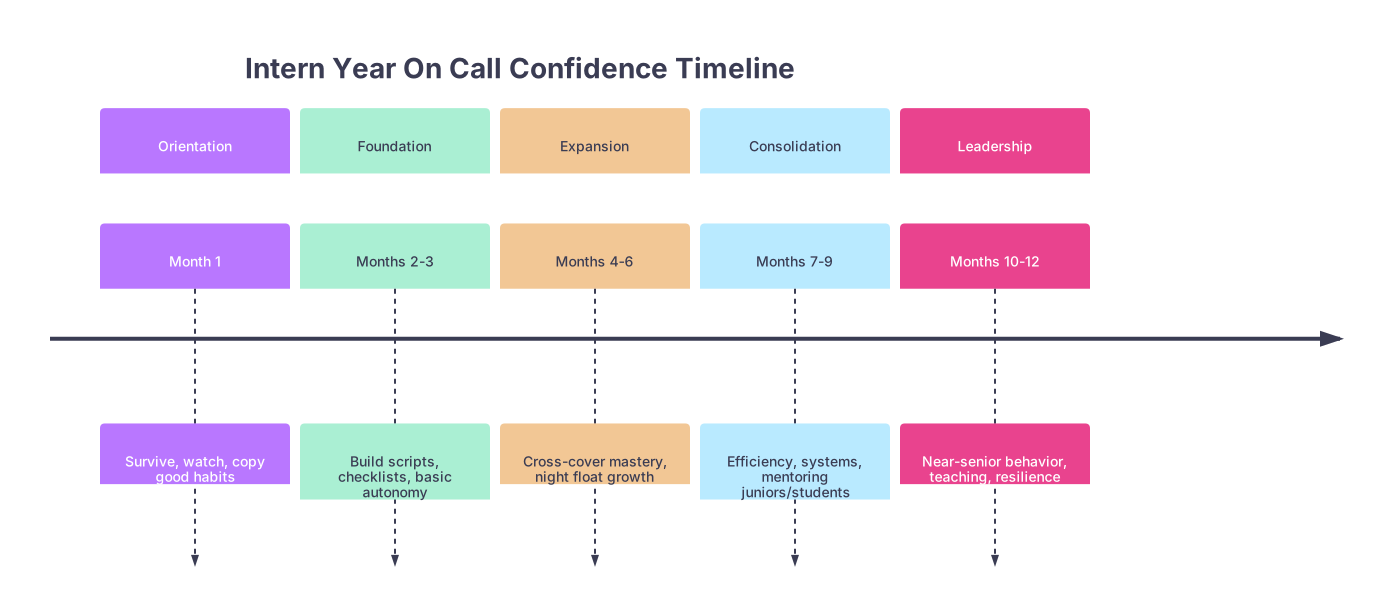
| Period | Event |
|---|---|
| Orientation - Month 1 | Survive, watch, copy good habits |
| Foundation - Months 2-3 | Build scripts, checklists, basic autonomy |
| Expansion - Months 4-6 | Cross-cover mastery, night float growth |
| Consolidation - Months 7-9 | Efficiency, systems, mentoring juniors/students |
| Leadership - Months 10-12 | Near-senior behavior, teaching, resilience |
Your confidence curve tends to look like this: miserable → shaky → functional → competent → occasionally smooth. Plan for that.
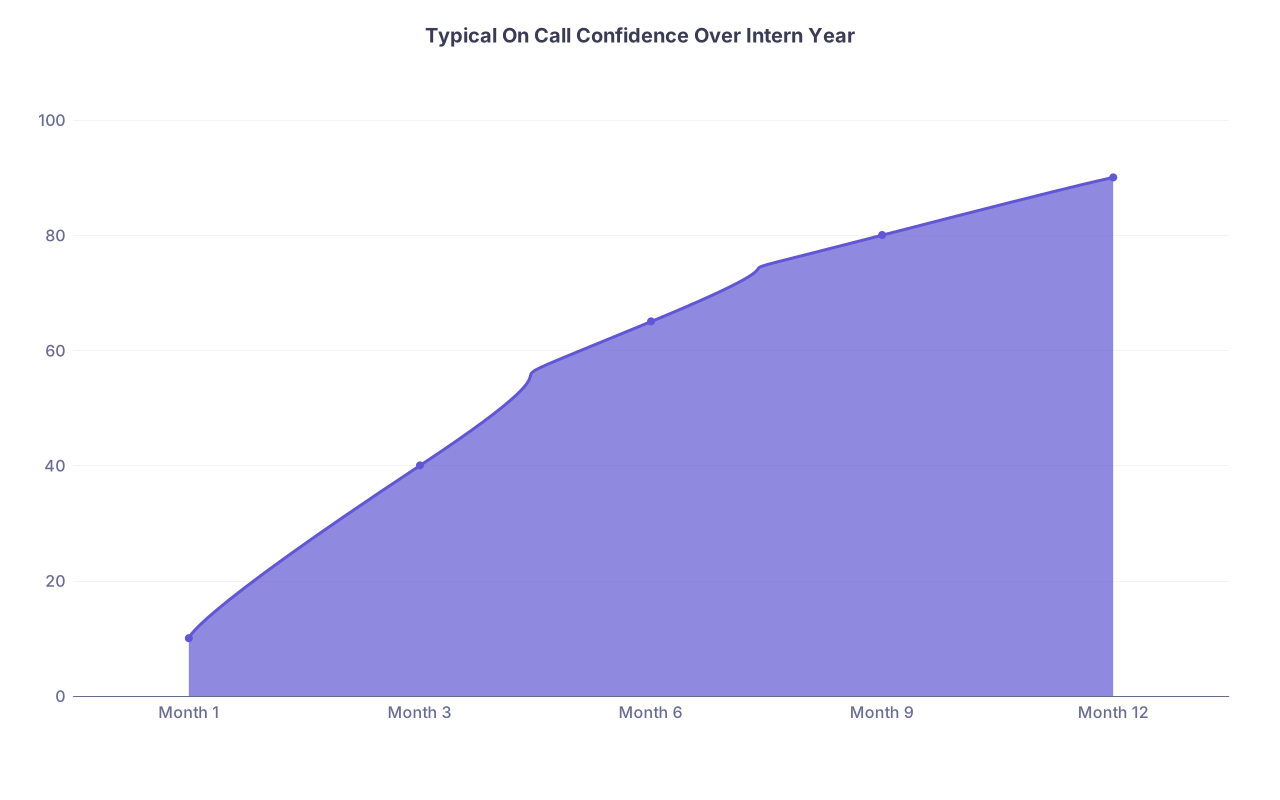
| Category | Value |
|---|---|
| Month 1 | 10 |
| Month 3 | 40 |
| Month 6 | 65 |
| Month 9 | 80 |
| Month 12 | 90 |
Target: by Month 6 you should be safe and mostly steady; by Month 12 you should handle 90% of pages without needing help.
Month 1: Survival Mode with Intent
At this point you should not be trying to be “independent.” You should be trying to not drown while quietly building internal structure.
Week 1–2: Orientation + First Calls
Your priorities:
- Learn the mechanics of call, not the heroics.
- Watch your seniors like a hawk. Steal their phrases and flows.
- Build your personal “oh no it’s 3 AM” tools.
Concrete actions:
-
- One small notebook or notes app section with:
- Rapid assessment scripts: chest pain, shortness of breath, hypotension, altered mental status, fever, tachycardia, low urine output.
- Stat labs to consider for each.
- Default fluids and doses you’ve confirmed with seniors/attendings.
- Don’t crowd it. The test: can you find what you need in 10 seconds with shaky hands?
- One small notebook or notes app section with:
Shadow your senior on early calls
- When possible, physically walk with them on:
- First rapid response or RRT
- First new admission
- First “this seems bad” cross-cover page
- Listen for their openers:
- “Tell me what’s going on.”
- “What’s the blood pressure and oxygen right now?”
- “I’m on my way. Put them on a nonrebreather and grab vitals q5 minutes.”
- When possible, physically walk with them on:
Establish your “page response script” For every non-crashing page, use something like:
- Get name/MRN/location
- Get vital sign snapshot
- One‑line problem: “66M with CHF, new dyspnea and 88% on 2 L”
- Say what you’re doing: “I’ll be there in 5 minutes; can you recheck vitals and put them on the monitor?”
-
- After each call night, ask your senior:
- “What’s one thing I could have done better tonight?”
- “Was there a page I overreacted/underreacted to?”
- Write their answers down. Same day, or you’ll forget.
- After each call night, ask your senior:
Week 3–4: Start Owning Simple Things
By the end of Month 1 you should:
- Comfortably handle:
- Tylenol orders
- PRNs for pain, nausea, insomnia (with guardrails)
- Mild electrolyte abnormalities
- Simple HTN/tachycardia in stable patients
- Know when you need to see the patient now vs. in 30–60 minutes.
Daily practice:
- For each page, explicitly decide:
- “Can I safely manage this by phone with clear instructions?”
- “Do I need to see them soon?”
- “Is this a ‘drop everything and run’?”
You will overcall and over‑see. Good. That’s where safety starts.
Month 2–3: Build Systems and Scripts
At this point you should stop white‑knuckling every page and start standardizing how you think.
Month 2: Problem‑Based Checklists
You’re ready to convert chaos into patterns.
Build 1‑page algorithms (index card or one phone note) for:
- Shortness of breath
- Chest pain
- Hypotension
- Fever
- Oliguria
- Agitation/Delirium
- Hypoglycemia/Hyperglycemia
Example: shortness of breath (what I’ve actually seen work):
Ask nurse on the phone:
- Vitals: BP, HR, RR, O2 sat, temp
- Mental status: “More confused or sleepy than usual?”
- Current O2 source and flow
- Any recent changes: meds, fluids, transfusions, procedures
At bedside (within minutes if unstable):
- ABCs, look at work of breathing
- Check monitor trends
- Listen lungs, heart, look at legs, JVP
- Verify lines, O2, and alarms actually working
Immediate orders based on pattern:
- New hypoxia + crackles + hypertension → suspect flash pulmonary edema: nitro (if BP ok), IV diuretics, NIPPV with senior involved.
- Hypoxia + clear lungs + unilateral leg swelling → PE workup, escalate early.
- Hypoxia + fever + new infiltrate → sepsis bundle, cultures, antibiotics.
You’re not creating textbook‑perfect trees. You’re creating “2 AM, half awake, safe enough” guides.
Month 3: Cross‑Cover Discipline
By now you’re doing more nights or late calls. The biggest leap in confidence comes from structured cross‑cover.
During sign‑out:
- Refuse vague plans. Fix this:
- Bad: “If BP low, give some fluids.”
- Good: “If MAP < 65 twice, bolus 500 mL LR x1, then page me or night float if still low.”
- For each sick‑ish patient, write:
- 1‑line story: “ESRD on HD, septic shock yesterday, on 2 L NC, MAPs 65–75.”
- Specific “if/then”s: “If febrile >38.5 again, repeat cultures and lactate, call MICU fellow before second bolus.”

Create a cross‑cover checklist you run nightly:
- Before 10 pm:
- Review all high‑risk patients
- Check tonight’s key labs and imaging pending
- Clarify “don’t miss” issues with your senior
- Midnight:
- Scan overnight labs for disasters
- 4–5 am:
- Last vitals/labs scan, prep pre‑round notes
This structure is how you stop waking up in a cold sweat about “what did I miss?”
Month 4–6: Night Float and High‑Stress Calls
At this point you should be moving from “reactive intern” to “proactive, pattern‑recognizing intern.”
Month 4: First Extended Nights
Your goal now: turn panic events into rehearsed events.
Key moves:
Run your own initial code/RRT steps
- You are not the team leader yet, but you must:
- Announce your name/role
- Call out what you see: “Airway obstructed, no chest rise.”
- Start the basic algorithm: compressions, airway adjuncts, epinephrine timing.
- After each event, jot down:
- What you froze on
- What the senior did that you didn’t think of
- You are not the team leader yet, but you must:
Pre‑night pre‑mortem
- Before each block of nights, list:
- 3 things that went poorly last block (e.g., “took too long to call ICU,” “forgot to check lactate,” “panicked with agitated delirium”)
- 1–2 behaviors you’ll do differently this time.
- Before each block of nights, list:
Page triage speed drills
- For one or two nights, time yourself (literally):
- From page received → to documented plan or “I’m en route”
- You’ll start to see:
- Which pages you’re overthinking
- Where you’re slow (often the “chart dive” trap)
- For one or two nights, time yourself (literally):
Month 5: Admission Flow and Efficiency
You should start to feel less destroyed by each admission.
Goal: standardize your admission process so it doesn’t consume all mental energy.
Build an admission flow:
On first contact:
- Clarify admitting problem in 1 line
- Ask ED/other team: “What are you most worried about?”
At bedside:
- Focused H&P built around chief complaint, not full template life history
- Decide disposition early: floor vs step‑down vs call ICU
After leaving room, always:
- Place immediate safety orders:
- Vitals frequency
- Telemetry vs no tele
- PRNs for pain, nausea
- DVT prophylaxis
- Then do fancy stuff (consults, bespoke orders)
- Place immediate safety orders:
You’ll notice on‑call confidence skyrockets when you’re not still finishing your 9 pm admission note at 1 am.
Month 6: Mid‑Year Checkpoint
By now, your on‑call performance should be clearly better than Month 1. If it isn’t, you course‑correct here.
Audit yourself:
- Pull 3–5 recent call nights.
- For each, ask:
- Did I miss any critical labs/vitals?
- Did any senior/attending say “this should’ve been escalated sooner”?
- How many times did nursing have to re‑page me for the same problem?
Summarize into 3 growth targets for the next quarter.
Month 7–9: From Not Dangerous to Genuinely Good
At this point you should be safe. Now you work on good.
Month 7: Anticipation and Prevention
You’re no longer just responding. You’re predicting.
Before each call shift:
- Identify 3–5 patients likely to blow up:
- Borderline vital signs
- Borderline labs (Na 121, K 5.7, lactate 2.4 and rising)
- “Soft” sepsis
- Write a one‑line prediction:
- “If this patient worsens, it will probably be hypotension from ongoing sepsis.”
- Pre‑emptive moves:
- Tighter vitals frequency
- Earlier cultures/imaging
- Earlier senior/ICU discussion
This alone will prevent 1–2 disasters per month. That’s not an exaggeration.
Month 8: Communication Mastery
A lot of on‑call anxiety is really “I don’t know how to say this to the consultant/attending/nurse.”
At this point you should:
- Have a tight SBAR style for pages to seniors/attendings.
- Never call a consultant with:
- “I’m not sure what’s going on, can you see them?”
- Instead:
- “68M with known cirrhosis, GI bleed yesterday, now new melena and Hb drop from 8 to 6.5, HR 110, BP 100/60 on 2 units in. I’m concerned about ongoing bleed and think he needs urgent scope—can you see him tonight?”
| Scenario | Bad Call Example | Better Call Example |
|---|---|---|
| Hypotension | “Patient’s pressure is low.” | “MAP 55 in septic patient despite 2L fluids, lactate 4.2, requesting ICU eval.” |
| Agitated delirium | “Patient is combative, need meds.” | “New agitation in post‑op 75F, vitals stable, suspect delirium, requesting help with non‑pharm + safest med option.” |
| Possible STEMI | “EKG looks weird to me.” | “New 2 mm ST elevations V2‑V4 in 60M with chest pain, trop pending, activating STEMI alert—agree?” |
You’ll feel your confidence harden when you can predict what the consultant will ask before they ask it.
Month 9: Teaching and Guiding Others
At this point you should start behaving like a baby senior, even if the badge still says “PGY‑1.”
When on call with students or new interns:
- Verbally walk through your approach:
- “We’re getting this page about fever. Listen to the questions I ask the nurse. Notice I always get vitals and mental status first.”
- Let them propose a plan, then refine it.
- After a code or RRT:
- “Tell me in 3 sentences what happened and what you’d do next time.”
Teaching forces you to organize your thinking. It exposes your gaps. That’s where the next level of confidence comes from.
Month 10–12: Near‑Senior Mode
At this point you should feel like you could function as a lower‑acuity senior with guardrails. You’re not “done.” But you’re not lost either.
Month 10: Complex Scenario Drills
Now you refine edge cases that still rattle you:
- DNR/DNI with acute deterioration
- Family demanding “everything” at 2 am
- Prolonged seizure/status epilepticus
- Massive GI bleed
- Post‑op chest pain or dyspnea
Pick one scenario per week and:
- Read 10–15 focused minutes on the algorithm.
- Ask a real senior or fellow:
- “Walk me through what you actually do in this situation on nights.”
- Update your pocket notes with real‑world steps, not just guidelineese.
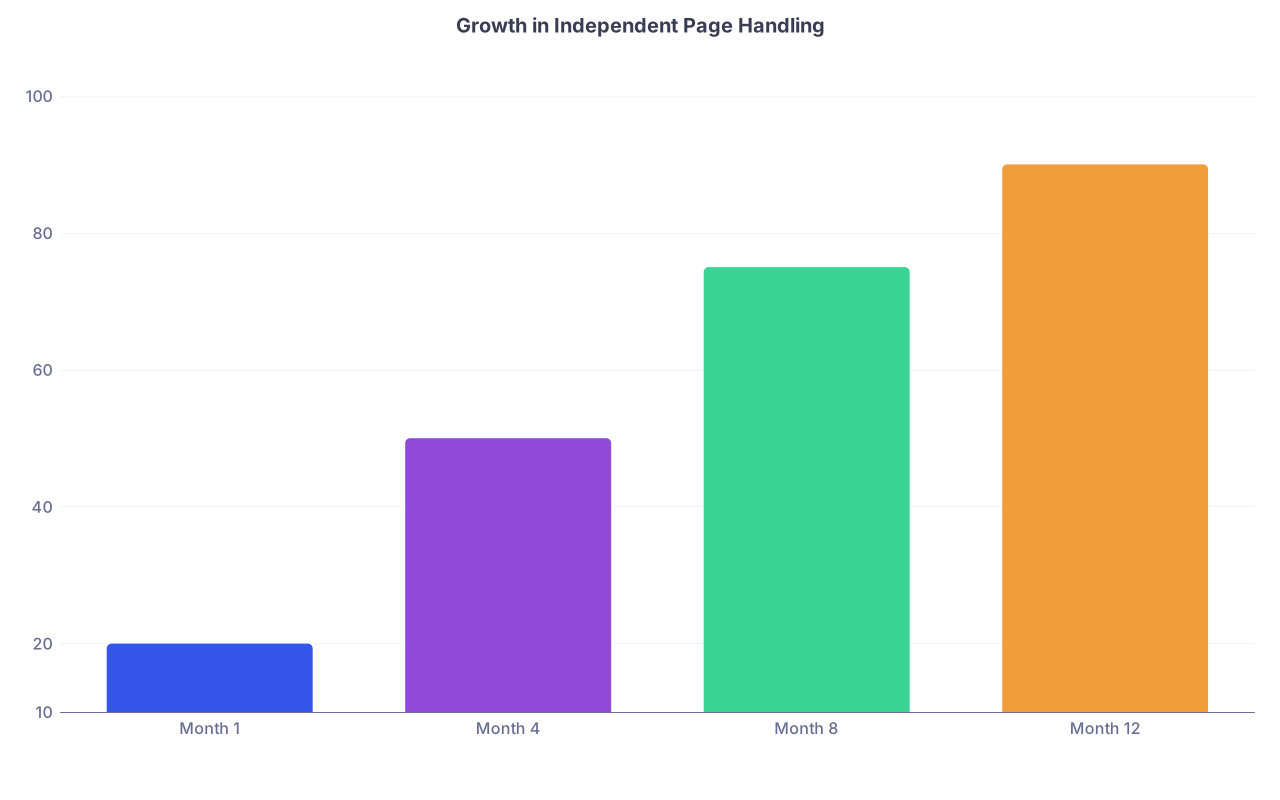
| Category | Value |
|---|---|
| Month 1 | 20 |
| Month 4 | 50 |
| Month 8 | 75 |
| Month 12 | 90 |
By now, most pages should be handled independently, with selective escalation.
Month 11: Systems, Not Heroics
You shift from “I saved this patient” to “the system works because I set it up right.”
On call, you:
- Build clear overnight plans for your own patients so the covering intern isn’t guessing.
- Use order sets and care pathways wisely (sepsis bundles, ACS, stroke alerts).
- Reduce friction:
- Anticipate which meds will not be in Pyxis.
- Pre‑enter imaging contrast parameters when appropriate.
- Coordinate early with RT, pharmacy, and transport.
You’ll notice nights feel “lighter” not because patients are magically healthier, but because you’ve removed 20 tiny sources of chaos.
Month 12: Exit Interview With Yourself
At this point you should be preparing to step into a real senior role next year. You don’t just want to have survived; you want to know how you got better.
Do a structured review:
Look back at Month 1–2 notes.
- Compare your old pocket algorithms to what you actually do now.
- Cross out what turned out to be useless. Update what works.
Ask 2–3 seniors you trust:
- “What did you worry about with me on call earlier this year that you don’t anymore?”
- “What’s the one area I still need to tighten before being a senior on nights?”
Write your own ‘Intern On‑Call Guide’
- 2–3 pages max.
- Sections:
- Top 10 pages and how to respond.
- When to drop everything and run.
- When to wake the senior without hesitation.
- How to set up a safe night for cross‑cover.
- This becomes gold for the next class—and a reality check of what you’ve learned.

Weekly & Daily Rhythm: How to Practice On‑Call Skills
Month‑by‑month is the skeleton. Here’s how you train week by week and day by day.
Weekly
Each week of intern year, especially the first 9 months, you should:
- Pick one recurring problem to master (e.g., hyponatremia, pain control, AFib RVR).
- Ask 1–2 seniors: “What’s your 2 am approach to this?”
- Update your pocket note with a simple, actionable algorithm.
- After each call, write one sentence on what rattled you and how you’ll handle it next time.
That’s it. Repetition wins.
During a Call Night
Pattern for each night:
Start of shift (first 30–45 min)
- Get detailed sign‑out
- Flag 3–5 “watch closely” patients
- Clarify all “if BP… if fever…” contingencies
Middle of shift
- Triage pages with your standard script
- For every “I’m going to see them,” set a mental or written time (“I’ll reassess in 1 hour”)
-
- Quick chart check for high‑risk patients
- Make 1–2 dot phrases or templates smarter based on what slowed you down tonight
- Jot down a 3‑bullet debrief:
- What went well
- What felt shaky
- What I’ll change tomorrow
You don’t need a perfect reflection practice. You need a consistent, brutally honest one.
Final Key Points
- Confidence on call is built deliberately month by month, not granted magically in June.
- Scripts, checklists, and brutally honest post‑call reviews are what separate the safe, steadily calmer intern from the one who stays scared all year.
- By treating each month of intern year as a specific training block—with concrete skills to acquire—you’ll finish PGY‑1 actually ready to be the one others look to on those ugly 3 am pages.