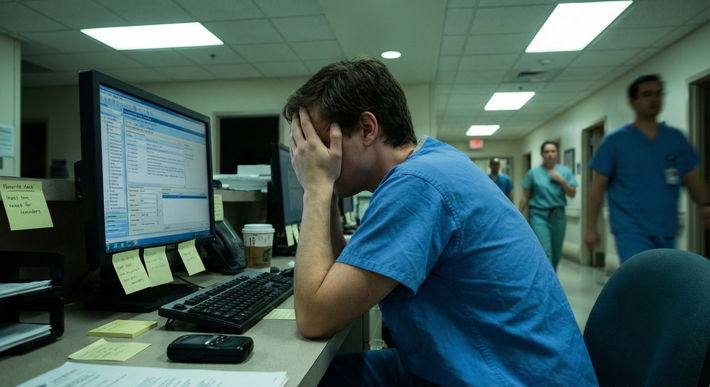
You don't lose verbal orders in trauma because you're careless. You lose them because trauma bays are built to overload human memory.
Someone's cutting clothes. Someone's asking for a blood gas. The monitor is alarming. The surgeon wants TXA. The nurse is clarifying blood products. RT is adjusting the airway setup. Then, thirty seconds later, somebody asks, "Did we ever send that repeat lactate?" and the room goes weirdly quiet.
If you struggle to capture everything happening in real time, review strategies like how to track resident tasks so nothing falls through the cracks to stay ahead of the chaos.
I've seen this happen over and over. Good teams. Smart residents. Strong attendings. Doesn't matter. If there isn't a system, verbal orders evaporate.
And here's why this matters to your career early: people quietly decide whether they trust you in chaos. Not based on how impressive you sound. Based on whether the right things happen, in the right order, without needing to be rediscovered three minutes later. In trauma, reliability is currency. If you're the resident who can keep the room moving and prevent order loss, people remember. If you're the one saying "I thought someone got that," they remember that too.
This isn't just about efficiency. It's patient safety. Missed antibiotics, delayed blood, forgotten calcium after massive transfusion, repeat labs that never get drawn, imaging ordered but never communicated, consults assumed but never called. Small losses stack into real harm fast.
The fix is not "try harder." That's nonsense. Nobody thinks better in a louder room. The fix is externalizing the task: closed-loop communication, visible tracking, role clarity, and one simple habit residents underestimate, writing things down immediately, even when it feels awkward.
For more actionable frameworks on managing heavy workloads under pressure, check out structured approaches to organizing cross-cover on large services.
If you're in residency and trauma resuscitations still feel like a blur, good. That's honest. The goal isn't to become magically calm. The goal is to become organized enough that the blur doesn't beat you.
The Core Challenge
Here's the ugly truth: verbal orders get lost because trauma resuscitations reward speed but punish ambiguity. People hear partial information, assume ownership is obvious, and move on. It isn't obvious. Not in a room full of adrenaline and parallel tasks.
The most common failure modes are boring. That's what makes them dangerous.
1. The order was heard by everyone and owned by no one
Classic example: "Can we get a repeat pressure after the unit is in?" Five people hear it. No one knows who is responsible. Everyone assumes someone else is doing it. That's not a communication problem. That's a responsibility problem.
2. The order was heard, but not repeated back
An attending says, "Give 1 gram TXA now." A nurse nods while hanging blood. No verbal confirmation. Twenty seconds later another urgent task interrupts. Now the room only feels like TXA happened.
That feeling gets residents in trouble.
3. The room is running two priorities at once
Airway on one side. Access and blood on the other. You cannot rely on ambient hearing in split-attention situations. If an order isn't directed to a person, it becomes background noise.
4. The resident tries to be the hero and the recorder
Bad move. If you're placing lines, presenting, updating family, watching hemodynamics, and mentally keeping a to-do list, you're not multitasking. You're dropping tasks in a fancier outfit.
5. "Ordered" gets confused with "done"
This one is constant. Someone says, "We need pelvic films." Another person says, "Ordered." Great. Were they obtained? Read? Acted on? Residents blur these steps all the time. Ordered is not done. Done is not resulted. Resulted is not communicated.
6. Nobody pauses to reconcile
In prolonged resuscitations, there should be quick reset moments:
- What did we ask for?
- What's completed?
- What's pending?
- What's the next risk if we miss something?
Without that pause, the team keeps sprinting past unfinished tasks.
I have a strong opinion here: if you're the resident in the room, your job is not to remember everything. Your job is to build a visible system so the room doesn't depend on memory. That's a better standard. And it's realistic.
A lot of trainees think note-taking in trauma makes them look slow or unsure. Wrong. Frantic memory theater is what looks weak. Quietly writing "TXA 14:06," "MTP active," "repeat ABG pending," "ortho called 14:12" makes you look like someone the team can lean on.
Use whatever tool your institution tolerates:
- trauma flowsheet
- folded sign-out paper in your scrub pocket
- whiteboard in the bay
- EHR tracking column if someone is stationed there
- a dedicated "pending" section on your patient list
The medium matters less than one rule: every verbal order gets converted into something visible.
Here's the practical hierarchy I use.
When you hear an order:
- Identify who owns it.
- Repeat it back.
- Mark it visibly.
- Confirm completion.
- Clear it from the list only when it's actually done.
That sounds basic because it is basic. Basic is what works in chaos.
What this sounds like in real life
Not:
- "Can someone call ortho?"
- "We need labs."
- "Let's give calcium."
Better:
- "Sarah, call ortho now for open tib-fib fracture."
- "Mike, repeat CBC, CMP, coags, ABG now, please repeat back."
- "Nurse Patel, 1 gram calcium chloride now. Let me know when it's in."
Then your part:
- write it down
- listen for confirmation
- circle back if the room moves on
If you're leading or semi-leading, use mini reconciliations every few minutes:
- "Quick check, TXA in?"
- "Have repeat vitals after blood?"
- "Did ortho call back?"
- "What labs are still pending?"
These tiny check-ins save resuscitations. They also save your credibility.
One more hard truth: hierarchy makes this worse. Junior people hesitate to clarify orders because they don't want to look dumb or slow down the attending. Forget that. A missed order is worse than an awkward repeat-back. Every time.
If you didn't hear clearly, say:
- "I didn't catch that, was that calcium now?"
- "Who do you want owning the repeat gas?"
- "I'm marking CT as pending, has transport been called?"
That's not weakness. That's how competent people keep patients safe.
Actionable Next Steps
If you're walking into trauma regularly, build a system before your next shift. Not after another messy case. Before.
Your step-by-step plan
1. Pick one tracking tool and commit to it
Don't rotate between random scraps of paper, memory, and the EHR. Pick one default.
Good options:
- a folded paper trauma checklist in your pocket
- the trauma narrator/flowsheet if you're assigned that role
- a whiteboard with two columns: Pending and Done
- your rounding list with a box specifically labeled Active trauma tasks
The best tool is the one you'll actually use when the room gets loud.
2. Pre-write the high-yield trauma items
Before the patient arrives, make a skeleton:
- airway
- access
- blood/MTP
- meds
- labs
- imaging
- consults
- disposition
Now when orders come, you drop them into buckets instead of trying to create order from scratch mid-chaos.
3. Use closed-loop language on purpose
This feels scripted at first. Good. Scripted is fine.
Say:
- "I'll track pending orders."
- "Can you repeat that back?"
- "That's still pending."
- "Completed at 14:18."
- "Who owns that task?"
Residents who do this consistently become anchors in the room.
4. Keep a live "pending" list
Not a memory. A list.
For example:
- 2nd unit PRBC in
- repeat BP after transfusion
- calcium after blood
- repeat ABG/lactate
- pelvic x-ray
- FAST documented
- ortho callback
- ICU bed request
Then cross items off only after verbal completion. Not after hope. Not after assumption.
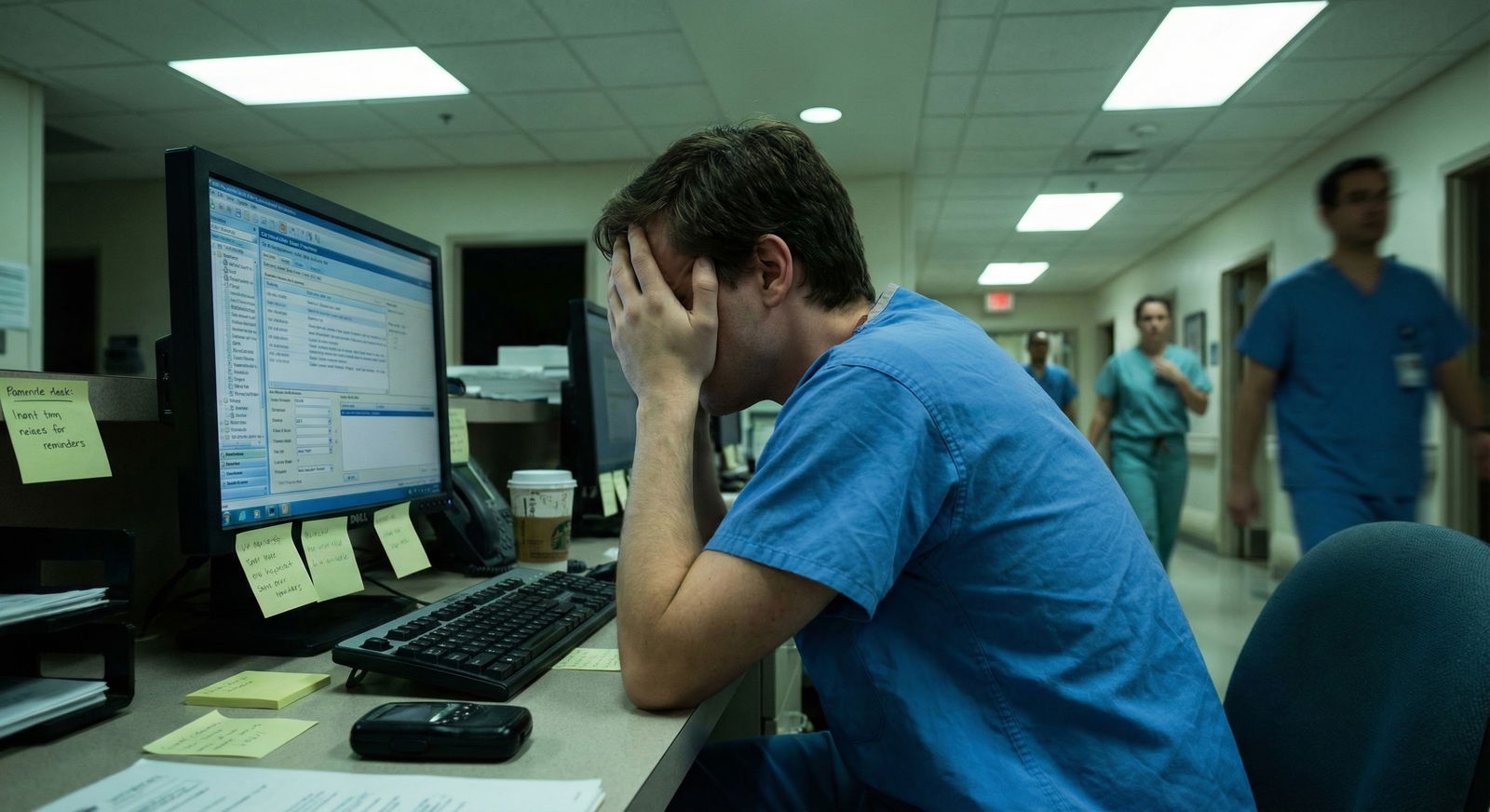
5. Build reset points into the resuscitation
Every few minutes, especially after a major intervention, ask for a quick task sweep:
- what's done
- what's pending
- what's the next bottleneck
This takes ten seconds and prevents the stupidest misses.
6. Debrief yourself after messy cases
Right after the case, ask:
- What got lost?
- Why did it get lost?
- Was there no owner?
- No repeat-back?
- No visible tracker?
- Was I trying to do too many jobs?
If you do this honestly for five trauma shifts, you'll see your own pattern fast.
A simple script you can use tonight
If you're the resident trying to hold things together, say this early:
"I'll track verbal orders. If something's requested, assign it to a person and I'll mark it pending until it's confirmed done."
That's it. Clean. Useful. Nobody argues with helpful structure when the room is busy.
Resources worth using
Skip bloated productivity advice. Use tools tied to the actual environment.
- ATLS principles for structured trauma priorities
- Your hospital's massive transfusion protocol workflow
- Local trauma documentation sheets
- Whiteboard or bedside task board if available
- A pocket card you make yourself with common trauma tasks
- Debriefs with senior residents after difficult resuscitations
If your program has simulation, ask to practice one specific skill: tracking and closing loops on verbal orders during a mock trauma. Not intubation. Not central lines. Order tracking. It sounds unglamorous because it is. It's also one of the highest-yield resident skills nobody brags about and everybody needs.
What to remember when the room gets loud
Be prepared. Focus on high-yield areas.
That means:
- blood products
- meds tied to resuscitation timing
- repeat vitals
- repeat labs
- imaging actually obtained
- consults actually reached
- disposition actually moving
Don't try to be impressive. Be trackable.
If you want one change from this article, make it this: never let a verbal order live only in the air. Give it an owner. Write it down. Confirm it's done.
Do that on your next trauma shift. Then the next one. Then every one after that. You'll make fewer mistakes, your team will trust you more, and the room will feel a lot less out of control. That's not theory. That's survival.