Master MCAT test-day dry runs with a step-by-step simulation plan: realistic conditions, scheduling, and strategies to improve timing, stamina and scores.
3,300 articles found in 2.78s
Master MCAT test-day dry runs with a step-by-step simulation plan: realistic conditions, scheduling, and strategies to improve timing, stamina and scores.
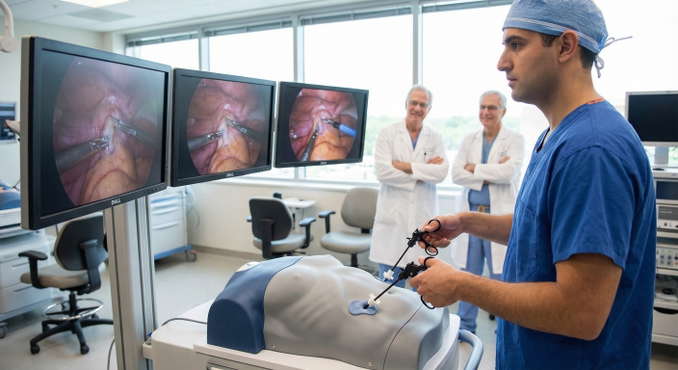
Compare surgical simulation hours to live case volume: learn which competencies simulation can replace, where live cases remain essential.
Learn how simulation-based education prepares clinicians for rare, high-stakes emergencies, choose modalities, design scenarios, and improve team performance.
Learn when EMS ride-alongs and simulation time count toward residency duty hours. Avoid mislogging, compliance issues, and fatigue distortions.
OSCE and simulation accommodations for sensory disabilities: practical steps to design accessible stations, support DHH learners, and use qualified interpreters.
Evaluate new residency simulation labs, POCUS training, and procedure tracks, ask the right questions, spot red flags, and benchmark true procedural skill.
Evidence-backed VR simulation training that yields measurable skill gains and performance metrics for surgical and procedural education - see the data.
Structured surgical simulation framework to compensate for low operative volume: four levels, targeted tasks, and protocols to rebuild resident surgical skills.
Simulated NRMP analysis shows how cutting your residency rank list by 30% can double unmatched risk - see data-driven strategies to protect your match.
Critical review of VR simulation training for procedural skills: what improves on simulators, limits in real-patient transfer, and guidance for educators.