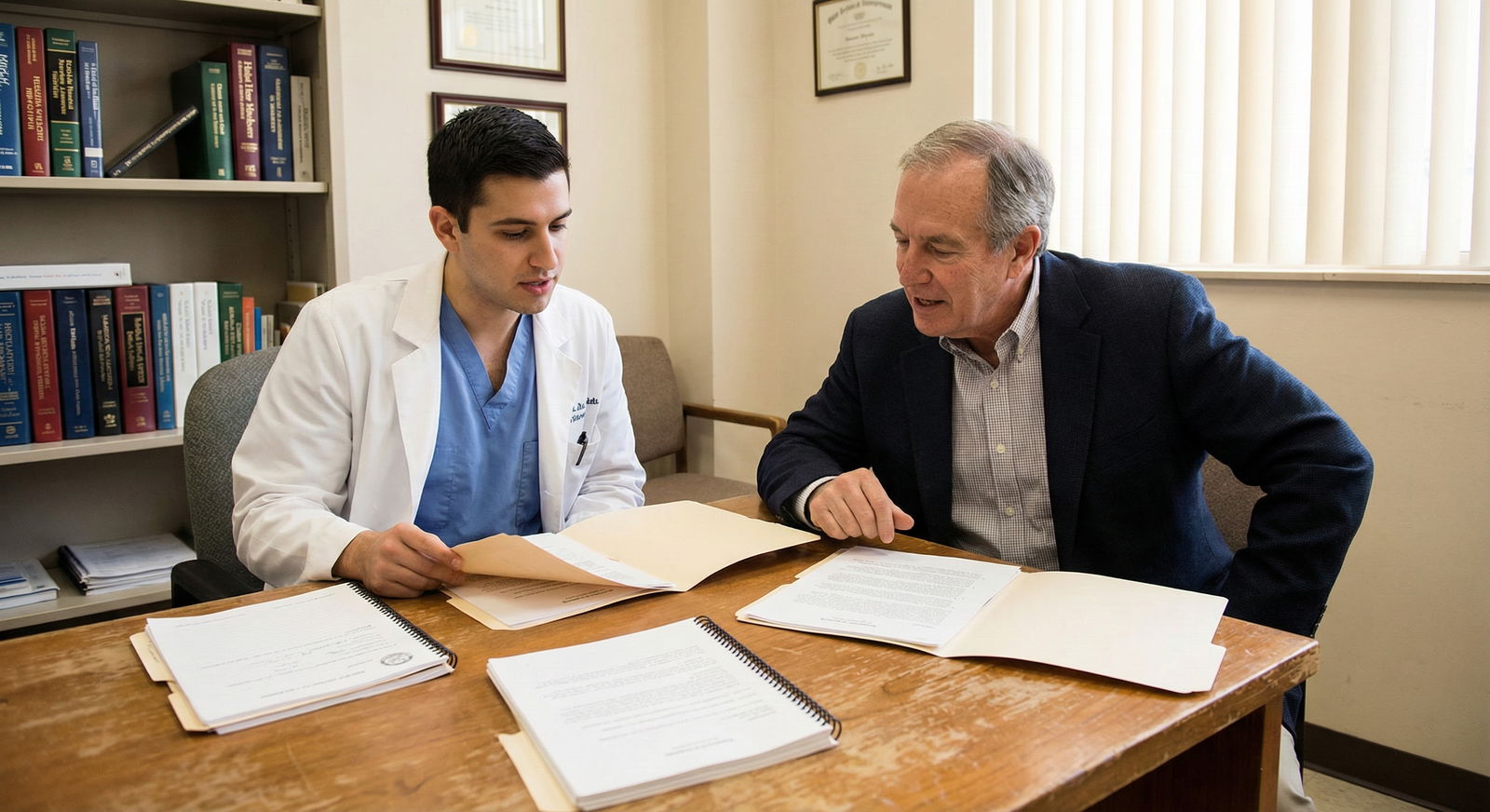
The shiny new sim lab is the easiest thing for a new residency to oversell and for applicants to misjudge.
Every new program will tell you they are “simulation heavy,” “ultrasound focused,” and “procedure oriented.” Half of them cannot back that up in a way that actually makes you competent at placing lines at 2 a.m. on a crashing patient. Let me break down how to separate marketing from reality.
You are looking at new residency programs. You have almost zero alumni, minimal word‑of‑mouth, and no long‑term board pass data. So you lean on what you can see on interview day: facilities, toys, and “innovative curricula.”
This is where people get fooled.
The core question:
Will this program’s simulation lab, ultrasound training, and procedure tracks reliably turn you into a safe, independent physician—not just give you glamorous photos for the website?
Let’s go piece by piece.
1. Simulation Labs: How to Tell a Toy Room from a Training Engine
A sim lab can be a million‑dollar mistake or the single best part of a new program. The difference is structure, not equipment.
The three levels of sim labs you will encounter
I see the same pattern repeatedly:
| Sim Lab Type | What You See on Tour | What Actually Happens |
|---|---|---|
| Showroom Only | Shiny mannequins, no schedule | Used a few times a year |
| Sporadic Sessions | Some posted sign-ups | Irregular, faculty dependent |
| Integrated Curriculum | Posted calendar, binders | Required, tracked, graded |
The only one that matters to you is the third.
A. Physical space is the least important part — but still check it
On your visit or virtual tour, pay attention to specifics, not adjectives.
Good signs:
- Rooms that look like actual ICU/ED bays, not generic classrooms with a mannequin parked in the corner.
- Separate debriefing rooms with screens for video playback.
- Multiple procedure stations visible: central line task trainers, lumbar puncture models, airway heads, chest tube or thoracentesis trainers.
- Single room with one high‑fidelity mannequin and nothing else.
- Everything looks brand new and untouched. No opened drawers, no scuffed task trainers. A pristine sim lab is often an unused sim lab.
B. Curriculum structure: this is where serious programs differentiate
Ask these exact questions. Word for word if you like.
“Is simulation built into the block schedule as a required activity, or is it optional?”
You want mandatory, scheduled sim sessions. If they say “Residents are encouraged to use the sim lab whenever they like,” translate that as: “No one goes.”“Do you have a longitudinal simulation curriculum with specific objectives by PGY level?”
A real answer sounds like:- PGY‑1: basic ACLS, sepsis management, respiratory distress, rapid response scenarios, fundamental procedures on task trainers.
- PGY‑2: ICU codes, airway crises, shock states with inotropes and pressors, multi‑system cases.
- PGY‑3: team leadership, running codes, complex ethical scenarios, supervising juniors.
If they just say, “We do occasional codes and crisis scenarios,” that is vague by design.
“How often does each resident have scheduled sim?”
Below is a reasonable benchmark.
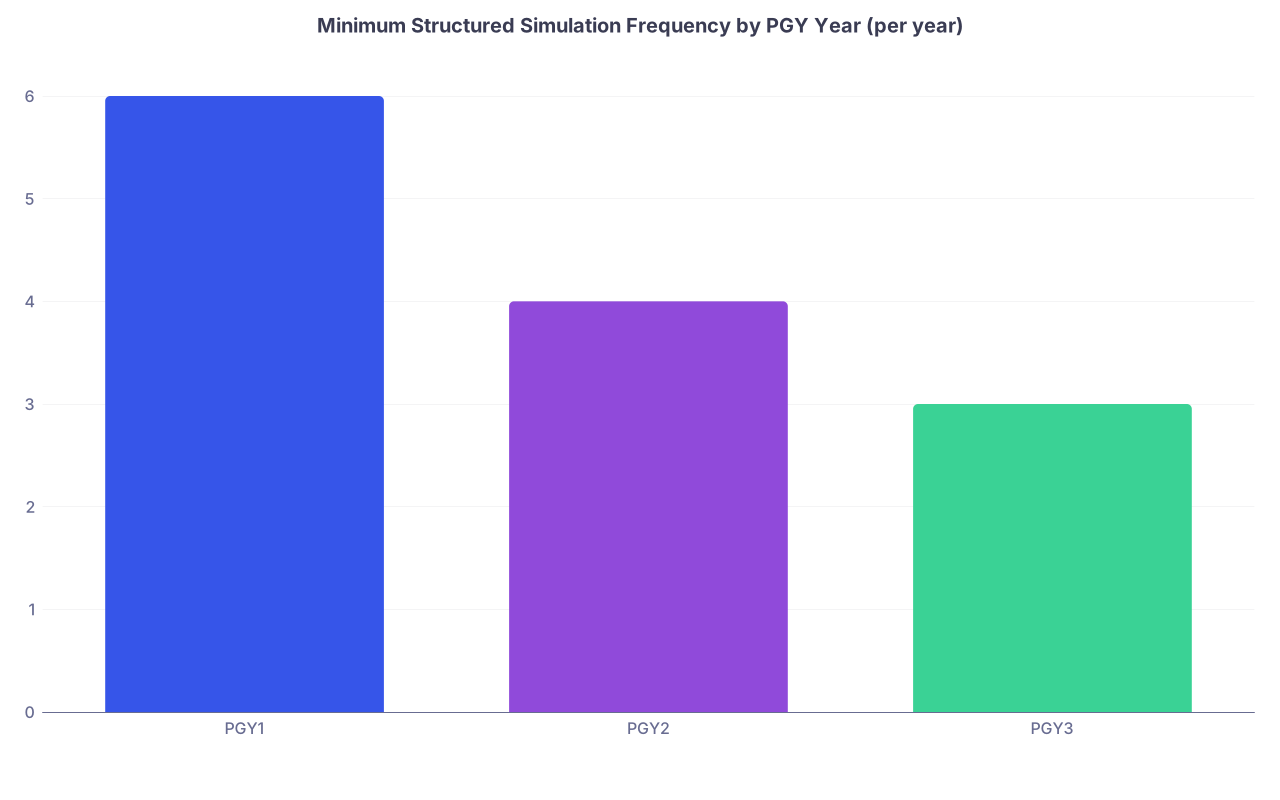
| Category | Value |
|---|---|
| PGY1 | 6 |
| PGY2 | 4 |
| PGY3 | 3 |
If the answer is “once or twice per year,” that is a hobby, not a curriculum.
C. How performance is evaluated and tracked
Here is where serious programs show their work.
Ask:
- “Do you use checklists or objective scoring tools in sim?”
- “Are simulation cases documented as part of resident evaluation?”
- “Do you track improvement over time or just give verbal feedback?”
You want to hear words like:
- Checklists
- Milestones
- Competency
- Entrustable Professional Activities (EPAs)
- Deliberate practice
If the answer is “We give feedback in the debriefing, but nothing is formally recorded,” fine for a simulation center demo, less fine as a major pillar of your training.
D. Who is running the show?
The value of a sim lab rises and falls with faculty engagement.
Look for:
- A designated simulation director with protected time.
- At least 2–3 faculty who have sim training or certificates.
- Interprofessional involvement: nurses, respiratory therapists, pharmacists.
Ask bluntly:
- “Who designs and runs most of your simulation sessions?”
Strong answer: “Dr X is our simulation director; she has 0.2 FTE protected time and leads a team that runs monthly sessions mapped to our curriculum.”
Weak answer: “It is shared among the attendings when we can fit it in.”
2. Point-of-Care Ultrasound (POCUS): The New Programs’ Favorite Buzzword
Everyone in 2026 is “an ultrasound‑focused program.” That phrase alone is meaningless.
What you want to know is whether ultrasound is:
- A core expectation for all residents, or
- A nice elective if you happen to be interested.
Ultrasound training: the four pillars
You judge a new program’s ultrasound credibility on these four things: structure, volume, supervision, and credentialing.
A. Structure: Is there an actual ultrasound curriculum?
You are looking for evidence of:
Didactic sessions that cover:
- Physics, knobology, image acquisition.
- Core applications: cardiac, lung, IVC, abdominal free fluid, basic vascular access.
- Specialty‑specific modules (for EM, IM, FM, anesthesia, critical care, etc.).
Scheduled scan shifts or ultrasound rotations:
- For EM: a dedicated 2–4 week ultrasound rotation PGY‑1 or early PGY‑2.
- For IM/FM/CC: longitudinal POCUS time during ICU or wards with structured scanning expectations.
If their ultrasound teaching is “bedside teaching when there is time,” that equals “almost never, and wildly inconsistent.”
B. Volume: Numbers matter here
To become competent, residents need reps. You should ask directly:
- “Do you track ultrasound exams by resident and by indication?”
- “Roughly how many supervised scans do most residents complete by graduation?”
For basic POCUS competence, you want to hear numbers approaching or exceeding:
- Cardiac: 50+
- Lung: 50+
- Abdomen / FAST‑type: 25–50
- Vascular access: 25–50
Not perfect numbers, but if they shrug and say, “We do not really track that,” they are not serious yet.
C. Supervision and archiving
A mature ultrasound program will have:
- Image archiving (QPath, Butterfly Cloud, Philips Lumify platform, etc.).
- Regular image review sessions or QA with an ultrasound director.
- Clear rules about when residents can use POCUS for clinical decisions vs when to call for formal studies.
Ask:
- “Do you archive resident ultrasound exams?”
- “Who reviews and signs off on them?”
- “Do residents receive regular image review and feedback?”
If the answer is “We do not archive, it is just for teaching,” you will not develop defensible, high‑quality skills.
D. Credentialing and pathways to independent use
This is where many new programs are completely vague.
Ask:
- “By graduation, will I be eligible for POCUS credentialing at most hospitals?”
- “Do you have a documented pathway that logs scans, supervision, and competence sign‑off?”
Good programs will mention:
- A POCUS director or ultrasound fellowship‑trained faculty.
- Written requirements: X number of scans per category + Y number of QA sessions + observed exams.
- Alignment with ACEP/ACP/SHM/SCCM POCUS guidelines, depending on specialty.
If they tell you, “Hospitals do not require formal credentialing for bedside ultrasound,” be careful. That is dated thinking and a red flag for future‑proofing.
3. Procedure Tracks and “Procedure Tracs”: Who Actually Gets Hands‑On?
The phrase “procedure track” is often abused by new programs trying to look advanced.
You will see:
- Procedure track
- Hospitalist/proceduralist track
- Critical care/procedure focus
- Ultrasound‑guided procedures curriculum
Some are excellent. Many are aspirational marketing.
First distinction: everyone’s baseline vs the “track”
You must separate:
- Procedures every resident is expected to learn.
- Additional depth for those on a formal procedure track.
Ask:
- “What procedures are required for all residents, and how many of each are typically logged by graduation?”
- “What additional procedures or volumes distinguish the procedure track from the standard pathway?”
For internal medicine or family medicine, standard expectations might include:
- Central lines
- Arterial lines (varies by institution)
- Paracentesis
- Thoracentesis
- Lumbar puncture
- Joint aspiration/injection
- Basic ultrasound‑guided vascular access
A procedure track might add:
- Higher volume expectations.
- More emergent airways (depending on system).
- Chest tubes, tunneled lines, dialysis catheters (sometimes via critical care or IR collaboration).
- Dedicated procedure service time.
If the “track” is just a title and an extra lecture, ignore it.
How real procedure tracks are built
A genuine procedure track (I have seen this work well in some new IM and EM programs) has:
- Dedicated procedure attending(s) or a proceduralist group.
- A procedure service, often hospitalist‑run, that gets all or most consultable procedures.
- Scheduled blocks or half‑days where residents on the track staff that service repeatedly.
- Logging and sign‑off requirements with real thresholds (50–100+ total key procedures).
Ask the hard questions:
- “Is there a dedicated procedure service, or are procedures distributed randomly across teams?”
- “How many procedures did your graduating seniors complete last year, roughly?” (For a new program, they should at least have realistic targets and early data.)
- “Are there caps on how many trainees can join the procedure track?”
If they tell you, “Everyone can be on the procedure track,” that usually means there is no true track.
4. How to Evaluate a New Program’s Claims in Real Time
Glossy brochures and a 15‑minute tour are not enough. You have to interrogate the structure.
Use the right questions at the right time
On interview day and second looks, rotate through these:
To the PD or APD:
- “What percentage of residents meet your procedural and POCUS targets each year?”
- “Have you had to adjust your simulation or ultrasound curriculum after initial feedback? How?”
To residents:
- “How often do you actually go to the sim lab?”
- “Do you feel simulation prepares you for real codes and decompensations?”
- “How many procedures have you logged so far?”
- “If you want more procedures, can you reliably get them?”
To core faculty:
- “Who is your ultrasound champion or director?”
- “Do you anticipate any changes to simulation, ultrasound, or procedures over the next 2–3 years?”
You are listening for consistency. If the PD says “monthly sim sessions” and residents say “We have been once this year,” believe the residents.
Look at scheduling and documentation, not just enthusiasm
I put much more weight on:
- Posted yearly simulation calendars.
- Written ultrasound curricula.
- Procedure log templates and EPAs.
Than on:
- Words like “cutting‑edge,” “innovative,” “ultrasound‑centered.”
- That slick drone tour of the sim center.
You are basically performing a mini‑accreditation audit of their educational infrastructure.
5. The Future‑Proofing Angle: Why This Matters More in New Programs
You are not just training for the board exam in 3 years. You are training for practice in 2035.
Simulation: where new programs can leapfrog older ones
ACGME and specialty boards are clearly nudging toward competency‑based training. Simulation is the tool that lets new programs compensate for uneven clinical exposure.
A new residency that fully exploits simulation can:
- Make up for temporarily low clinical volumes while they ramp up.
- Standardize exposure to rare but critical events (malignant hyperthermia, peri‑arrest asthma, massive GI bleed).
- Prepare you for a future where maintenance of certification will almost certainly involve some form of simulation.
If the new program is not pushing hard in this direction, they are already behind.
POCUS: this will not be optional going forward
Point‑of‑care ultrasound is going to be for internal medicine, anesthesia, and EM what the stethoscope became 100 years ago: basic, expected.
New programs have a strategic advantage here:
- They can hard‑wire POCUS into early training without fighting old faculty habits.
- They can recruit young ultrasound‑savvy faculty from the start.
- They can negotiate hospital credentialing language with POCUS in mind.
If a new program is not leaning aggressively into ultrasound—curriculum, archiving, QA, credentialing—that is a huge missed opportunity. And a warning sign about how forward‑thinking their leadership actually is.
Procedure tracks and the future of inpatient care
Hospitals are shifting procedural load from IR and subspecialists back to hospital‑based physicians in some systems (and away in others). The programs that will produce high‑value graduates are doing two things:
- Training residents to safely perform a meaningful panel of bedside procedures.
- Giving them the documentation and case logs to sell that skill set to future employers.
That means:
- Electronic logs with CPT‑equivalent coding, supervising attending, and confirmation of successful completion.
- Clearly defined numbers that you can show a future credentialing committee: “I completed 60 ultrasound‑guided paracenteses, 40 thoracenteses, 35 central lines, etc.”
Ask directly:
- “What procedure and POCUS documentation will I be able to present when I apply for privileges at my first job or fellowship?”
If they have no clear answer, they have not thought through your future as much as their NRMP fill rate.
6. Practical Heuristics: Quick Filters for Applicants
You do not have time to run a full site visit analysis at every interview. So here are some quick gut‑check rules.
If you see these, you are probably looking at a strong new program in this domain:
- A named simulation director and a named POCUS/ultrasound director, both with clear titles and some protected time.
- A posted simulation calendar for the year that residents can show you on their phones.
- Image archiving for ultrasound with scheduled QA sessions.
- Procedure logs already in use by current classes, even if they are PGY‑1/2 only.
- Residents who can quote their approximate procedure counts without hesitating.
If you see these, you should be skeptical:
- Tour of a gorgeous sim center with no mention of schedules, curricula, or who uses it.
- “We’re building an ultrasound curriculum soon.” Translation: not ready.
- “Everyone can do as many procedures as they want; there is no formal track.” That usually means disorganized chaos and attendings who cherry‑pick cases.
- Residents say things like, “We are supposed to start more sim after the next hire,” or “We only use the sim lab when visitors come.”
New programs will always have some growing pains. You are not looking for perfection. You are looking for seriousness, intentionality, and evidence that they have already moved beyond the “Phase I: pretty toys” stage.

| Step | Description |
|---|---|
| Step 1 | PGY1 Start |
| Step 2 | Structured Sim Basics |
| Step 3 | Intro POCUS Training |
| Step 4 | Supervised Core Procedures |
| Step 5 | Advanced Sim Scenarios |
| Step 6 | Longitudinal POCUS Practice |
| Step 7 | Procedure Track or Higher Volume |
| Step 8 | Graduation - Independent Practice |
FAQ (Exactly 5 Questions)
1. If a new program has a beautiful sim lab but no detailed curriculum yet, should I write it off?
No, not automatically. Early‑phase programs may have the hardware before the curriculum fully matures. The key is whether they can show you a concrete timeline and plan: draft curricula, faculty assigned as simulation leads, scheduled sessions even if not perfect yet. If all they have is “We plan to use it more,” and no documents or dates, then be cautious.
2. How many procedures is “enough” for internal medicine or family medicine residents?
Ballpark only, but as a rough minimum by graduation: 20–30 central lines (if your scope includes them), 20–30 paracenteses, 15–25 thoracenteses, multiple lumbar punctures and joint injections. More is better, but volume without supervision and feedback is not the goal. A well‑run new program with a procedure track can overshoot these numbers meaningfully.
3. Does POCUS training matter if I plan to do a fellowship (like cardiology, pulm/crit, or EM ultrasound)?
Yes. Fellowship directors increasingly expect residents to arrive with basic POCUS literacy. Programs where you graduate with a documented scan log and some credentialing groundwork will give you a significant head start, especially in ICU, EM, and hospitalist tracks. New programs that are weak in ultrasound will leave you playing catch‑up.
4. Are simulation hours ever counted or required by ACGME or boards?
Right now, ACGME does not mandate specific “simulation hours” for most specialties, but many Milestones can be met partly through simulation. Boards and hospital systems are drifting toward simulation‑based assessment for things like codes and procedural competence. A new program leaning hard into structured sim is aligning with where the field is going.
5. If current residents at a new program seem unsure about their sim/ultrasound/procedure structure, is that a deal‑breaker?
Not necessarily, but it is data. Early cohorts often live through rapid change. What you want to see is direction: are things clearly improving year to year, with more structure, more tracking, and more faculty involvement? If residents communicate confusion and the leadership gives only vague aspirations, then I would be wary.
Three takeaways:
- Do not be hypnotized by shiny sim labs or ultrasound machines. Judge structure, frequency, tracking, and leadership.
- For new programs, a serious, documented approach to simulation, POCUS, and procedures is one of the best predictors that they will age well.
- Your job is to walk out of training with defensible, documented skills. If a new residency cannot clearly show how their sim lab, ultrasound program, and procedure track get you there, move on.