
Last week a classmate showed me their rank list on their phone in the cafeteria. At the top was a brand‑new residency program I’d barely heard of, sitting right above a solid, mid‑tier, well‑established “safety” program. I swear my chest got tight just looking at it. Because I knew the thought that would keep me up: What if that one risky choice is the reason I don’t match?
If you’re reading this, you probably have some version of the same nightmare playing in a loop. You like a new program. Maybe you even love it. But your brain keeps whispering: “If you rank it above your safe option… and it doesn’t rank you… and then the safe one fills before it gets to you… that’s it. You’re unmatched forever.”
Let’s go straight into the stuff that’s actually true, the stuff that’s exaggerated, and what’s honestly risky vs what just feels risky at 2 a.m.
First: How the Match Actually Handles This “Risk”
Here’s the ugly fear:
“If I put New Program #1 above Safe Program #2, and New Program doesn’t like me, I lose Safe Program too.”
That’s… not how the algorithm works. At all.
The algorithm is applicant‑proposing. In plain English: the system is designed to favor your preferences, not the programs’.

| Step | Description |
|---|---|
| Step 1 | You submit rank list |
| Step 2 | Try New Program first |
| Step 3 | You tentatively match at New |
| Step 4 | Algorithm moves to next rank |
| Step 5 | Safe Program considered next |
| Step 6 | You tentatively match at Safe |
| Step 7 | Algorithm continues down list |
| Step 8 | Did New Program rank you high enough? |
| Step 9 | Did Safe Program rank you high enough? |
Here’s the key point that people consistently get wrong:
Ranking a program higher cannot make you lose a possible spot lower on your list.
If the new program doesn’t have a spot for you, the algorithm just acts as if it wasn’t there and moves on to the next program on your list. Your “safe” program will see you on the exact same terms whether you ranked it #1 or #7. It doesn’t punish you for liking someone else more.
Where the “risk” actually lives isn’t in the algorithm. It’s in these questions:
- Is this new program stable and legitimate, or is it chaos in a lab coat?
- Will I get the training, case volume, and letters I need for my career goals?
- What if they suddenly lose accreditation, leadership, or funding?
- What if the culture is way more toxic than they’re admitting because they’re desperate to fill?
So the fear isn’t “If I rank this higher, I’ll go unmatched.” That’s not the real threat.
The fear is, “If I do match there, did I just gamble my whole career on an experiment?”
Different kind of risk.
How Risky Are New Programs Actually? The Uncomfortable Middle Ground
People like black‑and‑white answers here. “New programs are unsafe, avoid.” Or, “They’re fine, stop overthinking.” Both are lazy.
I’ve seen both extremes:
- The PGY‑2 who left a shiny new community IM residency because the PD quit, schedules were a joke, and they were calling consults without any senior backup… in July.
- The EM resident at a new program who’s getting killer procedures at a busy county ED, joined by a well‑known PD from a big‑name place, and they’re matching fellowship just fine.
So what decides which side you end up on?

A few factors make or break new programs:
Leadership pedigree and stability
If the PD and core faculty came from reputable programs and have a track record of actually training residents, that’s a huge green flag.
Red flag: PD with no previous leadership experience, frequent turnover, or people mysteriously leaving before the program even hits full complement.Hospital volume and case mix
You can slap “residency program” on any hospital, but if the ED volume is low, or the inpatient service is sleepy, or there’s no complexity, you’ll struggle to meet ACGME requirements. You’ll feel that when you apply for fellowships or jobs.Institutional commitment
Is this a random community hospital that just decided it wants residents to save money on labor? Or is there a real GME office, multiple established programs, and clear investment in education?
New IM program in a hospital that already has surgery, EM, and FM residencies = usually less sketchy. New stand‑alone program with zero GME infrastructure = be more suspicious.ACGME status and growth plan
Are they just now taking their very first class? Or are you joining as the second or third class, after they’ve survived some growing pains? You don’t need to be second wave, but let’s not pretend being the first PGY‑1 there isn’t a very real experiment.
Here’s a quick comparison of what I’d call a less risky vs more risky new program:
| Factor | Lower Risk New Program | Higher Risk New Program |
|---|---|---|
| PD background | Former APD at solid academic program | Unknown faculty, no leadership track record |
| Existing GME presence | Multiple established residencies | This is the first and only residency |
| Hospital volume | High volume, tertiary care or busy | Low volume, limited complexity |
| Accreditation status | Continued accreditation, no citations | Initial with significant citations |
| Resident retention | First class all still there | Early resignations or transfers |
You won’t always get perfect clarity, but if you see multiple “higher risk” features… yeah. Ranking that above a reliable established program isn’t just a harmless vibe choice. It’s a real gamble on your day‑to‑day training and sanity.
But What About Matching at All? The “Safe Program” Panic
Here’s the other big anxiety spiral:
“I’m not worried about the quality of the new program. I’m worried that if I rank it above my safe program, I’ll somehow decrease my overall chance of matching.”
Let’s kill that with numbers for a second.
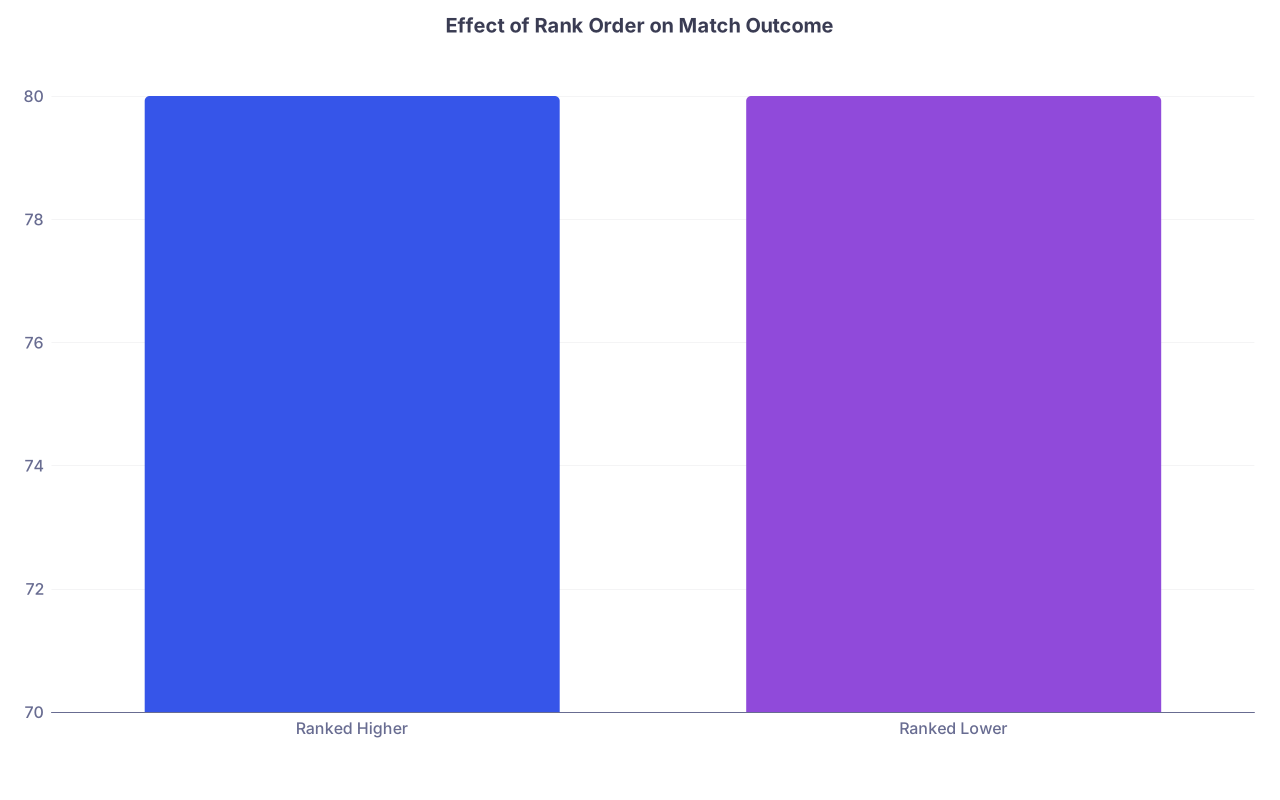
| Category | Value |
|---|---|
| Ranked Higher | 80 |
| Ranked Lower | 80 |
That’s the whole point: whether a given program is #1 or #5 on your list doesn’t affect whether they rank you or how high. They don’t see your rank list. They don’t know you’re calling someone else your “dream” program.
Here’s what does affect your chance of matching overall:
- How many programs you rank
- Whether those programs actually ranked you
- How competitive you are in your specialty overall
- Whether you have a realistic mix of program tiers
Where you slip into risk territory is not “I put a new program over a safe one.”
It’s “I only have one or two realistic safety options total, and I’m in a competitive specialty, and my list is short.”
If your rank list looks like:
- New Program (unknown risk)
- Safe Community Program A
- Safe Community Program B
- Safe University‑affiliated Program
- Extra mid‑tier places…
Then putting the new program first isn’t going to secretly destroy your match chances. If anything, your catastrophic thought should be the opposite: “If I’m too cautious and don’t put the place I actually want first, I might end up somewhere I like less even though I could have had my top choice.”
But if your list is:
- New Program in Chaosville
- Unobtainium University that barely interviewed you
- One “kind of safe” program
- That’s it
Then yeah, the whole list is risky. Not because of the order. Because it’s thin and unrealistic.
Specific to Brand‑New Programs: The “What If It Implodes?” Fear
Let’s hit the most unsettling scenario head‑on:
“What if I rank this new program #1, I match there, and then it loses accreditation or collapses?”
That’s the kind of thing that feels so apocalyptic your brain assumes it must be way more common than it is.
Collapse can happen: mass faculty exodus, hospital financial disaster, repeated ACGME issues. But residency programs don’t usually vanish overnight like a startup going bankrupt. There are phases, warnings, and often contingency plans.
Here’s how this tends to play out in reality:
- ACGME identifies problems → citations, site visits, probation
- Residents start to feel the dysfunction months before anything official
- Word spreads, recruitment suffers, hospital scrambles to fix or merge
- Worst-case: the program closes, current residents are usually placed elsewhere (not fun, but not career‑ending)
Is it ideal? No. It’s disruptive and incredibly stressful. But it’s not, “You’re now unemployable.”
This is where due diligence matters. Before you rank a new program over a safe one, you should:
- Ask current residents, “What’s one thing that worries you about the program’s future?”
- Look up ACGME accreditation status and any public citations.
- Ask directly on interview day: “What support do you have from the institution if census or funding changes?”
If their answers are vague, defensive, or you get the sense no one’s thought that far… your anxiety about collapse isn’t just you being dramatic. It might be your brain noticing real instability.
Emotional Reality: Are You Ranking Based on Fit or Fear?
This is the part nobody really admits on Reddit: sometimes we use “risk” as a fancy word for “I’m scared to admit what I actually want.”
You might genuinely like the new program more:
- You clicked with the residents.
- It’s in a city where you’d actually have a life.
- Leadership seemed hungry, organized, and invested.
- They treated you like a human being, not applicant #237.
And you might be pushing it down your list only because it’s “new” and that word feels dangerous.
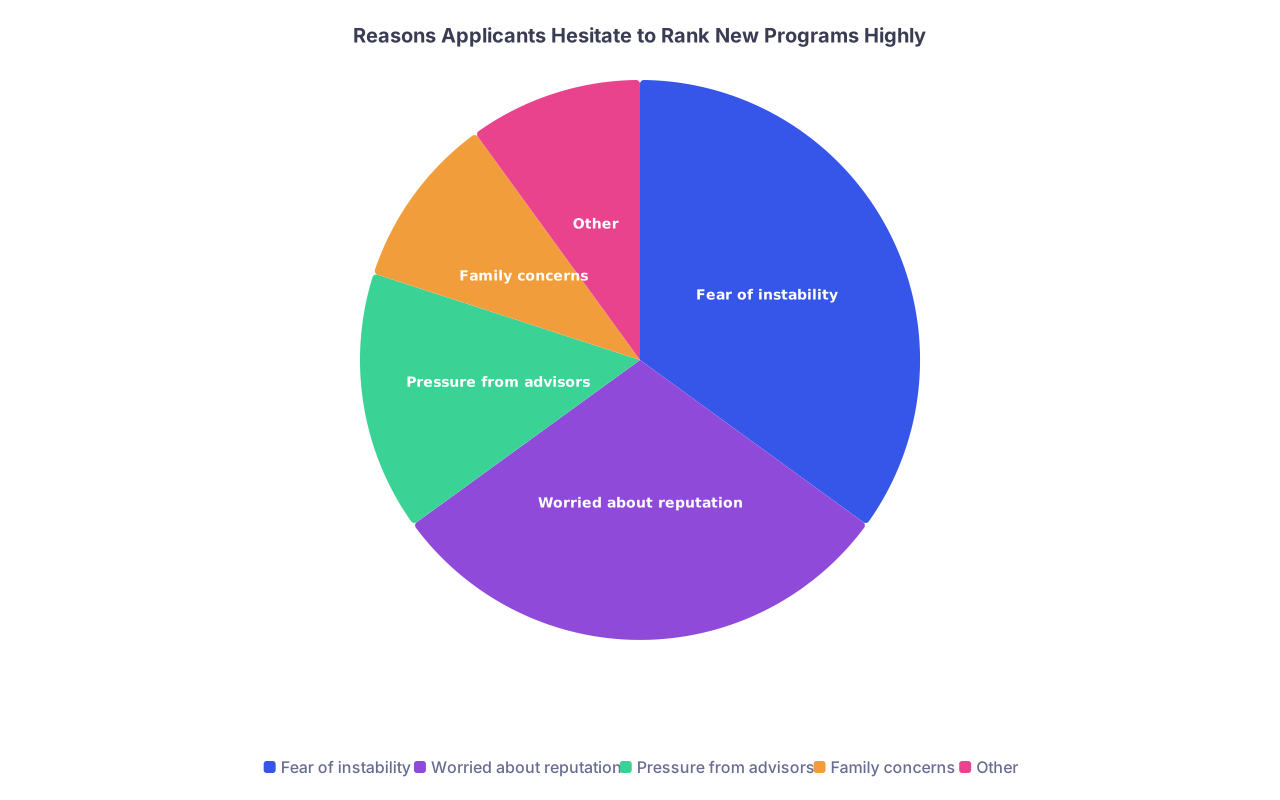
| Category | Value |
|---|---|
| Fear of instability | 35 |
| Worried about reputation | 30 |
| Pressure from advisors | 15 |
| Family concerns | 10 |
| Other | 10 |
I’ve watched people do mental gymnastics:
“I liked Program X much more, but it’s new and my advisor said I should choose the name I’ve heard before, so I put the place where I felt kind of ignored higher because it’s ‘established.’”
That’s not risk management. That’s self‑betrayal dressed up as pragmatism.
The healthier question is brutal but simple:
“If both programs were the same age and accreditation status, which one would I put first without hesitation?”
If the answer is clearly the new program, and it passes the basic safety checks (leadership, volume, accreditation, institutional support), then ranking it #1 is not some wild, reckless gamble. It’s just you being honest.
When It Is Actually Too Risky to Put the New Program Above Your Safe One
Let me be blunt: there are times when I’d tell you, as a friend, “Do not put that new program above your safer choice.”
Scenarios where I’d be seriously worried:
- They dodged every concrete question about call schedule, faculty availability, or board pass support with “We’re still figuring that out.”
- No existing GME infrastructure, no other residencies, and the vibe is “We started this to fill staffing gaps,” not “We’re building an educational program.”
- The hospital is financially shaky, recently sold, or cutting services.
- Residents you met seemed guarded, burned out, or quietly told you they’re trying to leave.
- You’re aiming for a very competitive fellowship and the program has minimal subspecialty exposure or research, with no clear plan to build that out.
If that’s what you’re seeing, then yes, ranking that over a decently solid, fully functioning “boring” program is a legitimate risk to your training and future options. Not because of the match algorithm. Because of the day‑to‑day reality you’re signing up for.
How I’d Actually Decide Between a New and a “Safe” Program
If I strip away the noise, this is what I’d do sitting with my own rank list open at midnight:
First, assume the algorithm is not out to get me. My rank order doesn’t reduce my chance of matching at lower programs.
Then, ask: “If this new program were 10 years old with the same current leadership and hospital, would I rank it above the safe one?”
- If yes, I probably should rank it higher now too.
Next, sanity‑check safety:
- Stable leadership?
- Adequate volume and complexity?
- Existing or growing GME ecosystem?
- No major ACGME red flags I can find?
Look at my whole list, not just 1 vs 2:
- Do I have enough realistic options total?
- Is my anxiety really about new vs safe, or about the possibility of not matching at all because my list is thin?
Finally, accept this: there is no zero‑risk rank list.
Staying somewhere miserable but “safe” for three years is also a kind of risk. It just looks more respectable on paper.
The Bottom Line: How Risky Is It Really?
Boiled down:
- Ranking a new program above a safe one does not make you more likely to go unmatched. The algorithm doesn’t punish you for swinging for your true #1.
- The real risk is qualitative: training quality, stability, reputation, and your day‑to‑day life if you actually match there.
- A well‑designed new program with strong leadership and solid volume can absolutely be worth ranking over a bland, “safe” option you’re already dreading.
So, three things to walk away with:
- The match algorithm is not the enemy here; your fear of being honest about your preferences is.
- New programs are not automatically bad, but ones with weak leadership, low volume, and no institutional support are not worth gambling your top spot on.
- If a new program passes basic safety checks and genuinely feels like the best fit, it’s not reckless to rank it above your safe program. It’s just you choosing the life you actually want.