
It’s early August. You’re staring at ERAS, looking at a shiny new residency program that just appeared this year. No alumni. No historical board pass rate. No word-of-mouth reputation. Just a website, a few faculty names, and maybe a social media account they spun up last Tuesday.
And you’re wondering: “Is this actually safe to rank? Or am I about to be someone’s accreditation experiment?”
This is where you need a timeline approach. Before you apply, during the site visit cycle, and after the site visit is done. At each point, there are different data points you can get and different questions you should push on.
Let’s walk it chronologically.
Before You Apply: 6–0 Months Before Rank List
At this point you should be in pre-commitment mode. You’re gathering intel long before you sign your career over to a brand‑new program.
6–4 Months Before ERAS Submission: Initial Screening
Your job right now: sort “probably safe to consider” from “absolutely not.”
Step 1: Verify accreditation status precisely
Do not gloss over this. You should:
- Look up the program on ACGME’s public directory.
- Check:
- Sponsoring institution
- Accreditation status
- Initial accreditation date
- Any citations (if visible)
Here’s how to think about risk:
| Status | Risk Level | Comment |
|---|---|---|
| Initial Accreditation | Medium | Normal for new program |
| Initial Accreditation–C | High | Concerns/citations flagged |
| Continued Accreditation | Low | Rare in brand‑new programs |
| Probationary | Red Flag | Do not rank |
| Application Submitted | Unknown | Avoid for now |
If you cannot find the program in ACGME at all, walk away. “We’re planning to apply” is not the same as “we are accredited.”
Step 2: Profile the sponsoring institution
At this point you should be asking: “If this residency vanished, would I still want to work or train at this hospital?”
Look for:
- Type of institution:
- University hospital with existing residencies? Good.
- Community hospital with zero other GME? Much higher risk.
- Existing programs:
- How many ACGME programs?
- Any specialties? IM, FM, Surgery, EM, etc.
- History:
- Any programs that lost accreditation recently?
- Any news stories about financial trouble or mergers?
If the institution already sponsors multiple solid, stable programs (IM, Surgery, Peds) with good reputations, that’s a strong plus for a new program in a related specialty.
Step 3: Check leadership track records
You’re early. So stalk. Professionally.
At this point you should:
- Look up:
- Program Director (PD)
- Associate PDs (if listed)
- Core faculty
- Check:
- Prior appointments
- Their previous programs’ reputations
- Publication and teaching history
Non‑negotiable question: Has the PD ever been a PD or APD before?
- If yes at a respectable program: big plus.
- If no, but they were strong core faculty at a serious program: cautiously okay.
- If this is a completely fresh PD from a small private practice with no GME history: proceed carefully.
3–1 Months Before ERAS Opens: Deep‑Dive and Shortlist
Now you’re narrowing. These are the programs that might actually go on your list.
Step 4: Dissect the curriculum on paper
Print it out if you have to. Then look for:
- Rotation structure:
- Do they cover all required ACGME experiences?
- Any obvious gaps? (e.g., an EM program with almost no pediatric EM exposure)
- Service vs. education:
- Do rotations look like “you are the only resident” at multiple sites?
- Is there a healthy mix of supervision and autonomy?
- Clinic/continuity:
- For primary care and IM especially—how often, where, with whom?
You should be asking yourself: If this exact rotation schedule actually happened, would I be comfortable graduating? If the answer is “no” on paper, it’s rarely “yes” in real life.
Step 5: Look for early warning signs
This is where I get blunt. Red flags in new programs are often right there on the website:
- No clear didactics schedule described
- Faculty list is 80% “coming soon”
- No mention of:
- Board prep
- Scholarly activity structure
- Evaluation/remediation policies
- Heavy emphasis on “flexibility” and “building together” without concrete plans
One “coming soon” section? Fine. Half the website is “TBD”? That’s not a program; that’s a wish.
During the Interview / Site Visit Cycle (Oct–Jan)
Now you’re in the thick of it. Programs are hosting interview days. ACGME site visits (for them, not you) are happening in the background. Your job: verify whether their story matches reality.
Timeline Perspective
Let’s anchor this:
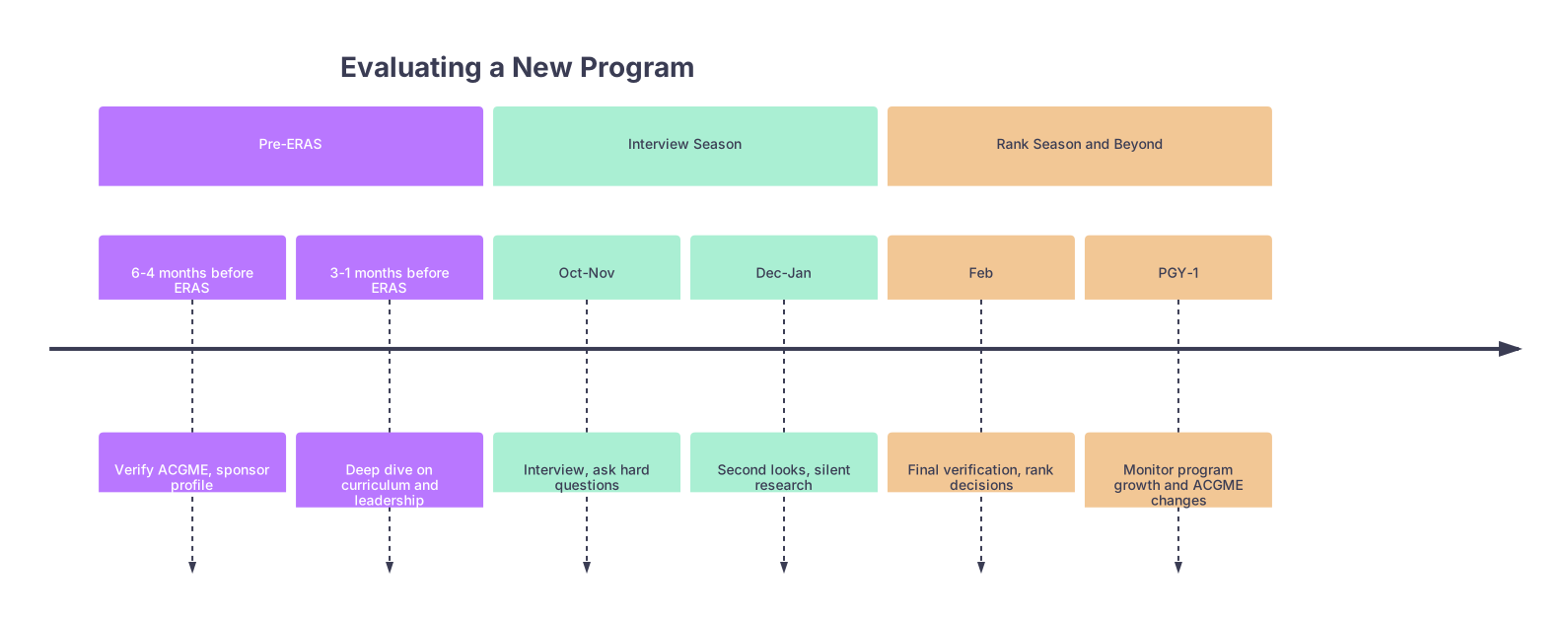
| Period | Event |
|---|---|
| Pre-ERAS - 6-4 months before ERAS | Verify ACGME, sponsor profile |
| Pre-ERAS - 3-1 months before ERAS | Deep dive on curriculum and leadership |
| Interview Season - Oct-Nov | Interview, ask hard questions |
| Interview Season - Dec-Jan | Second looks, silent research |
| Rank Season and Beyond - Feb | Final verification, rank decisions |
| Rank Season and Beyond - PGY-1 | Monitor program growth and ACGME changes |
During interviews and visits, you’re testing everything you read.
During the Interview Invitation Phase
At this point you should:
- Pay attention to how they communicate:
- Is scheduling organized?
- Do you get clear instructions?
- Are there professional, timely responses? Disorganized admin early usually means disorganized everything later.
On Interview Day: What to Look For, Hour by Hour
Let’s break the day like you should be experiencing it.
Morning: Program Overview & PD Talk
You’re listening for:
- A concrete vision:
- “We’re building a program with X residents per year, expanding to Y sites by year 3…”
- Evidence they understand growth:
- Plans for adding faculty
- Plans for expanding rotations
Red flags in PD language:
- “We’ll see how it goes.”
- “You’ll help us figure that out.”
- Vague responses to questions about future funding or hospital priorities.
Ask directly:
- “What is the current length of the ACGME accreditation cycle?”
- “Have you had your first ACGME site visit yet as an active program?”
- “What were the main pieces of feedback from ACGME, and how have you responded?”
If they dodge, that’s data.
Midday: Conversations with Faculty
You want to know whether faculty are actually invested or just names on paper.
Ask them:
- “How much of your time is protected for teaching?”
- “Do you have experience working with residents before this program?”
- “How is resident feedback incorporated into curriculum changes?”
Listen for:
- Real examples: “Last month residents asked for X, so we changed Y.”
- Or excuses: “Once we have more residents, we’ll start doing that.”
Afternoon: Talking to Current Residents (If Any)
If they already have PGY‑1s or PGY‑2s, this is gold. This is where you press.
You should ask very specific, time‑anchored questions:
- “Walk me through your typical week on wards. Hour by hour, start to finish.”
- “How often do attendings actually round in person?”
- “What surprised you in a bad way after starting?”
- “Would you choose this program again if you had last year’s rank list in front of you?”
You’re listening for patterns:
- Overwork with minimal supervision
- Constant schedule changes, last‑minute rotation rearrangements
- “We’re still figuring that out” used as a shield for everything
If the residents’ facial expressions do not match their words, trust the expressions.
If there are no residents yet (brand‑new first class recruiting), your risk goes up. Now your questions shift.
If There Are No Current Residents Yet
At this point you should be relentless about structure and protection.
Ask the PD and faculty:
- “What concrete protections are in place if ACGME feedback is negative?”
- “If the program were to not achieve continued accreditation, what is your specific plan for resident transfers?”
- “Do you already have MOUs with other programs to accept residents if needed?”
Most applicants never ask this. You should.
Also ask:
- “How many faculty have prior experience teaching residents in an ACGME program?”
- “What is the written didactic schedule for the first six months?”
- If they cannot show you a sample month, that’s a problem.
Between Interviews and Rank List: December–February
Now the site visit cycle is still ongoing on their side, but your rank list clock is ticking. You’re in verification and comparison mode.
December: Quiet Research Month
At this point you should be doing background checks.
Cross‑check with other applicants
- Talk to classmates who interviewed there.
- Compare notes: did you all hear the same story? Or does each person get a slightly different “vision”?
Search for hospital/system news
- Union negotiations
- Financial distress
- Recent closures or service line cuts
Follow up by email with specific questions
- “Can you share your formal block schedule for PGY‑1?”
- “Could you clarify which rotations have in‑house attending coverage versus home call?”
Their response time and detail matter.
January: Second Looks (Virtual or In Person)
If you’re serious about ranking a new program highly, you should consider a second look.
During a second look, focus less on sales pitch, more on unstructured reality:
- Ask to sit in on:
- Morning report
- Noon conference
- Sign‑out (even briefly)
Watch:
- Who actually shows up to teach
- Whether residents seem engaged or exhausted
- Whether the discussion is at an appropriate level
If they do not have any real conferences running yet? That tells you the timeline of their preparation. And that might be too slow.
Late February: Final Rank Decision on a New Program
You’re at your computer, staring at your rank list. You’re deciding whether this new residency is rank #3 or not on the list at all.
At this point you should have answers to five core questions.
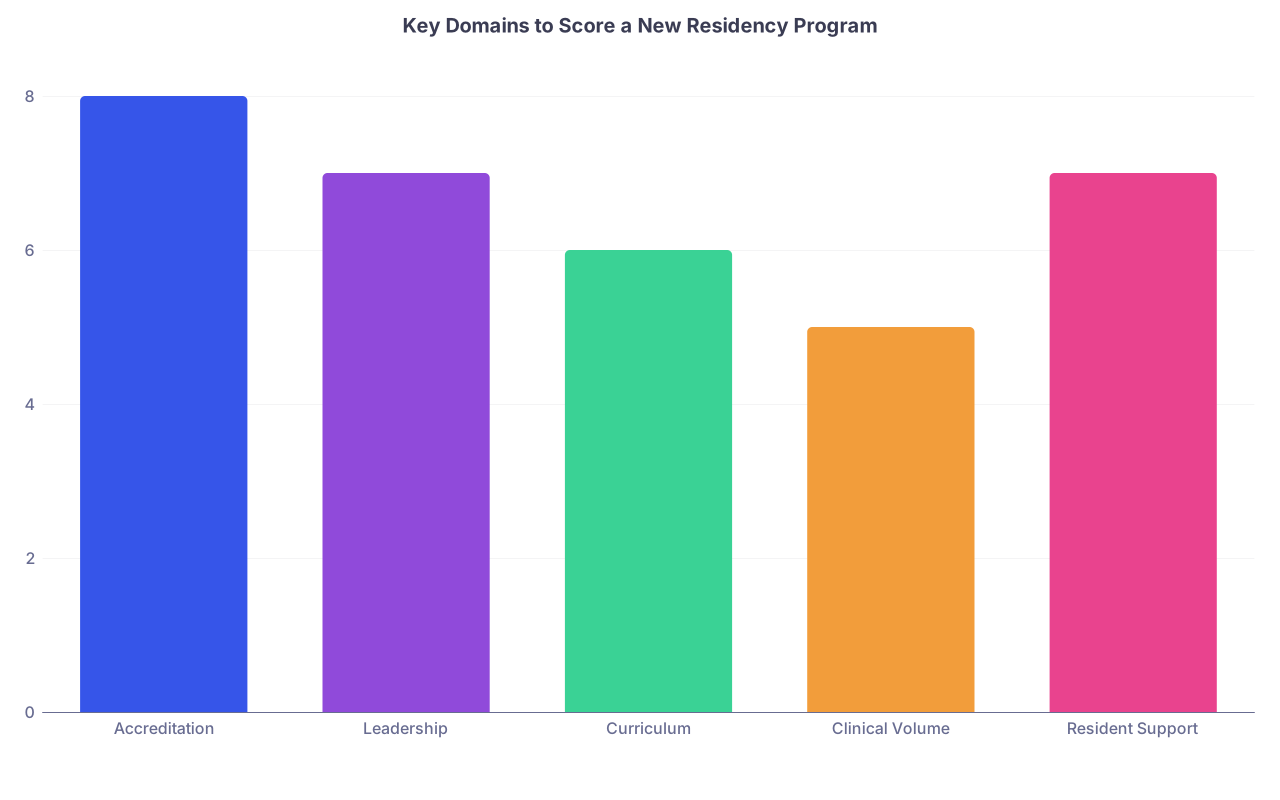
| Category | Value |
|---|---|
| Accreditation | 8 |
| Leadership | 7 |
| Curriculum | 6 |
| Clinical Volume | 5 |
| Resident Support | 7 |
Use a 1–10 scale (for yourself) in each domain:
Accreditation security
- Clear ACGME status
- Reasonable cycle length
- Honest response about citations
Leadership credibility
- Prior GME experience
- Clear, consistent vision
- Realistic growth plan
Curriculum completeness
- All required rotations covered by named sites
- Didactics not just “we’ll figure it out”
- Board preparation discussed and structured
Clinical environment
- Adequate volume and case mix
- Not overly dependent on residents for service coverage
- Supervision that matches your PGY level
Resident support and wellness
- Policies on duty hours actually enforced
- Backup systems when residents are sick or overwhelmed
- Faculty who seem protective, not exploitative
If more than 2 of these are at “4 or less,” that program should probably drop down your list or off it entirely.
After You Start: PGY‑1 in a New Program
You matched. The ink is dry. Now what?
Now you’re inside the experiment. Your job shifts from evaluating before entry to continuously auditing while you train.
First 1–3 Months of PGY‑1: Reality Check
At this point you should be:
Monitoring whether what you were promised matches what’s happening:
- Are you getting the rotations described?
- Are didactics happening on schedule?
- Is there regular access to your PD?
Tracking your own workload:
- Duty hours actually logged and respected?
- Appropriate supervision?
If the discrepancy between promised and real is massive, write it down. Dates, situations, examples. You may need that to escalate concerns later.
4–9 Months: Watching the ACGME Cycle
New programs go through:
- Early site visits
- Focused reviews
- Ongoing reporting
You should:
- Attend every meeting where the PD discusses ACGME updates.
- Ask:
- “What issues did ACGME raise?”
- “What is our action plan?”
- “What is the expected timeline for continued accreditation?”
If you never hear anything about ACGME all year, that’s actually suspicious. No program is perfect. There’s always feedback.
What If Things Go South? Mid‑Residency Contingency Planning
You do not wait until the program is on fire to think about this.
At this point (PGY‑1 to PGY‑2) you should know:
- Who your Designated Institutional Official (DIO) is.
- How to contact:
- GME office
- ACGME resident complaint process
If your program shows signs of serious trouble:
- Chronic, blatant duty hour violations
- Unsafe supervision
- Threats or retaliation for raising concerns
- Rumors of probation or closure
You start quietly:
- Document issues.
- Talk with trusted chief or senior residents.
- Consider confidentially contacting GME or ACGME.
I’ve seen residents successfully transfer out of collapsing programs, but only the ones who had documentation and reached out early.
Quick Comparison: New vs Established Programs
Sometimes you’re tempted to treat “new” as automatically inferior. That’s wrong. Some new programs are excellent. Some old ones are dinosaurs.
| Factor | New Program Advantage | Established Program Advantage |
|---|---|---|
| Personal Attention | Often very high | Variable |
| Flexibility | Easier to shape curriculum | Harder to change legacy systems |
| Reputation | None yet | Usually clear and known |
| Structure | Still forming, can be uneven | Generally stable and predictable |
| Risk | Higher (accreditation, quality) | Lower overall |
Your goal is not to avoid new programs. It’s to avoid bad new programs.
One Last Layer: The Future of Medicine Angle
This category is literally about “new residency programs” and the future of medicine. So let’s be honest.
Healthcare systems are:
- Expanding GME to staff their hospitals more cheaply.
- Opening new residencies partly for service coverage, not just education.
You need to see clearly:
- Is this program expanding training capacity because there’s a strong teaching culture and patient load?
- Or is this program expanding training capacity to plug labor holes?
Watch where the money and staffing go:
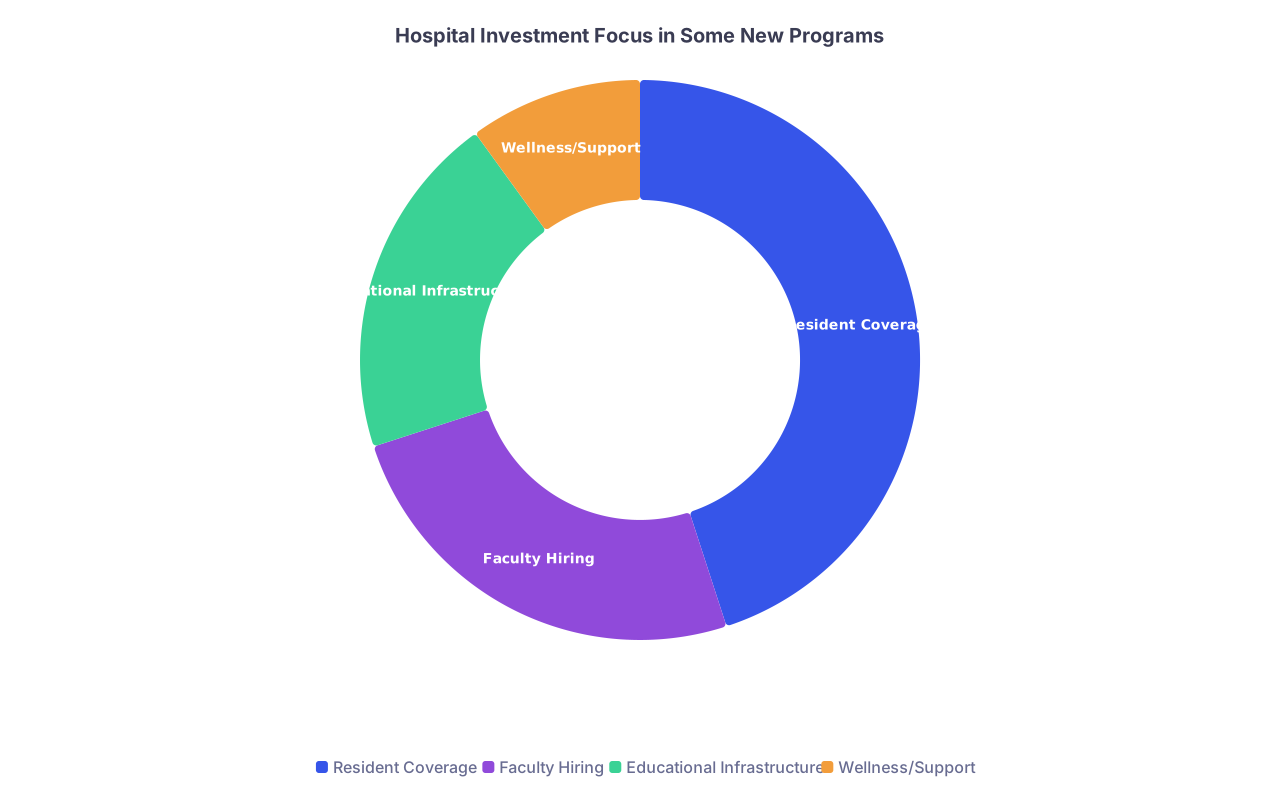
| Category | Value |
|---|---|
| Resident Coverage | 45 |
| Faculty Hiring | 25 |
| Educational Infrastructure | 20 |
| Wellness/Support | 10 |
If all the dollars and energy go into adding resident FTEs with minimal parallel faculty growth, that’s exactly how residents become cheap labor.
Today’s Action Step
You’re somewhere on this timeline right now.
So do one concrete thing:
Open the website of one new program you’re considering, pull up the ACGME directory in another tab, and verify their exact accreditation status and PD’s prior experience. Write down three specific questions you’ll ask them about accreditation and curriculum.
Do that tonight. Not “eventually.” That single 20‑minute check can save you from spending three years in a program that was never really ready for you.