
What if you match into a brand‑new residency and it’s a disaster?
That’s the fear, right? You become the horror story. First class. No structure. No didactics. Angry attendings who didn’t want residents. A PD who quits. A program that never gets accredited beyond the initial phase and now you’re scrambling to transfer while your friends complain about cafeteria food at their safe, established places.
You’re not crazy for being scared of that. You’re smart.
New residency programs are a gamble. Not always a bad gamble. Some turn out fantastic. Some are quietly mediocre. And a few are legit dangerous for your training and sanity.
Let’s talk about how you tell the difference—before you rank them high and lock yourself in.
First, how risky is a new program really?
Let me be blunt: “New” doesn’t automatically mean “trash.” But it does mean:
- Less track record
- More growing pains
- More dependence on leadership competence
And leadership competence is… wildly variable.
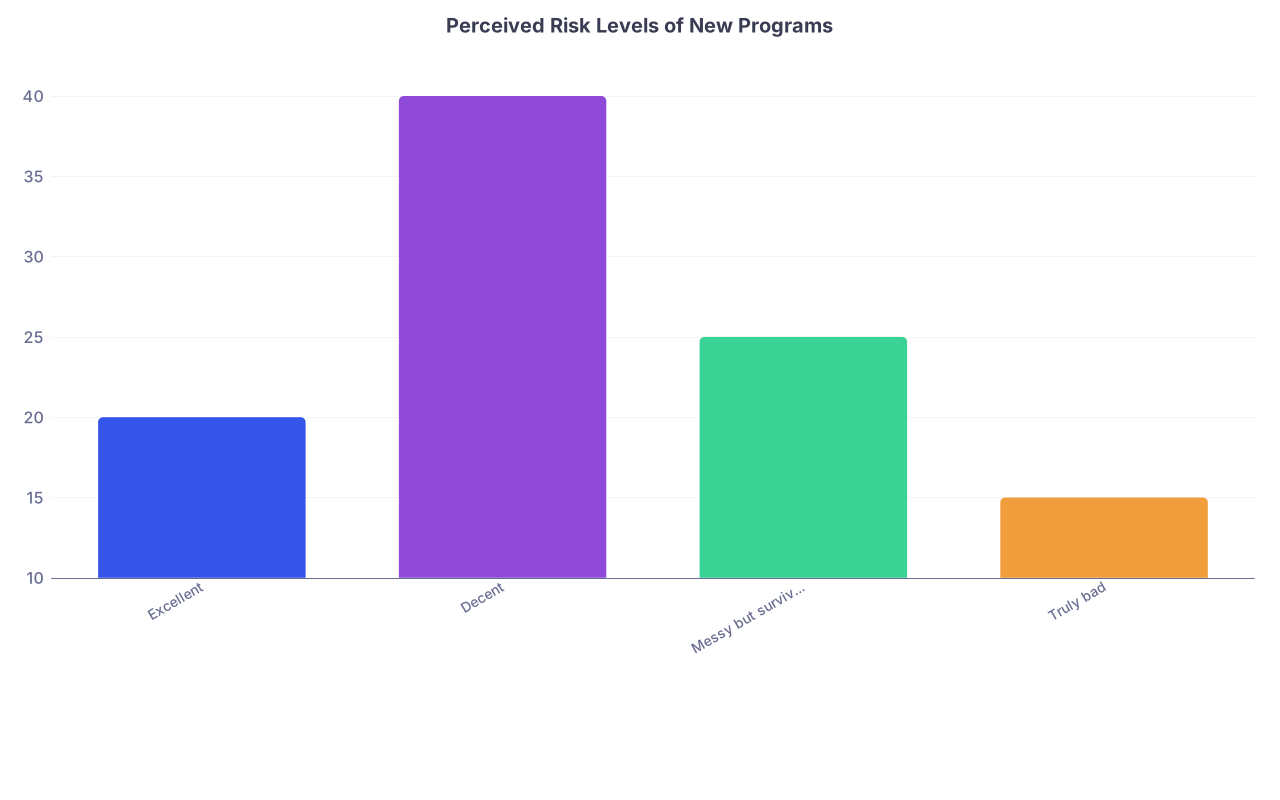
Here’s the honest risk profile I’ve seen:
| Category | Value |
|---|---|
| Excellent | 20 |
| Decent | 40 |
| Messy but survivable | 25 |
| Truly bad | 15 |
So maybe 15% end up in the “oh no, what have I done” category. That’s not negligible when this is your career.
Your job isn’t to magically know the future. Your job is to collect enough signals that you’re not walking into the 15%.
The non‑negotiable: ACGME status and accreditation reality
If you remember nothing else, remember this: you need ACGME accreditation at graduation to sit for boards. No exceptions. No vibes. No “they promised.”
There are a few key statuses you’ll see:
| Status | What It Means |
|---|---|
| Initial Accreditation | New program, approved, under close watch |
| Continued Accreditation | Stable, routine reviews |
| Probationary | Serious concerns, at risk |
| Withdrawn/Withheld | Program lost or never got accreditation |
You want to see “Initial Accreditation” at minimum. Not “we’re applying,” not “the hospital is working on it,” not “it’s in process.” If they don’t have initial ACGME accreditation now, you are volunteering to be a test subject.
Yes, some programs interview before the status is posted. That’s still a risk. I’d rank those low unless you see later they got full initial accreditation before you certify your list.
Also: ask directly in the interview or a follow‑up email:
- “Do you currently have ACGME Initial Accreditation?”
- “When was your last ACGME site visit and what was the outcome?”
- “Are there any citations you’re actively working on?”
If they’re vague or defensive? That’s a red flag. Good PDs answer this confidently because they’ve already been peppered with nervous questions by everyone else.
Follow the PD: credentials, history, and vibes that actually matter
The program director in a new program is basically your entire insurance policy. If they’re strong, they’ll drag the place into shape. If they’re weak, you’re a canary in a very messy coal mine.
Here’s what I look for.
1. Have they led or significantly shaped a program before?
Not just “I was faculty at a big-name place.” That’s nice. Doesn’t mean they can build infrastructure from scratch.
Green flags:
- Former APD or site director at a reputable program
- Experience running curriculum, evaluation, or scheduling
- They can clearly explain how they built something before (a rotation, boot camp, QI curriculum)
Red flags:
- This is their first time doing anything beyond “I was an attending”
- They dodge questions about their old program’s outcomes
- They’re weirdly focused on branding and research papers and not on basics like “Who supervises you at night?”
2. Can they answer “what does your typical PGY‑1 month look like?” with detail?
If you ask, “What does a PGY‑1’s first year look like?” and they say, “We’re still working that out”… you’re the guinea pig.
You want to hear:
- Specific rotations and where they happen
- Clear supervision (“night float with in-house attending,” “24/7 hospitalist backup,” etc.)
- How they plan to avoid over-service (“We capped admissions at X,” “We’ll start consults only after we reach Y residents”)
Vague = worry.
Infrastructure: the boring stuff that will make or break your life
Most applicants get hypnotized by shiny things: new building, big name system, fancy EMR. That’s nice. It doesn’t guarantee good training.
What actually matters is the unsexy infrastructure. And you can absolutely ask about it.

Ask about these, specifically:
Call rooms and workspaces
- “Where do residents sleep on call?”
- “Is there a dedicated resident workroom on each main unit?”
If they point to some random generic flex room or haven’t set it up yet, that tells you how much thought they’ve put into resident existence.
IT and EMR access
- “Will residents have their own logins and order-writing privileges from day one?”
If residents can’t write orders at first because IT “is still working on it,” your life will be hell for months.
- “Will residents have their own logins and order-writing privileges from day one?”
Ancillary staff
- “How many patients per nurse on the main resident services?”
- “Is there phlebotomy and transport at night?”
New programs sometimes get shoved onto under-resourced units: no phlebotomy, no transport, everything “resident-driven.” Translation: scut.
Didactics that actually exist
A schedule on a slide is not proof. Ask:- “Is didactic time protected?”
- “Do attendings consistently respect that protected time?”
If current faculty grimace or chuckle when this comes up, pay attention.
Numbers that should make you pause (or relax)
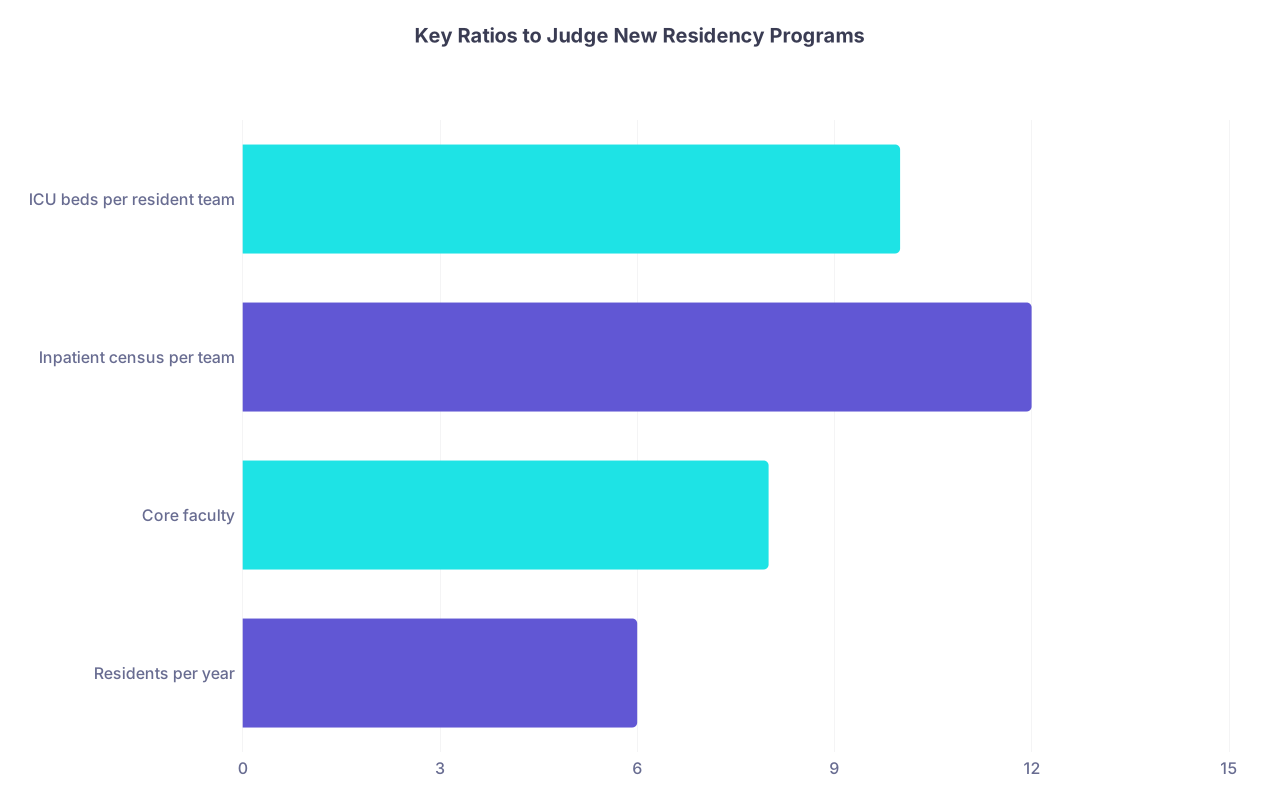
New programs love to talk about “growth” and “expansion.” Cool. You care about ratios and volume.
| Category | Value |
|---|---|
| Residents per year | 6 |
| Core faculty | 8 |
| Inpatient census per team | 12 |
| ICU beds per resident team | 10 |
Some rules of thumb (not perfect, but better than vibes):
- If they’re starting with >10 residents per class in an untested system: that’s aggressive. Can be okay in a huge academic center, but in a small or community place? Questionable.
- If they have fewer core faculty than residents in the first class, that’s rough. You’ll be spread thin on mentorship and evaluation.
- If each team routinely runs >14–16 patients with minimal ancillary support, new residents will be drowning, not learning.
Ask straight up:
- “How many core faculty are fully dedicated to resident education?”
- “How many patients does a typical team carry, and what’s the cap?”
- “How many residents are you planning to grow to, ultimately?”
No concrete numbers = they’re guessing. With your life.
How to interrogate a new program on interview day (without sounding insane)
You don’t want to sound hostile. You also don’t want to roll over and say “Looks great!” when your gut is screaming.
You can sound calm and still be sharp. Here’s how.
With the PD
Use “curious” language:
- “Since you’re a newer program, I’m really interested in how you’ve structured X…”
- “Can you walk me through how you built your curriculum for the first few years?”
- “What changes have you made after feedback from your current residents?”
If they never mention feedback, or change, or iteration? Either no one feels safe talking, or leadership doesn’t care.
With current residents (if there are any)
If they already have a PGY‑1 or PGY‑2 class, you’re in a much safer position. Ask them privately after the official tour:
- “What surprised you (good or bad) about starting in a new program?”
- “If you had to decide again, would you still come here?” (Watch their face, not just words.)
- “What’s one thing that’s actually not ready yet or still a mess?”
Nobody has a perfect program. If they claim everything is flawless, that’s either a lie or they’ve been coached.
What if there are no current residents yet?
This is peak anxiety scenario: you’re literally the first.
Now we’re in pure risk calculus.
Here’s how I’d rank the safety of “first class” situations:
| Scenario | Risk Level |
|---|---|
| New program at giant academic center with multiple other residencies | Lower |
| New program at established community hospital with strong fellowship presence | Moderate |
| New program at small hospital with no prior GME | High |
| New program with no ACGME approval yet | Extreme |
Questions become even more critical:
- “What other residency or fellowship programs are already here?”
- “Who is your GME director / DIO and what’s their background?”
- “What support are you getting from your parent institution or university?”
If this is the only GME presence, no oversight, no DIO with experience, and no academic affiliation? You’re basically testing a homebrew system.
Some people are okay with that gamble for geography, family reasons, or because they had few options. But you should at least be honest with yourself: this is higher risk.
Red flags that should actually scare you
You’re already anxious. Your brain sees red flags everywhere. So let’s separate the real ones from the noise.
Real, serious red flags
- They don’t have ACGME Initial Accreditation yet, and can’t tell you when they expect it.
- PD can’t articulate a clear schedule for PGY‑1 year.
- No core faculty list, no names, just “we’re hiring.”
- They rely heavily on locums or temporary attendings to staff core rotations.
- No GME office or DIO with prior experience.
- Current faculty talk more about “cheap labor” and “finally getting help with the work” than about teaching.
- Nobody can tell you how feedback will be collected or acted on.
Those aren’t “quirks.” Those are signs that your training will be chaos.
Mild flags that you can live with
- Didactics not fully polished yet, but they clearly have a plan and protected time.
- Slight uncertainty about electives or away rotations during the first year or two.
- Some rotations still being negotiated at nearby affiliate hospitals, but the core inpatient/clinic structure is solid.
Every new program has rough edges. You’re judging whether the foundation is solid.
How to weigh “new but promising” vs “old but meh”
You might be comparing a shiny, serious‑sounding new program vs a 30‑year‑old program that… just exists. No big name. Meh vibes. Safe but not exciting.
So which is “safer”?
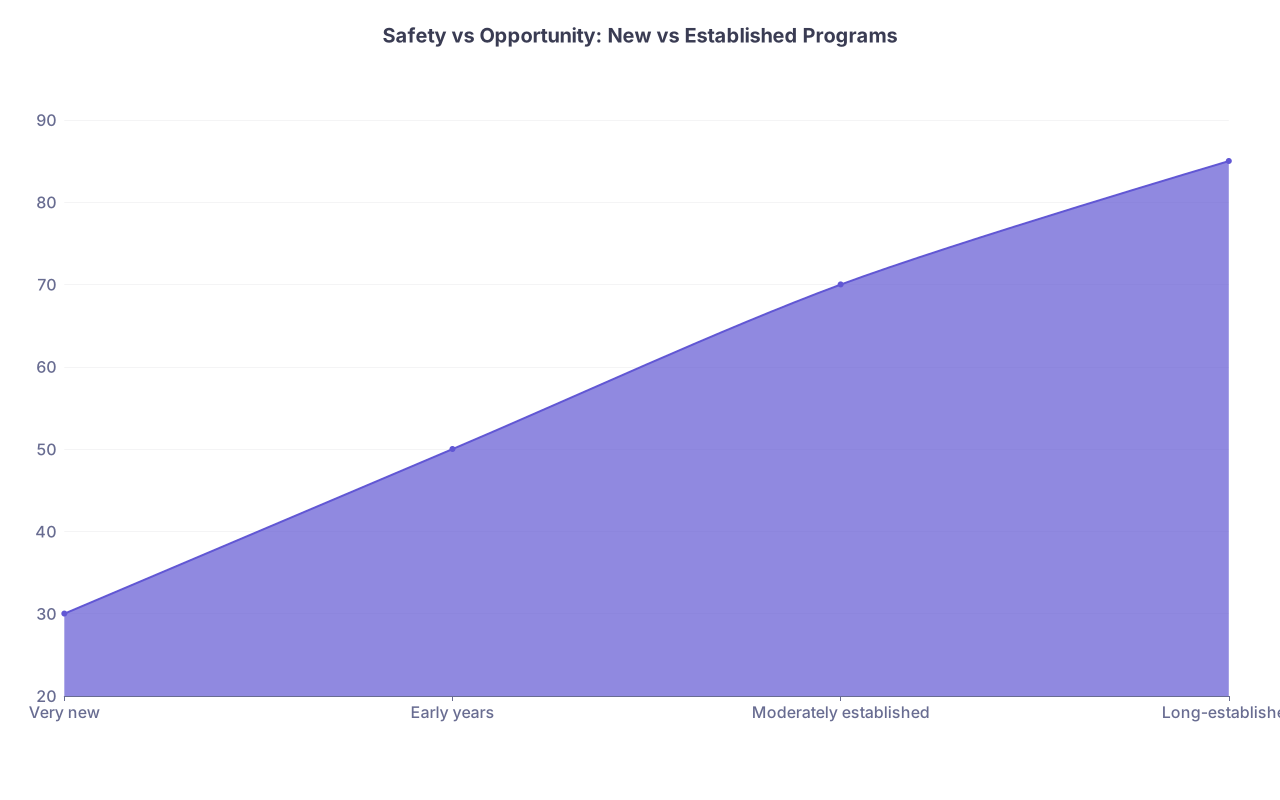
Use something like this mental scale:
| Category | Value |
|---|---|
| Very new | 30 |
| Early years | 50 |
| Moderately established | 70 |
| Long-established | 85 |
In general:
- Long-established + solid board pass rate + alumni in fellowships ⇒ safest for pure outcomes
- New + strong leadership + big institutional backing ⇒ more risk, more upside
- New + weak leadership + small hospital ⇒ high risk, low upside
So if you’re someone who absolutely cannot afford to be burned (visa issues, family relying on your income, limited ability to transfer), lean toward boring but stable.
If you have some buffer and you’re excited about shaping a program—and you’ve done your due diligence—it can be reasonable to rank a new but well‑backed program decently high.
What if I’m already stuck ranking one higher than I’m comfortable with?
Maybe this new program is in your home city. Maybe it’s the only one that interviewed you. Maybe your Step score boxed you out of your “dream tier.”
The anxiety spiral here is brutal: “If I rank it high, I might hate my life. If I rank it low, I might not match at all.”
Here’s how I’d structure the decision:
First question: Does it meet absolute safety checks?
- ACGME initial accreditation
- Real PD with prior GME experience
- Functional hospital with adequate volume and support
If no: rank very low or not at all unless you truly have no alternatives.
Second question: Could I transfer if it was bad? Transferring is possible but not guaranteed. Programs rarely advertise it, but people do move. If you’re willing to endure 1 tough year and hustle to move, that changes the calculus a bit.
Third question: Is not matching worse? Brutally honest: for a lot of people, not matching is worse than matching into a flawed but accredited program. You can survive a messy program. You can’t start a residency you don’t have.
If you decide to rank it high, do it as an informed compromise. Not blind optimism.
Final sanity check questions you should literally write down
Print this out, put it next to your laptop when you’re ranking:
- Is the program ACGME accredited right now?
- Does the PD have real GME leadership experience?
- Are there enough core faculty to support the number of residents?
- Is there clear structure for PGY‑1 schedule, call, and supervision?
- Does the hospital have functioning infrastructure: ancillary staff, EMR access, call rooms, GME office?
- Are there other established residencies/fellowships at this hospital or a strong academic partner?
- Did current residents (if any) look tired-but-okay, or dead-eyed-miserable?
If you can answer most of those positively, it’s probably safe enough, even if not perfect.

| Step | Description |
|---|---|
| Step 1 | Considering new program |
| Step 2 | Rank very low or skip |
| Step 3 | High risk - rank cautiously |
| Step 4 | Reasonable risk - rank based on priorities |
| Step 5 | ACGME initial accreditation |
| Step 6 | Experienced PD and core faculty |
| Step 7 | Clear PGY1 schedule and supervision |
| Step 8 | Adequate hospital resources |
Years from now, you probably won’t remember the exact wording of the brochure or the awkward small talk on the tour. You will remember how you handled this kind of decision—whether you asked the hard questions, trusted your own read of the answers, and chose with your eyes open instead of out of panic.