
This article is for educational purposes only. It is not financial advice, not legal advice, and not tax advice. Figures vary by individual circumstances, so consult a qualified professional before acting.
Direct Opening: What the 48 Hours Before SOAP Actually Control
The next 48 hours are not for panic. They're for setup, decisions, and execution readiness.
If you're staring down SOAP with limited interviews or an uncertain Match outcome, this window is your last real chance to build control before the scramble starts. SOAP, the Supplemental Offer and Acceptance Program, opens fast and moves faster. Programs post positions. Applicants flood applications. Offers can appear and disappear in hours. You don't win by being the most frantic person online. You win by removing friction so you can act cleanly on Day 1.
You're not trying to solve your entire career in two days. You're trying to protect your decision-making bandwidth. I've watched applicants burn the 48 hours refreshing forums, rewriting their entire personal statement for the fifth time, and then freeze when the list goes live. Don't do that. Use a clock-based plan instead.
Here's the structure: seven timed steps. Each one locks in a piece of readiness so that when SOAP opens, you're executing, not inventing strategy under adrenaline.
Step 1: At 48 Hours Out, Gather Your SOAP Core Materials
At this point you should verify that your ERAS access, CV, personal statement drafts, letters of recommendation, transcript, MSPE, and contact information live in one place. Not three drives and a random email thread. One place.
Build a single digital "SOAP folder." Include passwords (or password-manager links), login recovery steps, and every document you'll need to upload or attach. If you're the type who panics when Wi-Fi dies, print a thin backup packet too. Paranoid? Maybe. Effective? Yes.
Check the hardware. Smartphone charged. Laptop charged. Charger within reach. Stable internet. A workspace you can actually sit in for hours without roommates barging in. Identify missing items now. Discovering a locked account or a corrupted PDF after SOAP opens is a self-inflicted wound.
Do the inventory once. Then stop hunting for documents.
Step 2: At 36 Hours Out, Confirm Your Program List and Decision Filters
At this point you should create a ranked shortlist of likely-fit programs rather than chasing every open slot like it's a clearance sale. Volume without filters is how people waste the first critical hours.
Define your decision filters out loud: specialty fit, geography you can actually live in, visa needs, fellowship trajectory, program size, culture signals you've already seen, and likelihood of a timely response. Write them down. Soft preferences become hard rules under pressure.
Prepare three lists:
- Must apply
- Apply if eligible / time allows
- Do not spend time on
That last list matters more than people admit. Some programs look shiny and will still eat thirty minutes you'll never get back.
Check prior application expectations for each target so you can tailor fast instead of reverse-engineering requirements at 11 a.m. on opening day.
Step 3: At 24 Hours Out, Tighten Your Application Story
At this point you should refine a concise narrative for why you're in SOAP and why you fit the programs on your shortlist. Vague "I'm flexible and hardworking" language dies in a crowded inbox.
Draft and save short, specialty-specific talking points you can drop into applications and phone calls. Polish three pieces specifically:
- Your personal statement intro
- Any weak-spot explanation (gaps, failed exams, limited interviews, own it cleanly)
- Your "why now / why this program type" language
Prepare a 30-second version and a 2-minute version of your story. Unexpected calls happen. Messaging windows open. You do not want to invent your identity while someone is waiting on the line.
I've seen strong applicants stumble because they sounded surprised to be there. Sound prepared. Sound deliberate. Sound like someone a program can trust with patients in July.
Step 4: At 18 Hours Out, Script Your Communication System
At this point you should write and save templates for emails, portal messages, and phone-call introductions. Blank screens waste minutes you don't have.
Set up a contact sheet: program phone numbers, coordinator names, time zones, office hours. One spreadsheet. Sortable. Ready.
Prepare your voicemail greeting, clear name, that you're reachable, and you'll return calls promptly. Then decide your return-call plan. Who answers if you're mid-submission? How fast do you call back?
Decide who on your support team can help. One person to proofread. One person to monitor messages if needed. Not a committee. Committees create confusion and contradictory advice right when you need speed.
Step 5: At 12 Hours Out, Rehearse the Opening-Day Workflow
At this point you should walk through your first-hour plan step by step, from login to first submissions. Mentally rehearsing is not enough. Click the buttons.
Test every password. Test two-factor authentication. Test the browser you'll actually use. Test document uploads with dummy files if the system allows it. Find the broken piece now.
Create a submission sequence:
- Which programs first
- Which materials attach to each
- How you confirm completion and timestamp
Build in short breaks. Two minutes to breathe and re-check names beats a wrong upload that you only notice after the offer window moves.
Speed without a sequence turns into expensive mistakes. Accuracy first. Then pace.
Step 6: At 6 Hours Out, Protect Your Energy and Reduce Noise
At this point you should stop making major content changes. Shift into preservation mode. Tweaking your personal statement at 2 a.m. rarely improves it. It usually introduces typos and second-guessing.
Set boundaries with friends, family, and classmates. "I'll update you after the first wave" is a complete sentence. Group chats full of rumors are noise. Mute them.
Prepare the boring essentials: food you can eat with one hand, water, medications, chargers, quiet space. Interruptions compound. A dead laptop mid-upload is not dramatic, it's preventable.
Use a realistic sleep or rest plan. A tired applicant reads eligibility wrong, attaches the wrong letter, and then spends an hour undoing it. Rest is part of the strategy, not a luxury you earn later.
Step 7: In the Final 1-2 Hours, Lock In and Go Live
At this point you should do one final check of documents, priorities, and contact channels, then stop changing strategy. No new programs added because someone texted a rumor. No rewriting the opener because anxiety got loud.
When the window opens, start with your first-choice programs and follow the preplanned order. Reacting emotionally to every update is how people scatter their best materials across low-yield targets.
Track submissions, responses, and follow-up needs in a simple log. Time submitted. Confirmation received. Next action. That's it. Fancy systems fail when your heart rate is elevated. A clean table doesn't.
Preparation is complete. Now execution matters more than perfection. You will not craft the ideal application for every open slot. You will move through your list with discipline.
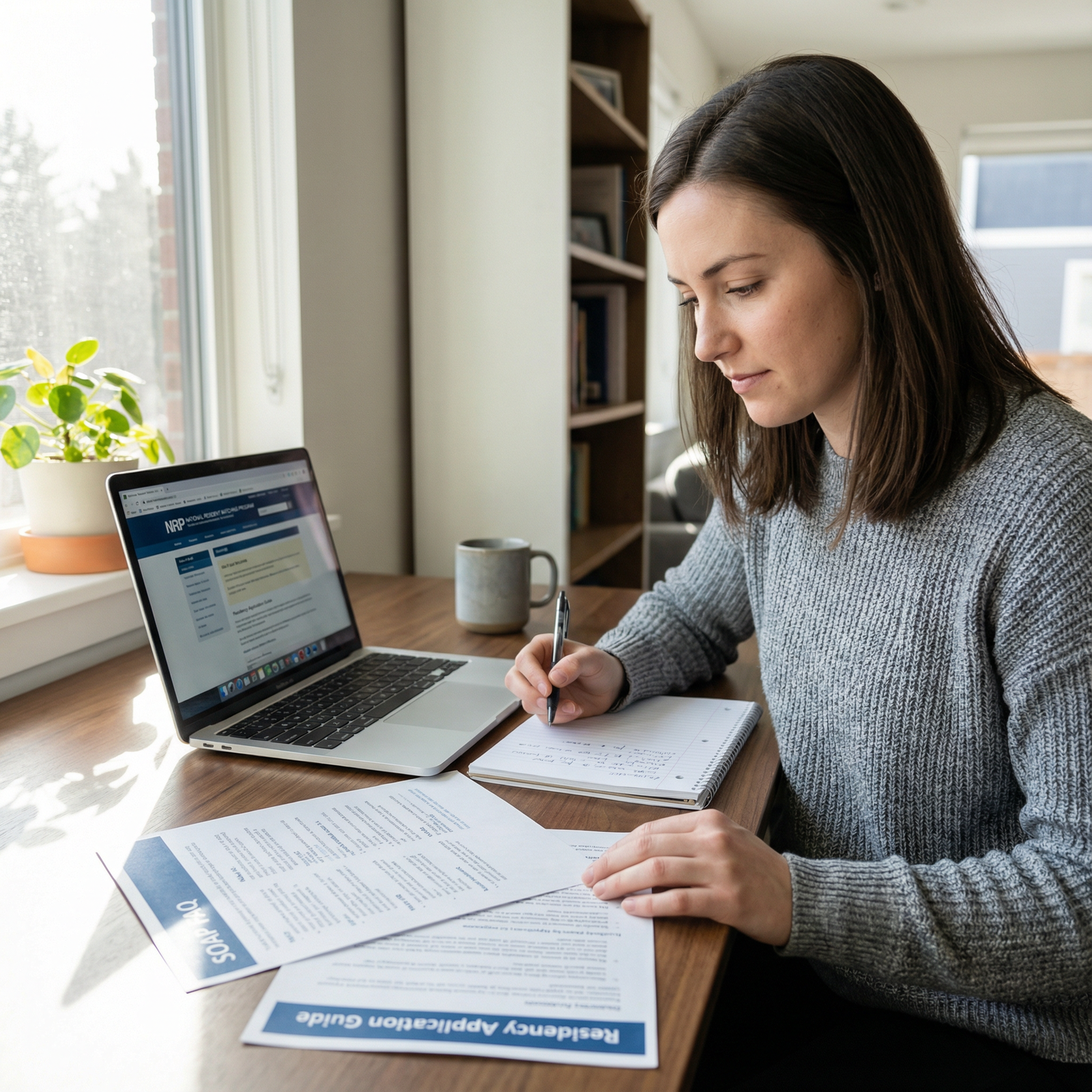
Closing CTA: Use the 48 Hours to Build Control, Not Anxiety
These seven steps turn uncertainty into a chronological workflow: materials at 48 hours, filters at 36, story at 24, communication at 18, rehearsal at 12, energy protection at 6, lock-in at the final stretch.
Save the checklist. Revisit your shortlist once more. Enter SOAP with a system instead of last-minute panic. The applicants who look "lucky" on opening day are usually the ones who removed friction the day before.
Finish the checklist now. Then move into SOAP with confidence and discipline.