The Art of Limited Interviews During SOAP: How to Make a Lasting Impression
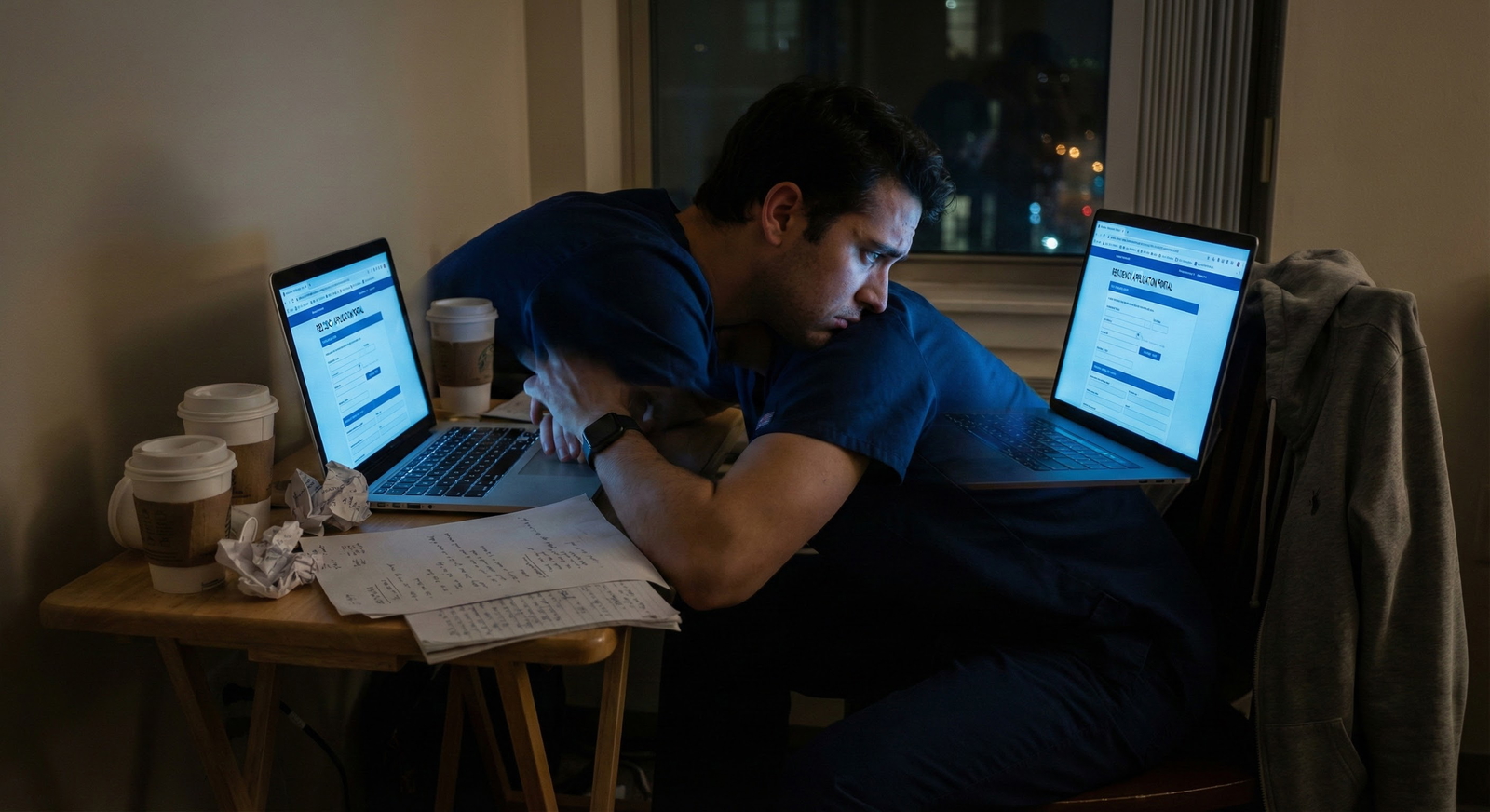
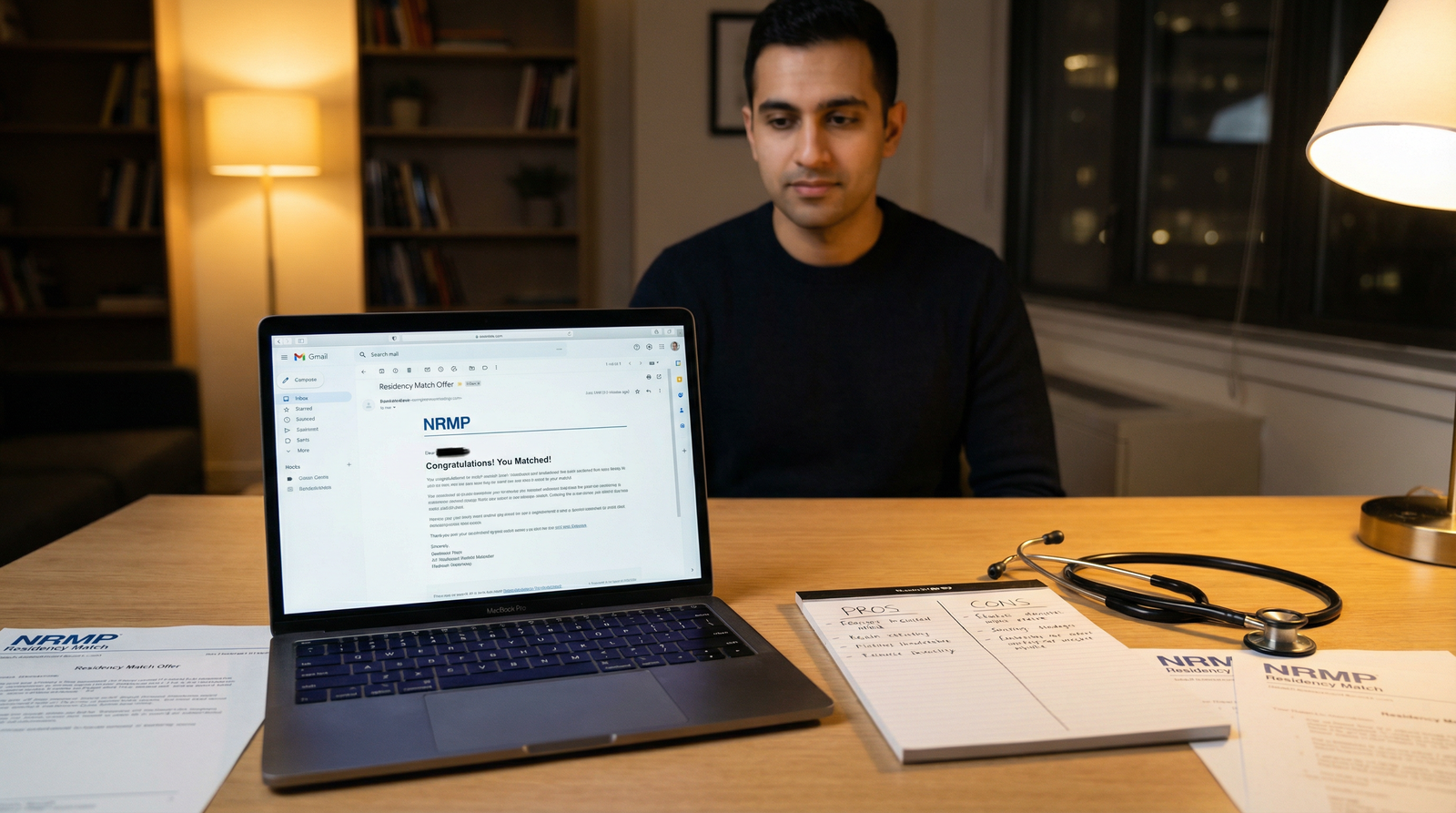
The Supplemental Offer and Acceptance Program (SOAP) can feel like the most intense week of your medical training journey. After months or years of meticulous planning for your residency application, SOAP compresses critical decisions into a few fast-paced days—and often into just a handful of brief, high‑stakes conversations.
For many medical graduates, these SOAP Interviews are truly make-or-break. You may only get one or two chances to speak with a program, and those limited interviews can determine whether you start residency this July or spend another year rebuilding your application.
This guide breaks down how to navigate limited interviews during SOAP strategically and confidently. You’ll learn how to prepare efficiently, communicate clearly, and leave a memorable impression—even when time is short and stress is high.
1. Understanding SOAP: Unique Constraints and Opportunities
What Makes SOAP Interviews Different?
While the traditional residency interview season allows for weeks to prepare, multiple interviews per specialty, and time to reflect, SOAP is compressed and transactional:
Limited Opportunity
- UNLIKE the regular Match cycle where applicants might attend 10–20 interviews, during SOAP you may only be offered a few—or even a single—interview.
- Every conversation carries disproportionate weight. There is very little margin for error, and there are fewer chances to “warm up” or learn from earlier mistakes.
- Programs may use brief, semi-structured interviews to quickly assess fit and resolve questions they didn’t get from the written Residency Application.
Extreme Time Pressure
- SOAP occurs over a few days in March with strict, pre-set communication windows.
- Programs may be reviewing hundreds of applications in just hours and might only skim your ERAS file before speaking with you.
- Many SOAP interviews are short (10–20 minutes) and tightly focused. You must convey who you are, why you’re a strong candidate, and why you’re interested in that program—fast.
Heightened Competition Among Qualified Applicants
- Most unmatched candidates are capable and motivated medical graduates. Many have strong scores, solid clinical evaluations, and substantial experiences.
- Because the pool is dense with qualified applicants who are also urgently seeking placement, your ability to differentiate yourself through communication, clarity, professionalism, and insight becomes a major advantage.
Why Limited Interviews Can Still Work in Your Favor
Despite the stress, SOAP interviews offer unique opportunities:
- Programs are also under pressure to fill positions quickly with engaged, reliable residents.
- Your interpersonal skills and readiness to work can matter as much as test scores.
- A focused, genuine connection in a 15-minute conversation can outweigh a more generic, unfocused 60-minute interview in the regular season.
Thinking of SOAP interviews as concise, high-yield encounters—rather than “lesser” versions of regular interviews—can help you bring the right mindset and energy to each interaction.
2. Strategic Preparation for SOAP Interviews
Because SOAP moves fast, you need a focused, efficient approach to Interview Preparation. This is not the time for perfectionism; it is the time for targeted, high-yield work.

2.1 Researching Programs Quickly but Effectively
You may be applying to many programs during SOAP, but interviews will likely come from a subset. Build a system that lets you prepare enough to speak intelligently about any program that contacts you.
Key Program Features to Research (10–15 minutes per program):
- Program structure and strengths
- Community vs. academic vs. hybrid
- Unique features: strong ultrasound curriculum, robust ICU training, early operative experience, rural health focus, etc.
- Patient population and setting
- Urban underserved, suburban, rural, veteran populations, or specialty populations (e.g., pediatrics, geriatrics).
- Educational philosophy
- Emphasis on resident autonomy vs. supervision
- Simulation, academic tracks, scholarly activity expectations
- Faculty and leadership
- Program director’s background and interests
- Notable faculty (e.g., research, advocacy, leadership roles)
- Recent changes or developments
- New affiliations, expansion of residency classes, ACGME updates, recent recognitions or awards.
Practical tip:
Create a one-page document per program with:
- 3–4 reasons you are genuinely interested
- 2–3 questions you want to ask
- 1–2 ways your background aligns with their mission/population
Keep this near your screen for quick reference during virtual interviews.
2.2 Refining Your Personal Narrative (Beyond the Personal Statement)
While you may update or tailor your personal statement during SOAP, most programs will not re-read long documents in detail at this stage. Instead, your spoken narrative becomes your most important personal statement.
Focus on three narrative pillars:
Who you are as a developing physician
- Core values: compassion, curiosity, teamwork, resilience, attention to detail.
- Clinical strengths: communication with patients, procedural skills, efficiency, leadership on rounds, evidence-based thinking.
Why you are applying SOAP and what you learned
- Address your path honestly but briefly if asked:
- Example: “I didn’t match in the main cycle, and that was difficult. It pushed me to seek more feedback, strengthen my clinical performance, and clarify that internal medicine is truly where I see myself contributing long-term.”
- Focus on growth, insight, and readiness—not self-criticism.
- Address your path honestly but briefly if asked:
Why this specialty and why this program
- Be specific: tie your interests to patient populations, curriculum features, and career goals.
- Emphasize adaptability and willingness to work hard from day one.
2.3 Practicing Behavioral and Situational Questions
SOAP Interviews often rely on behavioral and situational questions to quickly assess your professionalism, teamwork, and resilience.
Use the STAR format (Situation, Task, Action, Result) for clear, concise answers.
Common Behavioral Questions to Practice:
- “Tell me about a time you faced a major challenge or setback in your training.”
- “Describe a conflict within a team and how you handled it.”
- “Give an example of a time you received critical feedback. What did you do?”
- “Tell me about a time you had to adapt quickly to a changing situation on the wards.”
High-yield answer tips:
- Keep your response focused (1–2 minutes).
- End with what you learned and how it makes you a better future resident.
- Avoid blaming others; highlight your responsibility and professionalism.
2.4 Crafting a Clear, Memorable Elevator Pitch
Your elevator pitch is your 30–60 second summary that you can adapt to almost any “Tell me about yourself” question.
Suggested structure:
Introduction and background
- “My name is Dr. [Name]. I graduated from [medical school] and completed my clinical training with particular interest in [specialty/clinical area].”
Key strengths and experiences
- “My strengths include [teamwork, communication, work ethic, or specific clinical skills], which I’ve developed through [rotations, leadership roles, research, or community work].”
Connection to the specialty and program
- “I’m especially drawn to [specialty] because [specific reasons], and I’m excited about your program’s focus on [population/curriculum feature].”
Forward-looking statement
- “I’m looking for a residency where I can contribute from day one, grow in [specific skill/interest], and be part of a supportive, hardworking team.”
Practice saying this naturally, not as a script. Customize a few phrases for different types of programs (academic vs. community, urban vs. rural, etc.).
3. Executing on Interview Day: Professionalism, Presence, and Precision
On the day of your SOAP Interviews, your mindset should be: “Every minute counts, but I can only control what I bring to this moment.”
3.1 Professional Appearance and Virtual Setup
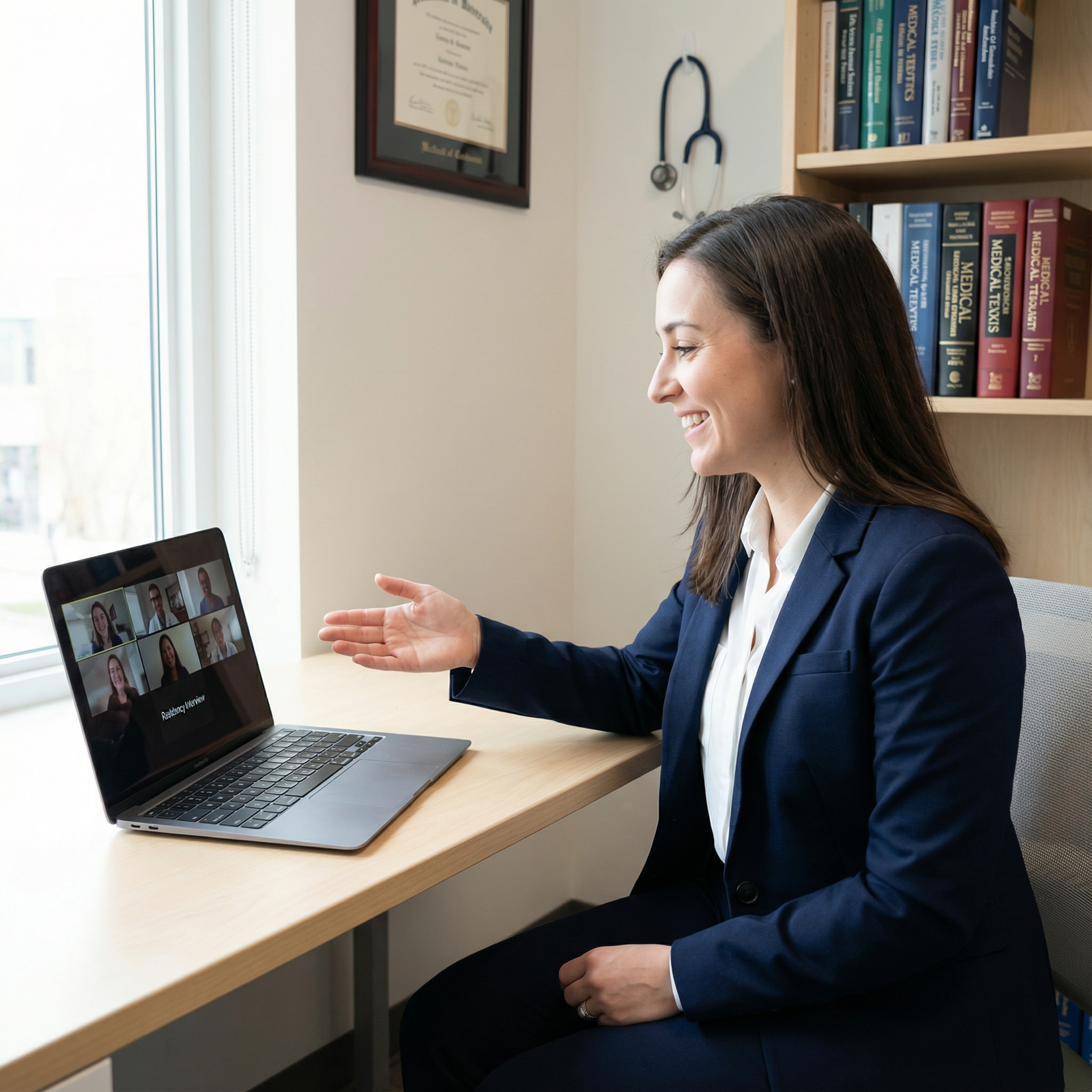
Even if you only have a 10-minute video call, your visual presentation impacts how programs perceive your professionalism.
Attire:
- Business formal (suit jacket or blazer) in conservative colors (navy, gray, black).
- Subtle accessories, minimal jewelry, neat grooming.
- Avoid distracting patterns or bright colors that may not render well on camera.
Virtual environment:
- Neutral, uncluttered background (plain wall, simple bookshelf).
- Good lighting from in front of you, not behind.
- Camera at eye level to promote natural eye contact.
- Test your microphone and camera in advance.
3.2 Punctuality and Technical Readiness
Programs are juggling tight schedules; being late, frazzled, or technically unprepared can hurt you quickly.
Before the interview:
- Log in 10–15 minutes early.
- Close background apps or notifications.
- Have your CV, program notes, and a notepad ready.
- Keep your phone silenced but nearby in case of technical issues.
If something goes wrong technically, calmly acknowledge it and move on:
- “I apologize for the brief issue with my audio. I appreciate your patience and am ready to continue.”
3.3 Communicating with Clarity, Enthusiasm, and Focus
In limited interviews, you must be concise but not robotic.
Verbal communication tips:
- Answer questions directly first, then add a brief example if helpful.
- Use plain, professional language; avoid long tangents or overly complex language.
- Keep most answers in the 60–120 second range unless prompted to elaborate.
Non-verbal communication tips:
- Look at the camera periodically to simulate eye contact.
- Nod occasionally to show engagement.
- Maintain an open, attentive posture (avoid slouching or leaning too close to the camera).
Showing enthusiasm without sounding desperate:
- Focus on fit and contribution, not on your anxiety.
- Instead of: “I really need a spot this year.”
- Try: “I’d be genuinely excited to train here, and I’m ready to work hard and contribute to your team from day one.”
3.4 Handling Questions About Not Matching or Gaps
Programs may ask directly about your SOAP participation, prior attempts, or gaps. Prepare a brief, honest, and growth-oriented answer.
Example framework:
Acknowledge the situation clearly.
- “I participated in the regular Match this year but did not match to a position.”
Avoid excessive detail or self-criticism.
- Briefly mention contributing factors only if necessary (e.g., step timing, limited specialty focus).
Emphasize reflection and improvement.
- “I used this as an opportunity to seek feedback, strengthen my application, and deepen my commitment to [specialty].”
End with your strengths and readiness.
- “I’m confident I can contribute positively as a resident right away and am eager to bring my [specific strengths] to your team.”
4. Standing Out in Short Conversations
When every minute matters, you need deliberate strategies to make your SOAP Interviews impactful and memorable.
4.1 Ask Smart, Focused Questions
Programs often ask, “What questions do you have for us?” This is a chance to demonstrate genuine interest and preparation.
High-yield question types:
- Curriculum and Training
- “How does your program support interns transitioning into independent decision-making during the first year?”
- Resident Support and Culture
- “How would you describe your resident culture, and what qualities tend to thrive here?”
- Feedback and Mentorship
- “How often do residents receive formal feedback, and in what format?”
- Career Development
- “For residents interested in [hospitalist work / fellowship / community practice], what types of mentorship or career development opportunities are available?”
Avoid questions easily answered on the website (e.g., “How many residents are in each class?”) unless asking for clarification or updates.
4.2 Emphasize Adaptability and Team Orientation
SOAP is, at its core, about adaptability—responding constructively to a challenging situation. Programs are looking for residents who can thrive in a demanding, often unpredictable environment.
You can highlight adaptability by:
- Mentioning specific examples of adjusting to last-minute schedule changes.
- Describing how you handled unfamiliar clinical scenarios.
- Emphasizing willingness to work where needed and support your co-residents.
Similarly, stress your role as a team player:
- Share examples of supporting classmates on rotations.
- Describe times you stepped up to help the team during high workload periods.
- Highlight interprofessional collaboration with nurses, pharmacists, RTs, social workers.
4.3 Closing the Interview with Confidence
Near the end, you’ll often hear: “Is there anything else you’d like us to know?”
Use this to reinforce your value and fit:
- Briefly summarize your key strengths (clinical work ethic, reliability, communication).
- Reiterate authentic interest in the program.
- Express appreciation for their time and the opportunity to speak.
Example:
“I’d just like to emphasize that I’m a hardworking, reliable team player who thrives in collaborative environments. I’m genuinely excited about the possibility of training here, particularly given your focus on [specific aspect]. Thank you again for the opportunity to speak with you today.”
5. Following Up Thoughtfully and Professionally
Your communication after the interview is part of your overall impression.

5.1 Sending Targeted Thank-You Messages
While SOAP timelines are tight and some programs may finalize lists quickly, a brief, professional thank-you email can still help reinforce your interest and professionalism.
Key elements of an effective thank-you note:
- Subject line: “Thank you – [Your Name], [Specialty] SOAP Interview”
- Opening: Express appreciation for their time.
- Specific reference: Mention one or two concrete things you discussed.
- Reinforce fit and interest: Tie back to program features and your goals.
- Close professionally: Thank them again and sign with full name and contact information.
Example:
Dear Dr. [Name],
Thank you for taking the time to speak with me today about the [Program Name] [Specialty] residency. I appreciated hearing more about your emphasis on [specific aspect discussed, e.g., resident autonomy in the ICU and caring for an underserved urban population].
Our conversation reinforced my strong interest in your program, particularly given my experiences working with similar patient populations and my goal of developing into a well-rounded, compassionate [specialist]. I would be honored to contribute to your resident team.
Thank you again for your time and consideration.
Sincerely,
Dr. [Your Name]
5.2 Managing Uncertainty and Maintaining Professionalism
You may not immediately know your standing with programs after interviews. During this period:
- Stay reachable via the phone and email listed in ERAS.
- Remain professional in any communication—no pressuring or repeated messages to programs.
- Support your peers going through the same process; mutual support can reduce anxiety.
Remember that how you handle this stressful week is itself a demonstration of your maturity and readiness for residency.
Frequently Asked Questions (FAQ) About SOAP Interviews and Limited Opportunities
1. What should I do if I receive multiple SOAP interview invitations at overlapping times?
Prioritize programs based on:
- Genuine interest and perceived fit
- Specialty alignment with your long-term goals
- Program stability, accreditation, and training environment
If you have conflicts:
- Communicate promptly and politely with program coordinators.
- Briefly explain the conflict and ask if there is flexibility in scheduling.
- Be honest but professional: programs understand that SOAP is logistically complex.
Avoid double-booking or last-minute cancellations whenever possible, as these can reflect poorly on your professionalism.
2. Can I practice SOAP-style interviews in advance, and how should I do it?
Yes, and you absolutely should. Effective practice can significantly improve performance despite the compressed timeline.
Strategies:
- Arrange mock interviews with:
- Faculty mentors
- Recent graduates who have gone through SOAP
- Career advisors or your school’s residency support office
- Ask them to focus on:
- Behavioral questions
- Short, focused “speed interview” formats
- Questions about not matching or gaps
- Record yourself answering common questions and review:
- Clarity and length of your responses
- Non-verbal cues (eye contact, posture, tone)
- Whether your key strengths and narrative come across consistently
Even a few hours of structured practice can make your limited interviews feel more familiar and controlled.
3. How should I handle rejection or no offers after SOAP?
If you don’t secure a position during SOAP, it can be emotionally challenging—but it does not define your potential as a physician.
Steps to take:
- Allow yourself time to process your emotions and seek support from trusted mentors, peers, or counseling services if needed.
- Request honest feedback from programs or advisors where possible.
- Reflect on potential gaps in your Residency Application: grades, exams, specialty choice, letters, red flags, or geographic limitations.
- Develop a concrete plan for the coming year:
- Additional clinical experience (e.g., research positions, observerships, prelim years, or non-ACGME fellowships)
- Retaking or completing licensing exams if appropriate
- Strengthening letters of recommendation and clinical evaluations
- Stay engaged in medicine: consistent clinical or academic involvement strengthens both your skills and your future applications.
Resilience and growth after SOAP can become a powerful part of your long-term Career Development story.
4. What are the most common mistakes applicants make during SOAP interviews?
Frequently observed pitfalls include:
- Lack of preparation: Not knowing basic information about the program or specialty focus.
- Overexplaining or rambling: Using precious minutes on long, unfocused answers.
- Speaking negatively: Criticizing prior programs, advisors, or the Match system.
- Sounding desperate rather than focused on fit: Emphasizing your need for any spot rather than why you are a good choice for their specific program.
- Poor virtual professionalism: Distracting backgrounds, technical issues not tested in advance, or casual attire.
- No follow-up: Missing an easy chance to reiterate interest and professionalism via a brief thank-you email.
Focusing intentionally on these areas can set you apart from other equally qualified candidates.
5. Is it appropriate to acknowledge vulnerability or personal challenges during SOAP interviews?
Yes—when done thoughtfully. Programs appreciate authenticity and insight, especially around adversity. When sharing personal or professional challenges:
- Keep details appropriate and professional.
- Avoid oversharing or focusing only on emotion.
- Emphasize coping strategies, support systems, and what you learned.
- Connect the experience to how you will be a stronger, more empathetic physician.
For example:
“Going through the unmatched result was difficult, but it pushed me to seek more feedback and refine my clinical skills. It also deepened my empathy for patients facing setbacks and uncertainty. I feel more focused and resilient as I move forward into residency.”
Handled well, vulnerability can demonstrate maturity, self-awareness, and growth—qualities highly valued in residents.
Navigating SOAP with limited interviews is demanding, but it’s also an opportunity to demonstrate the very qualities residency programs value most: resilience, adaptability, professionalism, and genuine commitment to patient care. With focused preparation, clear communication, and strategic follow-through, you can maximize each limited interaction and position yourself strongly for a successful residency match—whether this cycle or the next.