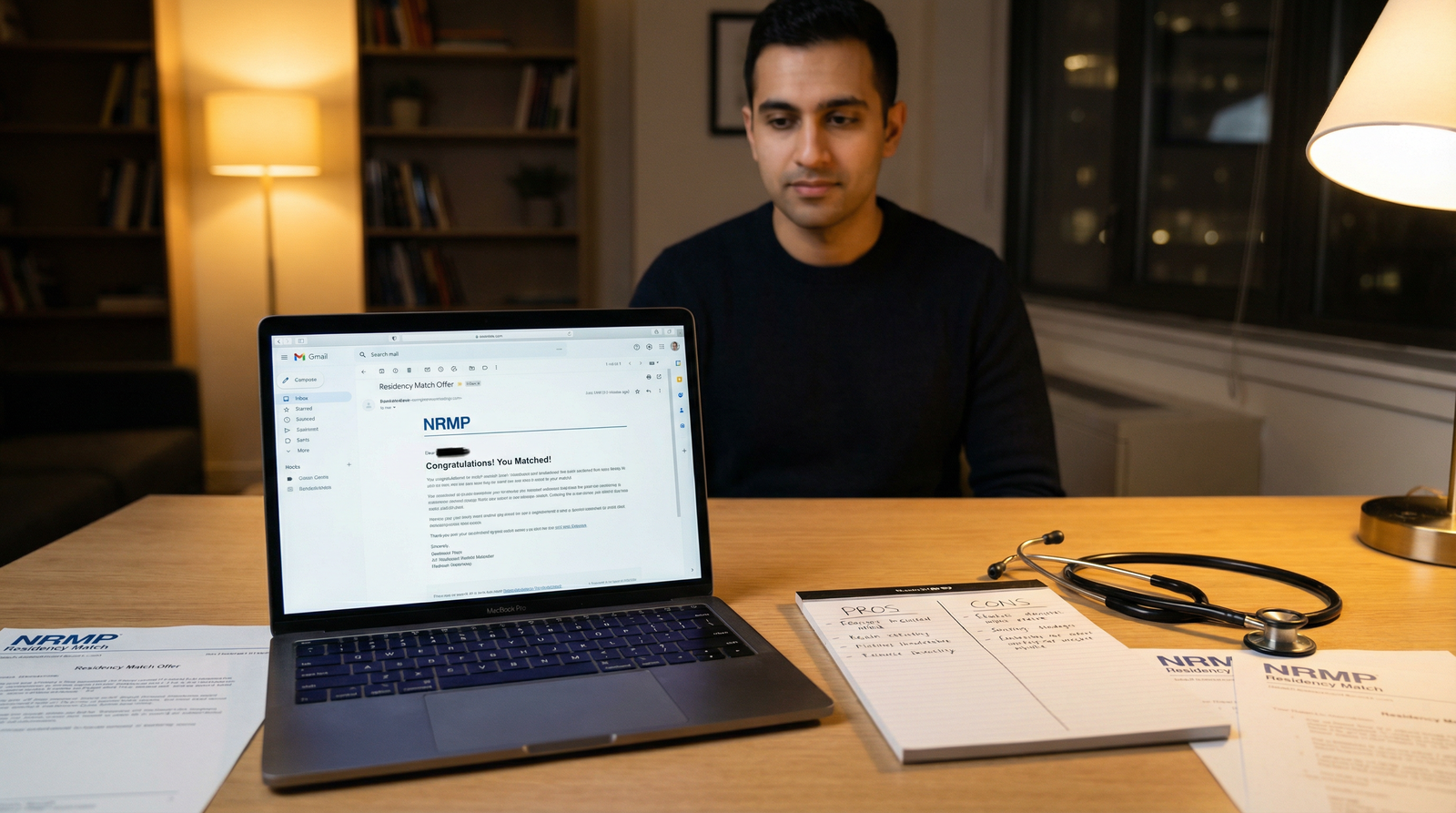
Achieving Residency Dreams: Strategies for SOAP Success with Few Interviews
Securing a residency position is one of the most stressful transitions in medical education. When Match Week arrives and you learn you are unmatched or partially matched, the Supplemental Offer and Acceptance Program (SOAP) becomes your next critical opportunity.
Navigating SOAP is challenging in any circumstance—but it can feel especially daunting if you have very few interviews or are worried that your application is not as competitive as others. Yet every year, thousands of applicants successfully obtain residency positions through SOAP, including those starting with limited interviews.
This guide walks through a structured, realistic approach to optimizing your chances of success in SOAP when interviews are scarce. You’ll find detailed, actionable strategies to strengthen your application, sharpen your interview performance, and use networking and communication strategically—while protecting your mental health in the process.
Understanding the SOAP Process and Timeline
What is SOAP and Who is Eligible?
The Supplemental Offer and Acceptance Program (SOAP) is an organized, time-limited process administered by the NRMP during Match Week. It allows eligible unmatched or partially matched applicants to apply for and accept residency positions that remain unfilled after the initial Match algorithm runs.
You are typically SOAP-eligible if:
- You are registered for the Main Residency Match.
- You are unmatched or partially matched at the start of Match Week.
- You are not withdrawn or ineligible with the NRMP.
- Your medical school or ECFMG confirms your eligibility.
Programs with unfilled positions post them in the NRMP system, and applicants can apply to these positions through ERAS during SOAP rounds.
Key Phases of SOAP
SOAP unfolds over a few very intense days. Understanding the sequence is crucial for planning:
Pre-SOAP Preparation (Before Match Week)
- Update and polish your ERAS application.
- Finalize your CV and personal statement.
- Identify potential letter writers and mentors.
- Reflect on specialty flexibility (e.g., considering preliminary or categorical positions in related specialties).
Notification and List Release (Match Week Monday)
- You are notified whether you are matched, partially matched, or unmatched.
- The List of Unfilled Programs becomes available to SOAP-eligible candidates and their schools.
Application Phase (Usually Monday–Wednesday)
- You can apply to a limited number of programs (historically up to 45 applications, but always verify the current rule).
- Programs cannot initiate contact with you until a designated time, and you must not contact programs outside official channels.
Interview and Communication Phase
- Programs review applications and reach out to selected candidates for brief interviews (often same-day).
- Interviews are typically virtual and may be short (10–20 minutes).
Offer Rounds
- Residency programs submit preference lists.
- Applicants receive offers during multiple SOAP rounds and must accept or decline within a short window.
- Once you accept an offer, you are SOAPed into that position and removed from further consideration.
Because SOAP moves quickly, especially for competitive programs, planning in advance is essential—particularly if you expect to have limited interviews.
Strengthening Your Application Materials for SOAP
When you have fewer interview opportunities, every aspect of your written application must work harder for you. Programs are rapidly screening large numbers of candidates; strong, clear documents improve your odds of making the “interview” list.
Optimizing Your CV for Residency SOAP
Your residency CV is a snapshot of your professional identity. For SOAP:
Use a clean, consistent format
- Simple fonts, clear headings, and logical sections (Education, USMLE/COMLEX scores, Clinical Experience, Research, Leadership, Volunteerism, Skills).
- Avoid clutter and excessive colors or graphics.
Prioritize clinically relevant experience
- Highlight core clerkships, sub-internships, acting internships, and any relevant electives.
- For each significant rotation, include:
- Institution and department
- Dates
- Brief bullet points describing responsibilities (e.g., “Managed 6–8 inpatients daily under supervision, wrote daily progress notes, presented on rounds”).
Show continuity and growth
- Demonstrate progressive responsibility or leadership: chief roles in student-run clinics, teaching assistant roles, QI projects.
- Emphasize anything that shows reliability, teamwork, and professionalism—traits programs value highly for SOAP candidates.
Address gaps or unusual paths
- If you have a non-traditional route (e.g., gap year, research year, international training), present it positively and clearly.
- Be prepared to explain in interviews how these experiences strengthened your skills and commitment.
Crafting a High-Impact Personal Statement for SOAP
Your personal statement can be a deciding factor when programs are unsure or only have time for a brief review.
Key principles:
Be specific, not generic
- Replace vague statements (“I love internal medicine because it is broad and challenging”) with specific experiences and patients that shaped your interest.
- Draw a clear connection between your past experiences and the specialty you are applying to.
Address SOAP honestly but strategically (if needed)
- You generally don’t need to dwell on being unmatched. However, for some situations, a brief mention of resilience, reflection, and growth can be powerful.
- Example: “This year’s Match process has compelled me to examine my goals carefully and reaffirm my commitment to internal medicine, reinforcing my desire to…”.
Tailor by specialty, not program (in most cases)
- Given SOAP’s time pressures, it is usually realistic to have 1–2 versions:
- One for your primary specialty
- One for a related or backup specialty (e.g., IM vs prelim surgery).
- When time allows, add a sentence aligning with the program’s mission or population, especially if you have direct connections or regional ties.
- Given SOAP’s time pressures, it is usually realistic to have 1–2 versions:
Maximizing the Impact of Letters of Recommendation
Strong, specific letters of recommendation (LORs) can heavily influence whether you receive interviews during SOAP.
Prioritize recent clinical supervisors
- Letters from attendings who directly observed your clinical work in the last 1–2 years are most valuable.
- Ideal writers:
- Sub-I or acting internship attendings
- Clerkship directors
- Program directors or department chairs who know you well
- Longitudinal preceptors
Coach your letter writers (professionally)
- Share your updated CV, personal statement, and a brief summary of your SOAP plan.
- Politely request that they highlight:
- Clinical judgment and work ethic
- Teamwork and communication
- Professionalism and reliability
- Resilience and adaptability (especially relevant in SOAP context).
Consider an additional “advocacy” letter
- Some schools or mentors will contact programs on your behalf (within NRMP/ERAS rules) to endorse you.
- This type of advocacy is particularly helpful when interviews are limited and every extra signal of support matters.

Targeting Programs Strategically When Interviews Are Scarce
When you can only submit a limited number of SOAP applications, random or overly narrow choices can seriously hurt your chances. Strategic targeting becomes critical.
Balancing Breadth and Realism in Program Selection
Your goal is to maximize the chance of receiving any offers, while still targeting programs where you could realistically thrive.
Be flexible with program type
- Consider:
- Categorical vs preliminary positions
- Community vs university-affiliated programs
- Programs outside highly competitive geographic regions.
- If you are strongly committed to a particular specialty long-term, a preliminary (PGY-1) year in transitional year, internal medicine, or surgery can still keep doors open.
- Consider:
Use data and past trends
- Review prior years’ SOAP patterns (if available through advisors, forums, or your institution).
- Programs that frequently fill through SOAP may be more open to applicants with unconventional pathways.
Weigh your specialty competitiveness
- If you went unmatched in a highly competitive specialty (e.g., dermatology, plastics, ortho), talk candidly with advisors about:
- Applying to a different (less competitive) specialty through SOAP this year, or
- Focusing on a solid preliminary year with a plan to reapply strategically.
- If you went unmatched in a highly competitive specialty (e.g., dermatology, plastics, ortho), talk candidly with advisors about:
Customizing Applications Within Time Constraints
You likely won’t have time to deeply customize each application, but small targeted adjustments can matter:
Emphasize regional ties
- Mention in your ERAS experiences or personal statement if you:
- Grew up in the region.
- Have family or support systems there.
- Trained there during medical school or did rotations nearby.
- Programs often prefer residents with ties to their region due to higher retention.
- Mention in your ERAS experiences or personal statement if you:
Align with program strengths
- Quickly review each program’s website:
- Patient population (rural, urban, underserved).
- Emphasis on primary care vs fellowship preparation.
- Unique tracks (global health, research, hospitalist, etc.).
- In interviews or brief communications, reference these features and how they align with your goals.
- Quickly review each program’s website:
Be realistic about visa and credential constraints
- If you are an international medical graduate (IMG) or require visa sponsorship:
- Prioritize programs that historically sponsor your visa type (e.g., J-1, H-1B).
- Use online resources, alumni, and school advisors to identify IMG-friendly programs.
- If you are an international medical graduate (IMG) or require visa sponsorship:
Leveraging Networking and Communication During SOAP
Networking isn’t just for the pre-interview season. During SOAP, smart, ethical networking can make a meaningful difference, especially when formal interviews are limited.
Building and Using Your Support Network
Engage your medical school advisors
- Deans, student affairs staff, and advisors often:
- Have direct lines of communication with program leadership.
- Can advocate for you when they know your story, strengths, and goals.
- Schedule a rapid meeting as soon as you learn you are SOAP-eligible.
- Deans, student affairs staff, and advisors often:
Tap into alumni networks
- Ask your school for a list of alumni in your target specialty or programs.
- Reach out professionally (email or LinkedIn) with:
- A brief introduction.
- Your current situation and career goals.
- A specific, respectful ask: “Do you have any advice regarding [Program X] or similar programs participating in SOAP this year?”
Use professional social media strategically
- LinkedIn and specialty-focused platforms can be used to:
- Follow programs and stay updated on their priorities.
- Connect with residents or faculty from programs with unfilled positions.
- Use a professional profile photo, updated education and experiences, and a concise summary of your interests.
- LinkedIn and specialty-focused platforms can be used to:
Ethical and Effective Communication with Programs
During SOAP, strict NRMP and ERAS communication rules apply. You must:
- Avoid initiating direct contact with programs about SOAP positions unless explicitly allowed by the current rules and your advisors.
- Respond professionally and promptly when programs contact you:
- Reply courteously and succinctly.
- Confirm availability for interviews quickly.
- Use a professional email address and voicemail greeting.
Example email reply to an interview invitation:
Thank you very much for considering my application to your Internal Medicine residency program. I would be grateful for the opportunity to interview. I am available today between 1–4 PM ET or tomorrow between 9–11 AM ET; however, I am happy to adjust to any time that works best for your team.
Sincerely,
[Your Name], MD (or MS4)
Mastering Residency Interview Strategies Under SOAP Time Pressure
Even a small number of interviews can lead to a successful SOAP outcome if you perform strongly. Because SOAP interviews are often brief and scheduled at short notice, preparation must be both focused and flexible.
Core Interview Preparation for SOAP
Practice core questions intensively
- “Tell me about yourself.”
- “Why this specialty?”
- “Why our program/region?”
- “Tell me about a challenging case and what you learned.”
- “Describe a time you made a mistake or received critical feedback.”
Use the STAR method (Situation, Task, Action, Result) for behavioral questions to structure responses clearly.
Prepare a concise narrative of your SOAP situation
- If asked, be honest yet forward-looking:
- Briefly acknowledge the match outcome without blame or defensiveness.
- Emphasize what you’ve learned, how you’ve grown, and why you remain committed to the specialty and to improving.
- Example:
“Not matching was difficult, but it’s pushed me to critically evaluate my application and reinforce my commitment to internal medicine. I’ve focused on X, Y, and Z to strengthen my skills and I’m very ready to contribute as an intern this year.”
- If asked, be honest yet forward-looking:
Know each program’s basics
- Before each interview (even if called on short notice), quickly review:
- Program size and type (community, university-affiliated).
- Unique features or tracks.
- Location and patient population.
- Prepare 2–3 thoughtful questions that show genuine interest.
- Before each interview (even if called on short notice), quickly review:
Practical Tips for Virtual SOAP Interviews
Set up your environment in advance
- Neutral background, good lighting, and reliable internet.
- Test your microphone and camera beforehand.
- Have your CV and a few notes available (but avoid reading verbatim).
Project calm confidence
- Sit upright, maintain eye contact (look at the camera, not the screen), and speak clearly.
- If nervous, practice breathing techniques or short grounding exercises before logging on.
End with impact
- Close each interview by:
- Reiterating your strong interest in the program.
- Briefly summarizing what you offer (e.g., strong work ethic, teamwork, commitment to underserved populations).
- Thanking them sincerely for their time and consideration.
- Close each interview by:
Maintaining Resilience, Reflection, and Long-Term Perspective
SOAP is not just a logistical challenge—it’s emotionally demanding. Protecting your well-being helps you perform better in interviews and make clear decisions.
Staying Grounded During an Uncertain Week
Focus on controllable actions
- You can’t change how many interviews you receive, but you can:
- Refine your talking points.
- Respond rapidly and professionally.
- Show up prepared and composed to every interaction.
- You can’t change how many interviews you receive, but you can:
Use your support system intentionally
- Stay connected with:
- Friends or classmates facing similar challenges.
- Family or partners who can offer emotional support.
- Online and in-person support groups for unmatched applicants.
- Normalize your experience—many excellent physicians did not match on the first attempt.
- Stay connected with:
Prioritize basic self-care
- Even amid the chaos, try to:
- Sleep at least 6–7 hours when possible.
- Eat regularly.
- Take short breaks to walk, stretch, or breathe between tasks.
- Even amid the chaos, try to:
Reflecting on Feedback and Future Planning
Whether or not you secure a position through SOAP, reflection is essential:
Seek constructive feedback
- Once the process concludes, ask advisors, mentors, or program contacts (when appropriate) for insights about:
- Application strengths and weaknesses.
- Specialty competitiveness.
- Possible ways to improve (research, additional clinical experience, exam retakes if advisable).
- Once the process concludes, ask advisors, mentors, or program contacts (when appropriate) for insights about:
Clarify your true interests
- Reflect on:
- Which rotations genuinely energized you.
- The patient populations and practice environments you gravitate toward.
- Your long-term career goals (e.g., primary care, academic medicine, subspecialty fellowship).
- Reflect on:
Develop a backup or multi-year strategy
- If SOAP does not result in a position:
- Consider research fellowships, prelim years, or additional clinical experiences that enhance your future competitiveness.
- Work with advisors on a timeline for reapplying, potentially to multiple specialties or different geographic regions.
- If SOAP does not result in a position:
Remember: not matching initially does not predict the quality of physician you will be. Many outstanding residents and attendings have taken alternate routes.

FAQs: Navigating SOAP with Limited Interviews
1. How competitive is SOAP, and do I really have a chance with only a few interviews?
SOAP is highly competitive because many unmatched and partially matched applicants are competing for a finite number of unfilled positions. However, even a small number of interviews can absolutely lead to a successful match through SOAP. Programs participating in SOAP often value:
- Applicants who are ready to work hard from day one.
- Strong clinical performance and professionalism.
- Clear interest in their specialty and region.
- Positive, coachable attitudes.
By maximizing your preparation for each interview, targeting realistic programs, and presenting a coherent, honest narrative, you can significantly improve your chances—even if your number of interviews is limited.
2. What are the most important things I should focus on before SOAP begins?
Before SOAP, prioritize:
Polishing your ERAS application
- Update CV, personal statement, and experiences.
- Ensure that exam scores, transcripts, and MSPE are accurate and complete.
Securing strong letters of recommendation
- Identify recent clinical supervisors who can speak enthusiastically about your skills and work ethic.
Meeting with advisors early
- Develop a realistic SOAP plan: target specialties, geographic flexibility, and number/type of programs.
Preparing for interviews
- Practice core questions and behavioral responses with mentors, career advisors, or peers.
Having these pieces in place before Match Week allows you to move quickly and confidently once the SOAP list opens.
3. How can I use networking without violating SOAP or NRMP rules?
During SOAP, NRMP and ERAS rules govern when and how programs and applicants can communicate. To network ethically:
Before SOAP
- Build relationships with mentors, faculty, and alumni.
- Ask for advice and general guidance, not for guaranteed positions.
- Maintain professional profiles on LinkedIn or similar platforms.
During SOAP
- Follow the rules outlined by NRMP and your medical school.
- Respond promptly and professionally when programs contact you.
- Allow your advisors or deans to advocate for you when appropriate, since they often understand the boundaries well.
Never attempt to pressure programs or circumvent official communication channels. Effective networking is about building relationships and gathering insights, not breaking rules.
4. Should I consider switching specialties during SOAP if I went unmatched?
It depends on your situation and long-term goals. Factors to consider:
Your passion and long-term vision
- Are you open to practicing another specialty and genuinely finding satisfaction in it?
Relative competitiveness of your target specialty
- If your original specialty is extremely competitive, advisors may suggest:
- Applying to a less competitive specialty through SOAP, or
- Seeking a strong preliminary year that will position you for reapplication.
- If your original specialty is extremely competitive, advisors may suggest:
Your current application profile
- Exam scores, clinical performance, research, and letters may be stronger fits for certain specialties.
Discuss this question openly with trusted mentors who understand your academic record and goals. A thoughtful pivot can sometimes create a more sustainable and fulfilling career path.
5. What should I do if I don’t secure a position through SOAP?
Not obtaining a position through SOAP is deeply disappointing but not the end of your journey in medicine. Constructive next steps include:
Meet promptly with advisors and deans
- Review your entire application.
- Identify realistic pathways for the coming year (research, observerships, additional clinical experience, MPH or other advanced degrees, etc.).
Strengthen your candidacy strategically
- Address modifiable weaknesses:
- Additional US clinical experience.
- Improved exam scores if retaking is appropriate.
- New research, QI projects, or publications.
- Enhanced LORs from recent supervisors.
- Address modifiable weaknesses:
Plan for the next application cycle
- Decide whether to:
- Reapply to the same specialty with a stronger application.
- Apply to multiple specialties.
- Reassess your long-term specialty choice.
- Decide whether to:
Many physicians who initially went unmatched have gone on to successful, fulfilling careers. The key is to respond with reflection, persistence, and a clear, strategic plan.
Navigating SOAP with few interviews is undeniably stressful, but it is also an opportunity to demonstrate resilience, professionalism, and growth. By strengthening your application materials, targeting programs intelligently, leveraging networking ethically, and preparing thoroughly for each interview, you substantially improve your chances of securing a residency position—and taking the next step toward your medical career.