
Creating a Personal Statement Narrative That Resonates: The Essential Do’s
Crafting a powerful Personal Statement is one of the most high‑stakes writing tasks you will complete on your path to medical school or residency. In a crowded pool of highly qualified applicants—with similar GPAs, test scores, and extracurriculars—your narrative often becomes the decisive factor.
A strong Personal Statement does more than list achievements. It tells a cohesive story about who you are, why medicine (or a specific specialty) is the right path, and how your experiences have prepared you to contribute meaningfully to a program. When done well, it creates an emotional and intellectual connection with your reader—often a tired faculty member reading dozens of statements in a single evening.
Below, you’ll find a detailed, step‑by‑step guide to the do’s of Personal Statement writing, with practical Writing Tips, examples, and Narrative Techniques you can apply immediately to your own draft.
Understanding the Purpose of Your Personal Statement in Admissions
Before you start writing, be clear on what your Personal Statement actually needs to accomplish. This is not an autobiography or a creative writing exercise—it's a focused professional narrative with a specific purpose in Medical School Admissions and residency selection.
What Admissions Committees Are Really Looking For
Programs use Personal Statements to:
Assess fit with the program
- Do your values, interests, and goals align with their mission and training environment?
- For residency: Does your interest in the specialty feel mature, informed, and realistic?
Evaluate your communication skills
- Can you communicate clearly and professionally in writing?
- Do you organize complex information logically?
- Are your reflections coherent and insightful?
Understand your motivations and professional identity
- Why medicine—and why now?
- For residency: Why this specialty?
- How have your experiences shaped the kind of physician you hope to become?
Differentiate you from similar applicants
- What is distinctive about your path, perspective, or contributions?
- How will you add to the culture, diversity, and strengths of their cohort?
What Your Personal Statement Is Not
Understanding what not to do can keep you focused:
- It is not a list of everything you’ve done (that’s your CV or ERAS application).
- It is not a place to repeat your entire AMCAS or ERAS activities section.
- It is not the place for exaggerated drama, vague clichés, or generic statements that could belong to any applicant.
Instead, aim for a selective, well‑crafted story that gives insight into your character, judgment, and readiness for training.
Do #1: Start with a Strong, Purposeful Hook
Your opening lines determine whether an exhausted reviewer leans in or mentally checks out. A strong hook doesn’t have to be “flashy,” but it must be engaging, specific, and relevant to your overall narrative.
Effective Ways to Open Your Personal Statement
1. A brief, vivid clinical moment
This is one of the most effective Narrative Techniques for Medical School Admissions and residency applications.
Example (medical school):
“The first time I held a patient’s hand as she waited for a biopsy result, I realized that sometimes medicine begins long before a diagnosis is made.”Example (residency):
“I was 18 hours into a call shift when my senior handed me the pager and said, ‘You’ve got this.’ As the alarms started, I understood that what drew me to internal medicine was not adrenaline, but responsibility.”
2. A moment of realization or change
Describe a turning point that led you to reconsider your path, values, or understanding of medicine.
- “Before my mother’s stroke, I understood medicine as a science. Watching her struggle with rehabilitation taught me that medicine is also a language—one that patients either feel empowered to speak, or shut out from entirely.”
3. A brief personal context that directly connects to medicine
This can be a family, cultural, or community background, as long as it’s tied clearly and quickly to your path.
Common Pitfalls to Avoid in Your Hook
- Starting with a dictionary definition: “Medicine is defined as…”
- Using generic statements: “Ever since I was young, I knew I wanted to help people.”
- Opening with overly graphic or sensational scenes that feel manipulative or disconnected from your growth.
- Writing long, unrelated stories before mentioning anything about medicine.
Your hook should lead naturally into your central theme—think of it as the first step into your narrative, not a standalone vignette.
Do #2: Be Deeply Authentic and Honest
Authenticity in Writing is crucial. Committees read thousands of statements; they quickly sense when an applicant is exaggerating, using borrowed language, or constructing a persona rather than sharing their real story.

What Authenticity Looks Like in a Personal Statement
Specific, true details instead of vague generalities
- “I spent evenings translating discharge instructions into Spanish with Mr. R.” is more authentic than “I frequently help underserved patients.”
Honest acknowledgment of your journey
- You don’t need to claim you always knew you wanted to be a doctor.
- It’s acceptable to describe gradual interest or shifting motivations—as long as you show where you’ve landed and why.
Balanced vulnerability
- Sharing challenges (burnout, family illness, academic setbacks) can be powerful if:
- You maintain professionalism.
- You focus on insight, coping, and growth, not on eliciting sympathy.
- Sharing challenges (burnout, family illness, academic setbacks) can be powerful if:
Practical Writing Tips for Authenticity
- Use your natural voice, but professionally. If you’re not naturally highly poetic, don’t force it.
- Avoid overusing buzzwords like “passion,” “calling,” and “lifelong dream” without specific stories to back them up.
- Ask someone who knows you well:
- “Does this sound like me?”
- “If you didn’t know whose statement this was, would you still recognize my voice?”
Authenticity is your greatest advantage because no one else has lived your exact combination of experiences, reflections, and values.
Do #3: Choose and Sustain a Clear Central Theme
A strong Personal Statement feels cohesive, not scattered. A central theme functions like a spine holding your narrative together and guiding what to include or leave out.
Examples of Effective Central Themes
Longitudinal patient advocacy
How advocacy (for family, community, or patients) shaped your view of the physician’s role.Bridging communication gaps
Between language groups, health literacy levels, specialties, or systems.Growth through responsibility and teamwork
How increasing responsibility in clinical or leadership roles prepared you for residency.Commitment to underserved or specific populations
Such as rural communities, refugees, patients with substance use disorders.
How to Build Around a Theme
Ask yourself:
- What are 2–3 experiences that all point in a similar direction about who I am?
- If someone read just my statement, what one sentence would I want them to remember about me?
For example, a core sentence might be:
“Across research, volunteering, and clinical work, I am drawn to moments where I can help patients feel heard in intimidating systems.”
Then, choose experiences that reinforce that message and show your growth over time.
Do #4: Highlight Key Experiences with Reflection, Not Just Description
A common mistake is turning your Personal Statement into another activities list. Admissions committees already know what you did; what they don’t know is what it meant to you and how it changed you.
The “Experience + Reflection” Formula
For each major experience you include, aim to address:
- What you did (briefly)
- What you observed or felt
- What you learned
- How it shaped your approach to medicine or your specialty
Weak:
“I volunteered in the emergency department and saw many different patients.”Stronger:
“During my shifts in the emergency department, I was struck by how quickly patients were triaged and moved on. I began quietly introducing myself, asking, ‘What’s worrying you most right now?’ Those brief conversations showed me that for many patients, the scariest part of being in the ED isn’t the illness itself, but the uncertainty. This realization shapes my commitment to clear communication and steady presence in acute care settings.”
Choosing Which Experiences to Include
Prioritize experiences that:
- Show maturity and depth (longitudinal or impactful experiences over one‑time shadowing).
- Clearly connect to your motivation for medicine or your specialty.
- Demonstrate qualities programs value: empathy, resilience, curiosity, teamwork, integrity, and initiative.
Two or three well‑developed experiences are more powerful than a superficial mention of ten.
Do #5: Show, Don’t Just Tell
“Show, don’t tell” is one of the most important Writing Tips you can apply. Instead of labeling yourself (“I am compassionate, hardworking, and dedicated”), use concrete details and brief scenes to let the reader draw that conclusion.
Turning Claims into Narrative
Telling: “I am a strong team player.”
Showing: “During codes, my role was small—often just documenting or fetching supplies—but I made a point to anticipate what my team would need next. Over time, the nurses began turning to me and saying, ‘Can you grab…’ before finishing the sentence.”
Telling: “I’m committed to underserved communities.”
Showing: “When our clinic lost its interpreter funding, I worked with a classmate to create a rotation of bilingual volunteers. It meant adding unpaid hours to my week, but it also meant that Mrs. L no longer had to rely on her 10‑year‑old grandson to interpret complex medical decisions.”
Sensible Use of Detail
You don’t need elaborate literary descriptions. Aim for brief, focused details that bring the scene to life:
- A few sensory cues (the quiet of a night shift, the bustle of a clinic).
- A short piece of dialogue.
- A specific action you took.
Used sparingly and purposefully, these small details make your narrative memorable without overwhelming the reader.
Do #6: Address Challenges and Demonstrate Growth
Admissions committees understand that no one has a “perfect” path. Thoughtfully addressing challenges can strengthen your Personal Statement—if you emphasize insight, responsibility, and growth, not excuses.
Types of Challenges You Might Address
- Academic difficulties (low GPA early on, a failed course, Step/COMLEX struggles).
- Personal or family health issues.
- Financial or work responsibilities during training.
- Immigration or systemic barriers.
- Burnout, mental health challenges (carefully and professionally framed).
How to Discuss Challenges Effectively
Be concise and factual
- Avoid overly graphic or emotionally heavy detail.
- Provide just enough context to help the reader understand.
Take responsibility where appropriate
- “I underestimated the volume of material” is better than “The course was unfair.”
Focus on what changed
- New study strategies, time management, seeking mentorship, therapy, academic support, etc.
End on a note of readiness
- Show how you are now better equipped for the demands of training.
- Example:
“During my second year, my grades declined as I struggled to balance coursework with caring for my ill father. Initially, I tried to manage everything alone, which led to exhaustion and poor performance in pharmacology. After meeting with my advisor, I learned to proactively ask for help, accessed counseling services, and created a more realistic schedule. Since then, my academic record has been consistently strong. This period taught me the importance of seeking support early—an approach I will carry into residency when caring for both patients and myself.”
Handled well, these moments can signal emotional maturity and resilience—key traits for physicians.
Do #7: Keep Your Audience and Their Priorities in Mind
Every line of your statement should be relevant to your readers: admissions committee members, program directors, and faculty interviewers.
What Medical School and Residency Readers Value
Across programs, committees tend to look for:
- Commitment to patient care and service
- Curiosity and lifelong learning
- Professionalism and reliability
- Teamwork and communication skills
- Resilience under stress
- Self‑reflection and openness to feedback
- For residency: understanding of and genuine interest in the specialty
When revising, ask yourself:
- “What does this paragraph show about me that would matter to a program?”
- “Could this sentence apply to almost anyone? If yes, can I make it more specific or cut it?”
Tailoring your content to these priorities helps your statement resonate more deeply.
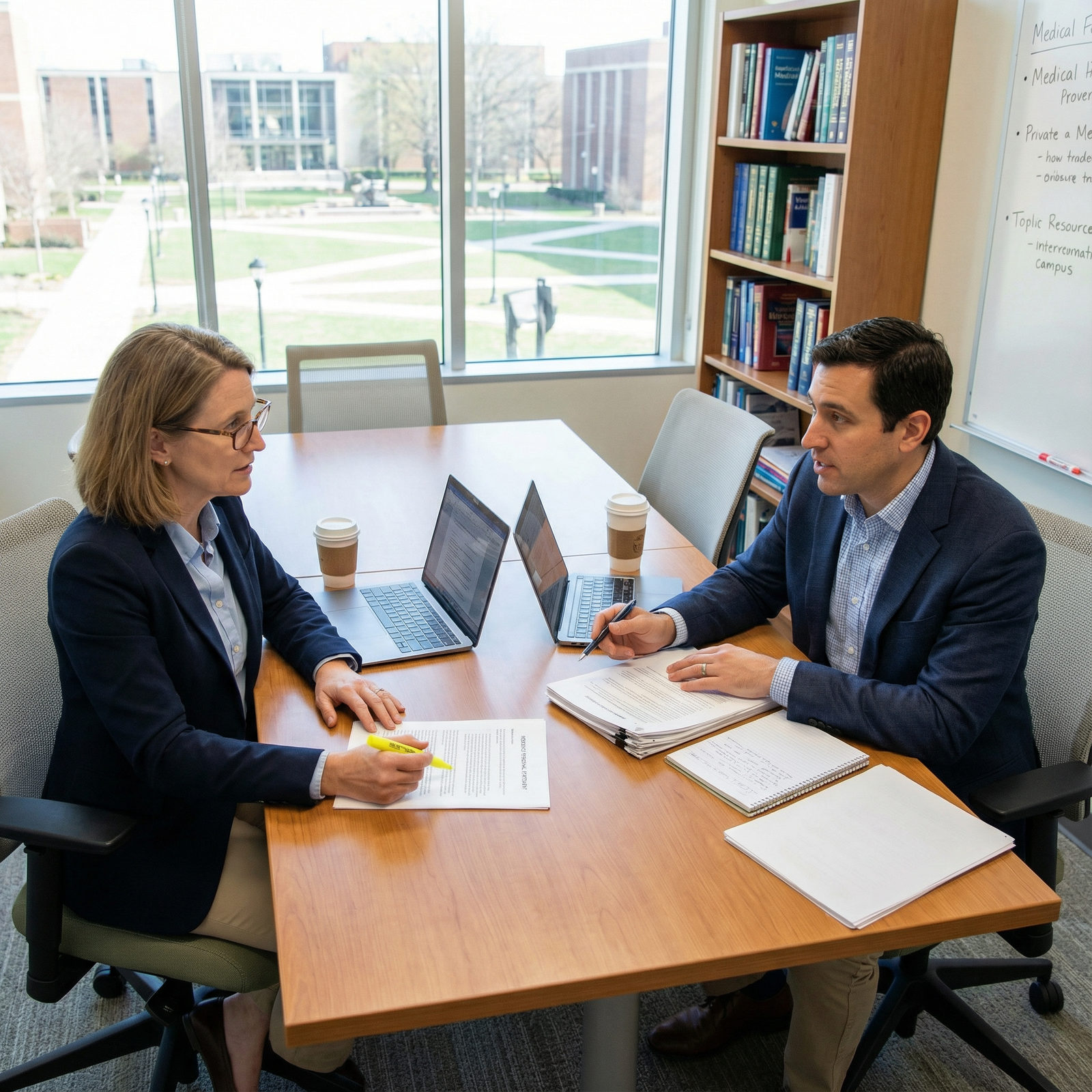
Do #8: Edit, Revise, and Seek Thoughtful Feedback
Excellent Personal Statements almost never emerge from a first draft. Revision is where clarity, structure, and impact are built.
A Strategic Revision Process
Big‑picture review
- Is there a clear central theme?
- Do your experiences flow logically and chronologically (or thematically) in a way that’s easy to follow?
- Is there unnecessary repetition?
Paragraph‑level revision
- Does each paragraph have a clear purpose?
- Do you transition smoothly between ideas and experiences?
- Are you balancing description with reflection?
Sentence‑level polishing
- Cut filler phrases (“It is important to note that…”, “In conclusion…”).
- Replace vague terms with specific ones.
- Ensure tense and point of view are consistent.
Grammar and style check
- Correct spelling, grammar, and punctuation.
- Ensure professional tone (avoid slang or overly casual language).
Getting High‑Quality Feedback
Seek feedback from:
- A premed or faculty advisor
- A mentor in your desired specialty
- A trusted peer with strong writing skills
- A career or writing center, if available
When you ask for feedback, be specific:
- “Does this clearly explain why I’m interested in this specialty?”
- “Are there any parts that feel generic or confusing?”
- “Does my voice and authenticity come through?”
Remember: too many conflicting opinions can dilute your voice. Ultimately, this statement needs to feel like you.
Do #9: Conclude with Purpose, Momentum, and Clarity
Your conclusion is your final opportunity to leave a strong impression. It should:
- Reconnect to your central theme or opening hook.
- Summarize who you are as an emerging physician.
- Look forward—toward training and your future role in medicine.
Elements of a Strong Conclusion
Brevity: Avoid repeating every point from your statement.
Forward‑looking energy: Show readiness and enthusiasm.
Grounded confidence: Confident but not arrogant.
Example (medical school):
“From translating for patients in free clinics to studying the biology of disease in the lab, I have come to see medicine as the intersection of science, service, and human connection. I am eager to continue this journey in medical school, learning to pair clinical skill with compassion so that each patient I meet feels both cared for and understood.”Example (residency):
“My experiences in medical school have confirmed that internal medicine is where my curiosity, interpersonal strengths, and dedication to continuity of care align. I am ready to contribute as a hardworking team member, to keep learning from every patient, and to grow into a physician who offers not only evidence‑based care, but also steady support through uncertainty.”
Avoid overly dramatic endings or generic statements like, “I know I will be a great doctor.” Let your narrative speak for itself.
Putting It All Together: Building a Cohesive Narrative
To synthesize these do’s into a practical roadmap for your Personal Statement, consider using this structure:
Hook
- A brief, engaging moment or reflection that introduces your connection to medicine or your specialty.
Core Theme
- A clear idea about who you are as an aspiring physician (advocate, communicator, problem‑solver, teacher, etc.).
Key Experiences (2–3)
- Clinical, research, service, or leadership experiences that:
- Show what you did.
- Deepen your understanding of medicine or your specialty.
- Demonstrate valued qualities.
- Clinical, research, service, or leadership experiences that:
Challenges and Growth
- Selective and thoughtful discussion of obstacles, if relevant.
- Focus on insight, coping, and readiness.
Connection to Medicine / Specialty
- Explicitly connect your experiences and growth to:
- Why you want to pursue medicine or this specialty.
- How you see your future role in the field.
- Explicitly connect your experiences and growth to:
Strong Conclusion
- Reaffirm your readiness and enthusiasm.
- Leave the reader with a concise sense of your identity and goals.
By following this framework—and integrating authenticity, reflection, and narrative coherence—you can create a Personal Statement that truly resonates with admissions committees and program directors.
FAQs About Medical and Residency Personal Statements
1. How long should my Personal Statement be?
For most U.S. applications:
- Medical school (AMCAS): Up to 5,300 characters (including spaces), roughly one single‑spaced page.
- Residency (ERAS): The system allows more, but a practical target is about 650–800 words or ¾ to 1 page when printed.
Always check your specific platform or program’s limits, and do not feel compelled to fill every character if doing so adds fluff.
2. Can I use quotes or famous sayings in my Personal Statement?
You can, but it’s rarely necessary and often weakens your narrative:
- If you use a quote, keep it brief and ensure it directly connects to your story.
- Avoid common or overused quotes (e.g., Hippocrates, “First, do no harm”).
- The spotlight should be on your voice and experiences, not someone else’s words.
In most cases, it’s stronger—and more memorable—to express your ideas in your own language.
3. Should I mention my GPA, MCAT, or board scores?
Generally, no. Your academic metrics are already visible elsewhere in your application.
You might briefly reference academics when:
- Providing context for a significant fluctuation or improvement (e.g., early poor performance followed by sustained growth).
- Explaining a specific, relevant academic decision (e.g., taking extra coursework to strengthen your foundation in a subject).
Even then, focus more on what you learned and how you improved than on repeating numbers.
4. Is it okay to talk about failures, mental health, or personal hardship?
Yes—when done thoughtfully. Programs value resilience and insight.
Guidelines:
- Be selective and professional: avoid graphic detail or content that shifts the focus away from your readiness.
- Emphasize how you sought help, adapted, and grew.
- If discussing mental health, show that you have appropriate treatment/support and are currently stable and ready for training.
If you’re unsure about including sensitive topics, discuss your draft with a trusted advisor or dean.
5. How can I make my Personal Statement stand out when so many stories seem similar?
Your experiences may overlap with others, but your interpretation of them is unique. To stand out:
- Focus on specific, personal anecdotes rather than broad generalizations.
- Show how you think—your reasoning, observations, and values.
- Let your authentic voice come through, instead of writing what you think committees “want” to hear.
- Emphasize your trajectory: how you’ve changed over time, and how that growth prepares you for the next phase.
A statement doesn’t need to be spectacularly dramatic to be memorable. It needs to be clear, honest, and deeply yours.
By approaching your Personal Statement as a coherent, reflective narrative rather than a checklist, you transform it from a daunting requirement into a powerful tool. When authenticity in writing is combined with intentional Narrative Techniques and careful revision, your story can meaningfully elevate your Medical School Admissions or residency application—and help programs see the physician you are becoming.