Understanding the Purpose of the MD Graduate Residency Personal Statement
As an MD graduate, you’ve already cleared major hurdles: USMLE exams, clinical rotations, and graduating from an allopathic medical school. Now you face a different kind of challenge: telling your story convincingly on paper.
Your residency personal statement is not a CV in paragraph form and not a generic essay about “why medicine.” It exists for three core reasons:
- Context – to explain the “why” behind the facts in your application
- Fit – to help programs assess whether you are aligned with their specialty and culture
- Projection – to show who you will be as a resident and colleague
Program directors routinely report that the personal statement can:
- Break ties between similarly qualified applicants
- Provide talking points for interviews
- Raise red flags when poorly written or unprofessional
For MD graduate residency applicants, the expectations are higher: you’re coming from an allopathic medical school, with strong clinical exposure and formal writing feedback throughout training. Your statement should reflect that level of maturity, clarity, and insight.
Your goal: present yourself as a thoughtful, self-aware, dependable future resident who understands the specialty and is ready for the demands of training.
Step-by-Step Strategy: How to Write a Strong Personal Statement
Instead of starting by typing random paragraphs into ERAS, use a structured process. This not only improves quality but also reduces the stress and time spent revising.
Step 1: Clarify Your Core Message
Before you write, answer these questions in a notebook:
- Why this specialty, specifically? (Go deep—beyond “I like procedures” or “I like continuity of care.”)
- What two or three qualities best represent you as a clinician? (e.g., calm under pressure, meticulous, team-oriented, innovative, compassionate listener)
- What differentiates you from other MD graduates applying to this specialty?
- What do you want a program director to remember about you after reading?
From your answers, define a one-sentence core message, for example:
- “I am a calm, detail-oriented future internist with a strong foundation in clinical reasoning and a passion for complex chronic disease management.”
- “I am a team-focused emergency medicine applicant who thrives in high-acuity environments and values rapid, compassionate communication with patients and colleagues.”
This core message will guide every paragraph you write.
Step 2: Choose the Right Story Anchors
Program directors remember specific stories, not vague claims. Effective allopathic medical school match statements use a few key stories that illustrate:
- Motivation for the specialty
- Growth and self-awareness
- Professionalism, teamwork, and resilience
Brainstorm 6–8 potential experiences in these categories:
- A particular patient encounter that shifted or confirmed your specialty choice
- A moment of failure or struggle and how you responded
- A leadership role (e.g., teaching, quality improvement, research, advocacy)
- A time you handled conflict or miscommunication professionally
- A high-stress clinical moment where you stayed composed and effective
Then pick 2–3 strongest stories that:
- Directly support your choice of specialty
- Show your core qualities in action
- Are specific enough to feel real, but not so detailed that they become a full case report
You will not use every experience you brainstorm. Strong writing is about selectivity, not volume.
Step 3: Map Out a Proven Structure
A clear, predictable structure makes your statement easier to follow and more impactful. A common and effective format for an MD graduate residency personal statement:
- Opening (1–2 paragraphs) – a focused clinical or personal vignette that introduces your interest in the specialty and hints at your key qualities
- Development (2–3 paragraphs) – expansion on:
- How your interest in the specialty developed
- What you learned from key clinical/research/leadership experiences
- How you’ve grown during medical school
- Future Direction (1 paragraph) – what you’re looking for in residency and your early career goals
- Conclusion (1 short paragraph) – tie back to the opening theme and reinforce your core message
Your structure should be logical and chronological enough to follow, but not a full autobiography of your life from childhood.

Crafting Each Section: Practical ERAS Personal Statement Tips
1. The Opening Paragraph: Start with Controlled Impact
Many MD graduates struggle with the first sentence and either:
- Use clichés (“Ever since I was a child, I have wanted to be a doctor…”)
- Start with an over-dramatic trauma narrative
- Write something vague and generic
Aim for an opening that is:
- Grounded in a specific, meaningful moment
- Tightly written and relevant to your specialty
- Honest and professional, not sensationalized
Stronger example (for Internal Medicine):
On my first night on call as a sub-intern, I stood outside Mr. R’s room, rehearsing how to explain that his new diagnosis of heart failure meant changing the life he had known for 60 years. I wasn’t there to make the diagnosis—that had been done before I arrived. My role was to interpret it, translate it, and help him plan the next chapter. That conversation cemented what I value most in medicine: sustained, thoughtful relationships with patients whose conditions demand both analytical rigor and long-term partnership.
This works because:
- It immediately places the reader in a real clinical moment
- It shows a key specialty-aligned value: long-term relationships and complex chronic disease management
- It hints at communication skills and responsibility
Avoid in your opening:
- Graphic details of trauma, abuse, or death
- Statements you can’t back up later (“I have always known I was destined to be a neurosurgeon”)
- Generic praise of the specialty (“Family medicine is a diverse and fulfilling field”) without context
2. Middle Paragraphs: Show Growth, Don’t Just List Achievements
This is where many MD graduate residency statements drift into “CV in paragraph form,” which is exactly what program directors dislike.
Use your middle section to:
- Connect clinical experiences to specific insights
- Demonstrate how you handle challenges, not just that challenges occurred
- Show that you understand the realities of the specialty
Less effective:
I have done many rotations in internal medicine and enjoyed all of them. I worked with a variety of patient populations and disease processes. I also participated in research and taught medical students.
Improved version:
During my third-year internal medicine rotation, I initially felt overwhelmed by the volume of data each patient generated—labs, imaging, notes, consult recommendations. Working with my attending, I learned to prioritize problems systematically and to distinguish what needed immediate action from what could evolve over time. On my sub-internship, I applied this approach while managing a panel of patients under supervision. I began each day by identifying a primary goal for each patient, whether it was titrating diuretics, clarifying goals of care, or preparing for a safe discharge. This deliberate structuring of information and tasks is one of the main reasons I am drawn to internal medicine.
This shows:
- Specific learning (prioritization, structured thinking)
- Progression over time (from overwhelmed to organized)
- Fit with the specialty’s demands
Integrating Research and Leadership
For MD graduate applicants, research, teaching, and leadership are common. Mention them selectively and always with impact and reflection:
- Why was this project meaningful?
- What skills did you develop (critical thinking, collaboration, persistence)?
- How does it relate to your clinical interests or future goals?
Example:
My research in heart failure readmissions taught me to look beyond isolated hospitalizations and think in terms of systems. Analyzing patterns in follow-up appointments and medication reconciliation revealed how small breakdowns in communication can lead to major consequences. This experience informs how I now approach discharges on the wards, ensuring that patients understand their medications and follow-up plans. It has also sparked my interest in pursuing quality improvement projects during residency.
3. Addressing Red Flags or Non-Linear Paths
If your application includes:
- A leave of absence
- A failed or repeated exam
- An extended timeline through allopathic medical school
- A significant career change before medicine
Your ERAS personal statement is one appropriate place to briefly, calmly provide context.
Guidelines:
- Be factual and concise; avoid over-explaining
- Take responsibility where appropriate
- Emphasize what you learned and how you’ve changed
- Don’t make the red flag the entire focus of the statement
Example:
During my second year, I took a one-year leave of absence due to a family health crisis. This period was challenging, but it reinforced the importance of clear communication and advocacy within healthcare systems. Returning to medical school, I approached my clinical rotations with renewed focus and resilience, which is reflected in my clerkship evaluations and sub-internship performance.
4. Future Goals Paragraph: Be Specific but Flexible
Program directors don’t expect you to have your entire career mapped out, but they do look for:
- A realistic sense of what residency in this specialty involves
- Some direction (e.g., interest in academic medicine, community practice, research, education, advocacy, or certain patient populations)
Avoid:
- Overly rigid statements (“I will definitely complete both a cardiology and electrophysiology fellowship and work at a major tertiary center in New York City”)
- Completely vague statements (“I am open to anything”)
Better approach:
Looking ahead, I hope to train in a program that emphasizes strong inpatient and outpatient experiences, exposure to complex pathology, and opportunities for resident involvement in quality improvement. I am particularly interested in working with underserved populations and anticipate pursuing a fellowship in cardiology, while remaining open to how my interests evolve during residency.
5. Conclusion: Close the Loop
Your conclusion should be brief (3–4 sentences) and purpose-driven. Consider:
- Echoing a theme or image from your opening
- Reinforcing your core message and readiness for residency
- Ending on a forward-looking, confident but humble note
Example:
Thinking back to my conversation with Mr. R, I recognize how that moment captured what I value in medicine: listening carefully, synthesizing complex information, and partnering with patients as they adapt to new realities. Internal medicine offers me the opportunity to practice these skills daily while continuing to grow as a clinician and teacher. I am eager to contribute as a reliable, thoughtful team member and to learn from the diverse patients and colleagues I will encounter in residency.

Style, Structure, and Length: Practical Guidelines for MD Graduates
Optimal Length and Format
For the ERAS personal statement:
- Target word count: ~650–850 words
- Page guideline: Aim to fit comfortably within one page on ERAS (typically around 4,000 characters including spaces, though ERAS allows more)
- Use short paragraphs (4–7 sentences each) to improve readability
- Avoid bullet lists; the statement should read as a narrative
As an MD graduate, err on the side of clarity and concision. Overly long statements are rarely more persuasive.
Tone and Voice
Aim for:
- Professional yet personal
- Confident but not arrogant
- Reflective, not melodramatic
Avoid:
- Excessive self-praise (“I am the best candidate for your program…”)
- Overly casual language or slang
- Politicized or polarizing rhetoric unless it is central to who you are and presented thoughtfully
You can write in the first person (“I”) without overusing it. Vary your sentence structure and avoid repetitive phrasing (“I learned… I learned… I learned…”).
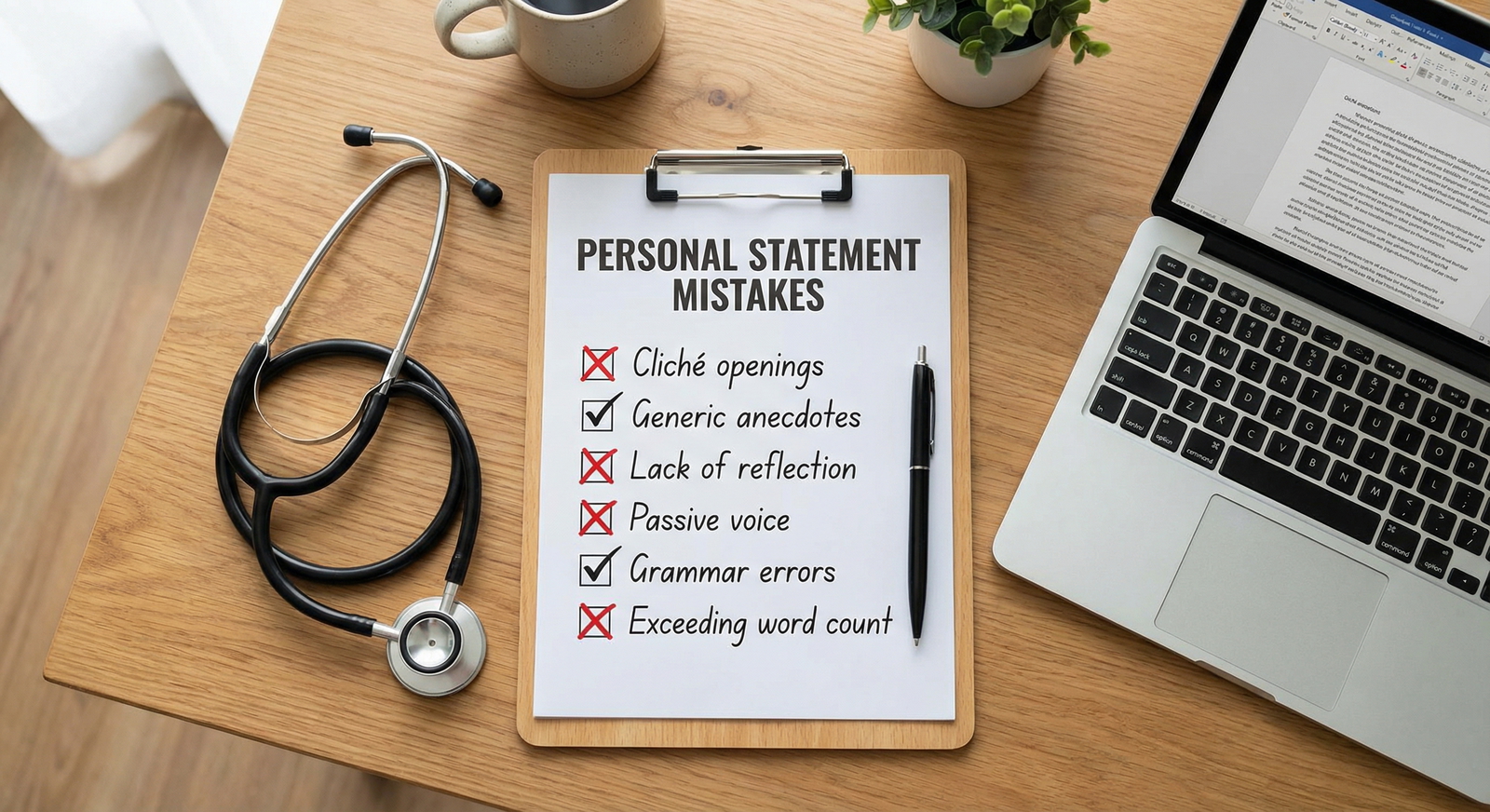
Common Pitfalls to Avoid
Clichés and generic claims
- “I want to help people.”
- “Medicine is both an art and a science.”
- “I am passionate about [specialty].”
Instead: show specific examples of helping people, or of how you balance art and science.
Overly dramatic patient stories
- Graphic detail, “hero” narratives, or violating patient privacy
- If you wouldn’t comfortably say it in a professional meeting, don’t write it.
Copying structure or language from templates
Program directors read thousands of statements. Overused templates stand out negatively.Inconsistency with the rest of your application
If your CV shows no research, don’t claim to be primarily research-driven. If you’re applying to internal medicine but your entire statement sounds like a surgery essay, that mismatch will hurt you.Grammar, spelling, and formatting errors
These are often interpreted as carelessness. As an MD graduate, the bar is higher; errors are less easily forgiven.
Specialty-Specific Nuances for Allopathic Medical School Match
While the core principles are similar across specialties, program directors look for slightly different traits in each field. Below are brief examples of how you might slant your residency personal statement depending on your chosen specialty.
Internal Medicine
Highlight:
- Analytical thinking, managing complexity
- Appreciation for chronic disease management and longitudinal care
- Communication with consultants and multidisciplinary teams
- Interest in systems-based practice, QI, or academic inquiry (if applicable)
Surgery (General or Subspecialty)
Emphasize:
- Ability to handle long hours and physical demands
- Commitment to technical skill development and continuous improvement
- Calm under pressure and in the OR
- Respect for team hierarchy and collaborative culture
Avoid writing only about the “thrill of the OR”; also show understanding of perioperative care, patient counseling, and long-term follow-up.
Pediatrics
Focus on:
- Communication with both children and families
- Patience, empathy, and adaptability to developmental stages
- Interest in advocacy or community health (if true)
- Teamwork with nurses, social workers, and allied health professionals
Psychiatry
Emphasize:
- Curiosity about patients’ narratives and psychosocial context
- Comfort with ambiguity and long-term therapeutic relationships
- Reflective capacity and emotional awareness
- Interest in psychotherapy, neurobiology, or public mental health (as applicable)
Emergency Medicine
Highlight:
- Ability to make decisions under time pressure
- Teamwork and interprofessional collaboration
- Breadth of skills and comfort with undifferentiated complaints
- Communication in crisis and with diverse patient populations
Whatever your specialty, reread your statement with this question in mind:
“Would a program director in this field recognize this as a good fit for their day-to-day reality?”
Revision Strategy: Polishing Your ERAS Personal Statement
Stage 1: Self-Editing
After your first full draft:
Take a 24–48 hour break before revising.
Read aloud and ask:
- Where do I lose my own interest?
- Which sentences are vague and could be more specific?
- Are there any clichés I can replace with concrete examples?
Trim:
- Redundant phrases (“completely unique,” “very extremely”)
- Sentences that repeat the same idea
- Overly detailed clinical descriptions that don’t serve your core message
Stage 2: External Feedback
Choose 2–3 people with different perspectives, for example:
- A faculty mentor in your specialty
- A resident you know and trust
- A career advisor or dean’s office representative
Ask for feedback on:
- Clarity of your motivation for the specialty
- Whether your strengths come through clearly
- Whether any sections raise questions or concerns
Be cautious about:
- Over-editing to the point that you lose your authentic voice
- Accepting contradictory advice from too many reviewers
Stage 3: Final Professional Polish
Before submitting:
- Triple-check for spelling, grammar, and punctuation
- Verify that:
- Your name is not embedded in a way that will be awkward if programs print the statement
- You have not mentioned any specific program names
- The formatting looks clean when pasted into ERAS
Remember: you may have different personal statements for different specialties if you are applying to more than one; keep versions clearly labeled to avoid upload errors.
FAQs: MD Graduate Residency Personal Statement
1. How long should my residency personal statement be as an MD graduate?
Aim for 650–850 words, which typically fits on a single ERAS page with room to spare. You do not gain points for length; clarity and coherence matter more. If you are far over 1,000 words, you likely need to cut repetition and tighten your narrative.
2. Can I reuse parts of my medical school application essay?
You can reuse elements of your personal journey if they are still central to why you chose your specialty, but avoid simply pasting your medical school essay. As an MD graduate, program directors expect a more mature, clinically grounded perspective. Reframe older experiences through the lens of your medical school training and current career goals.
3. Should I write different personal statements for different specialties?
Yes. If you are applying to more than one specialty, you should have distinct statements tailored to each. Program directors can easily detect a generic essay. Each statement should clearly articulate:
- Why you are drawn to that specific field
- How your experiences match its demands
- What you hope to contribute and learn
4. Is it okay to mention specific programs in my personal statement?
Generally, no. The ERAS personal statement is sent to all programs in that specialty. Naming one program can be off-putting to others and is unnecessary. Instead, describe the type of training environment you seek (e.g., strong academic focus, exposure to underserved populations, robust mentorship), which will resonate broadly without excluding any programs.
By approaching your residency personal statement as a focused, honest narrative rather than a checklist of accomplishments, you can give program directors a clear, memorable sense of who you are as a future resident. As an MD graduate from an allopathic medical school, you bring a strong clinical foundation; your task now is to translate that into a compelling story that aligns with your chosen specialty and the realities of residency training.