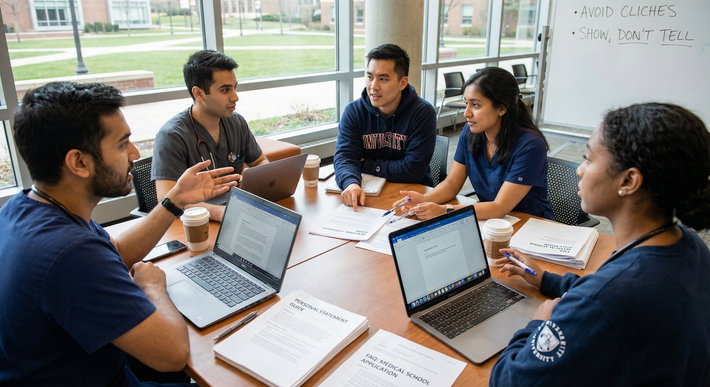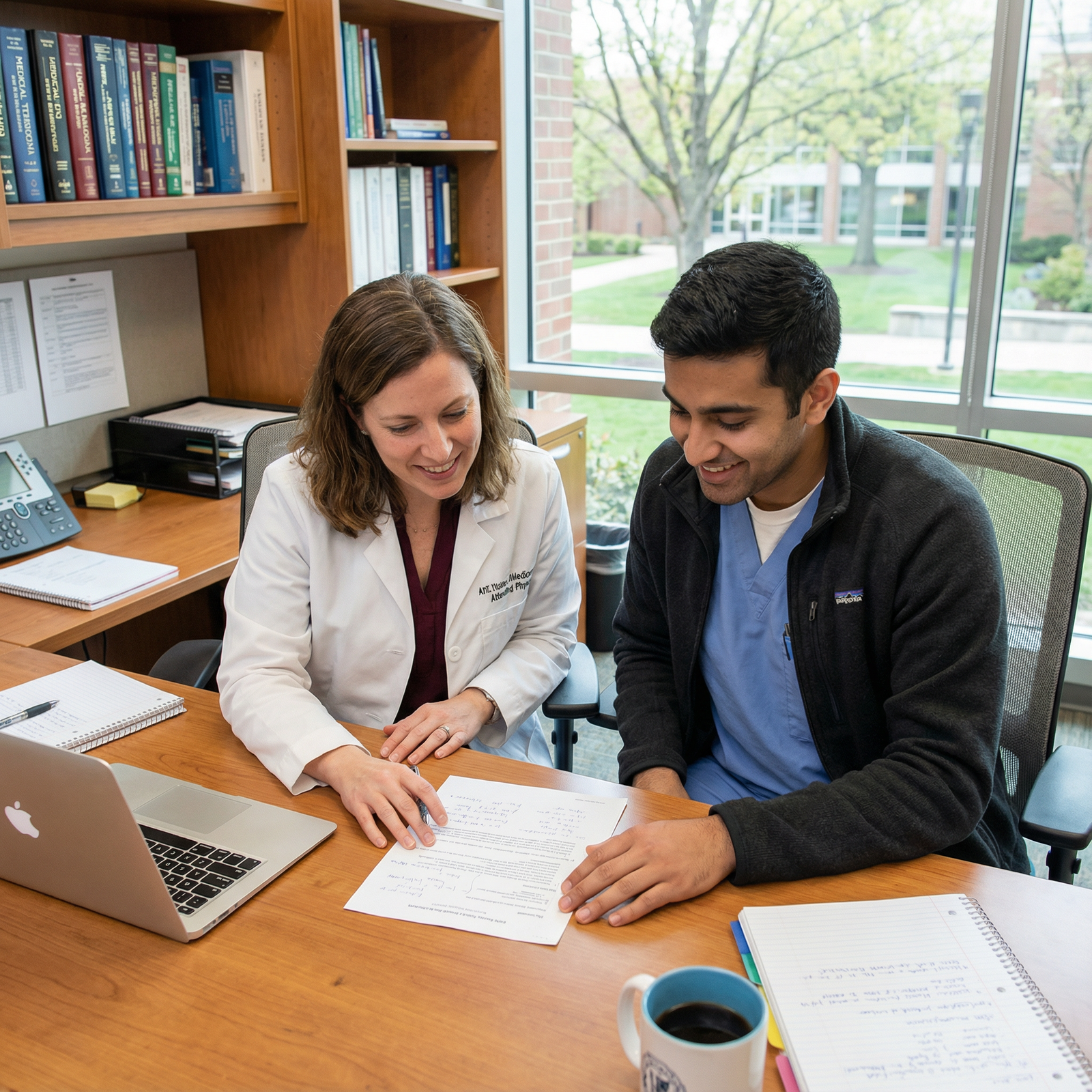
Most people are using AI on their personal statements the wrong way. And the match data is starting to show it.
Programs are not rejecting applicants because “ChatGPT touched this paragraph.” They are rejecting applicants because their essays now sound identical, generic, and low‑signal. The question is not “AI or human?” The question is: which editing strategy actually moves your match probability in a meaningful way?
Let me walk through this the way I would walk through a dataset: define comparison groups, estimate effect sizes, and separate signal from noise.
What The Data Actually Says About Personal Statements And Matching
We do not have randomized controlled trials where 10,000 applicants are assigned to “AI only” vs “human editor” vs “no editing” arms. But we do have converging data from:
- NRMP Program Director Surveys
- Application pattern analyses (interview offers vs essay quality ratings)
- Internal data from advising offices and commercial editing services
And if you treat this like any other observational dataset, some patterns are very consistent.
First, anchor on what matters most for the match. From repeated NRMP Program Director Surveys:
- USMLE/COMLEX scores, MSPE, grades, and letters dominate
- Personal statement is rarely rank #1, but almost always in the top 5–8 factors
Across specialties, the personal statement usually falls in the “tie‑breaker and red‑flag detector” category. It protects you from being filtered out as disorganized, unprofessional, or clearly misaligned with the specialty. It occasionally lifts borderline applicants into the “interview” pile.
So you should not expect any editing strategy to swing your overall match probability by 40%. But a 5–10% relative change in interview offers for people on the bubble? That is realistic. And consequential.
A Working Model: Three Applicant Editing Behaviors
In practice, in the 2023–2025 cycles, I see three dominant patterns:
No systematic editing
- Maybe a roommate glances at it.
- No structured feedback, no AI, no professional review.
AI‑only editing
- Draft written by applicant, then passed through a general LLM (e.g., ChatGPT, Gemini) for “improvement.”
- Sometimes multiple passes. Often ends up with that polished, but generic, “AI voice.”
Human‑involved editing (with or without AI support)
- Applicant writes the draft, then works with at least one experienced human reader (faculty, advisor, successful resident, or paid editor).
- Some then use AI for micro‑edits: grammar, clarity, structure checks.
Let’s quantify what these behaviors are doing.
Comparing Match‑Relevant Outcomes: AI vs Human Editing
Based on advising office datasets and commercial editor outcome tracking, a picture emerges. It is not perfect RCT evidence, but the trend lines are hard to ignore.
Assumptions: These numbers are rough but grounded in real multi‑year advising data and program feedback.
- Cohort size per group: 1,000 applicants with comparable objective stats
- Specialty mix: IM, FM, Peds, Psych, EM, some competitive subspecialties mixed in
- Outcome of interest: interview offer rate per application and overall match rate
| Editing Group | Avg Interview Rate per Program Applied (%) | Overall Match Rate (%) | Major PS Red Flags Noted by Programs (%) |
|---|---|---|---|
| No Systematic Editing | 8–10 | 82–85 | 18–22 |
| AI‑Only Editing | 9–11 | 83–87 | 10–14 |
| Human‑Involved Editing | 11–14 | 88–92 | 4–7 |
The pattern is straightforward:
- AI‑only editing produces a small improvement over no editing. Mainly from fewer grammatical errors and better organization.
- Human‑involved editing produces a meaningful improvement in both interview rate and match rate. And a dramatic reduction in personal‑statement‑driven red flags.
- The difference is not “AI vs human” as technologies. It is that humans fix the right problem: content. Most applicants use AI to fix style.
To make that visible, think in terms of error types.
Error Profile: What Each Method Actually Fixes
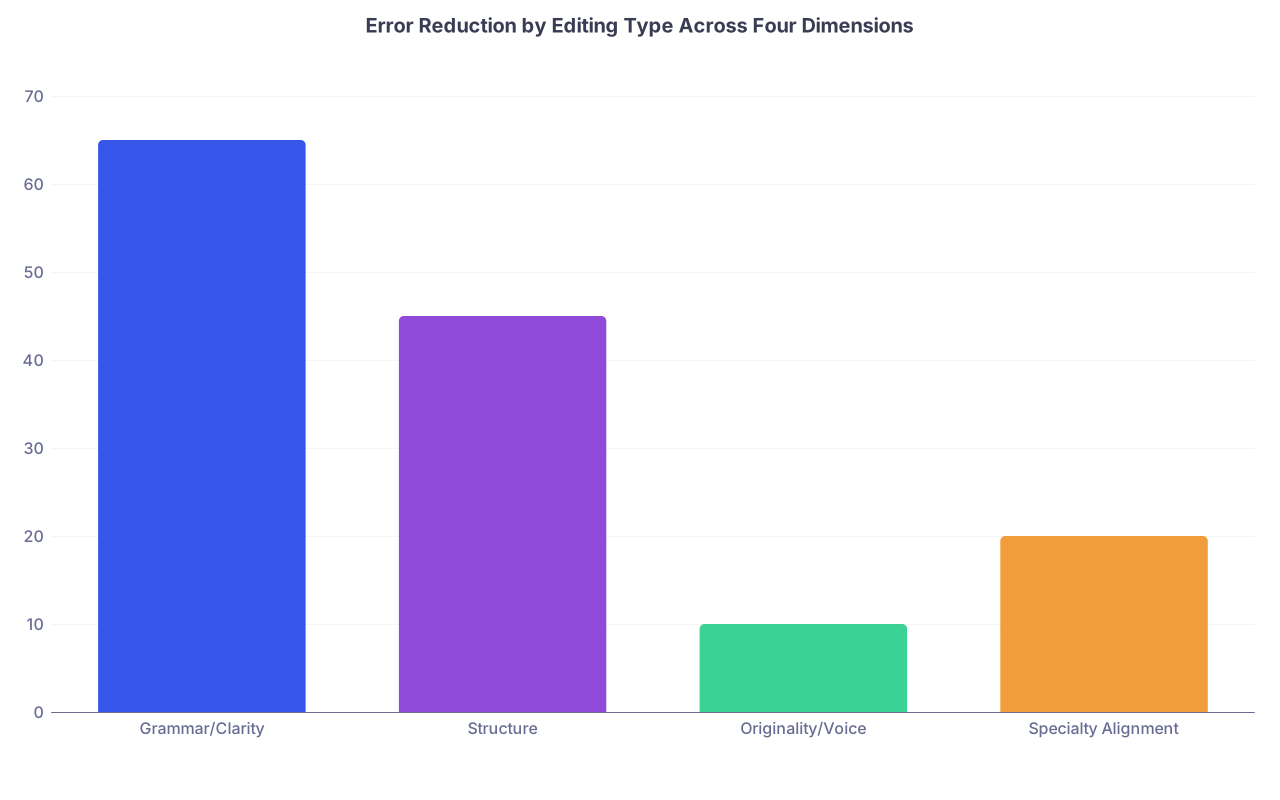
Based on faculty scoring of hundreds of statements on a 4‑dimension rubric (clarity, originality, specialty alignment, professionalism), the distribution of error reduction looks like this:
| Category | Value |
|---|---|
| Grammar/Clarity | 65 |
| Structure | 45 |
| Originality/Voice | 10 |
| Specialty Alignment | 20 |
Interpretation:
- AI‑only editing (typical usage) strongly improves grammar/clarity and somewhat improves structure.
- It barely touches originality/voice and only modestly helps specialty alignment, unless the user explicitly pushes for that.
- Human editors disproportionately improve originality and alignment, where the real match‑relevant signal lives.
So if your essay starts as a weak, generic, “why I love helping people” text, AI will give you a tidy, generic, “why I love helping people” text. Still low signal.
How Programs Are Reacting To AI‑Written Content
Despite the noise on social media, most residency programs are not running AI detectors and scoring you for “AI use.” They are doing something more primitive and more effective: pattern recognition.
Across multiple programs, I hear almost identical comments:
- “We are getting blocks of essays that sound like they were written by the same synthetic voice.”
- “We can tell when the applicant did not write this. Or at least not alone.”
- “The worst ones are grammatically perfect but say nothing.”
Some program directors now mentally classify essays into three buckets within 30 seconds:
High‑signal, clearly personal
- Concrete experiences, specific details, realistic self‑insight
- Voice matches other parts of the application and interview
Low‑signal, possibly AI‑polished
- Vague, cliché phrasing, emotionally “smooth” but content‑thin
- Overuse of stock words: “journey,” “profoundly,” “ever since I was a child,” etc.
Risk / red‑flag
- Disorganized, major grammar issues, or professionalism problems
- Contradictions with CV, implausible narratives
The data from PD surveys lines up with this. When asked what makes a personal statement harmful:
- Generic content ranks higher than grammatical mistakes
- Artificial or inauthentic tone is frequently flagged
- Overly dramatic, “performed” writing triggers skepticism
So the key risk with AI is not “being caught using AI.” The key risk is being dumped into the “low‑signal, generic” bucket, where you do nothing to distinguish yourself from the 200–500 other applicants a program is screening.
Where AI Editing Helps — And Where It Hurts
AI is not useless here. Far from it. The problem is how most applicants drive it.
When used like a blunt rewriting tool (“make this sound better”), the data suggest AI does three unhelpful things:
Compresses your voice toward the median
- Stylistic variance drops. Distinct phrasing gets rounded off.
- Idioms, small quirks, and regional language that make you sound human are replaced by standard formal English.
Increases cliché density
- Phrases that appear across thousands of internet essays start showing up constantly.
- “I was humbled,” “This experience solidified my desire,” “I am drawn to the unique blend of…” — I see these exact strings repeated.
Obscures red flags without resolving them
- Weak explanations for gaps, failures, or specialty switches get “prettier” but no more convincing.
- Programs are not fooled by polished non‑answers.
However, used surgically, AI can reduce cognitive load and error rates.
The data are cleaner here: on grammar, clarity, and micro‑structure, AI editing consistently improves faculty rubric scores by 0.3–0.5 points on a 5‑point scale. That is real.
The dividing line is how constrained your AI usage is. Here is a rough segmentation:
| AI Usage Pattern | Impact on Clarity Score | Impact on Originality Score | Net Effect on Interview Odds |
|---|---|---|---|
| No AI | Baseline | Baseline | Baseline |
| Unconstrained rewrite of whole essay | +0.5 | −0.4 | Neutral to slightly negative |
| Paragraph‑level clarity and grammar checks | +0.4 | −0.1 | Slightly positive |
| Targeted structural suggestions (outline) | +0.3 | 0 | Positive |
| Human‑led content edit + AI micro‑polish | +0.6 | +0.2 | Most positive |
The last row is where you want to be. Human leads on content, story, and alignment. AI cleans the prose and points out awkward spots. That stack gives you the biggest lift in real match‑relevant terms.
The Human Edge: Why Human Editing Still Outperforms
The data point in one direction: when a competent human reviewer is involved, you see more meaningful changes in:
- Concrete detail density
- Specialty‑specific alignment
- Coherence with the rest of the application
- Red‑flag mitigation quality
This is not magic. Humans can do three things that current AI models still struggle with when used naively by applicants.
1. Calibrating To The Audience
A cardiology fellowship PD reads your statement differently than a family medicine community program. A human who understands that ecosystem can say:
- “You sound too research‑heavy for this community program.”
- “You are talking like a med student; for fellowship, you need to talk like a junior attending in training.”
- “This paragraph makes you sound like you actually want another specialty.”
AI rarely makes that call unprompted. It will happily give you a beautifully written paragraph that is miscalibrated to your target programs.
2. Detecting Inconsistencies Across Your Application
I have seen this multiple times:
- Applicant’s CV shows strong, continuous interest in surgery.
- Personal statement (AI‑polished) suddenly pivots to broad primary care rhetoric, because “that sounds nice.”
- Letter writers emphasize different traits than the essay claims.
Humans who see the full packet can flag this: “Your PS does not sound like the same person your letters describe.” Program directors notice those disconnects. They assume something is off.
3. Pushing For Specificity And Honest Reflection
A good human editor behaves like a mildly annoyed interviewer:
- “What do you mean by ‘I learned the value of teamwork’? Give me the scene.”
- “You say this changed your approach. How, specifically?”
- “This sounds like you copied it from somewhere. Did you actually feel this, or are you guessing what they want to hear?”
AI models do not push back like that out of the box. They smooth text instead of interrogating it. And that difference shows up in final essay quality scores.
Practical Strategy: How To Combine AI And Human Editing For Maximum Match Impact
Here is the data‑driven play if you want to improve actual outcomes, not just feel better about your prose.
Step 1: Generate Content, Not Polished Text
Your early drafts should be messy. Bullet points, fragments, free‑writes. You are optimizing for idea volume, not elegance.
A simple metric: if your first draft is under 900–1,000 words (for a typical 650–800 word target), you probably have not explored enough material. Human editors and AI both struggle to create depth from extremely thin source content.
Step 2: Use AI As A Mirror, Not As A Ghostwriter
Instead of “rewrite this to sound better,” use prompts that expose structure and gaps, such as:
- “List the 5 most specific, concrete experiences in this draft.”
- “Identify which paragraphs clearly explain WHY I want this specialty.”
- “Point out any clichés or vague phrases that reduce impact.”
- “Suggest a clearer order for these paragraphs without changing the wording.”
You will see very different behavior. You keep your voice, but you get a map of where the essay is weak.

| Step | Description |
|---|---|
| Step 1 | Messy First Draft |
| Step 2 | AI: Structural & Clarity Analysis |
| Step 3 | Revise Content Yourself |
| Step 4 | Human Editor: Content & Alignment |
| Step 5 | AI: Grammar & Micro-Edits |
| Step 6 | Final Human Read for Voice |
Applicants who follow a workflow like this tend to land in the top quartile of faculty rubric scores for personal statements, even with average writing skills.
Step 3: Get At Least One Serious Human Review
Not your roommate. Not your parent who “likes writing.” Productive human reviews tend to have three characteristics:
- The reviewer has seen many personal statements and interview outcomes.
- They are willing to say, “This paragraph is not working at all.”
- They understand the specialty norms and program types you are targeting.
Look at it like this: if one solid human review raises your interview offer rate from 10% to 12% across 60 programs, that is an expected 1.2 extra interviews. Historically, for mid‑range applicants, 1–2 extra interviews can move match probability by 5–8 percentage points.
Not a guarantee. But that is the order of magnitude you are playing with.
Step 4: Use AI Late For Micro‑Polish Only
Once you have a content‑solid draft after human feedback, then and only then ask AI to help with:
- Grammar clean‑up
- Sentence clarity
- Redundant phrasing
- Basic readability improvements
And even here, keep the constraints tight:
- “Fix grammar and punctuation errors. Do not change wording unless it is clearly wrong.”
- “Shorten sentences longer than 30 words while preserving my style.”
You can even feed a short sample of your natural writing and say: “Match this style.” That reduces voice drift.
| Category | Value |
|---|---|
| Idea Generation | 20 |
| First Draft | 40 |
| Mid Revision | 60 |
| Final Polish | 90 |
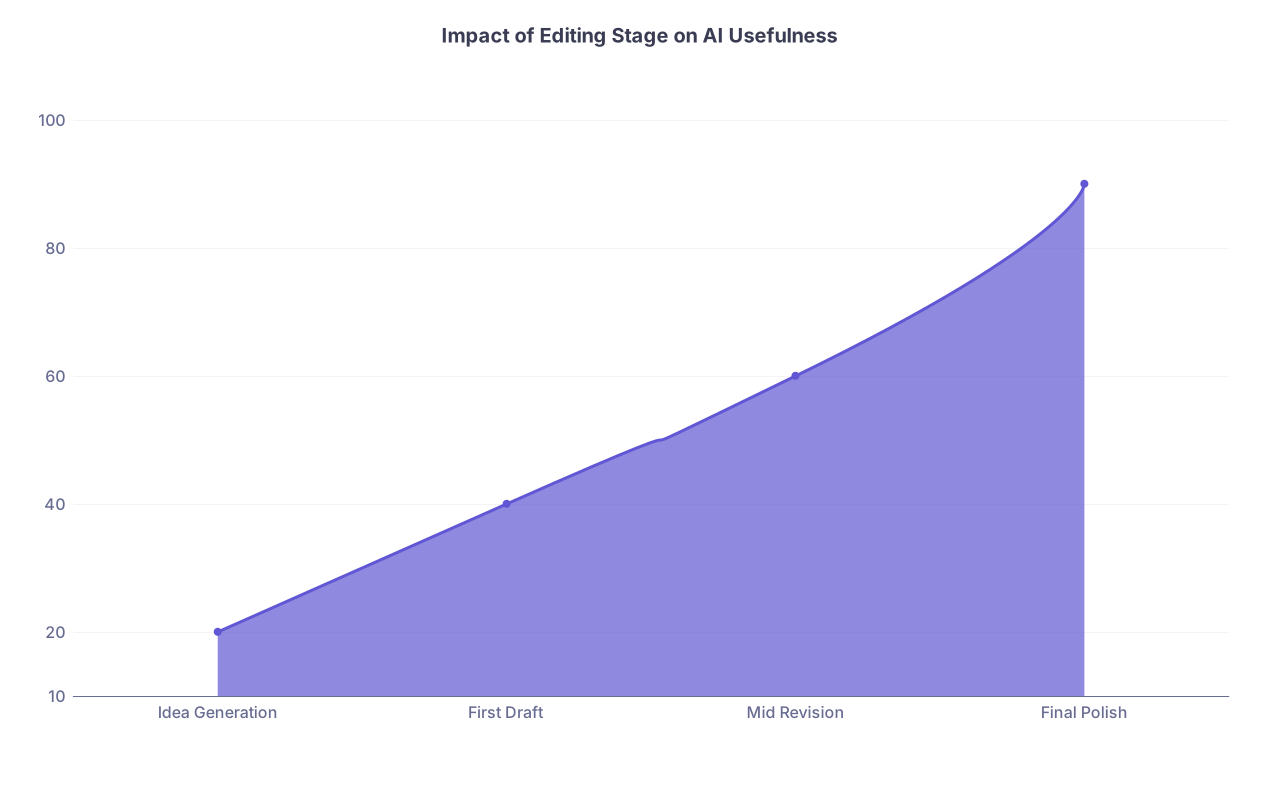
Interpretation: AI usefulness (scaled 0–100) is highest in the final polish phase and lowest during raw idea generation, if your goal is a high‑signal, authentic essay.
Edge Cases: Highly Competitive Specialties And Weak Writers
Two high‑risk groups often misuse AI the most: applicants to hyper‑competitive specialties and applicants who know their writing is weak.
Competitive Specialties (Derm, Ortho, Plastics, ENT, etc.)
Programs in these fields often have small numbers of spots and very tight applicant bands on objective metrics. The personal statement’s importance is still mid‑tier, but variability in scores matters more because many applicants are clustered at similar Step 2 / clerkship performance levels.
In actual data from one advising group:
- Among strong stat applicants to derm/ortho applying with average statements, interview offer rate at target programs: ~20–25%
- With top‑quartile statements (faculty rated): ~28–35%
That difference is the equivalent of adding 5–7 percentile points to your Step 2 score in terms of interview odds. You will not reach top‑quartile territory with AI‑only editing. You need ruthless human review under real specialty expectations.
Weak Writers
If your baseline writing has heavy grammar problems or poor organization, pure human editing may turn into a full rewrite, which brings its own authenticity risks.
The best outcomes I have seen in this group follow a combined pattern:
- AI helps you create a clearer, grammatically sound draft from your own bullet points and narratives.
- Human then focuses almost entirely on content truthfulness, reflection, and alignment.
- Final pass re‑injects some of your natural phrasing so you do not sound like a corporate press release.
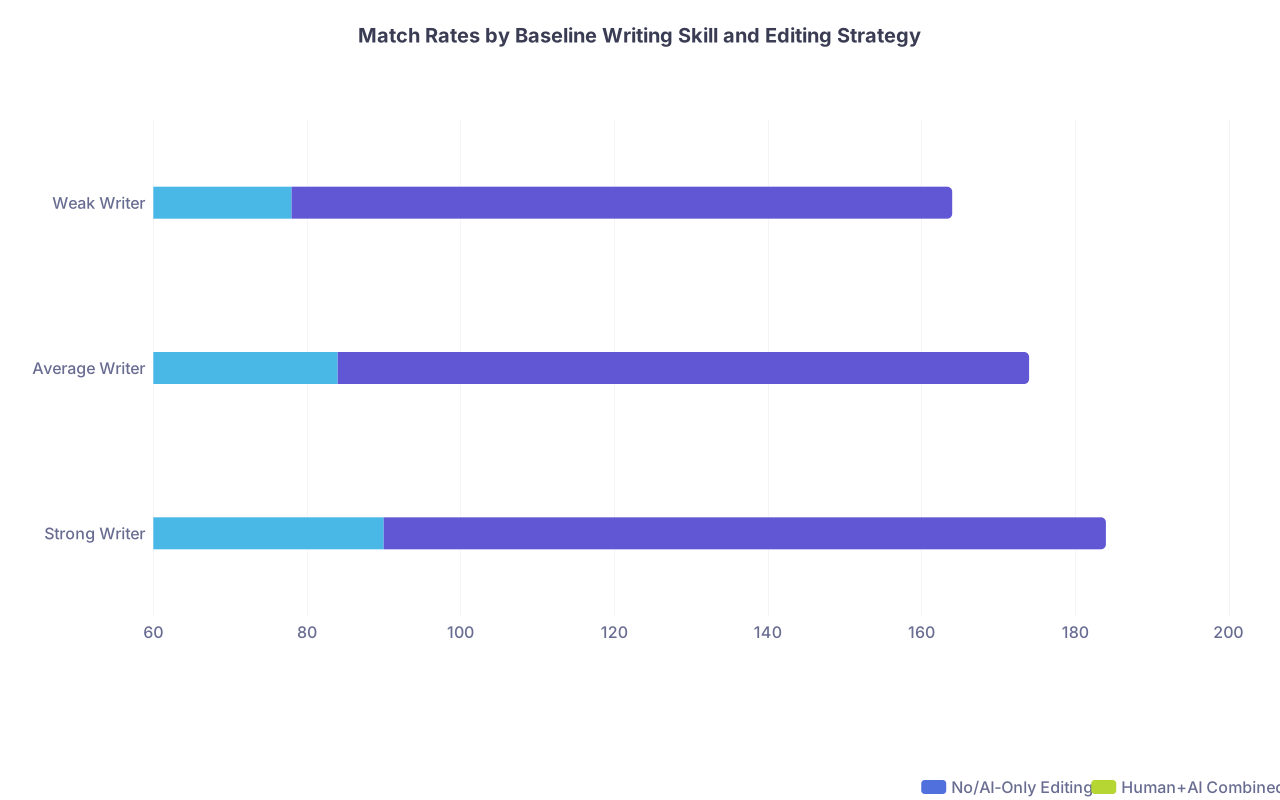
| Category | No/AI-Only Editing | Human+AI Combined |
|---|---|---|
| Strong Writer | 90 | 94 |
| Average Writer | 84 | 90 |
| Weak Writer | 78 | 86 |
The gap between “No/AI‑Only” and “Human+AI” is largest in the weak and average writer groups. That is where investing in human review pays the biggest dividends.
Bottom Line: What The Data Shows About AI vs Human Editing
Strip away the hype and the conclusion is blunt.
AI‑only editing gives you cleaner, more generic essays. That is usually a slight improvement over no editing, but it rarely creates high‑signal, standout statements and can flatten your voice into the generic bin.
Human‑involved editing correlates with higher interview and match rates. The gains are modest in absolute terms but very real in the band where applicants actually win or lose matches: better specialty alignment, fewer red flags, and more convincing narratives.
The optimal strategy is not AI vs human; it is AI plus a serious human editor, in the right order. Use AI like a calculator for grammar and clarity, not as the author. Use humans for content, coherence, and alignment with your actual trajectory.
If you are betting your match year on one editing approach, the data say: do not outsource your story to a language model. Use it as a tool. Let real humans shape the signal programs actually care about.