
The mythology around residency personal statements is statistically wrong.
If you listen to applicant forums, you would think a personal statement can single‑handedly swing your match outcome. The data from program director surveys says otherwise. Personal statements matter, but they are not even close to the top of the hierarchy—and they are used very differently than most applicants imagine.
Let me walk through what the numbers actually show, where personal statements rank, and how you should allocate effort if you care about outcomes rather than folklore.
What the Program Director Data Actually Says
Two data sets dominate this conversation:
- NRMP “Program Director Survey” (last several cycles)
- Specialty‑specific PD surveys (e.g., EM, IM, Surgery subsurveys when available)
The exact numbers vary by year and specialty, but the pattern is very stable.
On the NRMP Program Director Survey, where PDs rank the importance of various factors in deciding whom to interview and how to rank applicants, personal statements fall in the middle of the pack. Solidly “important,” not decisive.
Typical pattern across recent cycles (aggregated, approximated):
- USMLE/COMLEX scores and Step 2 CK in particular
- Grades in required clerkships and key specialty rotations
- Class ranking / MSPE
- Letters of recommendation in the specialty
- Perceived fit / professionalism
Those cluster at the top.
Personal statements show up as:
- Frequently used to some extent
- Rarely ranked as top 3 decision factor
- More influential in small, specific scenarios than as a global filter
To sanity‑check, let’s compare where personal statements sit versus other criteria for interview offers.
| Criterion | Relative Rank Tier* |
|---|---|
| USMLE Step 1/Step 2 CK/COMLEX | Top tier |
| Clinical grades / clerkships | Top tier |
| Letters of recommendation | Top / upper‑middle |
| MSPE (Dean’s Letter) | Upper‑middle |
| Personal statement | Middle |
| Research | Middle (varies) |
| Extracurriculars / leadership | Middle / lower |
*Rank tier = comparative, based on frequency marked “very important” or “critical” across surveys.
The blunt truth: program directors do not start with your personal statement. They rarely end with it either. It operates in the middle of the workflow, as a tiebreaker, red‑flag detector, and “fit” clarifier.
Where Personal Statements Rank in the Screening Funnel
You cannot understand the personal statement’s role without understanding how PDs and selection committees actually process hundreds or thousands of ERAS applications.
The pattern is broadly this:
- Hard filters (scores, citizenship/visa issues, severe academic red flags).
- Academic/clinical quality assessment (clerkship grades, MSPE, letters).
- Specialty‑specific factors (home rotation, away rotations, research in field).
- “Fit” and professionalism (signals, geographic ties, personal statement, activities).
- Final calls for interview list.
- After interviews: rank list, where interview performance dominates; personal statement drops further.
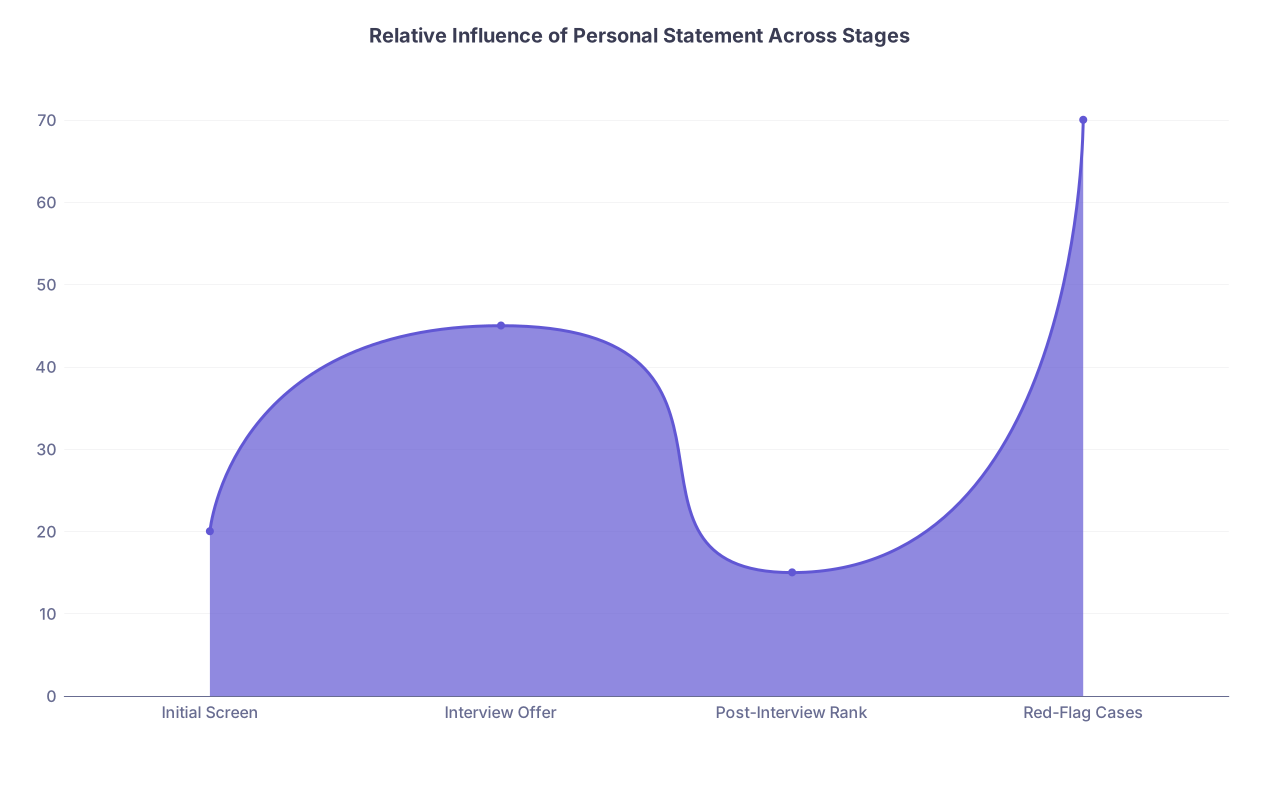
A data‑driven way to represent the personal statement’s “weight” across this funnel:
| Category | Value |
|---|---|
| Initial Screen | 20 |
| Interview Offer | 45 |
| Post-Interview Rank | 15 |
| Red-Flag Cases | 70 |
Interpretation (0–100 scale, relative influence compared to other factors):
- Initial screen: around 20/100. Most programs never get to your statement if you are filtered out by scores or requirements.
- Interview offer phase (among non‑screened‑out applicants): roughly mid‑range influence (call it 40–50/100).
- Post‑interview ranking: low influence. Interview impressions, fit, and letters dominate.
- Red‑flag cases (low scores, career switches, leaves of absence): much higher influence (60–70/100). The statement becomes the narrative explanation tool.
So the statement is disproportionately important for:
- Nontraditional applicants
- People with a Step failure, leave of absence, or career switch
- Applicants changing specialties after a prior application cycle
- Those aiming for a niche fit (rural, academic research, specific population)
For the “standard” applicant with solid scores and clean record, the personal statement is more like a quality control document than a major driver.
How Often PDs Actually Use the Personal Statement
The NRMP survey routinely asks PDs two relevant questions:
- Do you use this factor in deciding whom to interview?
- If yes, how important is it?
The answers for personal statements look something like this across many cycles (numbers approximate, rounded for clarity):
- About 70–80% of programs say they “use” the personal statement at least somewhat.
- Only around 10–20% place it in their top tier of importance.
- A nontrivial minority barely read them unless something else prompts a closer look.
Here is a compact comparison table using approximate, aggregated values:
| Factor | Programs Using It | Programs Rating It “Very Important” |
|---|---|---|
| USMLE/COMLEX scores | 95–99% | 80–90% |
| Clerkship grades | 90–95% | 70–80% |
| LORs in specialty | 90–95% | 60–75% |
| MSPE | 85–95% | 40–60% |
| Personal statement | 70–80% | 10–20% |
| Research | 60–75% | 20–40% (high in academic fields) |
The pattern is consistent: widely used, modestly weighted.
You also see big specialty variation. Academic internal medicine at a large research institution will often care far more about research productivity than your narrative. A small community program in family medicine may lean relatively more on your statement to identify genuine interest in primary care, underserved work, or the specific region.
Specialty Differences: Where Personal Statements Matter More
Specialty context changes everything. You cannot treat “residency” as one monolith.
Surgical and highly competitive specialties
Neurosurgery, orthopedic surgery, plastic surgery, dermatology, ENT—these are dominated by:
- Step scores / COMLEX
- AOA / class rank
- Letters from known faculty
- Sub‑internship performance
- Home and away rotations
In PD surveys from these fields, the personal statement is often mid‑to‑low tier. It is read primarily to:
- Confirm interest in the specialty is real and sustained
- Catch professionalism issues (e.g., arrogance, bizarre content)
- Screen for any mention of research focus, career trajectory, or niche fit
I have heard surgeons say some version of, “The personal statement has never saved a weak file, but it has killed a few decent ones.”
Translation: neutral or mildly positive at best; dangerous when bad.
Primary care fields (FM, IM, Pediatrics, Psych)
Here the personal statement has slightly more leverage. These programs often look for:
- Commitment to underserved or specific populations
- Long‑term plans that match the program’s strengths (primary care, hospitalist, etc.)
- Geographic ties and likelihood to stay in the region
The quantitative weight still does not rival scores or letters, but the marginal utility of a strong “fit” narrative is much higher.
For example, in some family medicine PD surveys, a substantial minority report the personal statement as “important” in ranking applicants after interviews, especially to differentiate otherwise similar candidates.
“Fit”‑sensitive niches
Examples: rural tracks, global health tracks, community‑focused psychiatry, academic research tracks.
Programs explicitly advertise their focus. PDs then use:
- The personal statement
- Supplemental essays (where used)
- Activities section
to identify who is genuinely interested and not just mass‑applying.
In those contexts, a generic or obviously recycled personal statement is a negative signal. Not fatal, but a missed opportunity in a tight race.
What PDs Actually Look For in Personal Statements
The typical applicant believes PDs are looking for “a moving story.” That is not what the data or lived behavior suggests.
From exit interviews with PDs and faculty reviewers, the recurring themes are:
- Evidence of maturity and insight
- Clear, specific reasons for the specialty
- Coherent career direction (even if broad)
- Professionalism and communication skills
- Absence of red flags
The personal statement is primarily a signal extraction tool. Not a literary contest.
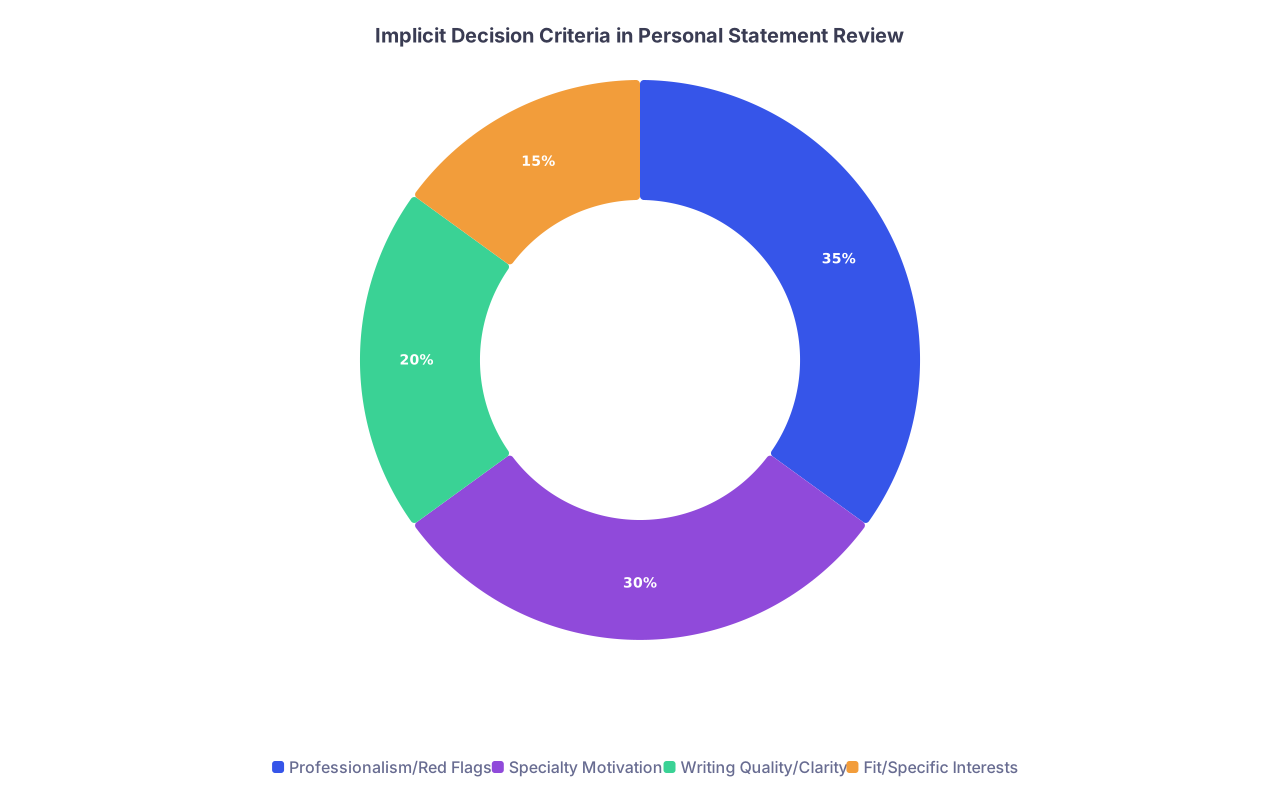
You can structure what PDs are implicitly “scoring” in their heads as something like this:
| Category | Value |
|---|---|
| Professionalism/Red Flags | 35 |
| Specialty Motivation | 30 |
| Writing Quality/Clarity | 20 |
| Fit/Specific Interests | 15 |
That 35% “Professionalism/Red Flags” slice is bigger than applicants expect. Reviewers are scanning for:
- Inappropriate disclosure (graphic detail, oversharing trauma without purpose)
- Boundary issues (talking down about other specialties, trashing prior institutions)
- Egotism or hero narratives that suggest poor team function
- Dishonesty or exaggeration that contradicts the rest of the application
Another data‑informed nuance: most PDs do not have time to fine‑grade your style. They are not ranking you from 1 to 10 on prose quality. The threshold is more like:
- Competent, clear, and professional → acceptable
- Sloppy, error‑filled, or bizarre → concern
The marginal gain from “good” to “great” prose is modest. The penalty from “okay” to “bad” is substantial.
Time Allocation: How Much Effort the Data Justifies
Given this hierarchy, over‑investing in a personal statement while ignoring higher‑yield levers is a statistical mistake.
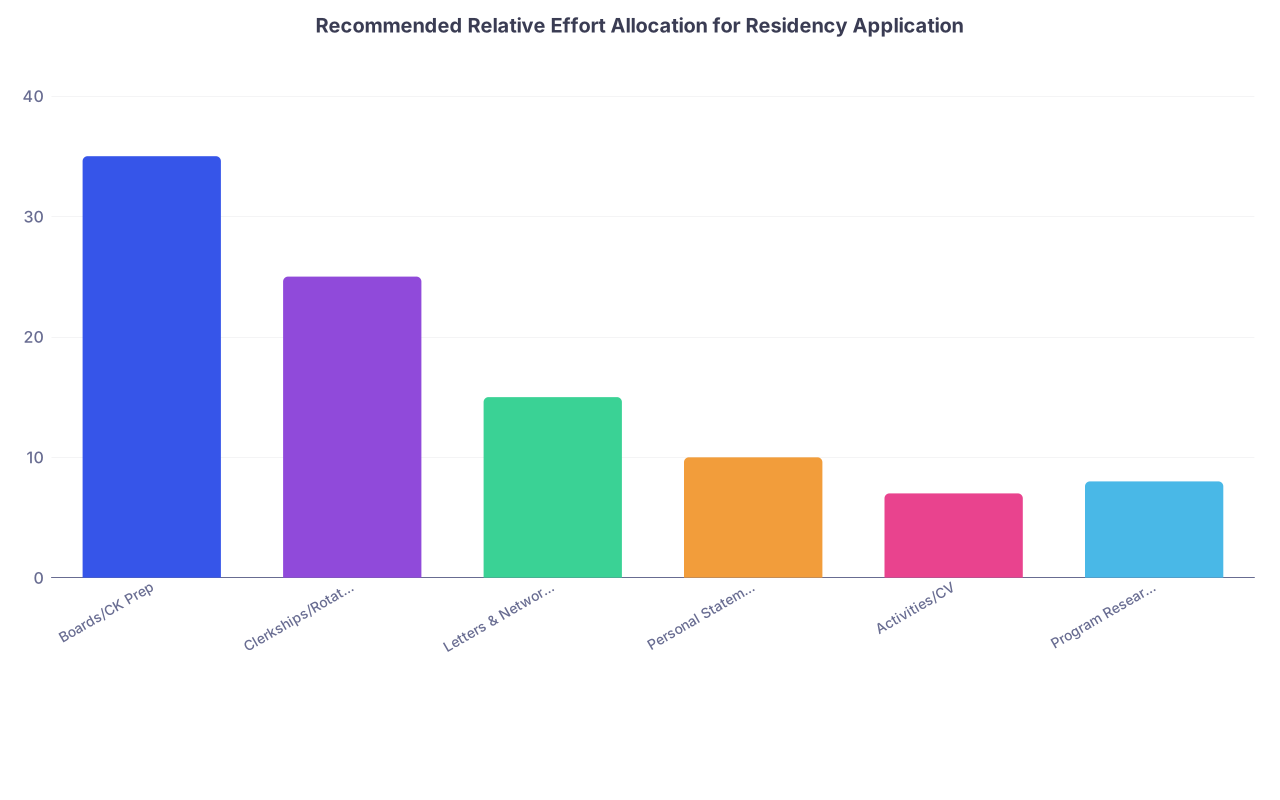
Based purely on impact from program director surveys, a rough allocation of effort across application components for a typical applicant might look like this:
| Category | Value |
|---|---|
| Boards/CK Prep | 35 |
| Clerkships/Rotations | 25 |
| Letters & Networking | 15 |
| Personal Statement | 10 |
| Activities/CV | 7 |
| Program Research & Signaling | 8 |
Interpretation:
- If you are still pre‑CK: most marginal benefit comes from raising your score.
- On rotations: professionalism and strong letters beat any personal statement polish.
- For the statement itself: it deserves serious work, but not obsession. Something like 8–12 hours of real, focused drafting and revision is usually enough for a strong, clean result.
Candidates who spend 40+ hours rewriting the same paragraph while neglecting to coordinate letters or research programs are making a poor tradeoff.
Exception: if you have a major red flag or nontraditional path, the personal statement deserves extra work because it is the main narrative repair tool.
When Personal Statements Move the Needle
Despite their mid‑tier rank overall, there are precise circumstances where the personal statement can change outcomes. I have seen PDs and associate PDs do this in real time.
1. Explaining a red flag
Example scenarios:
- Step 1 or Step 2 CK failure or low score
- Leave of absence for health or family issues
- Major career or specialty change late in training
- Significant time away from medicine
Programs often need a story to pair with the data. A straightforward, accountable explanation can shift them from “hard pass” to “maybe.”
In these cases, the relative influence of the personal statement versus other factors jumps substantially. In your mental model, treat it as 2–3x more important than for the typical applicant.
2. Distinguishing two very similar applicants
Picture a stack of twenty applications with:
- Similar Step 2 scores (e.g., 245–255 cluster)
- Comparable clerkship grades (Honors/High Pass mix)
- Decent letters from mid‑tier institutions
Committees will then look for “soft” differentiators:
- Clear expression of interest in their program type (academic vs community)
- Regional ties that predict retention
- Evidence of curiosity, resilience, or a specific clinical niche that the program values
I have sat in meetings where someone said, “These three look identical on paper. Let’s read the statements and see who actually sounds like they fit what we do.” That is where you pick up marginal advantage.
3. Fit for a specialized track or mission
For programs with a defined mission—rural primary care, global mental health, health disparities research—the personal statement is often used explicitly as a screen for alignment.
If the track description mentions:
- “Strong interest in working with underserved rural communities”
- “Commitment to academic research and QI”
- “Desire to build a career in addiction psychiatry”
and your personal statement says nothing remotely related, you have effectively self‑selected out.
Common Misalignments Between Applicant Beliefs and PD Behavior
The gap between what students believe and what PDs actually do is huge. A few of the worst offenders:
- “A unique story will get me an interview I otherwise would not earn.”
- Data and PD anecdotes do not support this for most specialties. If you are below hard filters, no story saves you.
- “I need to stand out with something dramatic.”
- PDs overwhelmingly prefer clear, professional, and somewhat predictable over dramatic. Drama is a risk factor.
- “The personal statement is my main way to show interest in a specific program.”
- It is one way, yes, but specific mentions in supplemental ERAS questions, emails to coordinators, away rotations, and geographic ties often carry more observable weight.
- “If I do not have a tragic backstory, my statement will be boring.”
- PDs are not awarding points for trauma. They are screening for insight, maturity, and fit. A clean, grounded story about clinical experiences is fine.
How to Actually Use This Data When Writing
Data without behavioral change is useless. So what should you do differently?
- Optimize for risk reduction first, marginal gain second.
- Avoid red‑flag content: arrogance, unprofessional tone, controversial topics without clear relevance.
- Ensure grammar and clarity are solid. Typos do not impress anyone.
- Anchor the statement in three data‑backed goals:
- Show you understand and are committed to the specialty.
- Demonstrate professional maturity and insight.
- Provide any necessary narrative bridge (red flags, nontraditional path, or specific niche interest).
- Keep the structure simple.
- One concise opening vignette or hook (if you insist).
- 1–2 paragraphs showing your trajectory into the specialty with specific clinical experiences.
- 1 paragraph on your future goals and how you see yourself practicing.
- Brief closing that reinforces your readiness and professionalism.
No need for literary gymnastics. The incremental return is low.
Calibrate length and complexity.
- Around 650–800 words is enough. Over 900 and PDs start skimming aggressively.
- Short, dense paragraphs beat long, meandering narratives.
Customize efficiently.
- Full program‑by‑program rewrites are rarely worth the time.
- Instead, build a strong core statement and, if you must, swap a short paragraph or a few lines for specific tracks (e.g., rural track vs academic track) where the payoff justifies it.
Where Personal Statements Rank: A Data‑Driven Bottom Line
If we force an overall ranking of influence across the entire application lifecycle—screening to rank—personal statements land in the second or third tier, not the top.
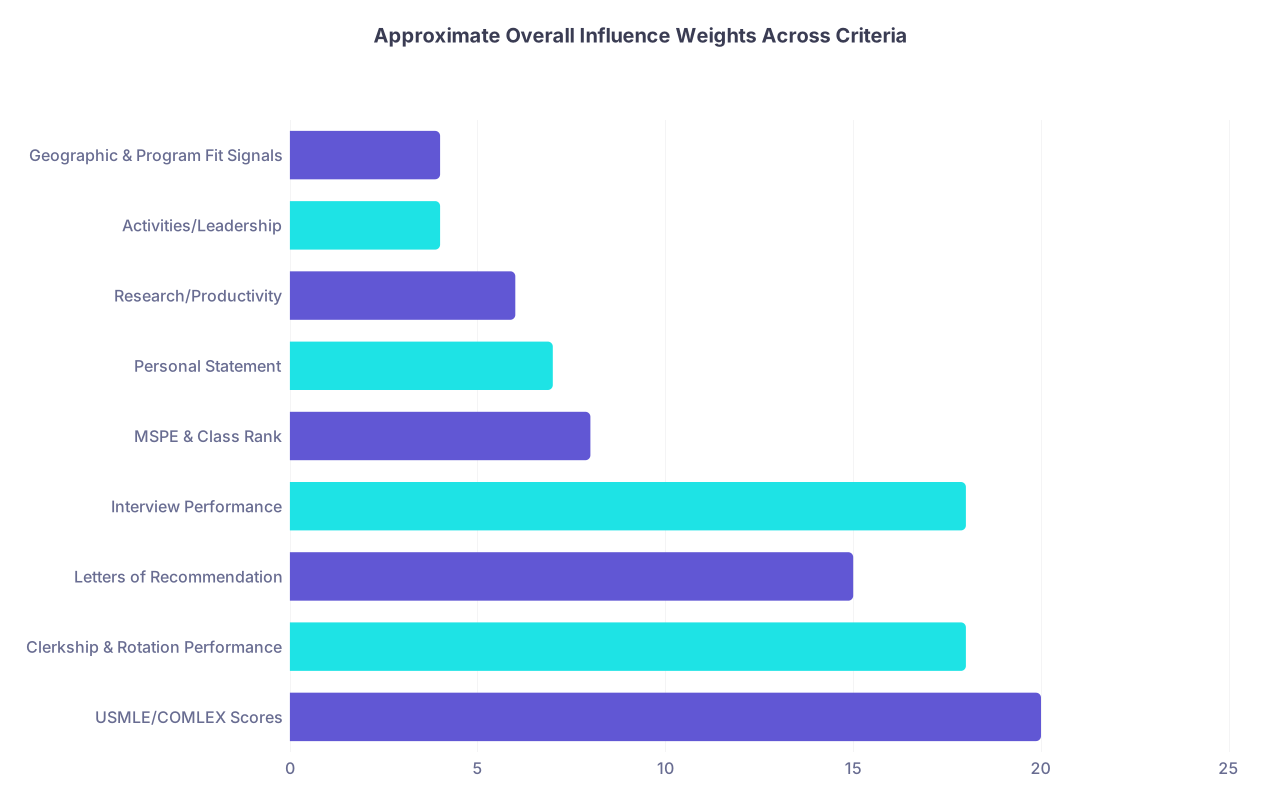
A reasonable all‑specialty weighting, collapsed to 100 points of total influence, might look like this:
| Category | Value |
|---|---|
| USMLE/COMLEX Scores | 20 |
| Clerkship & Rotation Performance | 18 |
| Letters of Recommendation | 15 |
| Interview Performance | 18 |
| MSPE & Class Rank | 8 |
| Personal Statement | 7 |
| Research/Productivity | 6 |
| Activities/Leadership | 4 |
| Geographic & Program Fit Signals | 4 |
You can argue with the exact numbers by a point or two, but the general hierarchy is stable:
- Scores, clinical performance, letters, and interviews occupy ~70% of the decision space.
- Personal statements hover in the high single digits overall.
- Their impact spikes only in specific contexts: red flags, borderline cases, niche / track fit.
So the quantitative message is clear:
- Personal statements are not king. They are a mid‑tier factor.
- They function more as risk management and fit clarification than as a primary selection driver.
- The rational strategy is to write a clean, coherent, professional statement that avoids hurting you and marginally helps you when PDs need a tiebreaker or an explanation.
Get that right, then redirect your real energy to what the data shows actually moves the needle.