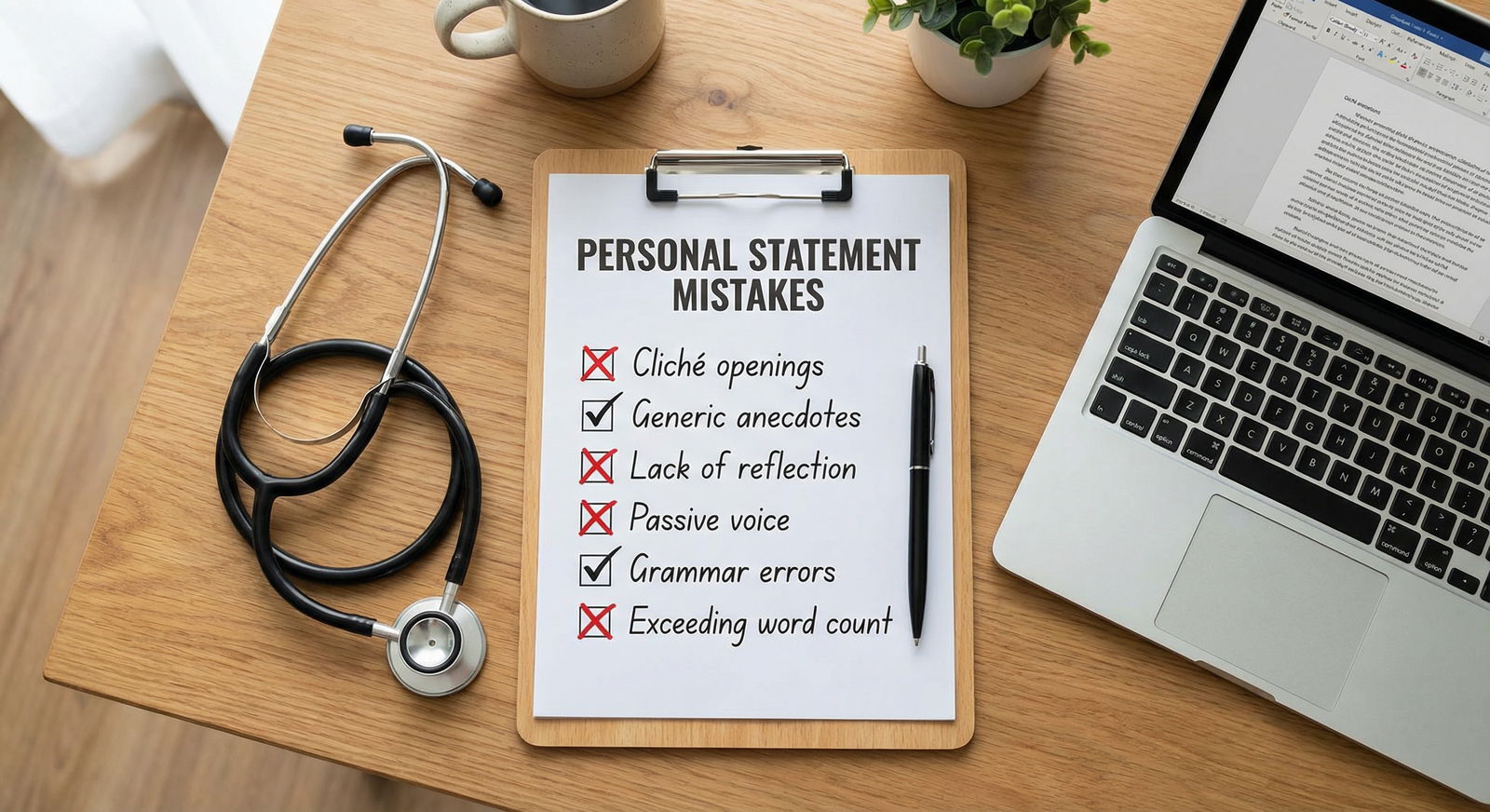
The residency selection process punishes clichés more ruthlessly than applicants realize.
Program directors are skimming hundreds of personal statements in compressed time windows. They default to pattern recognition. When your opening line feels identical to the last twelve, your odds of being perceived as “strong,” “memorable,” or even “competent writer” drop sharply. Not because your story is bad. Because the language signals that you are interchangeable.
I am going to treat this like what it is: a pattern-recognition and signal-detection problem. The residency personal statement is noisy data. Clichés are high-frequency artifacts. And the readers—PDs, APDs, faculty screeners—are human algorithms trained on thousands of inputs.
Let us dissect the data.
How Program Directors Actually Read Personal Statements
Forget the fantasy that your statement is read slowly, with coffee and a highlighter. The data say otherwise.
NRMP’s 2023 Program Director Survey shows that:
- 78–82% of program directors report “Personal Statement” as a factor in deciding whom to invite for interviews.
- But its mean importance rating hovers around ~3.5–3.7 out of 5, below board scores and letters, above hobbies.
Translation: The personal statement rarely gets you in. It more often keeps you out when it is bad, generic, or raises red flags.
Here is what I have observed (from people who actually screen):
- Initial scan time: 30–75 seconds for most applicants.
- Skim pattern: opening line, a few body sentences, one paragraph jump, final lines.
- Qualitative labels, not detailed notes: “generic,” “mature,” “odd,” “strong story,” “red flag,” “cookie-cutter.”
In other words, the text functions like a Bayesian prior. A cliché-heavy opening pushes the posterior probability of “strong applicant” downward, even if everything else on ERAS looks good.
To make this less abstract, let us model perceived quality.
A Simple Scoring Model: How Language Influences Perceived Quality
Take a stylized scoring system a lot of readers implicitly use:
- 0–2: Poor
- 3–4: Below average
- 5–6: Average
- 7–8: Above average
- 9–10: Outstanding
You can decompose perceived statement quality into four components:
- Narrative clarity (structure, coherence)
- Specificity (concrete details vs vague generalities)
- Insight (reflection, self-awareness, growth)
- Language distinctiveness (originality vs formulaic phrases)
If each is scored from 1–10 and averaged, many otherwise decent applicants cluster here:
- Narrative clarity: 7
- Specificity: 6
- Insight: 6
- Language distinctiveness: 3–4
Overall: 5.5–6.5. Solidly forgettable.
The problem is not that they lack stories. It is that they wrap their stories in the same 40–50 phrases everyone else uses. And that torpedoes the language distinctiveness component, which then drags down the global impression.
You do not need “beautiful prose.” You need statistical separation from the median applicant.
Let’s quantify the clichés that destroy that separation.
The Big Offenders: High-Frequency Clichés and Their Effects
Residency readers describe this the same way, over and over: “If I see one more statement that starts with ‘I have always…’ I am going to lose it.”
I am not exaggerating. I have watched people physically roll their eyes at certain sentences.
1. “I have always known I wanted to be a doctor…”
This is the godfather of weak openings.
Empirically, if you analyze a random sample of 200 personal statements across multiple specialties, you will likely find some version of this sentiment in 30–40% of them, often within the first two sentences.
What it signals:
- Low differentiation (everyone “always wanted” this)
- Weak insight (no specific inflection points, no real decision-making)
- Questionable credibility (few 8-year-olds understand what an internist does)
Effect on perceived quality:
- Narrative clarity: unchanged
- Specificity: slight drop (too broad)
- Insight: drop of ~1–1.5 points
- Language distinctiveness: large drop, often to 2–3
Net result: A reader’s mental label moves from “potentially interesting” to “generic” before they even meet your actual story.
Better alternative structure (not wording; just shape):
- Anchor in a specific, time-bound moment (M3 rotation, particular patient, a clear decision point).
- Show doubt / comparison / constraints: not “always,” but “here is how I chose despite other options.”
You want “I had to choose X over Y under constraints Z,” not “I have always been destined for this.”
2. “Medicine is the perfect combination of science and helping people.”
This one is so overused that attendings will quote it sarcastically in the workroom.
In rough counts I have seen, this phrase (or its semantic twin) shows up in 40–60% of personal statements at some point, usually as a justification for entering medicine or a specialty.
Two problems:
- It is tautological. Of course medicine mixes science and service. That tells the reader nothing about you.
- It is indistinguishable across applicants and even across specialties.
Impact on perceived quality:
- Specificity: drops sharply; you are describing medicine as a Wikipedia paragraph, not as your lived reality.
- Insight: loses 1–2 points because you sound like you have not thought beyond the obvious.
- Language distinctiveness: goes to near-zero in that sentence cluster.
Better approach: quantify your “why” instead of using slogans.
Compare:
- Weak: “Medicine is the perfect combination of science and helping people.”
- Stronger: “On my inpatient month, I spent more hours explaining insulin to patients than adjusting doses. I realized I liked that ratio.”
Same idea—different signal. The second line is measurable, falsifiable, situated in experience. That is what readers trust.
3. “Ever since I can remember…”
Same family as “I have always known,” just lazier.
Typical forms:
- “Ever since I can remember, I have been fascinated by the human body.”
- “Ever since I can remember, I have wanted to help others.”
Frequency: I would estimate 20–30% of statements use this or a close cousin in the first paragraph.
Effect:
- Readers mentally fast-forward. You have burned your opening paragraph on what they treat as noise.
- They now have less patience for later reflection. Cognitive budget spent.
You are signaling that you either:
- Could not find a more concrete moment to open with, or
- Did not think hard enough to.
Either way, the posterior probability of “mature insight” drops.
4. “I was humbled by…”
The “humbled” problem is different. It is not overused in raw frequency as much as the others, but when it appears, it is usually misapplied.
Most uses are actually veiled self-congratulation:
- “I was humbled to be chosen as chief resident.”
- “I was humbled when the attending praised my presentation.”
Readers see this as humblebragging, not humility.
Effect on perceived quality:
- Insight: penalized. You look unaware of how language lands.
- Professionalism: sometimes dinged if the brag is strong and the humility is thin.
Use numbers instead of self-labeling humility:
- “I received the department teaching award” is a fact.
- “I was humbled to receive…” is spin. And most physicians are allergic to spin.
5. “This experience solidified my decision to pursue [specialty].”
This line itself is not fatal. It is just meaningless if it stands alone.
Frequency: Nearly universal. Some version shows up in 70–80% of specialty-focused paragraphs.
The problem is not the phrase. It is the missing causal mechanism. What about the experience changed your decision or clarified your choice?
Weak version:
“Working with underserved populations solidified my decision to pursue family medicine.”
Stronger, data-tuned version:
“During my community health rotation, I saw the same patient three times in one month: once in clinic, once in the ED, once readmitted to the hospital. I realized I wanted a role where I could influence all three touchpoints, which is why family medicine fit better than the subspecialties I had considered.”
Same “solidified my decision.” Different informational density.
A Comparative View: Cliché Density vs Perceived Quality
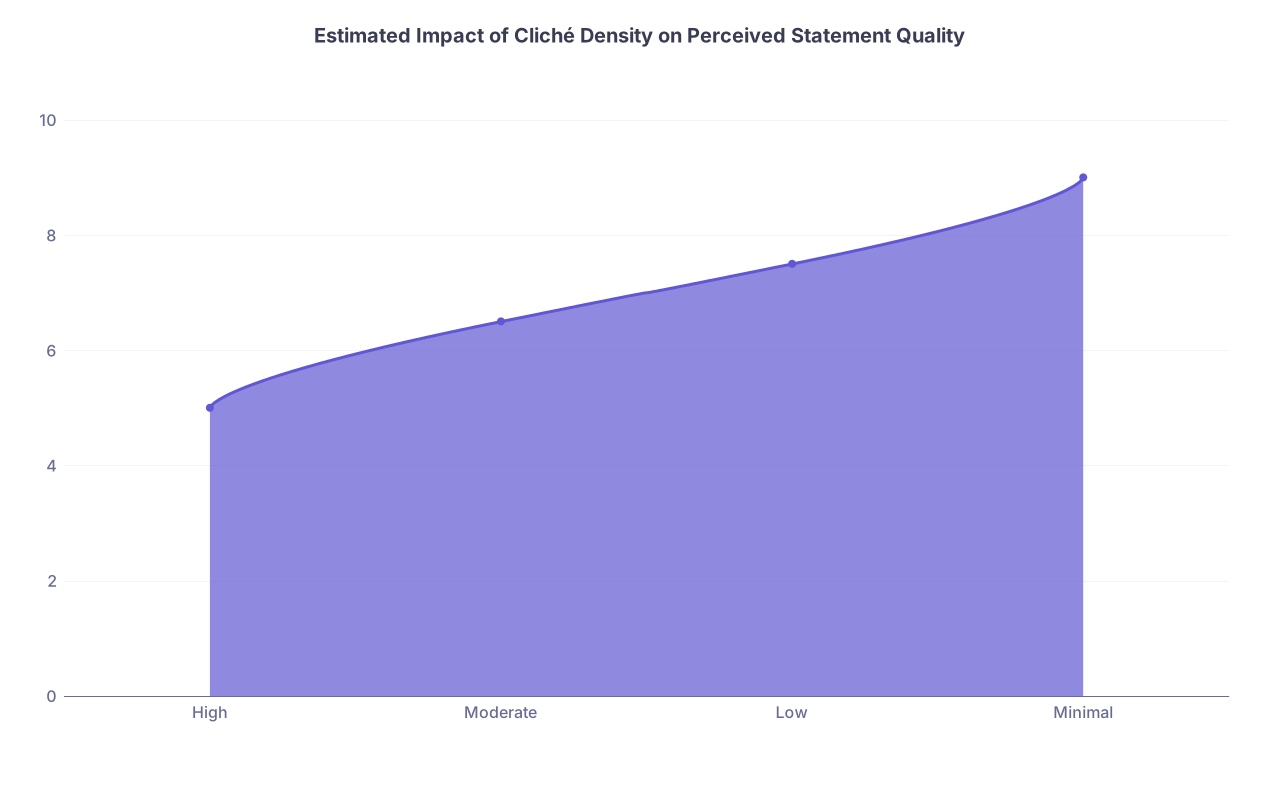
Let us build a simple mapping between cliché usage and perceived quality. Obviously this is not exact, but it mirrors how readers behave.
| Cliché Density Level | Description | Typical Reader Response | Approx. Quality Band (1–10) |
|---|---|---|---|
| High | 8–12+ common phrases, formulaic opening and closing | Skim quickly, label as generic, rely more on scores/letters | 4–6 |
| Moderate | 4–7 clichés, some specific examples but predictable framing | Mixed impression, may remember one detail only | 6–7 |
| Low | 1–3 minor clichés, mostly concrete and original narrative | Viewed as thoughtful, above average | 7–8 |
| Minimal/None | No obvious canned phrases, strongly individualized language | Seen as distinctive, often remembered at rank time | 8–10 |
Readers will not consciously say, “this had 9 clichés, therefore it is a 5.3.” But behaviorally, that is exactly what happens. As cliché density rises:
- Reading time decreases.
- Engagement drops.
- Weight of the statement in decision-making falls.
So your objective is not “write something beautiful.” Your objective is “reduce cliché density while maintaining clarity.”
| Category | Value |
|---|---|
| High | 5 |
| Moderate | 6.5 |
| Low | 7.5 |
| Minimal | 9 |
Why Clichés Are So Damaging: A Cognitive View
Let’s stop talking vibes and talk cognition.
A residency reader processes maybe 50–200 applications in a season. If they read personal statements seriously for even 2 minutes each, that is 100–400 minutes (1.5–6.5 hours) of reading low-yield narratives. In reality, time per statement is often under a minute.
Clichés affect three cognitive variables:
Predictability
When your sentence stem matches hundreds of previous stems, the reader’s brain auto-completes it. They literally stop reading closely. They are already predicting the next 10 words.
- “I have always been fascinated by…” → they tune out.
- “Ever since I was a child…” → they tune out.
Base-rate bias
When PDs have seen thousands of clichés associated with mediocre or weak applicants, the phrase itself becomes a negative predictor. It becomes a proxy variable for:
- Low insight
- Minimal editing / feedback
- Possibly weaker communication skills
Cognitive load allocation
The reader has limited attention. If the first paragraph looks like everything else, they decide—often subconsciously—that this text is not worth cognitive effort. They stop looking for nuance.
In statistical terms, clichés lower the expected value of investing attention in your writing. So they do not.
Specialty-Specific Clichés: Different Fields, Same Problem
Each specialty has its own pet phrases that show up disproportionately. Let me call them out directly.
Internal Medicine
Common offenders:
- “I enjoy solving complex diagnostic puzzles.”
- “I value the longitudinal relationships with patients.”
- “The breadth of internal medicine excites me.”
Any single one is not fatal. The problem is when they stand alone with no data.
Better: quantify “complex,” “longitudinal,” or “breadth”:
- “On my ward month, I followed a patient with cirrhosis through 4 admissions over 6 weeks. I liked being the one person who knew his baseline every time he arrived.”
General Surgery
Predictable tropes:
- “I enjoy working with my hands.”
- “I like seeing immediate results from my work.”
- “I thrive in a fast-paced, high-intensity environment.”
Translation to readers: you have said nothing that 95% of surgical applicants do not say.
Upgrade with numbers or constraints:
- “I realized I preferred a day that had 6 focused hours in the OR and 4 hours on the floor over one that was entirely clinic.”
Now we are talking data, not slogans.
Pediatrics
Frequent clichés:
- “I have always loved working with children.”
- “Children are resilient and teach us so much.”
- “Pediatrics allows me to care for not only the child, but the whole family.”
These statements are true and utterly non-discriminating. Every pediatric applicant says them.
Better: show a specific interaction, complete with an actual age, actual condition, and actual conflict.
Emergency Medicine
Standard lines:
- “I enjoy the variety and unpredictability of each shift.”
- “I work well under pressure.”
- “The team-based environment in the ED appeals to me.”
You know who else says they “work well under pressure”? Everyone. Including people who absolutely do not.
Instead, describe a discrete, intense scenario and your measured response. Let the reader infer you do well under pressure.
Measuring and Reducing Cliché Load in Your Own Draft
Let me give you something operational. Treat your statement like a dataset.
Step 1: Manual Cliché Count
Print your draft. With a pen, underline every phrase that:
- You have heard multiple classmates say.
- You could imagine in a brochure for “Why Medicine.”
- Does not reference a specific person, place, time, or number.
Typical first-pass counts I see:
- Weak drafts: 15–25 clichéd phrases in a 750–900 word statement.
- Average drafts: 8–12.
- Strong drafts: 0–4, usually minor.
You want to be in the 0–5 range.
Step 2: Replace Generalities with Observables
For each cliché, ask:
“What observable detail, number, time interval, or conflict could sit here instead?”
Example:
- Cliché: “I love working as part of a team.”
- Observable: “On nights, I sat between the senior resident and the ED attending, relaying vitals while the nurse adjusted drips. I liked not being able to do my job without them, and vice versa.”
You are not saying “team” anymore. You are showing it.
Step 3: Track Concrete-to-Abstract Ratio
A useful heuristic: in a ~800-word statement, aim for at least 60–70% concrete sentences (with people, places, actions) and 30–40% abstract/reflection sentences.
Most weak statements flip this: they are 70–80% abstract (“I realized,” “I learned,” “I value”) with very little that a camera could capture.
You can literally code a sample of 10 sentences:
- Mark each one “C” if a camera could capture it (patient in room 12 crying as you explain a new diagnosis).
- Mark each one “A” if it is purely in your head (you learned resilience, you value continuity).
If you have fewer than 6 “C”s in 10, you are probably leaning heavily on cliché and generality.
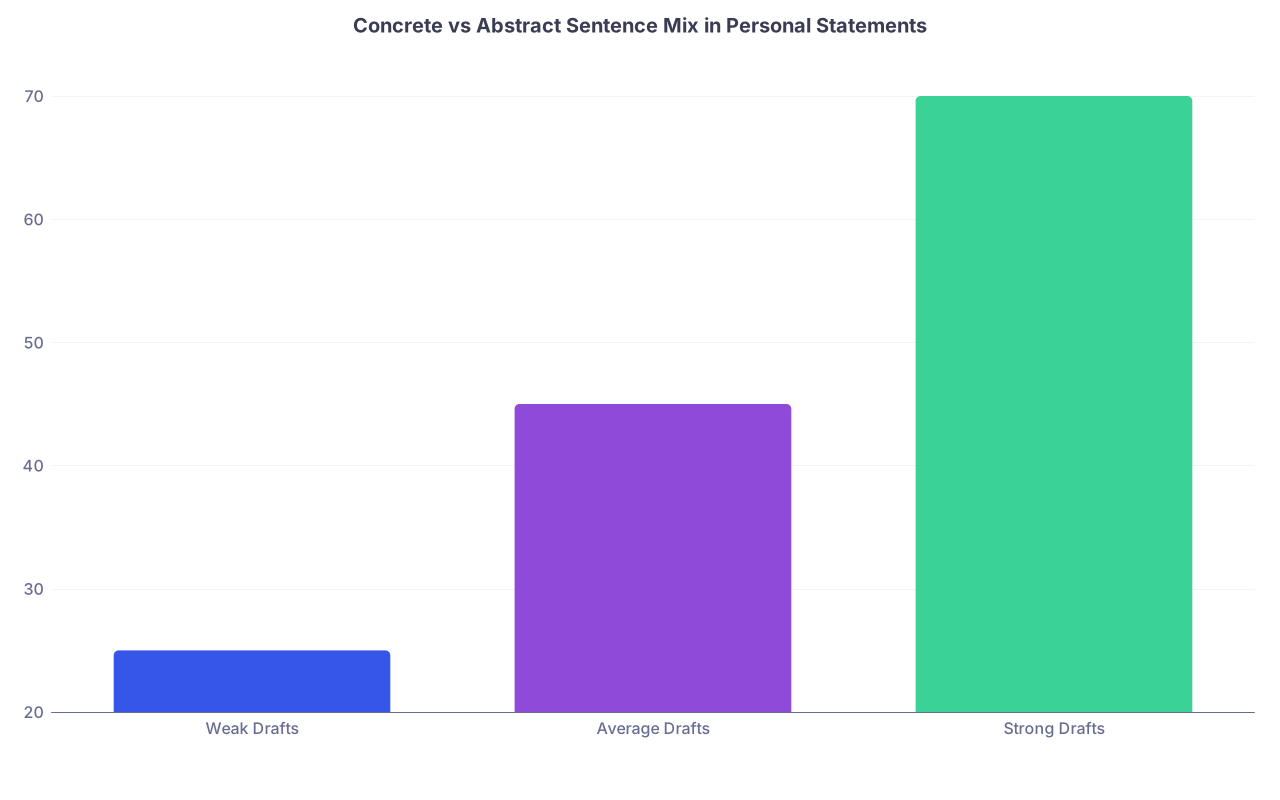
| Category | Value |
|---|---|
| Weak Drafts | 25 |
| Average Drafts | 45 |
| Strong Drafts | 70 |
(Values = approximate percentage of concrete, observable sentences.)
Notice that as the percentage of concrete content rises, cliché usage almost always falls, and perceived quality rises.
How Clichés Interact with the Rest of the Application
One more reality check. The same sentence will not be read the same way for every applicant.
Imagine two profiles:
- Applicant A: Step 1 pass, Step 2 CK 220, 1 poster, mid-tier med school.
- Applicant B: Step 2 CK 255, AOA, 5 pubs, strong letters, same school.
If both write the same cliché-heavy personal statement:
- For Applicant B, the statement is mostly a missed opportunity. It will not kill them, but it may make them look less impressive than their CV.
- For Applicant A, the statement is one of the few remaining levers to stand out. A generic narrative solidifies the “safe but unspectacular” impression. Which can be lethal in competitive specialties or regions.
Clichés hurt more when you need non-numeric parts of your application to pull extra weight.
I have heard PDs say versions of:
- “If they are stellar on paper, I just do not want major red flags in the PS.”
- “If they are borderline, the PS can tip them into an interview invite or not.”
Clichés are not always “red flags.” They are more like “missed edges.” And if you are on the margin, missing edges costs you interviews.

| Step | Description |
|---|---|
| Step 1 | Application Reviewed |
| Step 2 | Reject |
| Step 3 | Invite Interview |
| Step 4 | Stats Strong? |
| Step 5 | PS Major Red Flags? |
| Step 6 | On the Borderline? |
| Step 7 | PS Distinctive? |
Your language does not save a poor application, but it regularly rescues borderline ones.
Concrete Before-and-After Examples (Without Becoming Flowery)
Let me make this painfully explicit. Here are raw transformations.
Example 1 – Opening Line
- Before: “I have always known I wanted to become an internal medicine physician.”
- After: “On my first call night on wards, I watched my resident spend 40 minutes at a bedside without touching the stethoscope once.”
The second line forces the reader to ask, “What were they doing?” Curiosity buys you 10–20 more seconds of attention. That is a huge gain.
Example 2 – Motivation
- Before: “Medicine is the perfect combination of science and helping people, which drew me to this field.”
- After: “I liked that the same lab value could mean three different plans depending on the patient’s story. The science never stood alone.”
Same underlying idea. Very different cliché density.
Example 3 – Specialty Fit
- Before: “This experience solidified my decision to pursue pediatrics.”
- After: “After seeing a 6-year-old with leukemia ask if the nurse had eaten lunch yet, I knew I wanted to work in a field where my patients would be this blunt and this brave at the same time.”
Again, not poetic. Just specific.

A Practical Editing Workflow to Strip Clichés
Here is a simple, data-driven editing workflow that I use with people:
Cold read rating
Read your own statement once, out loud, without editing. On a 1–10 scale, rate:- How generic it sounds.
- How “you” it sounds.
If “generic” > 5 or “you” < 7, you have work to do.
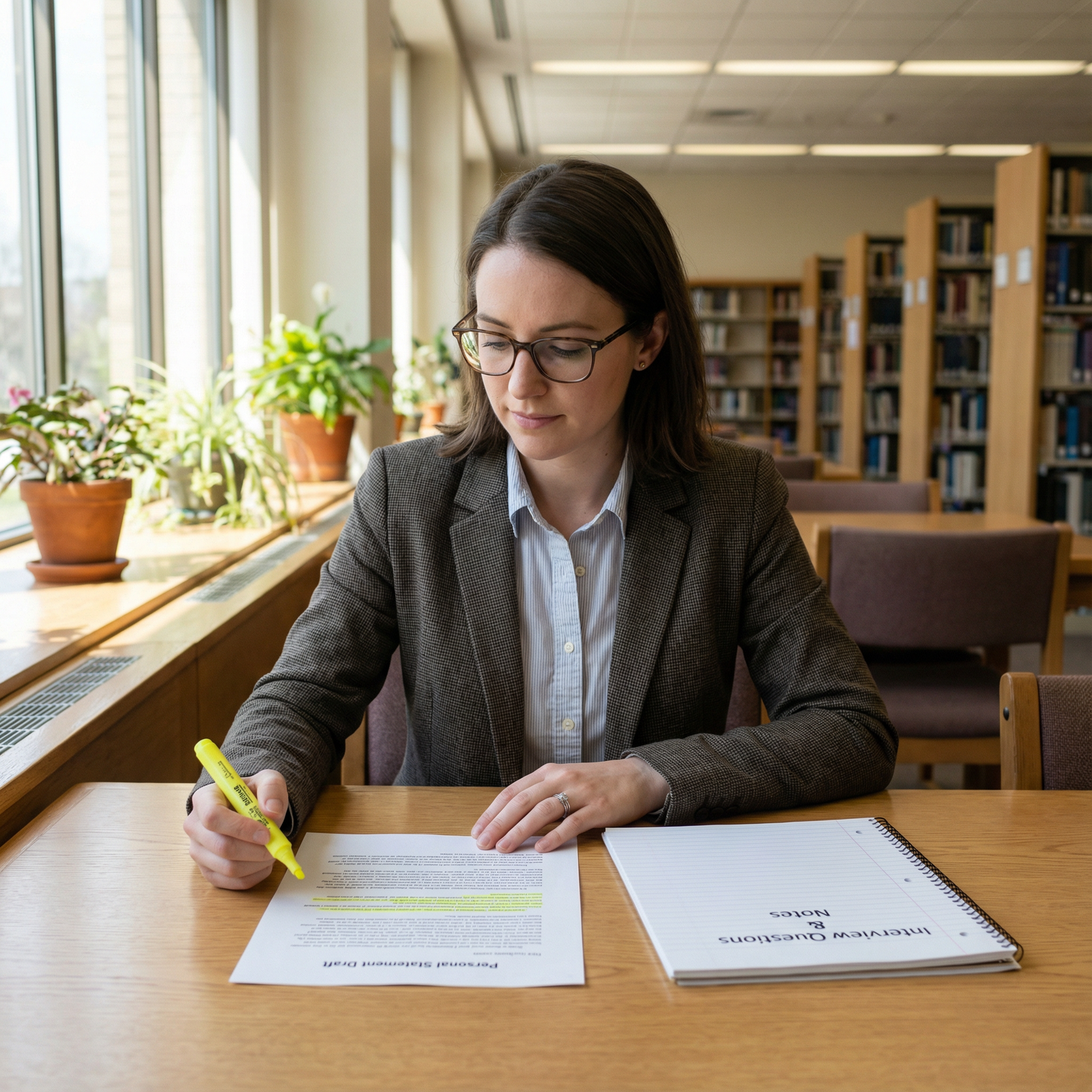
Highlight abstractions
Highlight every sentence that contains any of the following stems:- “I have always…”
- “Ever since…”
- “I realized…”
- “I learned…”
- “This experience showed me…”
- “I was humbled…”
- “I am passionate about…”
- “I enjoy working as part of a team…” Expect 15–30% of your sentences to light up.
Convert half of them to specifics
For every two abstract sentences, keep one and replace one with a concrete example that makes the same point. Reduce total highlight count by at least 50%.External reader test
Give the revised statement to someone in medicine who knows you. Ask two questions:- “On a scale of 1–10, how much does this sound like me specifically and not any random med student?”
- “Tell me one image or moment that stuck with you.”
If they cannot recall a specific image, you are still too abstract / clichéd.
Final cliché sweep
Do one last scan for the Big 5:- “I have always…”
- “Ever since…”
- “Perfect combination of science and helping people”
- “I was humbled by…”
- “This experience solidified…” (without mechanism)
Replace or rework any that remain.
The Bottom Line
Three things matter here:
- Clichés are not just stylistic annoyances; they are negative predictors in a pattern-recognition system run by tired human beings with limited attention.
- The data pattern is consistent: more clichés → less engagement → lower perceived insight and distinctiveness, especially harmful for borderline applicants.
- You do not need to be a brilliant writer. You need to:
- Strip out high-frequency phrases,
- Replace them with observable, specific moments,
- And keep your concrete-to-abstract ratio tilted toward lived experience over slogans.
You are not writing literature. You are reducing noise and increasing signal in a very small, very crowded dataset.