Mastering SOAP: Essential Strategies for Success in the Supplemental Offer and Acceptance Program
Finding out you did not match in the main National Resident Matching Program (NRMP) can feel devastating—but it is not the end of your residency journey. The Supplemental Offer and Acceptance Program (SOAP) exists precisely for this situation, offering a structured, time-sensitive pathway to unfilled residency positions.
This guide walks you through how to navigate SOAP with limited interviews or no initial match, and how to turn a difficult week into a strategic opportunity for your medical residency and long-term career.
Understanding SOAP and the NRMP Match Week Timeline
Before crafting a strategy, you need a clear, detailed understanding of what SOAP is—and what it is not.
What Is SOAP?
The Supplemental Offer and Acceptance Program (SOAP) is a process administered by the NRMP during Match Week that allows:
- Eligible unmatched or partially matched applicants to apply to unfilled residency positions
- Residency programs with unfilled positions to review applications and extend electronic offers through a structured series of rounds
SOAP is highly regulated: no “side deals,” no unsolicited calls to programs, and strict communication rules. All offers and acceptances occur through the NRMP’s Registration, Ranking, and Results (R3) system.
SOAP Eligibility
You are generally SOAP-eligible if:
- You registered for and participated in the NRMP Main Residency Match.
- You are:
- Fully unmatched, or
- Partially matched (e.g., matched to an advanced program but not a preliminary year, or vice versa).
- You are not withdrawn or disqualified from the Match.
Your medical school or the NRMP will confirm eligibility status on Monday of Match Week when you receive your “Did I match?” notification.
SOAP Timeline and Structure
SOAP typically runs from Monday through Thursday of Match Week, with a precise structure:
Monday (11:00 a.m. ET)
- You learn whether you matched.
- SOAP-eligible applicants gain access to the List of Unfilled Programs (but cannot yet contact them directly).
- You and your dean’s office begin formulating a strategy.
Monday afternoon – Wednesday morning
- You submit applications (through ERAS) to programs on the unfilled list.
- You may receive interview requests (often brief and virtual).
Wednesday–Thursday
- Programs review applications and conduct interviews.
- NRMP conducts several SOAP offer rounds, during which:
- Programs issue offers in batches.
- Applicants can accept one offer per round (or decline).
- Unaccepted or declined positions roll into subsequent rounds.
Thursday afternoon
- SOAP concludes.
- Any remaining positions move to the “Post-SOAP” list, and at that point, programs may use their own processes to fill vacancies.
Understanding this structure allows you to anticipate what you need to do each day and avoid missing opportunities because of confusion or delay.
Preparing for SOAP as Soon as Match Results Are Released
Success in SOAP is driven less by last-minute scrambling and more by the preparation you do in the days and weeks leading up to Match Week—or in the hours immediately after learning you did not match.
1. Process Your Emotions, Then Switch to Problem-Solving Mode
Learning that you did not match is emotionally charged. You might feel shock, shame, anger, or anxiety. All of that is normal—but SOAP moves fast, and you cannot afford to stay paralyzed.
- Take a brief pause (an hour or two) to breathe, vent, or talk to a trusted friend, family member, or counselor.
- Then consciously shift into action mode: your decisions over the next 72 hours can significantly alter your residency trajectory.
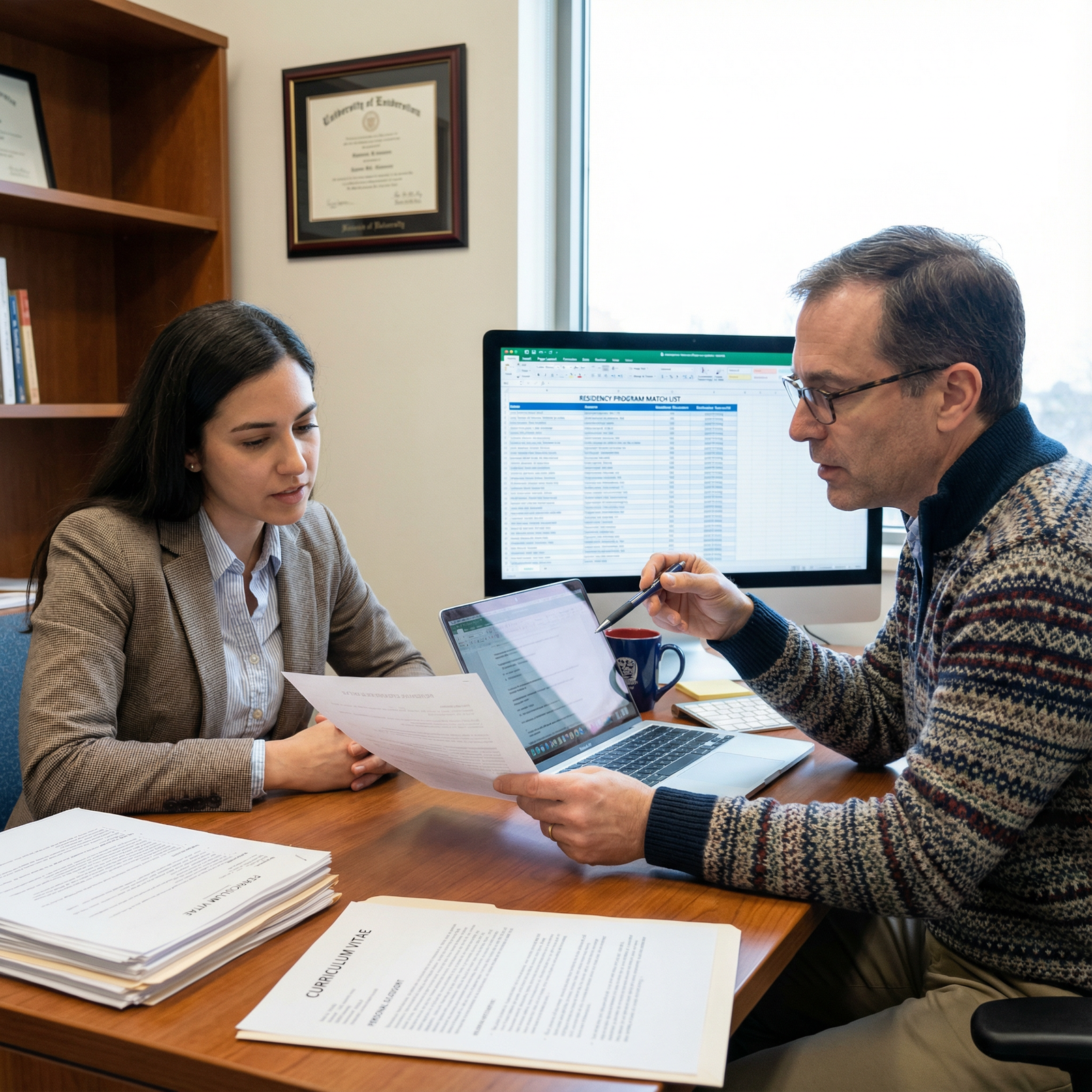
2. Meet Immediately With Your Dean’s Office or Advisor
Your medical school is one of your most critical resources in SOAP. Within hours of learning your status:
- Schedule an urgent meeting with:
- Your Dean of Student Affairs
- Match advisor or career services
- Specialty advisor (if available)
Use this meeting to:
- Review your application objectively:
- USMLE/COMLEX scores
- MSPE (Medical Student Performance Evaluation)
- Clinical grades and narrative comments
- Research and extracurricular profile
- Personal statement(s)
- Letters of recommendation
- Identify realistic SOAP specialty targets:
- Are you still a viable candidate in your original specialty?
- Should you redirect to a different specialty (e.g., IM, FM, transitional/prelim year)?
- Do you need to consider preliminary-only positions as a bridge year?
Your advisor can offer insight into:
- Where past unmatched graduates from your school have successfully SOAPed
- Which programs historically fill through SOAP
- How your specific profile compares to typical matched residents
3. Understand and Strategically Use the Unfilled Program List
When the NRMP releases the List of Unfilled Programs, avoid knee-jerk reactions. Instead:
- Scan by specialty first, then by geography.
- Be realistic about competitiveness:
- For example, if you did not match into categorical Internal Medicine, jumping to Dermatology SOAP positions is unlikely to succeed.
- However, broadening from General Surgery to prelim surgery or transitional year may be strategic.
Look at:
- Program type: academic vs. community, university-affiliated vs. independent
- Prior experience with SOAP (if you can infer from historical lists)
- Number of unfilled spots: a program with multiple open positions may be more open to a wider range of candidates.
Keep a running spreadsheet of:
- Program names and ACGME codes
- Specialty and position type (categorical, prelim, advanced)
- Location
- Application status (applied/interviewed/offer received)
- Notes from any communication or interviews
This organization becomes vital as offers and interviews start to move quickly.
Strengthening and Adapting Your Residency Application for SOAP
Even with the time pressure, you can significantly improve your residency application before you submit SOAP applications.
1. Clarify Your Revised Specialty Strategy
You may need two parallel strategies:
- Plan A: Stay in your original specialty where reasonable (e.g., FM, IM, Pediatrics, Psychiatry).
- Plan B: Broaden to adjacent or less competitive specialties or to preliminary/transitional positions.
Discuss with your advisor:
- Long-term career implications of each pathway
- Possibility of switching specialties later (e.g., from IM or prelim surgery into a more competitive specialty)
- Visa or funding limitations if you are an international medical graduate (IMG)
Remember: your career is long. A strategic SOAP choice now can still support future fellowship or specialty goals, even if it is not your ideal categorical starting point.
2. Update and Tailor Your Personal Statement
Many applicants use a generic personal statement for SOAP and miss a crucial chance to stand out.
Consider preparing 1–3 versions:
Revised original specialty statement
- Acknowledge growth and reflection since your initial application (briefly, without sounding defensive).
- Re-emphasize your fit, commitment, and what you bring to that field.
New specialty statement(s) (if changing fields)
- Explain the genuine reasons for your interest in the new specialty.
- Connect your background (rotations, electives, research, life experiences) to core values/skills in that field.
- Avoid sounding like you “settled”; instead, show thoughtful alignment.
Preliminary/Transitional year statement
- Emphasize your desire to build a strong clinical foundation.
- Highlight adaptability, work ethic, and teamwork.
- Mention long-term goals, but keep focus on how you will excel in that prelim year.
Keep these statements:
- 3/4 to 1 page
- Focused, specific, and professional
- Free of any language that blames the system or prior programs
3. Optimize Your CV and ERAS Application
Within the constraints of the ERAS system (which you cannot overhaul completely at this stage), you can still:
Update experiences:
- Add any recent rotations, quality improvement projects, leadership roles, or scholarly work.
- Clarify duties and impact briefly.
Highlight clinical readiness:
- Clear descriptions of sub-internships, acting internships, and key responsibilities.
- Note any procedures or patient volumes relevant to target specialties.
Address gaps clearly (if any):
- Use experiences or personal statement to show productive use of time (teaching, research, additional degrees, etc.).
4. Strengthen Your Letters of Recommendation Where Possible
In SOAP, you rarely have weeks to secure new letters—but there are still strategic options:
If your school allows letter updates or additions:
- Reach out to a faculty member who knows you well (particularly in your new target specialty) and explain your situation.
- Ask if they could provide a brief, supportive letter emphasizing:
- Clinical reliability
- Communication skills
- Work ethic and teachability
If no new letters are possible:
- Ask your dean or advisor to advocate on your behalf with selected programs (only if allowed by NRMP/ERAS rules and your school’s policies).
Executing a High-Yield SOAP Strategy During Match Week
Once SOAP officially opens for applications, your goal is to be organized, responsive, and flexible.
1. Applying Strategically—Not Randomly
You are limited by the number of programs you can apply to during SOAP (check the current NRMP/ERAS policy; historically, this has been capped).
Prioritize:
- Programs/specialties where you are a realistic match based on:
- Scores
- Clinical performance
- Visa requirements
- Geographic constraints
- A balanced list:
- Some “reach” programs
- A strong core of realistic targets
- A few safety options (e.g., prelim positions if needed)
Use your advisor’s insight and national data (e.g., NRMP’s Charting Outcomes, school-specific data) to avoid over-concentrating in extremely competitive programs.
2. Staying Within SOAP Communication Rules
The NRMP has strict rules during SOAP, including:
You may not:
- Cold-call or email programs to solicit positions (unless they initiate contact, or specific exceptions apply under current rules).
- Attempt to negotiate outside the NRMP system.
You may:
- Respond promptly and professionally to program-initiated contact.
- Attend virtual/phone interviews and Q&A sessions.
- Ask clarifying questions about program structure, training, and expectations.
Violations can jeopardize your NRMP participation and even your school’s standing, so always follow guidance from your dean’s office.
3. Preparing for Fast, Focused SOAP Interviews
SOAP interviews are often shorter and more rapid-fire than traditional residency interviews—sometimes just 10–20 minutes.
Conduct Mock Interviews in Advance
Even one or two mock interviews with:
- A faculty mentor
- A resident
- Your career services office
can help you:
- Smoothly explain why you think you did not match (if asked) without sounding bitter or unprofessional.
- Articulate why you are interested in their specific program and specialty.
- Highlight key strengths and examples quickly.
Anticipate Common SOAP Interview Questions
Be ready for variations of:
- “Can you tell me about yourself?”
- “Why our specialty, especially now?”
- “Why our program specifically?”
- “What did you learn from the initial Match outcome?”
- “How do you handle stress, setbacks, and high workload?”
- “What are your long-term career goals?”
Practice short, structured responses (1–2 minutes each) that:
- Are honest but positive
- Avoid blaming or making excuses
- Emphasize resilience, reflection, and growth
Do Targeted Program Research
Even if time is short, quickly review:
- Program website (curriculum, patient population, call schedule)
- Any special tracks (global health, underserved, research)
- Faculty or resident profiles
Use this to ask at least one thoughtful, specific question, which shows genuine interest and maturity.
Receiving, Evaluating, and Accepting SOAP Offers
When offers start to appear in the NRMP system, the pace and pressure increase dramatically. Preparation beforehand prevents rushed, poorly thought-out decisions.

1. Understand How SOAP Offer Rounds Work
During each SOAP round:
- Programs submit their ranked lists of applicants.
- NRMP’s system sends offers to applicants electronically.
- You may receive:
- No offers
- One offer
- Multiple offers (rare but possible)
You must:
- Accept or reject each offer within the designated time window (typically a short window, such as two hours—confirm current rules each year).
- If you accept an offer in a given round:
- You are done with SOAP and committed to that program.
- Declined or unaccepted offers return to the pool for the next round.
This is why having a decision-making framework in advance is critical.
2. Create Your Personal Offer-Ranking Framework
Before offers arrive, clarify your priorities. Consider ranking factors like:
Training quality and reputation
- Board pass rates
- Fellowship match data (if relevant)
- Case volume and diversity of patient population
Fit and culture
- Resident satisfaction
- Faculty accessibility and teaching style
- Wellness resources and support
Location and lifestyle
- Proximity to family or support systems
- Cost of living
- Safety and community resources
Career trajectory
- Availability of research or leadership opportunities
- Subspecialty exposure
- Potential to pivot to your ideal specialty or fellowship later
Assign rough “tiers” to programs ahead of time:
- Tier 1: Immediate accept if offered
- Tier 2: Accept if no Tier 1 offers this round
- Tier 3: Consider only if options are limited or you strongly need a position this year
Discuss these tiers with a trusted advisor or mentor for perspective.
3. Balancing Urgency and Long-Term Goals
It is understandable to feel that any residency position is better than none. However, be deliberate:
- If you receive an offer from a program that would significantly undermine your well-being or career goals, it may be more appropriate to decline and aim to strengthen your application for the next cycle.
- On the other hand, a solid but less “prestigious” community program may offer excellent hands-on training and networking that can propel you far.
There is no universal right answer—only what aligns best with your professional goals, personal circumstances, and tolerance for risk.
After SOAP: Next Steps Whether You Match or Not
If You Match Through SOAP
Once you accept a SOAP offer:
Confirm all documentation
- Complete onboarding paperwork quickly.
- Ensure your program has all required transcripts, immunization records, and visa or licensing documents.
Send professional thank-you notes
- To your new program leadership (PD, coordinator).
- To your dean, advisors, and anyone who supported you.
Adjust your mindset
- Even if this was not your original specialty or dream program, commit fully.
- Show up as a motivated, grateful, and hardworking intern—your reputation starts now.
Plan for your long-term goals
- If you hope to pursue a fellowship or switch specialties later, speak with mentors after you arrive about realistic paths and preparation.
If You Do Not Secure a Position Through SOAP
Not matching in SOAP is deeply challenging—but still not the end of your career in medicine.
Meet again with your dean/advisor quickly
- Conduct a detailed post-mortem analysis of your application and SOAP performance.
- Identify clear, actionable steps to improve for the next cycle.
Consider interim options that strengthen your candidacy
- Research fellowships or postdoctoral positions
- Chief resident or instructor roles at your medical school (rare, but sometimes available)
- Clinical roles where allowed (e.g., preliminary or transitional positions gained post-SOAP outside NRMP, if compliant with regulations)
- Additional degrees (MPH, MBA, MS) aligned with your goals
Create a 12–18 month plan
- Timeline of experiences, exams (if needed), research output, and new letters of recommendation.
- Goals for next year’s residency application, including realistic specialty targets.
Attend to your mental health
- Consider counseling resources, peer support groups, or wellness services.
- Recognize that many excellent physicians have experienced delayed or non-traditional match paths.
FAQ: Navigating SOAP and Unmatched Outcomes in Medical Residency
Q1: How can I best prepare for SOAP before Match Week, even if I hope to match?
Even if you feel confident about your NRMP rank list, it is wise to have a contingency plan. Before Match Week:
- Identify one or two alternative specialties you would consider in SOAP.
- Draft a flexible personal statement that can be quickly tailored.
- Keep your CV and ERAS application fully updated with recent activities.
- Know your school’s SOAP point person and how to contact them urgently.
Preparation does not decrease your chance of matching; it simply protects you if things go unexpectedly.
Q2: Is it better to SOAP into a preliminary year or to wait and reapply next cycle?
It depends on your situation:
- Preliminary year advantages:
- Gain U.S. clinical experience and strong letters.
- Demonstrate work ethic and professionalism in a real residency environment.
- Maintain clinical momentum and skills.
- Potential downsides:
- No guarantee of a categorical spot afterward.
- Moving twice in two years can be disruptive.
If your scores and application are close to competitive for your target specialty, a prelim year at a strong institution can be a powerful stepping stone. If your deficits are more fundamental (e.g., multiple failures, major professionalism concerns), a dedicated year to strengthen your application outside of residency might be better. Discuss this carefully with advisors.
Q3: How should I explain not matching during a SOAP interview without hurting my chances?
Use a brief, honest, and growth-oriented explanation. For example:
- Acknowledge relevant factors (e.g., competitive specialty choice, limited geographic flexibility, or earlier test performance).
- Avoid blaming “the system” or specific programs.
- Emphasize what you learned and how you have improved (better clinical evaluations, research productivity, enhanced communication skills, etc.).
Focus on what you bring to this program now, not just what went wrong before.
Q4: Do programs view SOAP applicants as “less desirable” than main Match applicants?
Many programs rely on SOAP every year for strong, capable residents. SOAP positions may be unfilled for reasons unrelated to applicant quality (late accreditation, new expansion of positions, geographic preferences, or unique program features). Programs know that:
- Outstanding candidates can go unmatched for complex reasons.
- SOAP offers a second chance to identify motivated, resilient applicants.
If you perform well in SOAP interviews and present yourself professionally, you can absolutely be viewed as a valued incoming resident.
Q5: What if I’m an IMG or have visa needs—how does that affect my SOAP strategy?
IMGs and applicants requiring visas must be especially strategic:
- Use filters (where available) to identify programs that sponsor your visa type (J-1 or H-1B).
- Prioritize programs and specialties that historically accept IMGs.
- Leverage your dean’s office, IMG support networks, or alumni who have matched as IMGs for targeted advice.
Because your pool of viable programs may be smaller, early planning and realistic specialty choices are critical.
Navigating SOAP with limited interviews or no initial match is one of the most intense experiences of medical training. Yet many physicians who ultimately thrive in their careers began exactly here—unmatched on Monday, recalibrated by Wednesday, and committed to a new program by Thursday.
By understanding the NRMP SOAP structure, preparing decisively, optimizing your residency application, and making thoughtful offer decisions, you can turn a painful setback into a powerful inflection point in your medical career.