
Live video is the least efficient way for a physician to practice telemedicine. There, the sentence nobody at the telehealth recruiting booth wants to say out loud.
Somewhere between residency graduation and your first contract negotiation, you absorbed the industry's favorite myth: "real" telehealth means a video visit, and everything else is second-tier medicine for second-tier pay. The data says the opposite. On income per hour, schedule control, and burnout, asynchronous care, store-and-forward, message-based, review-on-your-time medicine, wins more often than the conventional wisdom admits. Let's go myth by myth.
This article is for educational purposes only. It is not financial advice, not legal advice, and not tax advice. Compensation figures vary widely by specialty, platform, payer mix, and contract structure, so consult a qualified professional before making career or contract decisions.
(See also: workload planning mistakes for more.)
The Income Trap: Why 'Live' Doesn't Always Pay More
The myth sounds reasonable: video visits bill like office visits, so video must be where the money is. Asynchronous work, the logic goes, is $20-a-case churn.
Here's what the math actually shows. Synchronous income is time-boxed. You're paid for the slot, not the throughput, and slots leak. A 15-minute video visit might pay $35-45. In a fantasy hour, that's $140-180. But hours are never perfect. Double-digit no-show rates are common in virtual care. Patients can't find the camera button. Three minutes of "can you hear me now?" is three minutes you're donating. Your effective hourly rate quietly collapses while you sit there smiling at a frozen screen.
Now run the asynchronous numbers. A trained physician can complete a store-and-forward dermatology, urgent care, or follow-up case in three to six minutes, photos reviewed, history in front of you, plan documented. At $15-30 per case, batching ten to twelve cases in a focused hour puts you at $200-300. No waiting room. No dead air. You're never paid to sit; you're paid to decide.
For more on which specialties gain the most, see our data on telehealth use and salary.
That gap isn't a rounding error. It's a structural difference. Synchronous telemedicine sells your calendar. Asynchronous sells your judgment. A calendar has 24 hours in it, forever. Judgment scales with how fast you can apply it. One of those is a commodity service; the other is an asset.
The trap is that video feels like real doctoring, so physicians accept the pay ceiling as the cost of legitimacy. It isn't legitimacy. It's latency.
The Autonomy Illusion: Why Synchronous Schedules Are a Trap
Conventional wisdom says synchronous telehealth gives you control because you work from home. Nonsense. You've rebuilt the clinic schedule in your spare bedroom.
If a patient books you at 2:20 p.m., you are on camera at 2:20 p.m. Doesn't matter that it's your kid's recital or that you're sharpest at dawn. The appointment book owns you exactly the way it did in clinic, it just owns you over Zoom now. That's not autonomy. That's a shift with worse coffee.
Asynchronous workflows run on batching, and batching is what actual schedule control looks like:
- Clear 25 cases from 5:30 to 7:30 a.m. before anyone else in your house is awake.
- Or work 9 p.m. to midnight if that's when your brain fires.
- Compress a "full-time" caseload into four focused days and take three off.
- Work from anywhere your license and a laptop reach, no commute, no parking garage, no "running late."
The uncomfortable truth: in synchronous models, your availability is a liability. You're being compensated for being on call in real time, for presence, not expertise. The minute you stop being present, the income stops. Asynchronous flips that. Your expertise is the product, and it ships whether you're watching it leave the dock or asleep.
Physicians who chase "flexible video schedules" discover this the hard way around month three. Flexible location, rigid clock. That's the illusion.
Burnout: Telemedicine Isn't a Panacea
Now the myth I most enjoy breaking: that switching to telemedicine, any telemedicine, cures burnout.
I've watched physicians go full-time video and end up as fried as they were in clinic. Sometimes worse. Video fatigue is a documented phenomenon; Stanford's research on video-call exhaustion identified exactly why, prolonged eye contact at close range, constant self-monitoring of your own face, restricted movement, and the cognitive tax of decoding degraded social cues through a lagging connection. Synchronous telehealth keeps the single highest-stress component of the job, real-time consulting with a stranger, and bolts a tech-friction layer on top. The Brady Bunch grid is not a wellness plan.
Burnout research keeps pointing at the same drivers: loss of control, administrative friction, and cognitive overload from relentless context switching. Watch what asynchronous care does to each one:
- Control. You decide when the work happens. That alone moves the needle.
- Friction. The documentation is the encounter, no double entry, no rooming, no commute, no front-desk relay.
- Cognitive load. Batching similar cases turns decision-making into rhythm instead of whiplash. Twenty rashes in a row is flow state. Alternating a UTI, a panic attack, and a Medicare wellness visit every twelve minutes on camera is not.
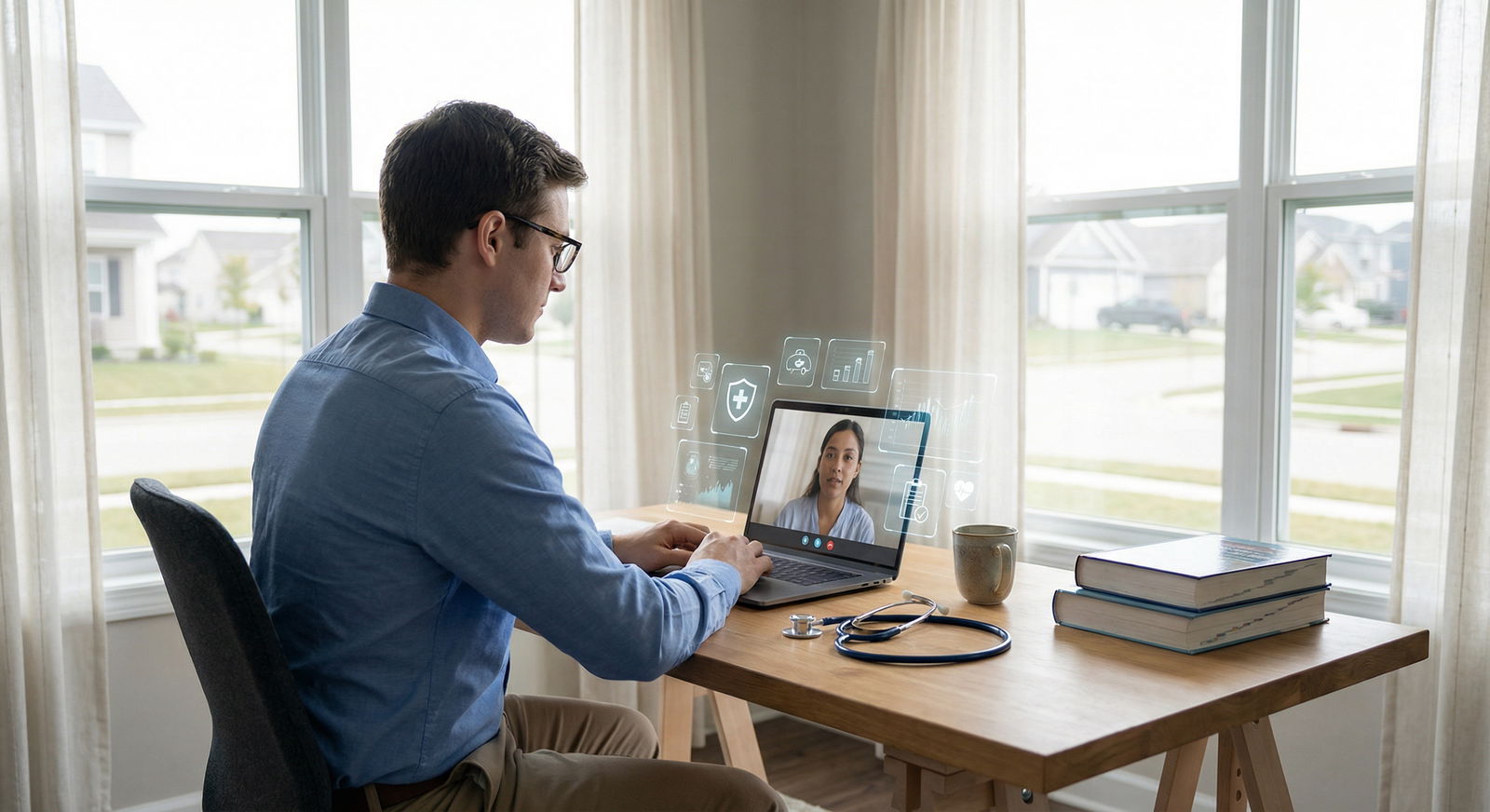
Honesty requires one caveat: asynchronous work can become its own hamster wheel if you let volume targets run your life. I've seen that too. But the mechanism of burnout is different, it's overload you control, not overload plus performance plus commute plus a camera you can't turn off. The modality that removes real-time performance removes a stressor most physicians don't even realize they're carrying until it's gone.
The 'Low-Tech' Bias: Why Asynchronous is the Future of Efficiency
Let's kill the stigma head-on: asynchronous care is not "write me a script" medicine, and the physicians who sneer at it usually haven't read the literature.
Radiology has been asynchronous for decades. Nobody calls radiologists low-tech. Store-and-forward teledermatology has a deep concordance literature showing diagnostic agreement with in-person exams comparable to what two in-person dermatologists achieve with each other. Behavioral health programs increasingly use asynchronous measurement-based check-ins between live sessions. E-consults let primary care physicians get specialist input in days instead of referral waits measured in months. High-yield medicine, all of it.
Here's the counterintuitive part: for a lot of conditions, asynchronous is more clinically accurate. A high-resolution photo of a lesion, taken in good light with a steady hand, beats a panicky patient waving a phone at their elbow over a 240p connection. Every time.
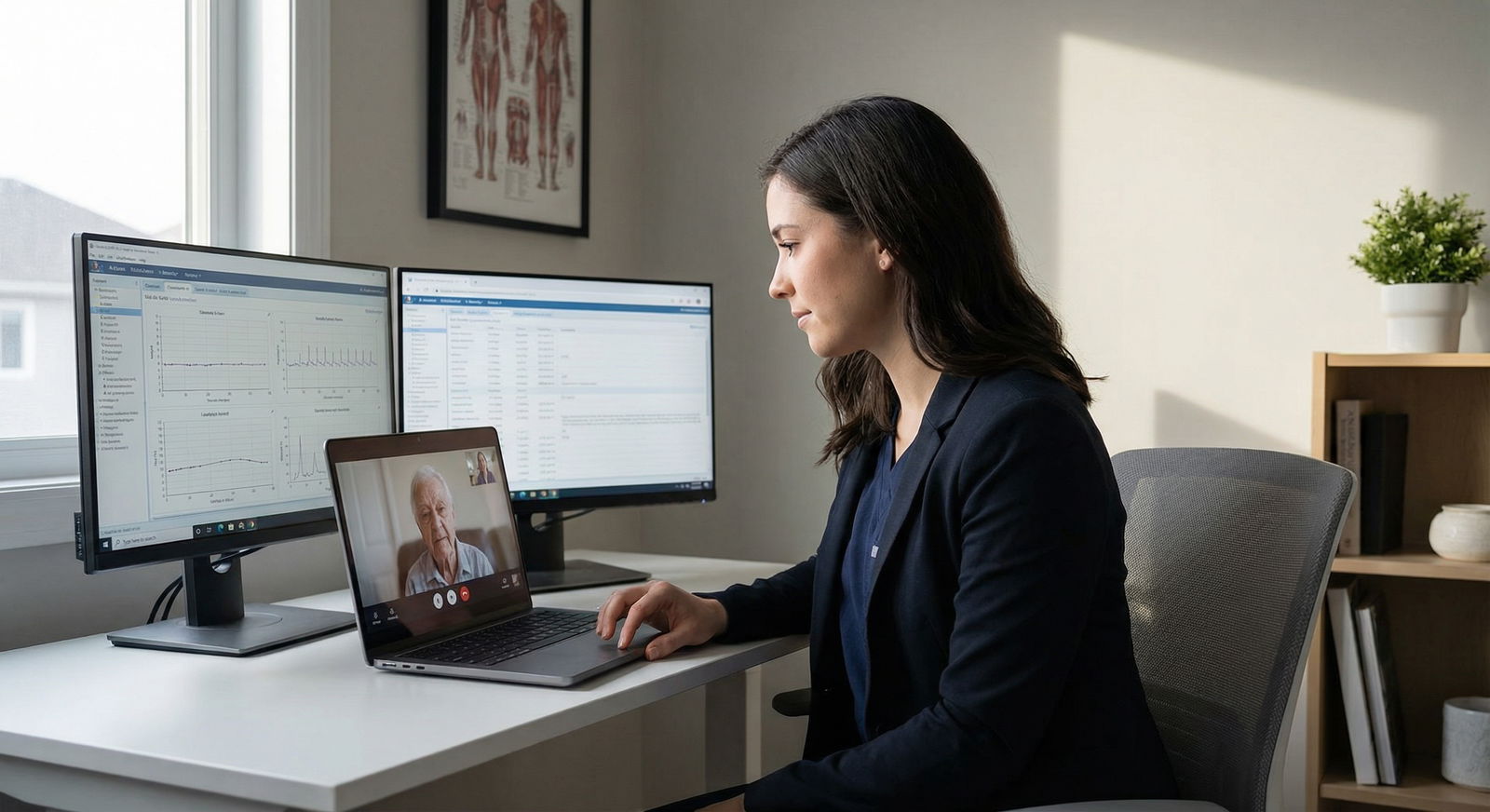
The medium was never the quality variable. The workflow is. A rigorous asynchronous protocol, structured intake, required photo standards, clear escalation criteria, delivers better medicine than a chaotic live video free-for-all, and it does it at three times the efficiency.
So where does that leave you? Synchronous care has real uses: new complex patients, anything requiring rapport in real time, exams that genuinely need motion. Keep it for those. But build your post-residency telemedicine career around the honest math, asynchronous as the income and autonomy engine, synchronous as the scalpel you pull out when the case actually needs it. The physicians who thrive in this space stopped confusing "live" with "legitimate" a long time ago.
Key Takeaways
- Synchronous telemedicine is a commodity service; asynchronous is a scalable asset. One sells your hours, the other sells your judgment.
- Your effective hourly income is likely higher in asynchronous models because you are never paid to wait, no no-shows, no dead slots, no frozen screens.
- True schedule control comes from asynchronous batching, not real-time availability. Flexible location with a rigid clock is still a shift.
- Asynchronous care attacks burnout at its roots, restoring control, killing the commute, and stripping out the administrative friction and camera performance that grind physicians down.