The way most clinicians run telemedicine call schedules is broken. Not unsafe. Just unsustainable.
You already know the feeling:
- Pager / app notifications going off at 11:47 pm.
- “Quick” messages that turn into 25-minute chart reviews.
- A schedule that looks fine on paper but somehow eats your entire week.
Let me be blunt: if you treat telemedicine call like a side chore you “fit in,” it will quietly consume your sleep, your patience, and your weekends. The only way this works long‑term is if you treat call management as a system, not a favor.
This playbook is that system.
1. Redefine What “Call” Means In Telemedicine
Most burnout starts here: vague definitions. If "call" means 10 different things, it will bleed into every corner of your life.
You need hard definitions in writing. For yourself, and for your group.
A. Break “Call” Into Clear Buckets
Spell out what you are actually responsible for:
- Synchronous urgent care
- Live video / phone consults
- Short response deadlines (e.g., within 15–30 minutes)
- Asynchronous messaging
- Secure messages / portal chats
- Non-emergent questions, med refills, lab follow-ups
- Escalations / safety checks
- Positive critical labs / imaging
- Suicidal ideation / high‑risk flags
- Administrative tasks during call
- Closing charts, follow-up orders, documentation
Now decide, in writing:
- Which of these are “on-call” duties.
- Which are “business hours only.”
- Which have explicit response-time expectations.
If your employer or telemedicine platform cannot answer this clearly, that is your first negotiation target.
B. Put Numbers On Expectations
“Reasonable response time” is lawyer language. Useless for survival.
Convert it into numbers like this:
- Synchronous urgent care: respond within 15 minutes
- High‑risk escalation: respond within 10 minutes
- Routine messages: respond within 4–8 hours
- Non-urgent admin: next business day
Then:
- Put these into your contract addendum or group policy.
- Make sure patient-facing materials match those expectations.
Burnout skyrockets when patients expect “instant” response but your contract pays you as if you have all night.
2. Build a Call Schedule That Respects Biology, Not Fantasy
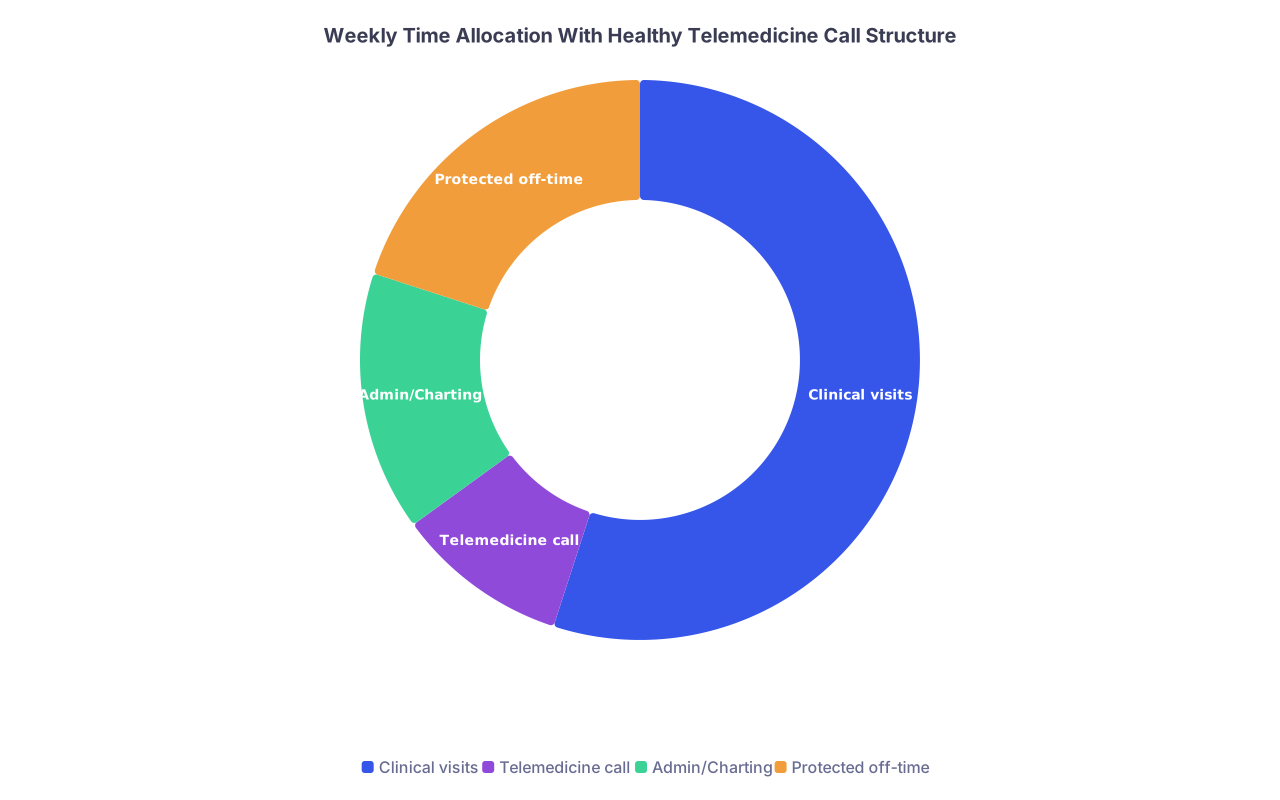
| Category | Value |
|---|---|
| Clinical visits | 55 |
| Telemedicine call | 10 |
| Admin/Charting | 15 |
| Protected off-time | 20 |
You are not a 24/7 server. You are a biologic system with limits. The schedule has to reflect that.
A. Hard Limits You Should Not Cross Long‑Term
From watching colleagues crash and burn, I’ll say this plainly: exceed these regularly and something else will crack.
- Night call:
- Telemedicine only: max 7 nights per month if nights are light and predictable.
- Mixed in-person + telemedicine: more like 4–5.
- Consecutive nights:
- Try not to go beyond 3 in a row without at least 2 recovery nights.
- Weekend density:
- Full 24‑hour availability: aim for 1 weekend in 4.
- If coverage is lighter (e.g., 8–12 hours), maybe 2 in 4, but only with protected weekdays off.
If your group expects “whenever the app pings” coverage, with no cap, that is not a schedule. It is exploitation.
B. Design a Sustainable Telemedicine Call Pattern
Instead of “Sure, I can cover that too,” design a pattern first, then defend it.
Examples that actually work:
Block Night Model (Hospital-employed + Telemed)
- 1 week of “telemed nights” every 6 weeks
- Coverage: 6 pm–7 am
- Paid at explicit night differential
- You do not work clinic mornings after a telemed night block
Distributed Evening Model (Outpatient-heavy)
- 2 weekday evenings per week: 5 pm–10 pm telemed call
- 1 weekend day per month: 8 am–8 pm
- Absolutely no expectation outside those blocks
True Part‑Time Telemedicine Add‑On
- 2–3 four-hour blocks per week (e.g., T/Th 6–10 pm, Sat 9 am–1 pm)
- Call only during assigned blocks
- No “on-demand” responsibility outside those windows
If you do not choose a structure, someone else will choose one that serves them, not you.
3. Negotiate Boundaries Up Front (Or Clean Them Up Now)
If you are post‑residency, this is where you pull your leverage. Health systems are desperate for telemedicine coverage but often lazy about structuring it. That is your opening.
A. Put Key Terms in Writing
Non‑negotiable items that must be spelled out:
- Definition of “on-call” vs “available as needed”
- Exact daily or weekly hours of call
- Backup coverage when you cannot respond (sleep, procedure, OR)
- Maximum:
- Encounters per hour
- Average response time expectation
- Number of nights/weekends per month
- Compensation:
- Flat call stipend vs per-encounter
- Overtime or surge pay
- Documentation time included or not
If you cannot point to an actual line in a PDF, it is not a policy. It is just “how we’ve been doing it.”
B. Sample Phrases That Actually Work
You do not need to be aggressive. Just precise.
- “For telemedicine call to be sustainable, I need clear caps. What is the maximum number of encounters expected per hour, and can we formalize that in the agreement?”
- “For safety and sleep, I cannot commit to more than 3 consecutive overnight telemedicine shifts. Can we structure call in 2–3 night blocks?”
- “Where is the backup coverage policy documented if I lose connectivity or am tied up with a high-risk escalation?”
If they dodge these, that is diagnostic. You are seeing the future.
4. Standardize Your Clinical Workflow So Call Does Not Bleed All Day
The quickest way to burn out is to make every case a bespoke snowflake. You cannot do that after-hours indefinitely.
You need playbooks inside the playbook.
A. Create Protocols For Your Top 10 Telemedicine Scenarios
Sit down with your last 1–2 months of call logs. Identify your frequent flyers:
- URI / COVID rule‑out
- Minor skin infections / rashes
- Simple medication refills
- Mild anxiety or insomnia
- Stable chronic disease questions (“My BP is 142/88, should I worry?”)
- Simple medication side effects
For each, build a one-page protocol:
- Triage questions
- Red‑flag questions
- Default plan if no red flags
- Standard refill / prescription rules
- Required documentation elements
- Standard phrases for patient education
You can template these in your EMR, your telemedicine platform, or even a private OneNote / Notion you keep on a second monitor.
This one change can cut your call cognitive load in half.
B. Use Hard Triage Rules To Shorten Calls
Some examples that protect your time without compromising safety:
- Clear vitals criteria that trigger in‑person ER / urgent care referral
- No new controlled substances after hours via telemed, only short bridge refills if you know the patient and can confirm PDMP
- No chronic issue med changes after 10 pm unless:
- Life-threatening situation, or
- You are on dedicated complex care duty
You can feel “mean” doing this if your identity is built on being endlessly available. But the alternative is resentment and mistakes at 2 am. Patients do not benefit from your exhaustion.
5. Make Technology Work For You, Not Against You
Telemedicine tools can either buy you time or shred your focus. Usually both.
You need to intentionally design how you use them.
A. Cut Notification Noise Aggressively
Separate three things:
- Urgent patient notifications
- Routine low‑stakes messages
- Pure noise (marketing, system broadcast spam)
Action steps:
- On your phone and desktop:
- Turn off all non‑urgent notifications from the telemed app.
- Create custom tones: different sound for true urgent pages vs everything else.
- Use “do not disturb” + exception list:
- Only the telemed app’s urgent call channel bypasses DND during your call hours.
- Everything else waits.
If your platform does not allow this separation, push their support:
- Ask how to distinguish urgent alerts from non-urgent.
- Ask for “scheduled quiet hours” as a feature.
If they cannot or will not implement it, that tells you how much they care about clinician sustainability.
B. Use Status Indicators Ruthlessly
Most platforms have a status: Available / Busy / Offline.
You must treat those as clinical orders, not suggestions.
- On‑call and ready: Available
- Deep in a high-risk case or procedure: Busy
- Not on call: Offline. Completely.
Same for communication apps (Teams, Slack, WhatsApp groups):
- Add a status: “Off call – will respond next business day.”
- During actual call: “On telemed call 6 pm–10 pm, response may be delayed.”
You are teaching your colleagues and staff how to treat your time. If you are “always reachable,” they will always reach you.
6. Protect Sleep Like It Is Part of Your License
Because it is. Sleep‑deprived doctors make bad decisions.
A. Build a Pre‑Call and Post‑Call Routine
Think like anesthesia here: you have pre‑op, intra‑op, post‑op. Do the same for call.
Pre‑Call (60 minutes before start)
- Light meal, nothing heavy or greasy
- 10–15 minutes of movement: walk, light stretching
- Caffeine cut‑off time (no coffee after ~2–3 pm if you have night call)
- Tech check:
- Laptop plugged in
- Backup hotspot or secondary internet ready
- Headset and webcam tested
- Clear desk. Only:
- Laptop / monitor
- Notebook & pen
- Water
Post‑Call (15–20 minutes after end)
- Quick brain dump: list incomplete tasks, follow-ups, unresolved issues
- Explicitly hand off anything still urgent (message covering provider / team)
- Shut down:
- Log out of telemedicine app
- Close email
- Phone to “Do Not Disturb” except family
Do not “just check one more message” after you officially come off call. That habit will keep your brain stuck in gear.
B. Design Sleep Around Call Blocks
For evening call (e.g., 6–10 pm):
- Go to bed 30–60 minutes later than usual on those nights, but:
- Keep wake time as close as possible to normal
- Use a short 20–25 minute nap the following afternoon if needed
For overnight call:
- Protect a 90‑minute nap before if you can (5–6:30 pm range)
- Post‑call:
- Sleep a full cycle (90–180 minutes), not a 45-minute tease
- Light exposure after waking so your circadian rhythm does not completely implode
I have seen attendings who swear they “do fine” on 3–4 hours. They do not. Their charts show it.
7. Share the Load: Coverage, Cross-Training, and Saying No
Telemedicine only works if call is shared and backed up. Lone‑wolf models burn people out.
A. Build Redundancy Into the Schedule

| Step | Description |
|---|---|
| Step 1 | Primary On Call |
| Step 2 | Manages case |
| Step 3 | Backup On Call |
| Step 4 | Backup manages case |
| Step 5 | Escalate to Supervisor |
| Step 6 | Responds in 10 minutes |
| Step 7 | Available? |
Your call system needs:
- Primary on‑call clinician
- Backup clinician reachable within 10–15 minutes
- Escalation path (medical director / admin) for:
- High volume surges
- Technical outages
- Personal emergencies
Document this in a simple one‑page coverage policy that everyone sees on day one.
B. Set a Hard “No More” Line
At some point, you will be asked to cover “just a few extra” shifts because someone left or the program expanded.
You need a pre‑decided maximum, and you stick to it.
Example script:
- “At my current in‑person volume, more than 4 telemedicine call shifts per month is not sustainable or safe. I am at my limit. I can help recruit or train others, but I cannot take additional nights.”
If you have never said no, your “limit” is theoretical. Choose a number. Then behave as if it is real.
8. Track Your Call Data Like an Operations Manager, Not a Victim
You cannot improve what you do not measure. And you definitely cannot negotiate it.
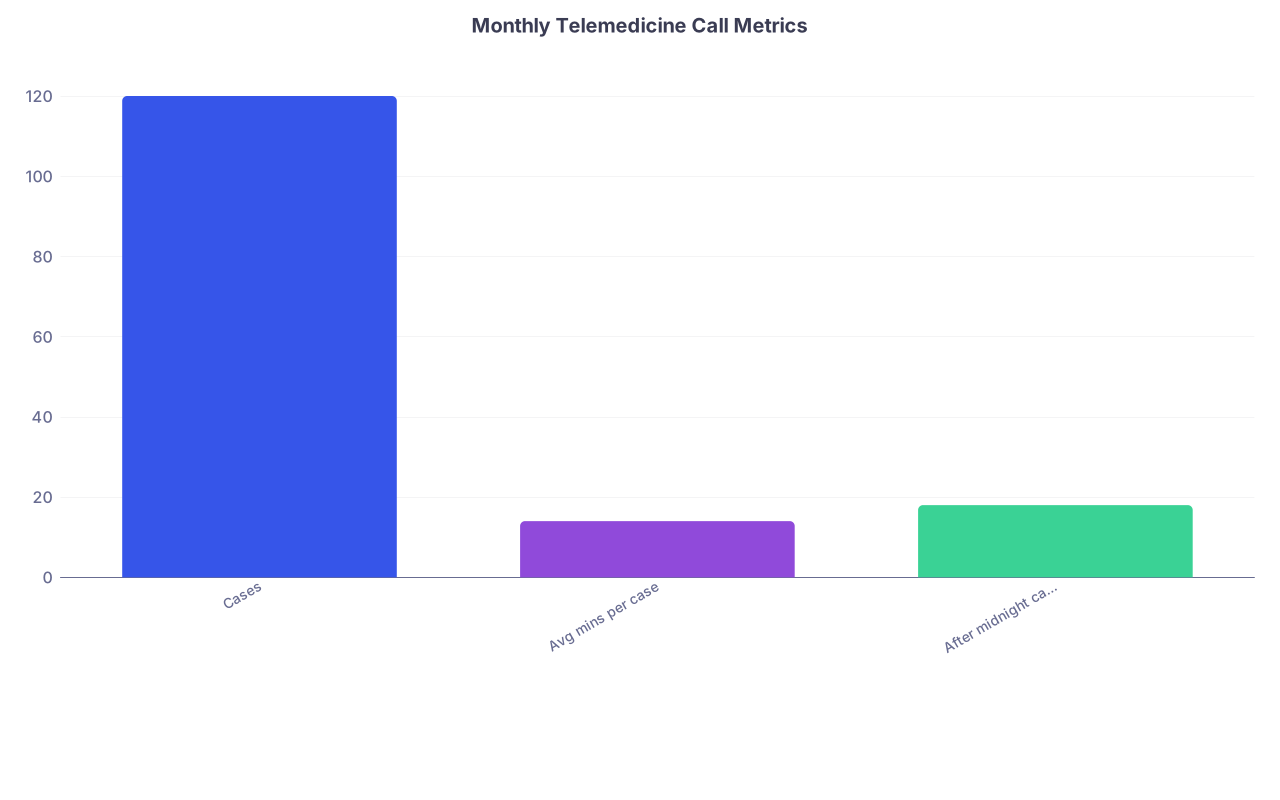
| Category | Value |
|---|---|
| Cases | 120 |
| Avg mins per case | 14 |
| After midnight cases | 18 |
Start collecting your own data:
- Number of encounters per shift
- Average time per encounter
- Number of:
- After‑midnight contacts
- High‑risk / escalation cases
- Technical failures / dropped connections
- Your subjective energy rating after shift (1–5)
Do this for 2–3 months. Patterns will jump out:
- Maybe Wednesday nights are crushing, Sundays are dead.
- Maybe you are spending 40% of time on administrative nonsense.
Then you use that in conversations:
- “We are averaging 18 contacts after midnight per overnight shift. At this volume, a second clinician needs to be added after 11 pm.”
- “Fifteen percent of my shift is handling tech failures. We need better patient onboarding or support.”
Admins perk up when you talk in numbers, not feelings.
9. Guardrails Against Emotional Exhaustion
Telemedicine call has a particular psychological trap: you are alone, at home, often in the dark, hearing distress through a screen. That adds up.
A. Create Closure Rituals
This sounds soft. It is not. It is psychological hygiene.
After an especially rough call (suicidal patient, angry family, diagnostic uncertainty):
- Write a 2–3 line note to yourself:
- What you did
- Why it was reasonable given available info
- What follow‑up is in place
- Say out loud (yes, seriously):
“I did what was possible with what I had. The next step is in motion.”
Then move to a non‑medical activity for 10 minutes:
- Wash dishes
- Take a short walk
- Shower
- Listen to music that is not a podcast about medicine
You are teaching your brain that the event is over.
B. Boundaries With Patients Between Calls
Telemedicine patients can start to view you like a 24/7 chat bot if the system allows it.
You must re‑train expectations:
- Use standard phrases:
- “I am on telemedicine call this evening until 10 pm. After that, the on-call team will assist you if needed.”
- “For urgent issues overnight, please use the on‑call line listed in your portal. I may not be the clinician who responds.”
- Never give personal numbers or direct text options for ongoing after‑hours care. Ever.
Patients adapt faster than you think when the boundaries are consistent.
10. Design Your Life Around, Not Against, Your Call Pattern
Telemedicine call does not have to wreck your life. But you cannot pretend it does not exist when planning your week.
A. Align Your Non‑Clinical Life With Your Schedule
Basic but overlooked moves:
- If you have fixed evening call (e.g., Mon/Thu 6–10 pm):
- Do not schedule kid activities you must attend during those slots.
- Declare those nights “no social events” weeks in advance.
- Before a heavy call weekend:
- Front‑load errands midweek.
- Protect a recovery block on Monday (lighter clinic, fewer meetings).
Think of call shifts like flights. You do not schedule a dinner that starts 30 minutes after landing. Same logic here.
B. Use Your Off‑Call Time Aggressively For Recovery
Most clinicians do the opposite: they let off‑days get chewed up by charting, meetings, and “quick” calls.
On your non-call days:
- Block 2–3 hours as sacred non-medical time
- Hobbies, family, exercise, nothing to do with screens and patients.
- Push non-urgent admin to specific times:
- “Email + chart cleanup” 4–5 pm, twice a week. Not all day, every day.
Rest is a skill. You get better at it when you schedule it intentionally.
Practical Snapshot: What a Sustainable Week Can Look Like
| Day | Clinic / Work | Telemedicine Call | Notes |
|---|---|---|---|
| Monday | 8–4 in-person clinic | Off call | Early bedtime |
| Tuesday | 8–2 clinic | 6–10 pm telemed call | Protected 2–4 pm admin block |
| Wednesday | 9–3 clinic | Off call | Light day after call |
| Thursday | 8–2 clinic | 6–10 pm telemed call | No meetings after 2 pm |
| Friday | 8–12 admin/meetings | Off call | Afternoon personal time |
| Saturday | Off clinic | 9 am–1 pm telemed call | Free evening |
| Sunday | Off clinic | Off call | Full recovery |
This is not perfect. It is realistic. And it is survivable over years, not months.
Visual: Telemedicine Career Phase and Call Intensity
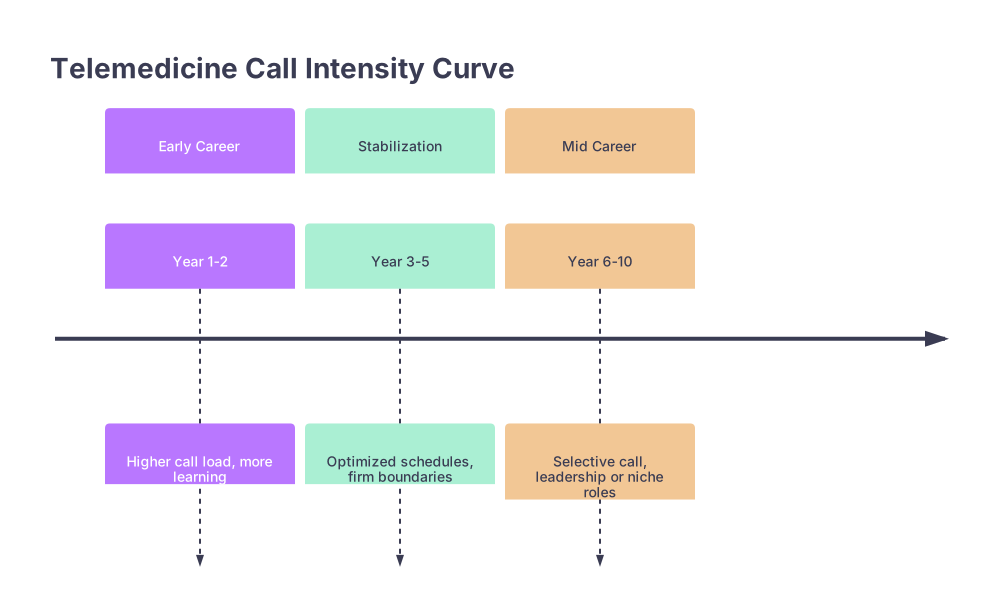
| Period | Event |
|---|---|
| Early Career - Year 1-2 | Higher call load, more learning |
| Stabilization - Year 3-5 | Optimized schedules, firm boundaries |
| Mid Career - Year 6-10 | Selective call, leadership or niche roles |
You are in the post‑residency job market phase. That is exactly when you set the slope of this curve. If you normalize chaos now, you will be fighting it for the next decade.
Quick Self‑Audit: Are You Sliding Toward Burnout?
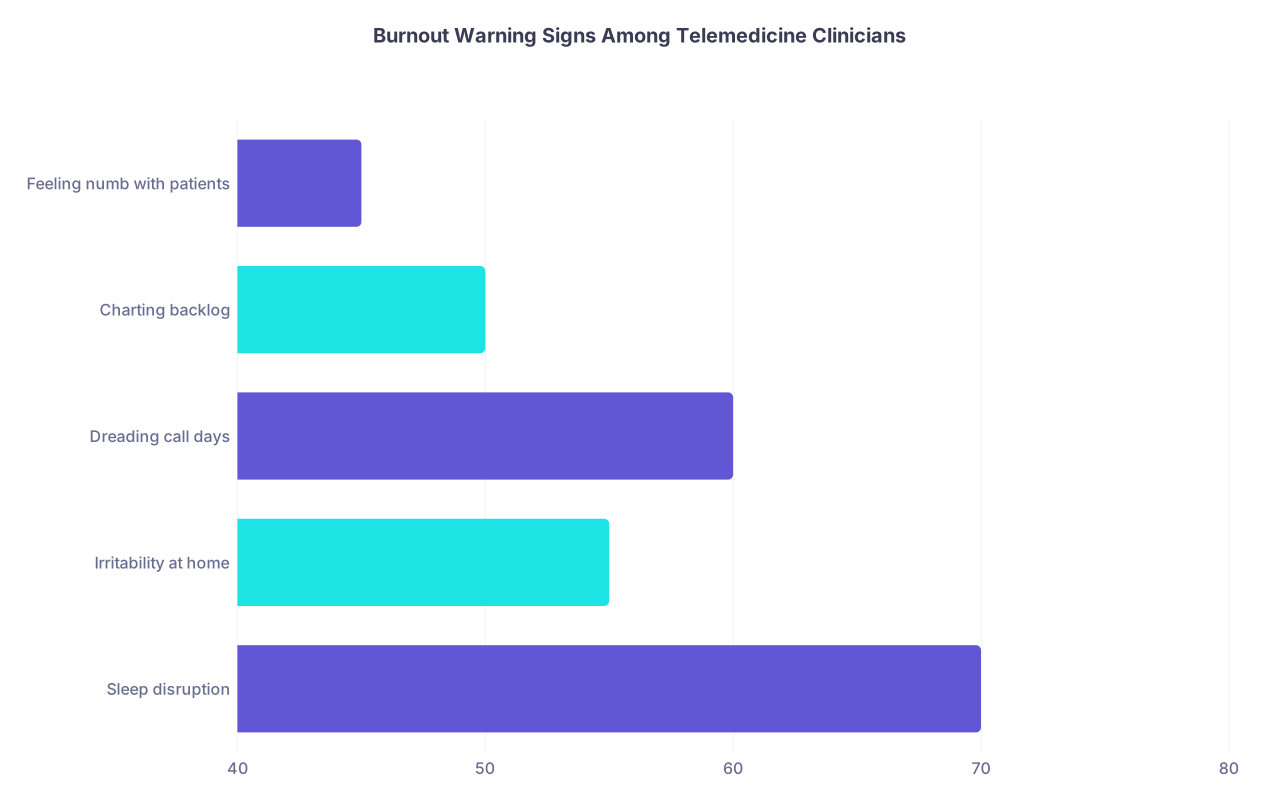
| Category | Value |
|---|---|
| Sleep disruption | 70 |
| Irritability at home | 55 |
| Dreading call days | 60 |
| Charting backlog | 50 |
| Feeling numb with patients | 45 |
Run through these questions honestly:
- Do you feel a spike of dread when the telemedicine app icon lights up?
- Are you routinely doing documentation after midnight for call‑related visits?
- Are you checking messages on your “off” days because you are afraid of backlog?
- Have you snapped at staff or family about “just one more message” recently?
If you are nodding at 2 or more, you do not need more resilience. You need a different system.
FAQs
1. How many telemedicine call shifts per month are reasonable for a full-time outpatient physician?
If your in‑person schedule is already near full (4–4.5 days of clinic per week), a truly sustainable range is usually:
- 2–4 evening telemedicine shifts per month or
- 1 overnight weekend block per month
Regularly exceeding this without protected time off somewhere else is a setup for chronic fatigue. If your employer expects more, you should negotiate for either reduced clinic hours, additional compensation, or shared call with more clinicians.
2. What if my group has already normalized 24/7 availability and I am “the nice one” who always picks up?
You fix this in stages. First, define your personal hard limits (nights per month, hours per week). Second, start by carving out one protected off‑call evening and one weekend day where you are truly offline and stick to it. Third, communicate clearly: “I will be unavailable on X; the on‑call team will handle any needs.” The culture will resist for 2–4 weeks, then adjust. If it does not, that is a sign to start exploring other positions that take clinician sustainability seriously.
3. Is telemedicine call actually compatible with having a family or serious hobbies?
Yes, but only if you treat it like a predictable block of work, not a constant background obligation. That means:
- Fixed call windows, not “ping anytime”
- Real backup coverage
- Clear communication with your family about which times you are truly unavailable and which you fully protect
I have seen physicians with young kids use telemedicine call very effectively: they do bedtime, then start a 8–11 pm shift on specific nights, and they never mix those roles. The trouble starts when boundaries blur and “just one more quick case” steals every evening. Set the rules early or your life will be organized around other people’s needs, not yours.
Key takeaways:
- Treat telemedicine call as a defined system with hard boundaries, not a vague obligation you “fit in.”
- Design schedules, technology settings, and clinical workflows that protect your sleep, your focus, and your off‑time.
- Use data, clear negotiation, and real limits to share the load and keep this work sustainable for the long haul.