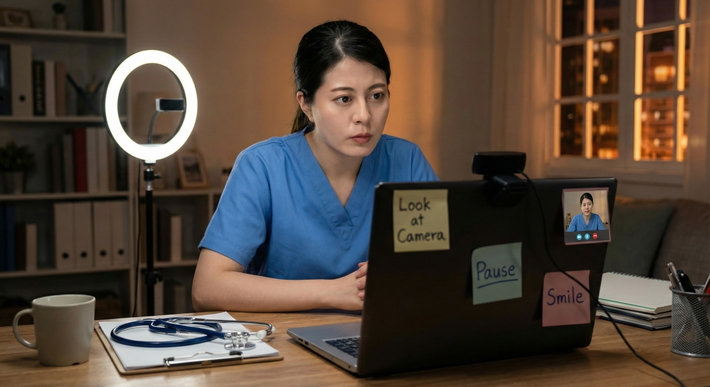
It's 6 PM. Your last formal interview just ended. You've answered "Why this program?" four times today, smiled through twelve faculty panels, and your voice barely survived the morning-wide introductions. Now, on your screen, the virtual social hour link glows, an hour-long, camera-on session with residents. The myth whispers, almost sweetly: This is the optional part. Just a casual hangout. They said I could skip it if I'm tired. I've earned my rest.
You haven't earned rest. Not yet.
The reality: This hour is the most watched, most discussed, most rank-influencing segment of your entire interview day. As you debate whether to join, program directors, chief residents, and faculty are already building the real-time portrait of your "fit." They're comparing what you said in the 20-minute structured slot, polished, rehearsed, guarded, to what you reveal when you think nobody's scoring. And they're scoring anyway.
From my seat as a former resident interviewer and now as someone who's watched hundreds of these social hours play out, I'll tell you straight: at this exact moment, the hidden rank list adjustments start. The next 60 minutes carry disproportionate weight. The committee isn't looking for perfection. They're looking for the crack in the facade, the genuine laugh, the person they'd actually want on a night float at 3 AM.
So let's get tactical. The myth that the virtual social hour is "optional" is dead. Here's the timeline of hidden influences you must master if you want that rank to move in your favor.
The Chronology of Influence: Where the Social Hour Fits on Your Timeline
Every virtual interview day follows a predictable rhythm: pre-interview research (weeks before), the morning welcome and orientation, the formal interview blocks with faculty and program leadership, and then, the unstructured virtual social hour, usually in the late afternoon or early evening. After that comes the post-interview signaling phase: thank-you notes, letters of intent, second looks.
The social hour is the only part of this chain with zero script. Your formal answers live inside a box. The social hour lives outside it. That's why it's so powerful. It's the sole data point where genuine interpersonal fit gets tested outside a Q&A framework. Faculty routinely debrief immediately after the social hour ends. I've sat in those debriefs. We don't compare USMLE scores again. We talk about who seemed like a future colleague and who seemed like they were just surviving the hour.
For a deeper look at specific pitfalls, read about common virtual social hour missteps that hurt your rank list.
This unstructured time is so influential that I advise a prep timeline that starts weeks before your first interview, not the night before.
Week-by-Week Guidance (4-6 weeks out):
- Prepare 3-4 non-medical stories about yourself. Travel, a weird hobby, a side project, a book you loved. These are your social currency. Practice them so they flow naturally, not like a rehearsed monologue.
- Research the program's city or town, not just the hospital. Know the local food scene, outdoor options, cost-of-living quirks. Bring genuine curiosity. A resident once told me she ranked an applicant higher because he asked, "Is the farmer's market actually as good as the pictures make it look?" Not because it was profound, but because it was real.
- The week of the interview, rehearse your virtual presence: lighting angled to avoid shadows, camera at eye level, a background that's tidy but not sterile. This setting is lower formality, but camera quality and framing still influence your likability score.
To understand what interviewers actually measure, review the unspoken virtual interview rubrics PDs use behind the scenes.
Here's a visual map of where that hour fits and what it decides:
That branching signal, strong fit vs. silent concern, isn't theoretical. I've watched applicants drop several ranks simply because they logged off early without a real goodbye. The committee didn't even have a negative note; they just had a blank where personality should have been.
The Myth of "Don't Be a Try-Hard": What Faculty Actually Record
There's a persistent myth among medical students that the safest move in the social hour is to observe quietly, smile, and nod. The logic: I don't want to seem desperate or try-hard. If I say little, I can't mess up.
That myth is dangerous. And it's wrong.
Silence is scored. When the program director or chair reviews feedback forms, the word "quiet" isn't neutral, it's a miss. Faculty are specifically assessing communication fluidity, enthusiasm for the location, and collegiality with future peers. A resident recently told me, "If an applicant doesn't say much, I assume they're either not interested or socially awkward. Neither helps their rank."
Here's the data that backs that up, drawn from aggregated program director survey responses about what's actually being measured during the social hour:
Notice: communication skills top the list, at 85%. Not medical knowledge. Not research output. The ability to hold a normal, two-way conversation. Every minute of silence erodes that signal.
Day-By-Day Micro-Timeline for the Social Hour Itself:
At this point in your interview day, you should be following a minute-by-minute internal plan. It's not about performing; it's about participating with intention.
- Minute 0-10: Identify the dominant conversation thread. What are residents chatting about? Weekend plans? A recent residency retreat? Complaints about parking? Don't jump in immediately. Listen, smile, and find a natural entry point.
- Minute 10-30: Contribute a personal anecdote that connects. If they're talking about local breweries, mention the one you visited when you were in town for a rotation, or ask if they can recommend a spot for your post-interview celebration. Better yet, ask a specific follow-up about resident social life: "Do you all actually get together outside the hospital, or is that mostly aspirational?" That question shows social awareness and curiosity.
- Minute 30-60: Ensure you've spoken to at least two different groups or residents. Don't monopolize one conversation. If breakout rooms exist, move between them. When you leave, and you should stay the full time, thank the residents genuinely and reference one moment that stuck with you. "Thanks for that tip about the call schedule swap system; that's exactly the kind of thing I wanted to know."
The clock isn't just ticking. It's evaluating.
The Hidden Rank Influences: Social Hour Echoes in Post-Interview Communication
The social hour doesn't end when you press "Leave Meeting." Your specific participation, or lack of it, creates narrative threads that follow you into the post-interview stage. When a program builds a "fit narrative" for each applicant in the weeks between interview day and rank list submission, the social hour is the strongest piece of evidence for or against that narrative.
Month-By-Month Timeline: November to January
- The days immediately after the interview: Your name is fresh. The residents you spoke with might casually mention you to a coordinator. If you were memorable for the right reasons, that casual mention becomes an informal advocate.
- Week 1 post-interview: Send your thank-you notes. But don't send generic "I enjoyed learning about your program" messages. Reference a specific resident by name and a moment from the social hour. For example: "I really appreciated hearing from Dr. Chen about the program's response to resident wellness feedback during the social hour, it told me more than any formal presentation could." That note will get forwarded.
- Month 1 post-interview: If you're drafting a Letter of Intent, weave in the connection you built during that hour to justify why your rank is shifting. "After speaking with residents during the social hour and learning how naturally they support each other on ICU nights, I've moved your program to my top position." That line is powerful because it's anchored in a specific, verifiable experience.
- January, pre-rank deadline: Programs often re-open their notes on top applicants. Your social hour impression, documented by a chief resident weeks ago, becomes a deciding tiebreaker.
Here's what your post-interview calendar should look like:

Let me be blunt: if I receive a letter of intent that mentions a generic "wonderful program culture" with no evidence of having actually talked to anyone, I discount it. If it references a specific conversation and a resident's name, I trust it. The social hour gave you that ammunition. Use it.
Your Strategy Guide: Turning the Myth into Your Match Advantage
By now, the myth is dead. The virtual social hour is not optional. It's not a casual hangout. It's the single richest opportunity you have to influence your rank through authentic human connection. Treat it like the evaluative, high-stakes segment it truly is.
At this point, you should stop thinking about "surviving" the social hour and start planning to own it. Here's your immediate action list:
- Prepare 3 stories about yourself that have nothing to do with medicine. A hobby, a travel disaster, a favorite podcast. Know them cold so they come out naturally.
- Identify 2-3 specific "fit" talking points about the city and the program that demonstrate you've done your homework and genuinely want to be there, not just anywhere.
- Rehearse your virtual presence for this lower-formality setting. Check your lighting, camera angle, and background. Test how you look when you lean back a bit, laugh, or gesture. You still need to look like the version of you they'd enjoy working with at 2 AM.
This hour is not a trap. It's a gift. Most applicants will approach it half-heartedly, exhausted, and disengaged. Those who show up present, curious, and a little bit human will stand out so starkly that their rank moves. I've seen it happen too many times to pretend it's coincidence.
The hidden rank influences are real. The timeline is now. Don't let the myth whisper you out of the room. Walk in, own your 60 minutes, and give the committee something, someone, to remember.