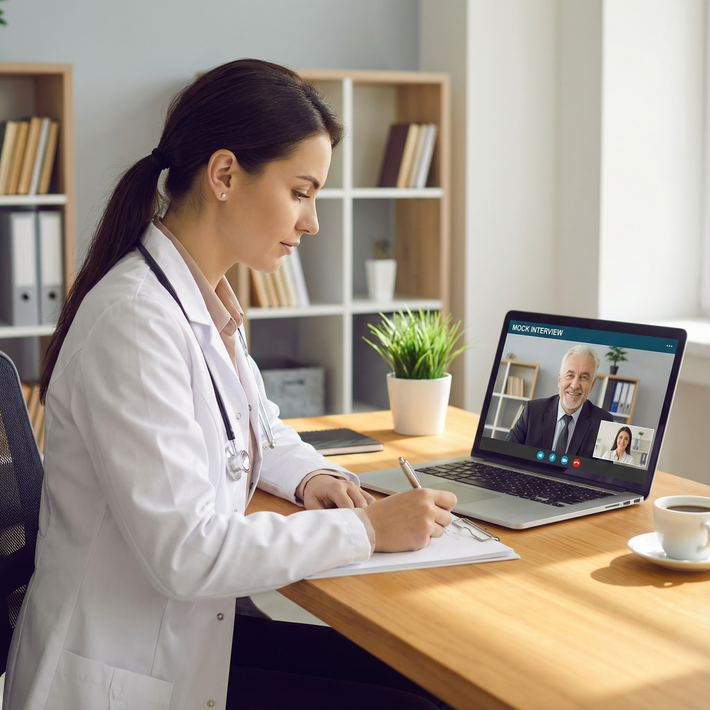
Hook: "Recorded beats live", or is that just recruiter folklore?
Let's kill the lazy take first.
Recorded virtual Q&As are not inherently worse than live Zoom panels. And live panels are not automatically better because they feel more "real." That's recruiter folklore. It sounds wise. It usually isn't.
I've watched applicants come away from a polished live panel saying, "That felt authentic," then realize later they learned almost nothing concrete about call structure, backup systems, elective flexibility, or how the program handles a struggling resident. I've also seen people dismiss prerecorded Q&As as sterile, then use them three times in a row to compare programs more accurately than any live event ever allowed. So no, "live is better" isn't data. It's a vibe.
Here's what we can actually measure: breadth of content, consistency of answers, accessibility, replayability, and whether candidates can get their real questions answered. Here's what people love to assume instead: engagement, authenticity, chemistry, and that slippery nonsense word, "fit."
In residency match terms, we're comparing two different tools. Recorded Q&As are asynchronous: watch when you want, pause when you want, revisit what matters. Live Zoom panels are synchronous: real-time access, spontaneous answers, and the possibility of follow-up.
The evidence doesn't hand us a neat winner. It gives us tradeoffs. Communication science, usability data, bias research, and a lot of practical common sense. That's better than folklore.
What the data can (and can't) tell us about Q&A formats
Here's the annoying truth: there isn't a giant, clean, specialty-wide evidence base comparing recorded residency Q&As with live Zoom panels and then linking each format to match outcomes. That study basically doesn't exist in the way people talk as if it does.
So when someone confidently tells you one format "works better," ask the obvious question: better by what metric?
The literature gives us proxies, not a final verdict. We have decent evidence from asynchronous learning research, digital communication studies, online attention data, and accessibility/usability work. Those fields matter because applicants are trying to learn, compare, and remember program information under stress. Same human brain. Same online environment.
What can we measure reasonably well?
- Clarity of content delivery
- Time-on-task
- Ability to replay and review
- Consistency of answers across viewers
- Access across time zones and schedules
- Usability for anxious viewers or non-native speakers
Those are real outcomes. Not glamorous, but real.
What can't we measure well without program-specific internal data?
- "Committee perception"
- "Likability"
- "Authenticity"
- "Fit"
- "Did the vibe help applicants rank us higher?"
Programs infer these constantly. Applicants do too. But inferred is not measured. And that distinction matters.
There's also a category error people make all the time: they confuse information richness with social warmth. A live panel can feel rich because it has faces, laughter, and spontaneous banter. That doesn't mean it transfers more usable information. A recorded answer can feel flat while actually being clearer, denser, and easier to compare.
So no, the data can't tell us that one format magically produces better match decisions everywhere. It can tell us something more useful: each format solves different problems, and most bad takes come from pretending they solve the same one.
Asynchronous recorded Q&As: the "boring" advantages supported by learning science
Recorded Q&As have an image problem. People hear "asynchronous" and think detached, robotic, low-energy. Fine. They're less theatrical. That's not a flaw.
The core myth is that recorded formats reduce learning because they're less human. The data from learning science points the other way more often than people admit. When learners can pause, rewind, and control pacing, comprehension usually improves, especially for dense material, unfamiliar systems, and anxious viewers trying not to miss details.
And residency information is dense. Not because programs make it elegant. Usually the opposite. Applicants are trying to track clinic structure, night float, jeopardy systems, research expectations, parental leave, mentorship access, board prep, fellowship advising, and whether "resident wellness" means an actual policy or a sad pizza photo from 2022.
Replay matters.
If a chief resident says, "Our ICU schedule changed this year and now interns have a different cross-cover model with..." you should be able to stop, rewind, and hear that again. In a live panel, that moment is gone unless you took perfect notes while also trying to look engaged. Good luck with that.
Recorded Q&As also improve content consistency. Every applicant hears the same answer to the same question. No moderator drift. No panelist rambling into a side story. No 9 p.m. version that's sharper than the exhausted 7 a.m. version. That standardization matters if you're comparing programs fairly.
Then there's cognitive load. Applicants are stressed. Some are watching after shifts. Some are processing in a second language. Some are neurodivergent. Some are just tired and overloaded. Prerecorded content, when structured well, lowers cognitive friction because the viewer controls pace. That's not a luxury. That's access.
Now the contrarian catch: recorded content goes stale fast.
This is the downside nobody should ignore. A beautifully produced Q&A from August can quietly become wrong by October. Program leadership changes. Rotation structure shifts. Visa processes tighten. New parental leave language gets approved. Faculty recruiting plans collapse. If the recording isn't dated or updated, applicants may be consuming polished misinformation.
That's the hidden risk. Recorded answers are clearer, yes. But clarity doesn't help if the content is outdated. A stale answer delivered smoothly is still a bad answer.
So recorded Q&As are often better for comprehension and comparison. Full stop. But only if you verify recency.
Live Zoom panels: where "real-time" actually helps, and where it doesn't
Live panels get overpraised for one reason: they feel alive.
People mistake that feeling for quality. Big mistake.
Authenticity is not the same as information value. A faculty member laughing spontaneously does not tell you whether backup coverage exists when a resident is ill. A resident sounding warm does not clarify whether elective time is protected or routinely cannibalized for service needs. Human presence is nice. It's not a substitute for specifics.
Still, live format has one advantage that recorded content can't fake: clarification in real time.
That matters when your questions are narrow, personal, or situational:
- visa timing
- disability accommodations
- couples match logistics
- research support in a niche subspecialty
- mentoring structures that don't fit the brochure version
- "What happens if clinic runs over and you're post-call?"
That's where live panels shine. You can ask, follow up, and test whether the answer survives contact with a real applicant concern.
But let's not romanticize "engagement." Online attention is fragile. People multitask. Internet connections lag. Audio cuts out at exactly the wrong moment. A panelist gives a long answer while the audience silently checks email. I've seen "highly interactive" sessions where 150 attendees joined and six people carried the event while everyone else sat muted, confused, or intimidated.
And equity problems show up fast.
Time zones punish some applicants. Queue systems favor the loud, the quick, or the already-confident. Silent participants often leave with less value, not because they lacked questions, but because the format rewarded assertiveness over reflection. That's not neutral. It shapes who gets access to clarifying information.
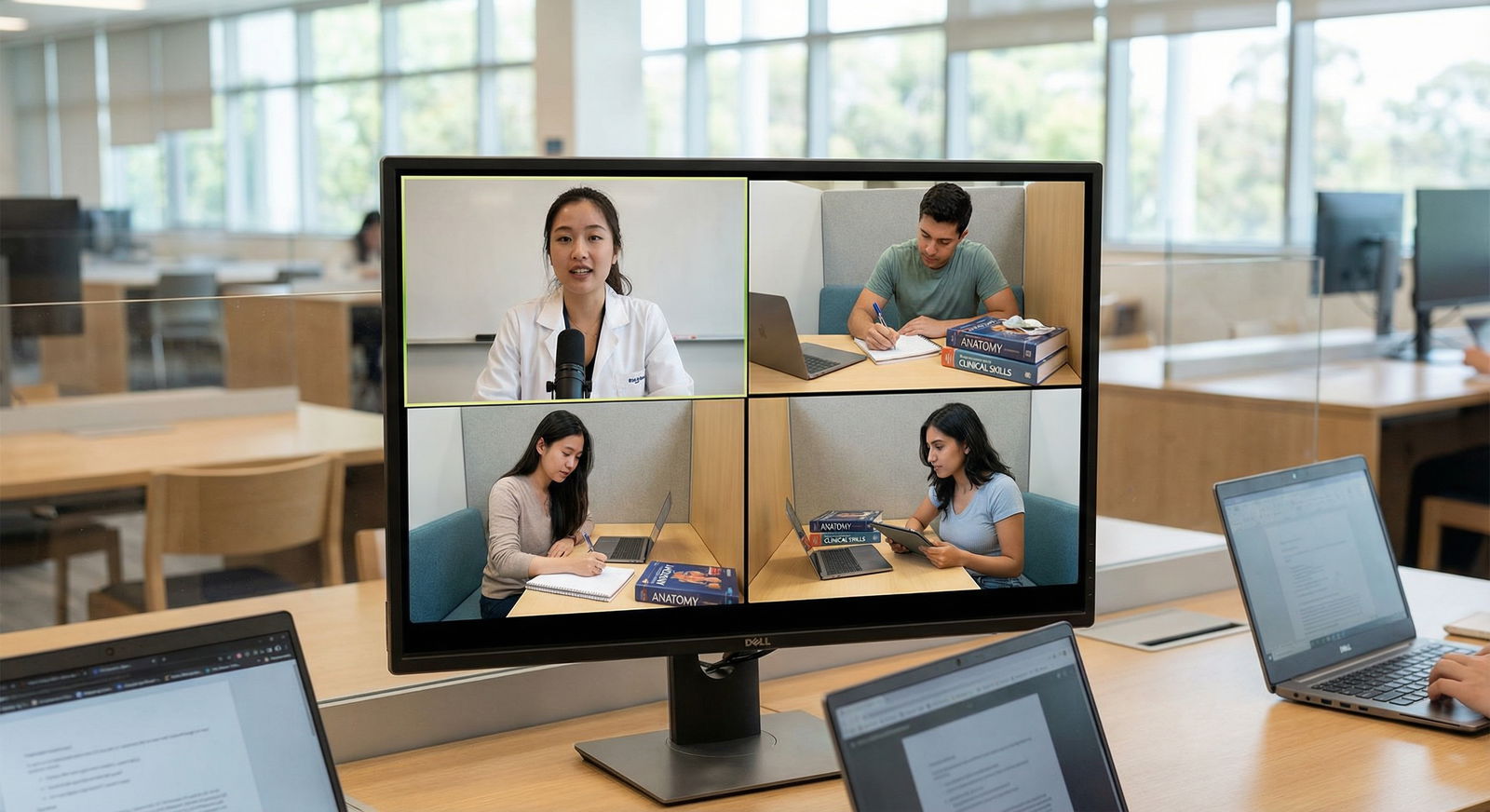
Then there's answer drift. Live speakers ramble. They contradict each other. One resident says call is manageable; another says, "Well, depends what you mean by manageable." A faculty member gives the official answer; the chief quietly gives the real one. That can be useful, yes. It can also create ambiguity instead of clarity.
So where does live actually help? With targeted uncertainty. With nuance. With follow-up. With testing edge cases.
Where doesn't it help? As a replacement for standardized baseline information. If you're using a live panel to learn basic program facts that should've been clearly documented already, the format isn't the issue. The program's communication is.
What candidates should optimize for: information, access, and decision quality
Your goal isn't to be charmed. Your goal is to reduce uncertainty and make a better rank decision.
That means getting useful signal on:
- training structure
- support systems
- culture under stress
- supervisory style
- schedule reality
- whether the program does what it says it does
My advice is simple: use a recorded-first strategy whenever possible.
Start with recordings to build your comparison grid. They're better for standardizing what you hear across programs. Watch, pause, take notes, and turn vague claims into categories. "Strong mentorship" means nothing unless you can define how it works.
Then use live sessions for what they're actually good at: clarifying the leftover questions.
Bring 3-5 high-yield questions. Not ten. Not a speech disguised as a question. Tight questions with low ambiguity:
- "How is backup coverage handled when someone is unexpectedly out?"
- "Has call structure changed in the last year?"
- "How are residents matched to mentors in practice, not just on paper?"
- "What happens when educational time conflicts with service needs?"
If the verbal queue is a mess, use chat. If your question gets half-answered, ask a short follow-up. Don't waste your live access asking something that was already covered in a recording or on the website.
The best setup, honestly, is hybrid. Programs should record the fundamentals and use live events for nuance. That's the grown-up model. Applicants should assume that if one channel is weak, they can often use the other to fill the gap.
And one more thing. Don't confuse emotional intensity with decision quality. A moving resident story is memorable. Fine. But it's less useful than a concrete answer about supervision, workload, and what happens when things go wrong.
Practical checklist: how to extract "real signal" from either format
Most applicants ask questions that are too soft. They get soft answers. Then they call it insight.
Here's how you get real signal.
Universal signal checks
Ask about things with measurable proxies:
- protected didactic time
- call frequency structure
- supervision expectations
- cross-cover design
- wellness resources people actually use
- escalation pathways when there's conflict or overload
Concrete beats charismatic. Every time.
If you're watching a recorded Q&A
Check the recording date. If you can't find it, that's already a minor red flag. Listen for whether speakers describe:
- current practice or just future plans
- approximate numbers or only adjectives
- process details or vague reassurance
"Residents have great support" is fluff. "Each intern is assigned a faculty advisor and upper-level mentor in July, with quarterly check-ins" is signal.
If you're in a live panel
Watch answer precision. Good answers usually do three things:
- name a process
- admit uncertainty when appropriate
- explain what happens when the ideal plan fails
That last part matters most. Every program can describe itself at its best. The honest ones can describe how they handle problems.
Guard against bias
Tone is not quality. Charisma is not culture. A polished moderator doesn't prove an organized residency. Sometimes the slickest sessions are the most curated and least informative. I've seen chaotic programs run beautiful panels and excellent programs run awkward ones. Don't reward stagecraft.
Build your own scorecard
Do this before the next event, not after. Create categories. Score each program the same way. Write down exact phrases. Compare later when the glow fades.
That's how you separate signal from performance.
Summary
Here's what the data actually supports: recorded Q&As usually win on consistency, replayability, pacing control, and comprehension. Live Zoom panels usually win on clarification, follow-up, and handling applicant-specific nuance. Neither format, by itself, tells you "fit." And anyone pretending otherwise is selling certainty they don't have.
So stop asking which format is better in the abstract. That's the wrong question.
Ask which format is better for the task in front of you.
Use recordings to build a clean baseline. Use live panels to test unresolved questions. Then verify what you heard against current program materials, because stale information and smooth delivery are a dangerous combination.
That's the myth worth busting: not recorded versus live, but the idea that one format can do everything. It can't. Use both like tools, not theater.