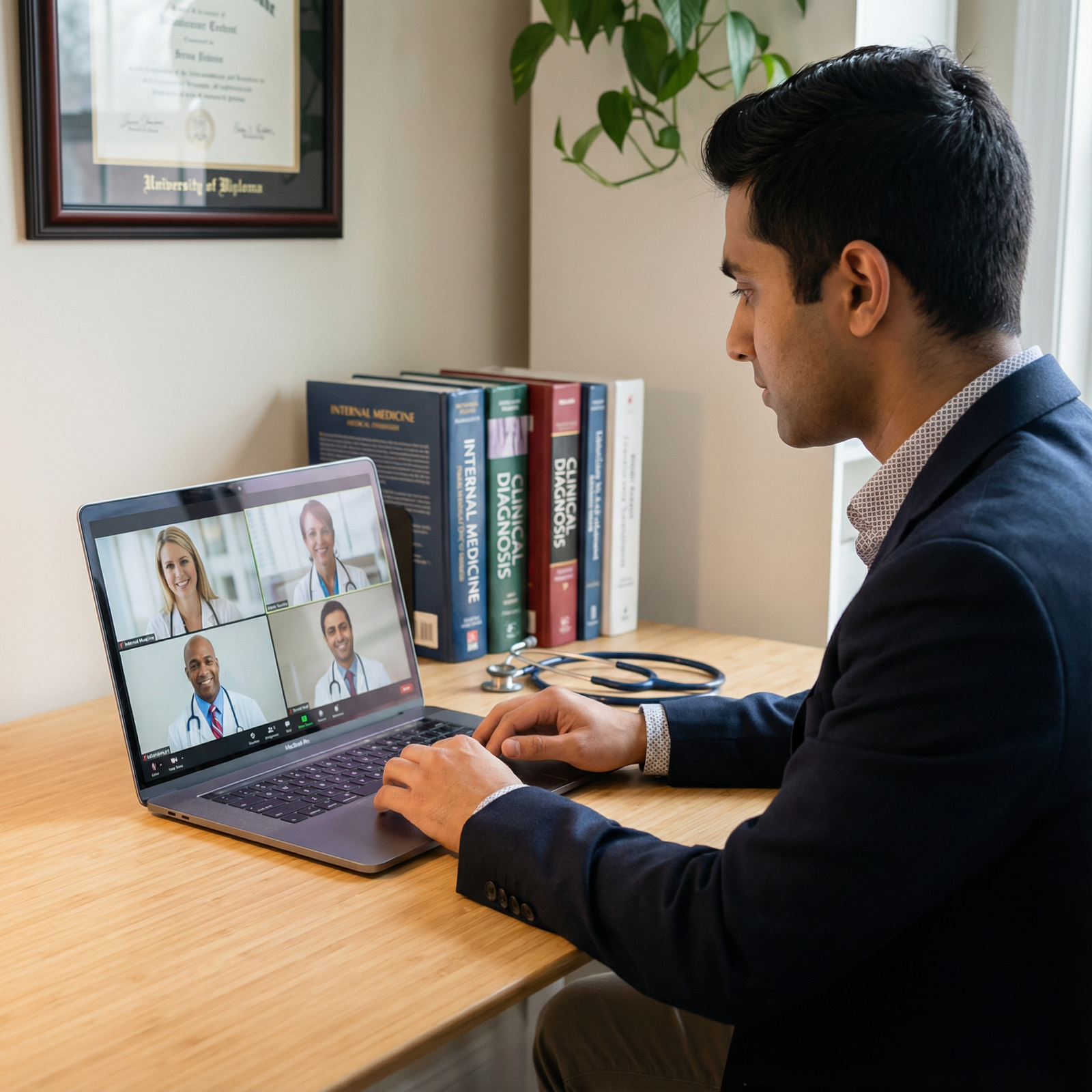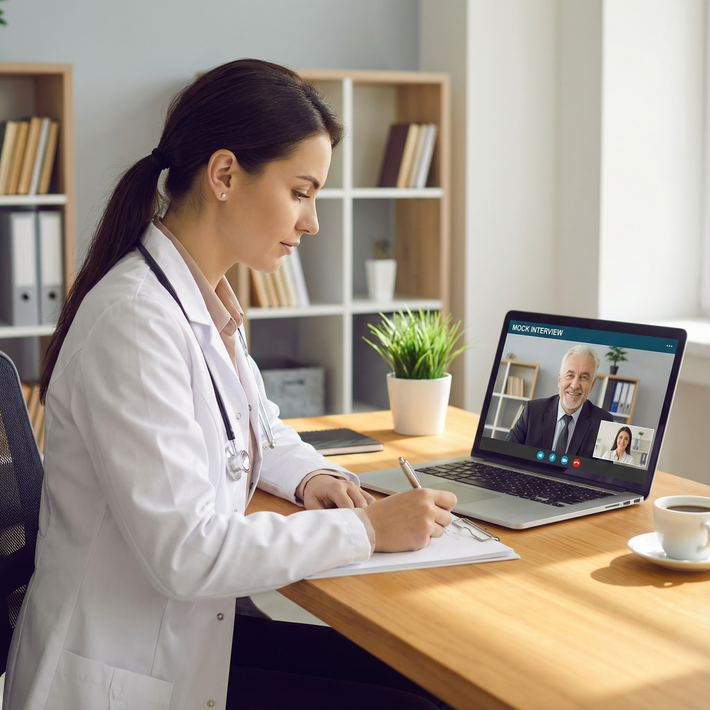
The most important part of your virtual residency interview is the conversation you’re not in.
You think it’s you and the interviewer in a tidy Zoom box, smiling, making small talk about your research or hobbies. That’s the decoy. The real interview—the one that decides if you rise or vanish—happens in the backchannels: faculty group texts, Slack channels, Zoom side-chats, DMs between residents, and post-interview debriefs where your name is thrown around in ten seconds and your fate gets quietly sealed.
I’ve sat in those meetings. I’ve watched a perfectly decent applicant get nuked in three messages on GroupMe because a resident typed, “Seemed arrogant, would not want on nights,” and no one in the formal evaluation ever bothered to question it.
You want to understand how virtual interviews actually work? You need to understand the shadow system they run on.
Let’s pull the curtain back.
The Invisible Room: How Virtual Interview Days Really Run
In-person, you could at least see the hallway chatter. Who lingered with the PD. Who cracked jokes with the chief. Virtually, all of that moved online—but it didn’t disappear. It just went underground.
Typical structure at most programs now:
- Zoom main room for welcome / overview
- Breakout rooms for interviews
- Separate Zoom or Teams channel for residents’ social or Q&A
- Slack / GroupMe / WhatsApp / iMessage threads for faculty and residents
- Google Sheets / ERAS export open in another window while people comment in real time
On your side, it’s a neat schedule: 8:00–12:30, meet the PD, three interviews, resident room, done.
On their side, here’s what’s actually happening in parallel:
- PD has a private chat going with the coordinator and APD: “Who’s next?” “What was his Step 2?” “She’s the one from X school, right?”
- Residents are in GroupMe firing off one-line takes as soon as you leave the room: “Super solid,” “bit awkward,” “felt rehearsed,” “LOVED her.”
- Faculty have a shared Google Sheet or REDCap form open where they rate you during the interview, often while you’re still talking.
- A few key people are silently collecting impressions: “Any red flags?” “Who stood out?” “Would you want them on your team?”
No one tells you that your fifteen-minute breakout with a single PGY-2 is not “informal.” That PGY-2 has a voice in that backchannel. And yes, what they say can absolutely override a blandly positive interview score from a faculty who met you once for 20 minutes.
This is the part students always underestimate: the volume of fast, informal, and decisive commentary being created about you while your camera is still on.
Where the Backchannels Live – And Who Actually Talks
Let me be specific, because hand-wavy “there’s gossip” doesn’t help you.
Here’s the typical ecosystem at medium-to-large programs:
| Backchannel Tool | Who Uses It | Main Purpose |
|---|---|---|
| GroupMe/WhatsApp | Residents | Quick vibes, red flags, “would I work with them?” |
| Slack/Teams | Faculty + Admins | Share impressions, flag standouts, logistics |
| Zoom Chat | Everyone on call | Real-time comments during or between interviews |
| Shared Sheets | Faculty/PDs | Numeric scoring, brief comments, rank inputs |
| Email Threads | PD/APDs/Core Faculty | Formal follow-up, concerns, high-priority notes |
Let me walk through how that plays out on a real day.
Residents’ group chats: your vibe court
Residents are brutally efficient. During virtual socials or “resident-only” rooms, they’re typing while talking. I’ve seen this exact pattern:
Applicant leaves room.
Ten seconds later, GroupMe blows up:
- “Super nice, I’d work with him.”
- “Was checking phone the whole time??”
- “Asked good q’s about teaching.”
- “Seemed entitled re: vacation.”
No one writes paragraphs. It’s shorthand. It sticks.
Programs like EM, surgery, ortho, and competitive IM fellowships lean very heavily on resident impressions. Not because they’re lazy, but because they know who actually has to survive nights and long call together. When the chief says, “I don’t want them on our ICU service,” that person slides down the rank list. Quietly.
Faculty backchannels: quick filters and red flags
Faculty don’t have time for essays either. They’re often bouncing between Zoom rooms, clinic schedules, and their inbox. So they use:
- Slack or Teams channels: “Anyone else get weird vibes?”
- Zoom chat to the PD: “Strong clinical anecdotes, limited research.”
- Shared sheet comments: “Excellent communication, would rank in top third.” / “Not very engaged, low energy.”
The important thing: these notes are usually written during or immediately AFTER meeting you, when impressions are raw and unfiltered. There is no later “careful reconsideration” for the mid-tier candidate. The only ones who get revisited are the obvious superstars and the “we need to talk” cases.
The coordinator’s quiet influence
Here’s a truth you won’t read on any program website: coordinators sway decisions more than you think.
Why? They see everything you do before and after the interview:
- How you wrote your emails
- Whether you followed instructions for Zoom links, time zones, or file uploads
- If you were late, confused, or rude on logistical questions
- How you reacted when something changed or went wrong
I’ve literally heard: “He was fine in interviews, but our coordinator said he was pretty demanding and sent three aggressive emails about schedules. I’m not excited to bring that energy into our program.”
So while residents and faculty are in one backchannel, coordinators are in a quieter one—usually directly with the PD or APD. PDs listen.
What Actually Gets Said About You (And How Fast It Sticks)
Let’s get even more concrete. These are real examples I’ve seen or heard in ranking meetings and post-interview debriefs. Names changed, obviously.
Example 1: The “Would you want them on nights?” question
IM program, midwest. After a full interview day, PD opens a quick Zoom with just residents and APDs.
PD: “Okay, quick lightning round. Anyone we absolutely loved? Anyone we don’t want to work with?”
Resident 1: “That guy from [School X], you know, the one with the podcast—super smart but kind of condescending.”
Resident 2: “Yeah, he kept cutting people off in the resident room. I wouldn’t want to be on nights with him.”
PD: “Okay.” Marks his name with a note: “Resident concerns about fit.” He slides from top quarter to middle of the list. No one argues.
That entire shift in ranking took maybe 40 seconds and was based almost entirely on resident backchannel comments.
Example 2: The silent sinker
Applicant had solid stats, quiet but polite in faculty interviews. Nothing weird. During the resident-only room, they kept their camera off “because of bandwidth” while 9 other people had theirs on.
GroupMe after: “Camera off, barely talked, might not be that interested.”
Another: “Hard to get a read, not sure about fit.”
Later in ranking: “Anyone remember this person?”
Silence.
“Okay, mid-low group.”
They didn’t do anything wrong. They were just forgettable in the spaces where people talk honestly.
Example 3: The resident darling
On the flip side. Mid-tier academic IM program. Applicant with average scores, non-fancy school, but:
- Showed up early to the Zoom resident social
- Asked sharp questions about rotations, culture, wellness—but not in a needy way
- Remembered residents’ names and referenced things they had said earlier
- Seemed relaxed, laughed, didn’t sound like a script
GroupMe that day:
“Loved her.”
“PLEASE rank her high.”
“She feels like one of us already.”
At the ranking meeting, faculty reviews: “Her app is fine, nothing special.”
Then the chief: “Residents really liked her, felt like she’d fit well.”
PD: “Okay, bump her into top third.”
That’s a massive difference in where she likely matched.
How Virtual Format Amplified Backchannels
Pre-COVID, a lot of this was face-to-face. Side whisper in the hallway. Five-minute chat after the pre-interview dinner. Debriefs over lunch.
Now, everything’s in writing. Fast. Persistent.
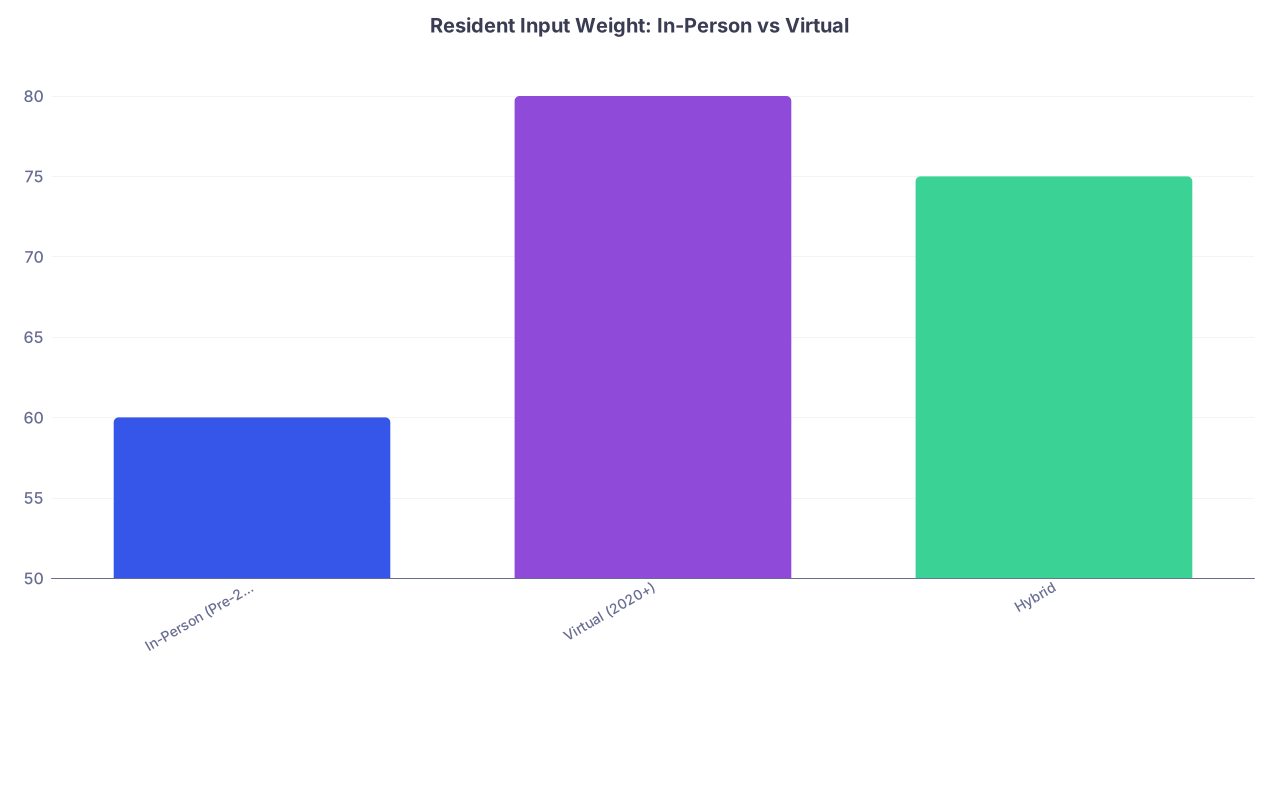
| Category | Value |
|---|---|
| In-Person (Pre-2020) | 60 |
| Virtual (2020+) | 80 |
| Hybrid | 75 |
Those numbers aren’t from a peer-reviewed paper; they’re from what PDs will tell you once the Zoom is off and the beer is open. Resident input always mattered. In virtual formats it got supercharged because:
- PDs can’t “read the room” themselves as easily
- Socials and informal interactions are almost entirely resident-run
- Faculty are often hopping in and out, but residents stay for most of the day
- Group chats make it trivial to aggregate resident impressions in real time
Also, virtual makes extremes louder. The obviously amazing and obviously terrible stand out more on camera. The huge middle—where most applicants live—gets sorted heavily by what backchannels say.
The Patterns Programs Actually Track
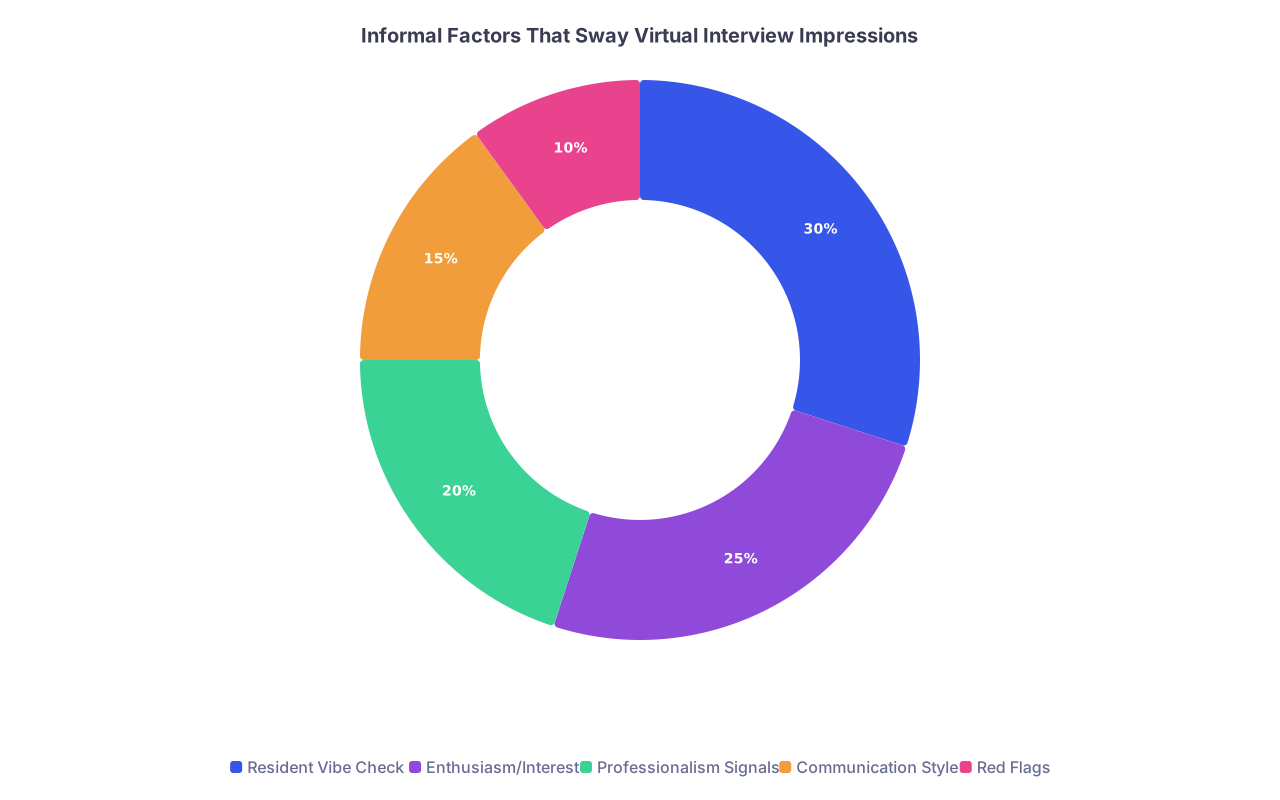
Let me show you the pattern recognition that happens behind closed doors. Most programs won’t admit they do it this explicitly, but they do.
| Category | Value |
|---|---|
| Resident Vibe Check | 30 |
| Enthusiasm/Interest | 25 |
| Professionalism Signals | 20 |
| Communication Style | 15 |
| Red Flags | 10 |
Resident vibe check is exactly what it sounds like: “Do I want to be stuck in an ICU at 3 am with this person?” That dominates the backchannel conversation.
Enthusiasm and interest aren’t about flattery; they’re about energy, curiosity, and whether you seem like you’d actually show up wanting to be there.
Professionalism shows up in small details:
- How you join and leave the room
- Whether you look mildly lost or prepared
- How you react to tech glitches
- If you interrupt or talk over others
Communication style is the under-discussed one. Too verbose, rambling, or hyper-scripted? People comment. A lot.
Red flags are rare but lethal: weird comments, off-color jokes, speaking poorly of other programs, clear lack of insight, or subtle arrogance.
That whole mix gets digested in Slack threads, side chats, after-hours texts. Then it crystallizes in the meeting where rank lists are made.
How Backchannels Enter the Actual Rank List
Let me walk you through a typical rank meeting, because you need to see where those quick comments show up.

| Step | Description |
|---|---|
| Step 1 | Finish Interview Season |
| Step 2 | Collect Scores & Comments |
| Step 3 | Resident Debrief Session |
| Step 4 | Faculty/PD Debrief |
| Step 5 | Adjust Tiers Based on Fit/Vibes |
| Step 6 | Draft Rank List |
| Step 7 | Final Edits by PD/APD |
| Step 8 | Submit to NRMP |
Here’s the dirty secret: by the time PDs sit down to “officially” discuss you, 80% of your fate is already determined by what lives in those scores, comments, and backchannel threads.
In the actual meeting, what gets said is shorthand, built on those earlier conversations:
“Remember, this is the one the residents loved.”
“She was the one with questionable professionalism in the email to the coordinator.”
“He seemed very strong clinically, but residents felt he was stiff and not a great fit.”
No one re-watches your Zoom. No one re-reads your entire personal statement. They work off memory + comments + vibes.
And then there’s the nuclear phrase I’ve heard in multiple specialties:
“Is there anyone here we would not want in our program?”
That is when backchannel negativity gets voiced out loud. A single, credible “no” from a key resident or faculty can tank you.
So What Do You Do About It?
You can’t control what’s said in those chats. But you can absolutely influence the raw material people are reacting to.
This isn’t about performing or being fake. It’s about understanding how small things you consider “informal” are precisely what programs are using to sort you.
1. Treat residents as evaluators, not tour guides
Stop thinking of the resident room as “chill time.” That delusion kills applicants every year.
Residents are:
- Watching how you treat quieter people on the call
- Noting if you ask questions that show genuine interest vs. box-checking
- Paying attention to whether you dominate the conversation or disappear
If you’re introverted, you don’t need to become a game-show host. But you do need to be present. Camera on when possible. Respond to others. React. Ask one or two real questions that build on what someone just said.
2. Build micro-rapport deliberately
Backchannels get very simple: “felt like a good fit” or “didn’t click.” That’s code for micro-rapport.
Things that help:
- Remembering names and circling back to details: “When Dr. Smith mentioned your ICU rotations…”
- Reacting like a human, not a script: “Honestly that night float schedule sounds rough, but I like that you’re upfront about it.”
- Showing you can laugh, roll with minor awkwardness, and keep the conversation moving.
You don’t have to force jokes. You do have to sound like someone your peers can see themselves next to at 2 am.
3. Guard your professionalism in the “informal” spaces
Offhand comments in resident rooms absolutely get reported upstream. Not always maliciously—sometimes just as a “by the way.”
Things that have hurt applicants:
- Complaining about other programs on the trail
- Making jokes that are a little too edgy for strangers
- Oversharing personal drama as a “relatable” story
- Sounding transactional: “How easy is it to moonlight here?” “How soon can people get time off for interviews for fellowship?”
You’re not being policed. But you are being observed. Big difference.
4. Own the tech and logistics
You think it’s minor. They take it personally.
Coordinators and PDs definitely talk about:
- Chronic lateness across multiple interviews
- Repeated Zoom link confusion after clear instructions
- Cameras off without explanation when everyone else is on
- No backup plan for audio when your laptop fails
None of that is automatically fatal. But in tight decisions, “seemed disorganized” or “a bit high-maintenance with scheduling” pushes you down.
5. Show consistent interest without being needy
Backchannels also log who seems genuinely into the program.
Signals that help you:
- Asking 1–2 specific, thoughtful questions about that program’s structure, not generic “So what’s your favorite thing here?” fluff
- Following up with one concise, genuine thank-you email to the coordinator and/or PD, not a novel
- Referencing something unique: “I appreciated hearing about your X rotation; that aligns with my interest in Y.”
Do not spam. Do not send gifts. Do not ask, “Where will I be on your rank list?” That gets screenshotted and laughed at.
The Things PDs Will Never Put in Writing (But I Will Say Here)
Programs will never document these rules because they don’t want to be held to them. But you deserve to know the real patterns.
I’ve heard all of these verbatim:
- “We almost never rank someone high if the residents are lukewarm about them.”
- “If multiple residents say, ‘bad vibes,’ I’m not fighting that battle.”
- “I can fix clinical gaps; I can’t fix someone who’s miserable to work with.”
- “I would rather take a 225 with great resident feedback than a 260 nobody remembers.”
- “If the coordinator hates you, I probably do not want you.”
That last one stings students who think only faculty matter. They don’t. The people who run the machine matter. A lot.
How to Practice for a World You Can’t See
You can’t rehearse this like a typical Q&A. You practice by putting yourself in the head of the people writing those backchannel comments.
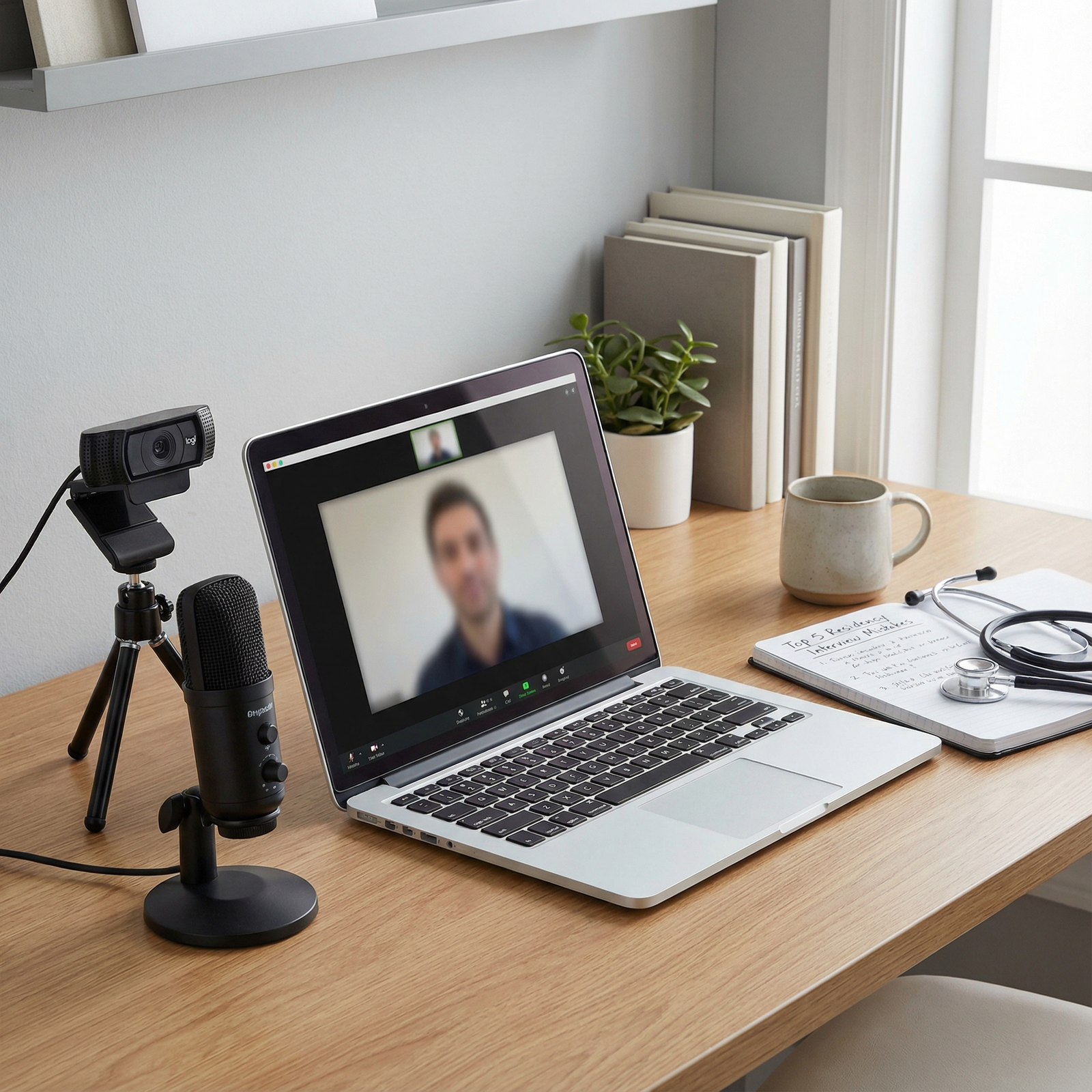
Do mock virtual sessions where:
- One person runs the “resident room” and pays attention to your engagement more than your answers.
- You record and re-watch: Do you look distracted? Are you staring at another screen? Do you smile at appropriate times?
- Someone else plays the role of a “coordinator”: send them emails ahead of time and see how you come across—organized, terse, overly casual?
It’s not about being polished to death. I actually think hyper-polish backfires in backchannels. People describe those applicants as “robotic,” “too rehearsed,” “felt like an OSCE.”
Aim for: prepared but real. Clear but not canned. Engaged without overperforming.
The Harsh Reality—and the Edge You Get by Knowing It
Here’s the uncomfortable truth: virtual backchannels introduce noise and bias. A tired resident’s offhand dislike can matter more than your carefully curated application. A small tech hiccup can lead someone to think you’re careless. None of that is fair.
But pretending those forces don’t exist is worse. The match isn’t a clean, noble meritocracy. It’s a human process, amplified by technology and group chats and half-distracted impressions.
Knowing that lets you play the actual game being played.
You show up to every portion of the day—formal interview, resident hangout, pre-brief, post-brief—with the same baseline:
- Respect for everyone
- Genuine curiosity
- Awareness that any interaction can echo in a Slack thread that feeds into a rank meeting
You can’t control everything people say in those channels. But you can make it very hard for anyone to honestly write, “Bad vibes, would not want to work with.”
And if you consistently give residents and faculty truthful reasons to say, “Yeah, I liked them,” you’d be amazed how far that carries you when rank lists solidify and everyone’s memory is blurred by dozens of little Zoom boxes.
You’re not just interviewing with the person whose face is on your screen. You’re interviewing with the group chat you’ll never see.
Understand that, and you walk into virtual season playing on the right board.
With that mindset in place, you’re closer to controlling what really matters: not just getting the interview, but converting it into a spot on someone’s list. How you turn that spot into the right match for you—well, that’s the next layer of the game. But we’ll tackle that another day.