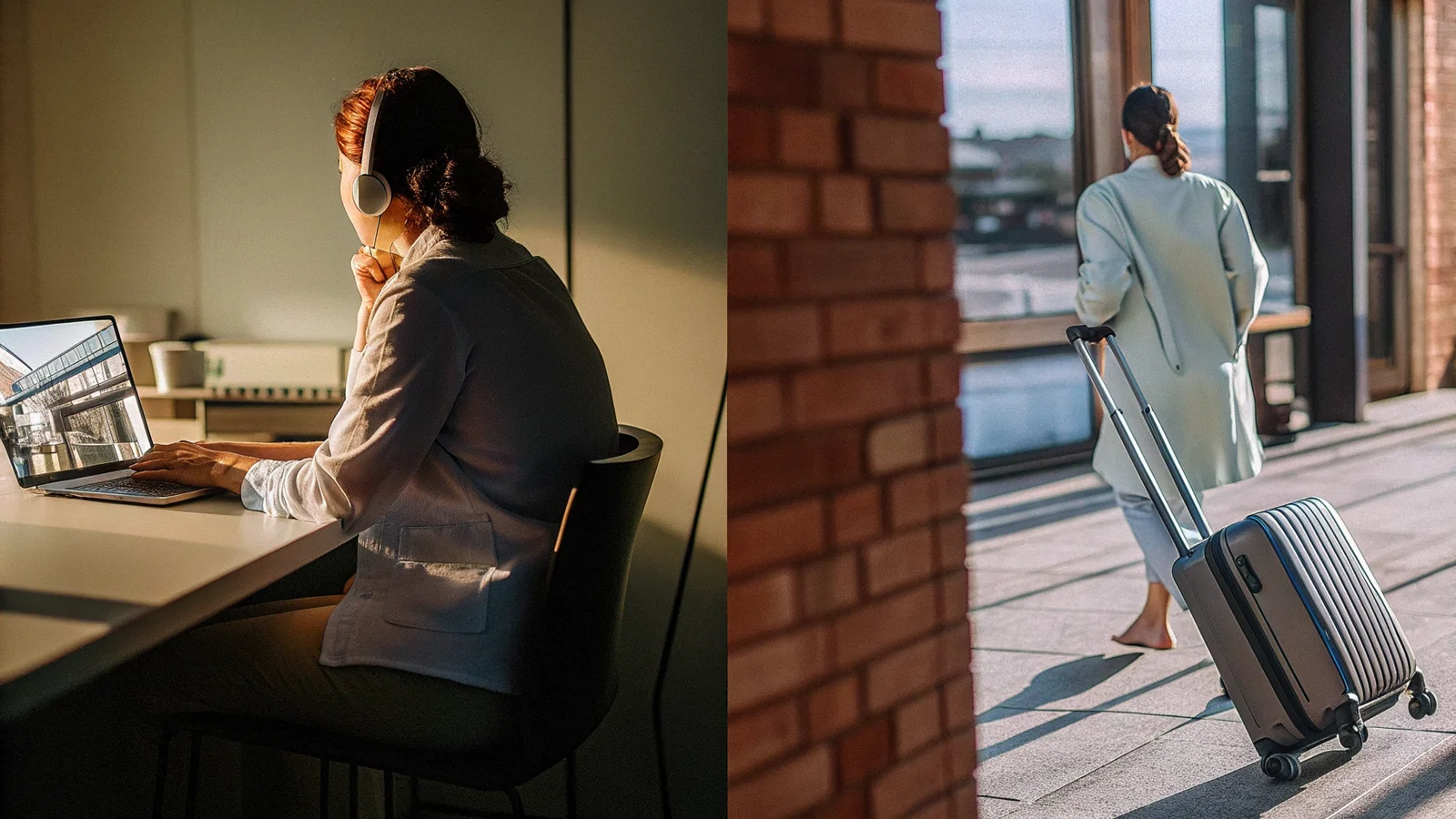
It's 6:00 AM on a Tuesday in mid-January. You're either staring at a ring light in your childhood bedroom, or you're staring at a departure board at O'Hare International. Both paths lead to the exact same Match Day envelope. But the timeline to get there? Completely different.
The format you choose warps your schedule, drains your cognitive reserves, and ultimately shapes your rank list. Let's look at what the data actually says about virtual versus in-person interview timelines, and how to manage your weeks when the stakes are this high.
The Pre-Interview Phase: November, December
At this point, you have secured your interview invitations. The decision to opt for virtual vs. in-person isn't just a logistical footnote. It fundamentally dictates your preparation bandwidth.
Virtual interviews demand a distinct technical setup. Lighting, audio, background. You have to test these early. That consumes precious prep time you'd normally use for content review or behavioral question practice. If your webcam lags or your microphone echoes, the program remembers the glitch, not your brilliant answer about healthcare disparities.
In-person interviews demand travel logistics. Flights, hotels, rental cars. If your budget or energy is constrained, you simply cannot attend as many. You are trading volume for immersion.
Here is where the data gets interesting. Applicants who switch between formats experience significantly higher cognitive load due to context-switching penalties. I've watched applicants completely fry their nervous systems in December just trying to calibrate their brains between Zoom etiquette and TSA security lines. The mental tax of shifting from "virtual professional" to "in-person guest" is real.
At this point, you should pick a lane. If you go virtual, build the studio and lock it in. If you go in-person, book the flights and accept the travel fatigue. Don't dabble in both unless a specific program absolutely requires it. Protect your mental bandwidth.
The Interview Sprint: January, February
January marks the peak of interview volume. This is the sprint.
Virtual interviews allow for 'stacking'. You can cram three or four into a single day without transit fatigue. You gather more data points per week. But here's the catch. Virtual scheduling inevitably leads to back-to-back interviews with zero break time. Burnout risk skyrockets mid-cycle. By your third Zoom call of the day, your enthusiasm looks like exhaustion.
In-person interviews are spaced out. You fly in, interview, fly out. You end up with fewer total interviews, but deeper interpersonal connections. You actually read the room. You pick up non-verbal cues. You see how the residents interact when the Program Director leaves the room.
The efficiency gap is massive, but efficiency isn't everything. More interviews do not equal a better match if you are too exhausted to perform.
At this point, you should track your energy levels ruthlessly. If you choose the virtual route, you must enforce strict boundaries.
The Virtual Sprint Checklist:
- Block out mandatory 30-minute buffers between every single interview.
- Step away from the screen during these breaks. Do not check email.
- Hydrate and reset your mental focus before the next link goes live.
- If a program offers a scheduling portal, actively decline back-to-back slots.
The Post-Interview Reflection: Late February, March
Post-interview debriefing differs significantly by format.
Virtual interviews lack immediate social feedback loops. There are no hallway chats with residents. No grabbing coffee with the chief resident after the formal tour. Because of this, self-assessment becomes entirely critical. Data suggests that virtual candidates report much lower confidence in their ability to gauge program culture fit compared to in-person attendees. They just don't feel the vibe. They are guessing based on scripted presentations.
For in-person candidates, the extended time spent at the institution allows for spontaneous networking. That unstructured time indirectly but heavily influences ranking decisions. You know if you'd actually want to get a beer with these people at 2 AM after a brutal call.
At this point, you should document specific impressions immediately after each interview. Virtual interactions fade from memory incredibly fast. Every Zoom background starts to blur together after week three. In-person experiences stick because they are tied to physical locations and sensory details. Write down the red flags, the green flags, and the gut feelings before you forget them.
Finalizing Choices: March, Match Day
The final weeks before submitting rank orders require balancing statistical probabilities with personal comfort.
Applicants who interviewed virtually often feel a lingering 'disconnect'. Last-minute anxiety creeps in. Where do I really stand in the evaluator's mind? Did they actually like me, or was I just another face on a screen? This virtual disconnect leads to erratic rank list adjustments in the final 48 hours.
In-person applicants usually enter ranking season with clearer hierarchy clarity. The visits were tangible. They know where they fit because they felt the physical energy of the department.

Don't let the format dictate your confidence. Use the remaining weeks strategically. Reach out via email to programs where you felt strong chemistry, regardless of the format. A brief, professional note reinforcing your interest can cut through the digital noise and remind them that you are a real person, not just a pixelated headshot.
Actionable Timeline Checklist
Keep this on your desk. Follow it strictly.
- November: Finalize interview format preferences based on your actual health, budget, and stamina. Stop debating and commit.
- December: Test your tech stack thoroughly if virtual. Do a mock interview with a harsh critic. Confirm all travel logistics and refund policies if in-person.
- January: Schedule buffer times between interviews to prevent fatigue. Protect your voice and your posture.
- February: Conduct detailed post-interview audits. Focus heavily on cultural fit indicators and write them down while the memory is fresh.
- March: Submit ranks with confidence. Leverage all collected data points, trust your gut, and lock it in.
The Bottom Line
Virtual interviews offer higher volume efficiency but significantly lower cultural immersion. In-person interviews provide deeper human connection but strictly limit your quantity. Cognitive load management is critical in virtual formats due to frequent context switching; in-person formats mitigate this through the physical separation of events.
Stop second-guessing the format you chose. The data is clear: success doesn't come from the medium of the interview. It comes from how meticulously you manage your timeline, your energy, and your focus within that medium.
Finalize your rank list. Trust the process. Now go get some sleep.