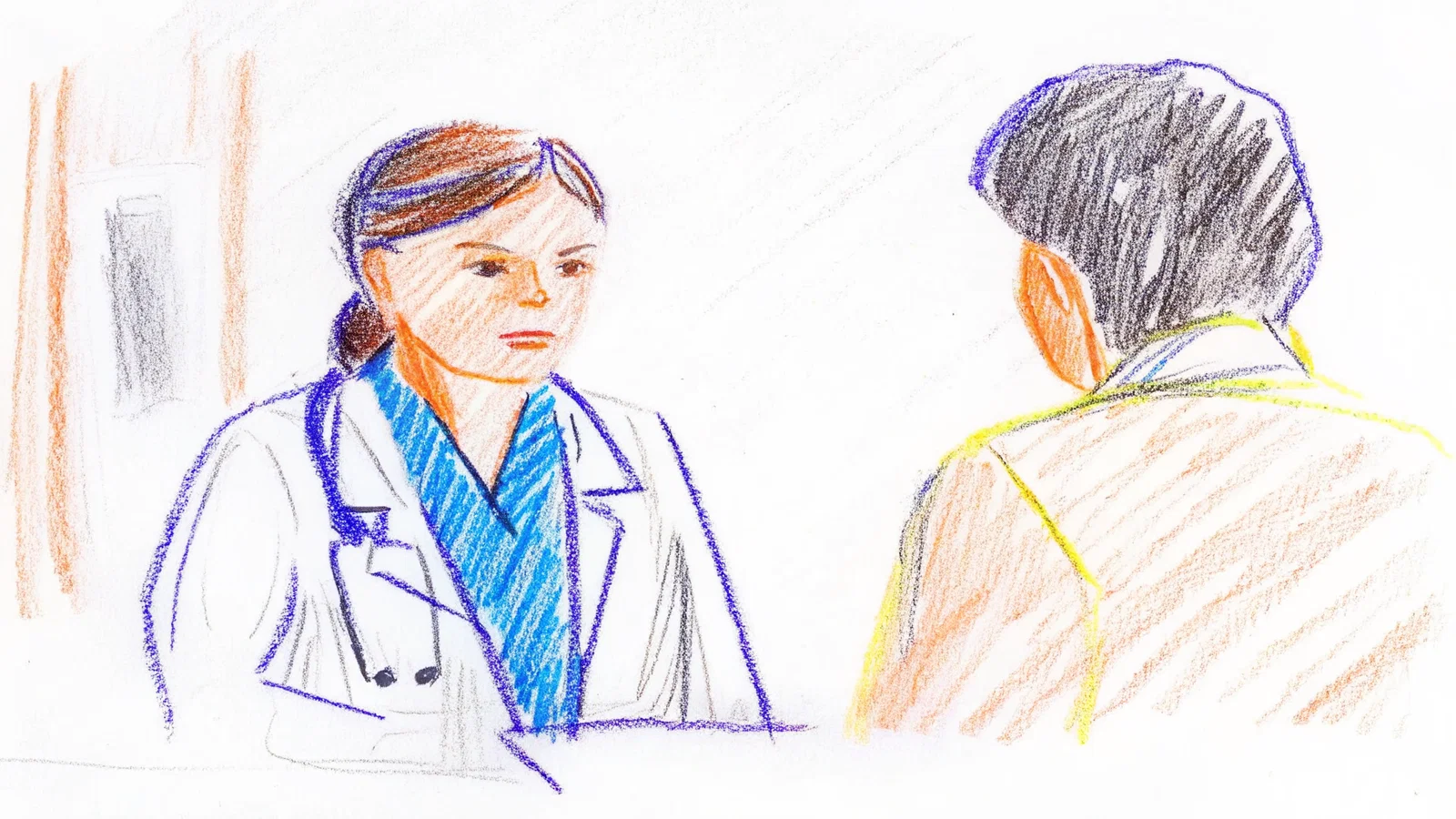
It's 2:14 AM. Your alarm is set for 4:30 AM. Your chest feels like someone is standing on it, your throat is raw, and you haven't slept more than three broken hours a night since this away rotation started. You're staring at the dark ceiling, hyperventilating, trying to calculate if you can physically survive a 14-hour shift on the surgical floor tomorrow without collapsing or bursting into tears during morning rounds.
You need a day off. You desperately, unequivocally need a single day to breathe, reset, and stop the mental downward spiral.
But then the panic hits. The absolute, paralyzing panic.
If you are worried that taking time off will signal unreliability, read I Took a Mental Health Leave: Will PDs See Me as Unreliable Forever? to understand how programs evaluate these situations.
If I call in sick, they're going to think I'm weak. The Program Director will mark me as 'unreliable.' They'll leave a scathing comment on my sub-I evaluation. I won't get ranked. I'll go unmatched. My career is over before it even starts.
So you lie there, trapped between acute burnout and catastrophic fear. Is taking a mental health day on an away rotation truly career suicide? Or is your anxious, sleep-deprived brain distorting reality?
The 2 AM Panic: Can I Really Take a Mental Health Day Without Ruining My Match Chances?
Let's be honest about what away rotations actually are: a month-long, high-stakes job interview where you feel like you're under a microscope 24 hours a day, 7 days a week. You smile until your cheeks hurt. You laugh at the attending's terrible jokes. You jump to write progress notes before the intern even asks. You act like an unstoppable, tireless medical robot because you've been conditioned to believe that showing an ounce of human vulnerability will instantly drop you to the bottom of their Rank Order List.
When you're in the pressure cooker of an audition elective, wanting to take a day off feels like committing academic treason. You convince yourself that everyone else is cruising through 80-hour workweeks with boundless joy, while you're the only "imposter" secretly drowning.
I've been in that exact dark room at 2 AM, staring at my phone, hovering my thumb over the "Send" button on an email to the chief resident, paralyzed by dread. The fear isn't just about missing a shift. It's the terrifying belief that a single absence will unravel four years of medical school, hundreds of thousands of dollars in tuition, and your entire future.
Here is the truth you need to hear right now: Taking one professionally handled sick day will not ruin your Match. What will ruin your evaluation is showing up so emotionally and physically compromised that you make a critical clinical error, snap at a nurse, or freeze up on rounds because your brain has shut down from sheer exhaustion.
Anatomy of a Catastrophe: What Actually Happens If I Take Off?
When anxiety takes the wheel, it constructs a elaborate horror movie about your absence. You imagine the residents sitting in the workroom at sign-out, shaking their heads in disgust: "Can you believe this sub-I couldn't even handle a basic floor day? Unbelievable. Put them on the Do Not Rank list immediately."
Let's dissect what your brain tells you is going to happen versus what actually happens in the real world.
Here is what actually happens when you call out sick:
- The Chief Resident reads your email. They don't convene a grand jury. They think, "Bummer, I need to adjust coverage," or "Hope they aren't dying," and they move on with their chaotic morning.
- The team carries on. You are a medical student. As much as you want to be indispensable, the hospital operated for decades before you arrived, and it will operate just fine for 24 hours without you writing pimping notes on the bed 4 patient.
- They forget about it by Tuesday. Unless you make a habit of missing shifts or handle your absence like a irresponsible ghost, a single missing day melts away in the blur of hospital workflow.
Residents and attendings are human beings. Many of them are just as burned out as you are. They understand acute illness and exhaustion, even if the toxic subculture of medicine pretends otherwise. The risk of working while actively crashing and burning far outweighs the minimal, manageable risk of taking a professional day off to recalibrate.
How to Call In Sick Without Sounding Suspicious or Weak
The biggest mistake anxious applicants make when requesting a day off is over-explaining.
When you feel guilty, your instinct is to write a rambling, four-paragraph novel detailing your symptoms, your emotional state, your apologies, and your undying dedication to the program. Don't do this. Over-explaining reeks of insecurity, invites unwanted probing, and actually makes your request look less credible.
Keep it brief, professional, and clear. You do not need to disclose the intimate details of your mental health, nor do you need to fabricate a elaborate story about vomiting blood. In modern medical administration, an acute health issue is an acute health issue.
The Exact Script to Use (Send via Email + Text to Chief/Attending)
Subject: Absence Today - [Your Full Name], Sub-I Student
Dear Dr. [Chief Resident Last Name] and Dr. [Attending Last Name],
I am writing to inform you that I am dealing with an acute health issue today and will unfortunately be unable to attend clinical duties. I expect to rest today and return at full capacity tomorrow morning.
I will touch base with the team later today to confirm my status for tomorrow. I apologize for the short notice and any inconvenience this creates for the team.
Best regards,
[Your Name] Visiting Medical Student, [Specialty] [Your Phone Number]
Why This Works:
- It's firm and professional: You aren't asking for permission like a child; you are informing them of a clinical absence like a professional colleague.
- It gives a clear timeline: You state you plan to return tomorrow, easing their scheduling anxiety.
- It maintains boundaries: "Acute health issue" covers everything from a severe migraine, severe gastrointestinal illness, to a crippling panic attack. It is accurate, honest, and non-negotiable.
Send this message to both your direct team (Chief Resident / Attending) and the Visiting Student Coordinator. Do it as early as possible, ideally before 5:00 AM, so they can adjust workflow. Once you hit send, turn off your alarm, put your phone on do-not-disturb, and sleep.
Damage Control: How to Make Up for the Lost Day and Protect Your Eval
You took the day off. You slept, you cried, you ate a real meal, and your brain is finally out of the emergency state. Now comes the re-entry. How do you return to the wards without feeling like an awkward, marked person?
Your recovery strategy matters far more than the day you missed. Here is your step-by-step game plan for your first shift back:
1. Show Up Early and Look Impeccable
On your first day back, arrive 15 minutes earlier than usual. Ensure your scrubs are fresh, your white coat is clean, and you look visibly rested and sharp. First impressions upon return set the narrative: They were genuinely sick, but now they are back and ready to work.
2. The 10-Second Acknowledgment
Do not spend the morning groveling or apologizing repeatedly to everyone you see. It makes people uncomfortable. Address it once, briskly and warmly, to your resident:
"Thanks so much for taking care of things yesterday while I was out. I'm feeling 100% better and ready to pull my weight today. Who can I jump in to help with?"
That's it. Move on. Focus on patient care.
3. Take an Extra Load (Without Being Obnoxious)
Quietly offer to take on an extra admission, write a procedure note, or follow up on difficult lab results. Show through immediate, reliable action that your single absence was an anomaly, not a pattern of laziness.
When attendings see an applicant who is calm, efficient, and proactive after a sick day, they don't think "That person is lazy." They think "That person is mature, knows how to handle their business, and doesn't make a big deal out of setbacks."
Reframing Vulnerability in Medicine: Moving Past the Martyr Complex
Medicine has a toxic culture of martyrdom. We glorify the attending who worked through a kidney stone or the intern who stayed on service through a high fever. We trick ourselves into believing that suffering in silence is the price of admission to a top-tier residency program.
That mindset is not only outdated, it's dangerous.
A clinician who refuses to acknowledge their physical and mental limits is a safety risk to patients. Pushing yourself past the point of severe emotional breakdown doesn't make you a hero; it makes you impaired. Recognizing when you are at your absolute breaking point and taking a tactical, 24-hour pause to protect your sanity is a sign of high emotional intelligence and clinical competence.
Programs don't want robots who break in silence and burn out six months into intern year. They want sustainable, self-aware human beings who can handle stress, communicate professionally, and take accountability for their own well-being.
So if you are reading this at 2 AM, trembling with exhaustion, trying to decide if you're allowed to take a break: Give yourself permission to be human. Send the professional email. Close your laptop. Take a deep breath. Your career is not going to shatter over 24 hours of self-preservation.

Summary of Key Rules
- Communicate immediately and concisely: Send a brief, professional notification early in the morning using clear boundaries ("acute health issue").
- Never over-explain or grovel: Long, dramatic explanations trigger doubt and look unprofessional. Less is always more.
- Focus on your re-entry strategy: Return rested, punctual, and eager to help. Your performance after the absence dictates your evaluation, not the missing day itself.
- Prioritize patient safety and sanity: Working while completely incapacitated or emotionally fried causes mistakes that actually tank evaluations.