
This article is for educational purposes only. It is not financial advice, not legal advice, and not tax advice. Figures vary by individual circumstances, so consult a qualified professional before acting.
The Resident Who Looks Fine
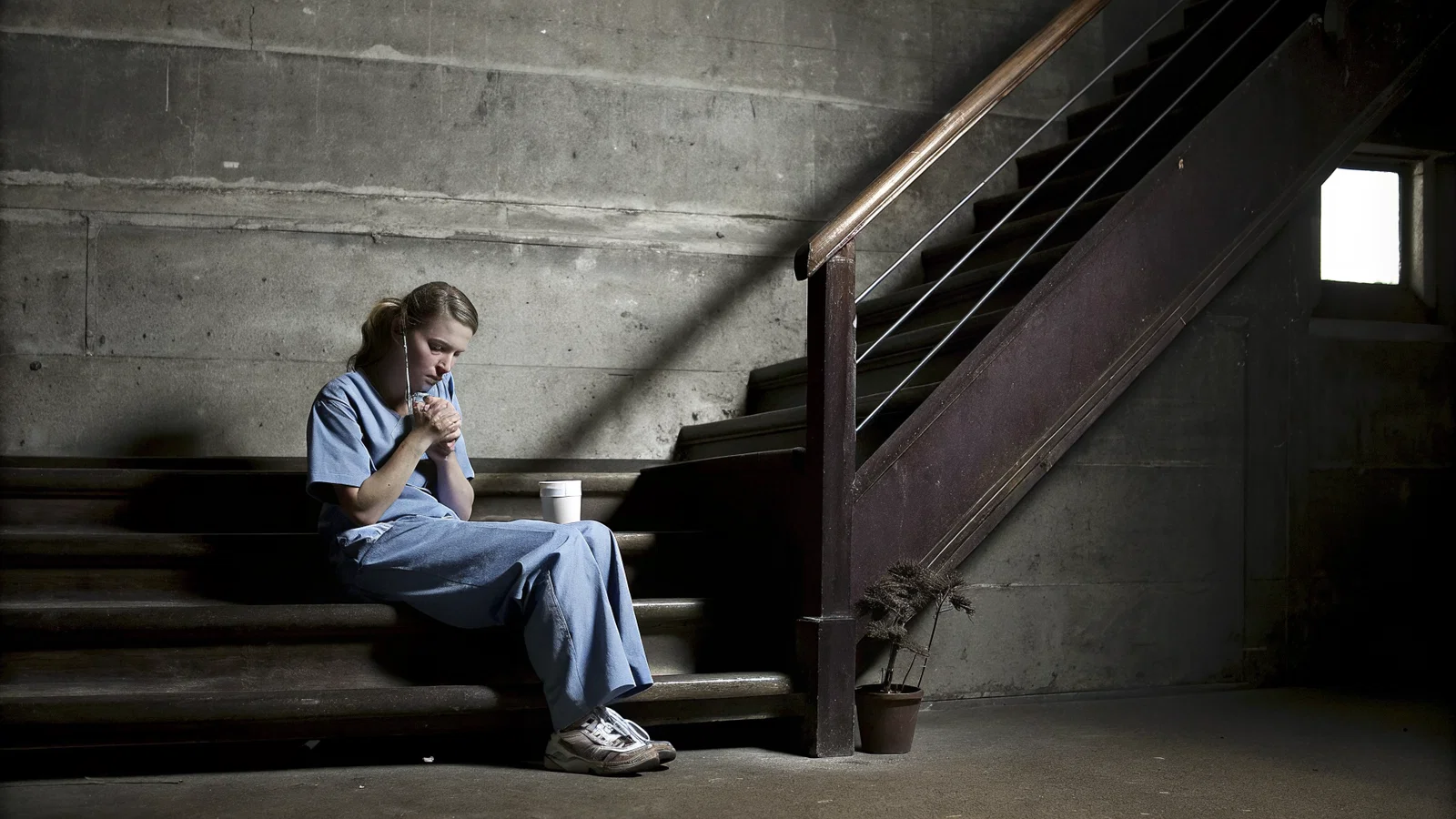
Consider Dr. Sarah, a second-year internal medicine resident. It is 05:45 AM, and her patient lists are formatted perfectly. Her sign-out sheets are color-coded, her lab values are double-checked, and her oral presentations during morning rounds are succinct, precise, and delivered with a calm smile. Her clinical evaluations on MedHub consistently read "meets or exceeds expectations." Her attendings view her as a rock-solid, dependable resident who handles heavy patient loads without complaint.
Behind that polished exterior is an entirely different reality.
Dr. Sarah has not experienced restful sleep in five months. She wakes up at 03:00 AM with a racing pulse, running through potential missed details on a complex oncology patient discharged three days prior. She relies on double-shot espressos to get through noon conference and prescription anti-nausea medication to swallow breakfast. She has stopped responding to non-medical text messages from her family, and her primary emotional state during a twelve-hour shift is not anger or sorrow, but a profound, chilling numbness.
When a concerned co-resident asks how she is holding up after a brutal week in the Medical Intensive Care Unit, her response is automatic: "I am fine. Just tired, but it is residency, right? We are all tired."
This scenario is not an outlier; it is an epidemic within modern graduate medical education. High-functioning individuals are exceptionally skilled at constructing operational masks. They possess the intellect, social conditioning, and discipline required to preserve clinical performance long after their internal reserves are entirely depleted. We spend years studying the overt, florid manifestations of physician distress while completely overlooking the quiet, compensated decompensation happening right next to us in the workroom.
Defining Stealth Burnout: The Invisible Crisis
Textbook burnout, as historically quantified by tools like the Maslach Burnout Inventory (MBI), relies on distinct, overt markers: classic depersonalization, overt cynicism, clear emotional exhaustion, and a drop in personal accomplishment. You recognize textbook burnout when a trainee becomes noticeably cynical, chronically late, overtly irritable with nursing staff, or starts missing charting deadlines.
Stealth burnout is fundamentally different. It is compensated burnout.
In stealth burnout, the resident's high baseline intellectual capacity and deep-seated fear of failure act as compensatory mechanisms. Clinical competence remains intact. Work output remains high. Documentation is submitted on time. To an external observer, and frequently to the resident themselves, there are no obvious red flags.
Standard institutional wellness surveys miss stealth burnout almost entirely. When a survey asks a high-performing, hyper-vigilant resident to rate statements like "I feel burned out from my work" on a Likert scale, the resident frequently underreports their distress. Admitting burnout on an institutional form, even an anonymous one, feels like an admission of incompetence or lack of resilience.
Stealth burnout follows a insidious progression:
- Covert Emotional Exhaustion: The internal battery hits zero, but cognitive effort is doubled to maintain output. The resident stops feeling joy, sadness, or relief, only operational momentum.
- Masked Depersonalization: Instead of vocalizing cynicism, the resident quietly converts patients from human beings into algorithmic tasks to be processed and cleared from the list.
- Quietly Diminished Accomplishment: Despite receiving glowing performance reviews, the resident develops a deep, unyielding conviction that they are failing, incompetent, and performing a fraud.
Why We Wear the Mask: The Culture of Performance
Medical training systematically rewards the appearance of invulnerability. From the first day of medical school, trainees absorb an unwritten curriculum: capable physicians do not complain, do not show fatigue, and do not let their personal struggles compromise clinical output.
+-------------------------------------------------------------+
|               THE MASK MAINTENANCE CYCLE                    |
+-------------------------------------------------------------+
|                                                             |
|   +-----------------------------------------------------+   |
|   |             Internal Struggle Begins                |   |
|   +-----------------------------------------------------+   |
|                              |                              |
|                              v                              |
|   +-----------------------------------------------------+   |
|   |         External Presentation (Mask Up)             |   |
|   +-----------------------------------------------------+   |
|                              |                              |
|                              v                              |
|   +-----------------------------------------------------+   |
|   |               Competence Maintained                 |   |
|   +-----------------------------------------------------+   |
|                              |                              |
|                              v                              |
|   +-----------------------------------------------------+   |
|   |             Positive Feedback Received              |   |
|   +-----------------------------------------------------+   |
|                              |                              |
|                              v                              |
|   +-----------------------------------------------------+   |
|   |                Mask Structure Reinforces            |   |
|   +-----------------------------------------------------+   |
|                              |                              |
|                              v                              |
|   +-----------------------------------------------------+   |
|   |              Internal Struggle Deepens              |   |
|   +-----------------------------------------------------+   |
|                              |                              |
|                              +---> (Loop Continues)         |
|                                                             |
+-------------------------------------------------------------+
In competitive specialties, such as surgical subspecialties, cardiology, or health system leadership tracks, the pressure to project absolute resilience is even higher. Trainees fear that showing any sign of psychological distress will lead to sub-par fellowship recommendation letters, lighter case assignments, or the dreaded label of being "unreliable."
Imposter syndrome amplifies this dynamic exponentially. When you suspect you are less capable than your peers, your primary defensive strategy is absolute compliance and perfectionism. You double down on work hours, double-check every order, and maintain a bright, enthusiastic demeanor to ensure no one looks closely enough to discover your perceived deficiencies.
The resident conducts a silent, continuous risk-benefit calculation: Vulnerability feels immediately dangerous; self-suppression feels manageable.
The tragic irony is that the system rewards this suppression. When a resident stays late to finish charting despite being clinically exhausted, the attending praises their "outstanding work ethic." The system reinforces the exact behavior that is quietly destroying the trainee.
Subtle Signs Your Colleague Isn't Fine
Because stealth burnout lacks the loud, obvious markers of traditional burnout, detecting it requires paying attention to micro-behavioral changes. You must look for changes in pattern, not just blatant failures of duty.
1. Micro-Changes in Engagement
Watch for subtle shifts in communication dynamics. A resident suffering from stealth burnout will rarely refuse tasks, but their interaction patterns alter:
- Delayed responses to secure messages or pages by 10 to 15 minutes, where they previously responded instantly.
- A subtle drop in eye contact during handoffs and sign-outs.
- Complete cessation of voluntary contributions in team discussions or didactic sessions, answering only when directly addressed.
2. Performance Operating at the Edge
Stealth burnout manifests not as clinical failure, but as a drop from elite execution to marginal baseline safety. A resident who historically operated at a 95% efficiency level drops to 85%. Because 85% is still fully sufficient to pass rotations and protect patient safety, attendings rarely flag it. However, for that specific individual, operating at 85% requires twice as much cognitive effort as their previous 95% baseline.
3. Social Withdrawal Disguised as Workload
Look for residents who systematically cut all non-essential human connection under the premise of being "too busy":
- Declining group lunches or post-call coffee runs with consistent, polite excuses.
- Finishing chart documentation in isolation (e.g., in a quiet call room or empty dictation room) rather than in the shared team workroom.
- Dissecting their daily schedule down to the minute to eliminate any unstructured social conversation.
4. Somatic and Behavioral Tells
The physical body keeps the score long before the mind admits defeat:
- Escalating caffeine, nicotine, or prescription stimulant intake to maintain basic focus.
- A hyper-rigid reliance on routine; becoming disproportionately distressed over minor disruptions to workflow (such as a delayed lab result or a late patient arrival).
- Frequent, minor somatic complaints, frequent headaches, gastrointestinal upset, muscle tension, offered as casual explanations for looking tired.
How Stealth Burnout Derails Your Training
Stealth burnout is not a harmless state of temporary overwork; it is an unstable metabolic state that erodes your clinical development and long-term capability as a physician.
Cognitive Load Accumulation and Clinical Errors
When you are operating in a state of stealth burnout, your working memory and executive functioning are compromised. The brain preserves raw task completion at the expense of complex synthesis.
You miss subtle clinical diagnostic clues:
- You fail to connect a marginal drop in urine output with a subtle medication dose adjustment.
- You order repetitive diagnostic imaging instead of performing a rigorous bedside physical exam and clinical re-evaluation.
- You execute clinical management plans mechanically without actively questioning incorrect baseline assumptions.
You avoid outright catastrophic malpractice, but you experience an increasing number of "near-misses." Each near-miss triggers an additional layer of anxiety, forcing you to spend even more energy double-checking routine tasks, which further accelerates your cognitive depletion.
The Erosion of Empathy
The most dangerous casualty of stealth burnout is empathy. Empathy requires emotional bandwidth. When your bandwidth is exhausted, human suffering ceases to evoke compassion; instead, it evokes frustration because it represents additional work.
You do not become openly rude to patients, the mask prevents that. Instead, you become internally cold. Patients become tasks to clear, beds to turn over, and disposition obstacles to overcome. This subtle detachment robs medical practice of its core meaning, leaving behind only repetitive administrative labor.
Learning Stagnation
Surviving a shift is not the same as learning from it. To convert clinical exposure into durable long-term memory, the brain requires post-event reflection, rest, and memory consolidation.
Residents in stealth burnout operate purely in survival mode. They digest clinical information long enough to pass rounds, complete the transfer, or write the discharge summary, but they absorb very little of it for long-term clinical intuition. They pass their annual inservice exams through brute-force cramming, yet feel strangely unprepared for autonomous clinical practice.
Breaking the Pattern: Recognition and Intervention
Overcoming stealth burnout requires moving away from superficial self-care advice, such as institutional wellness lectures or yoga apps, and instituting targeted, structural interventions.
+-------------------------------------------------------------+
|                 INTERVENTION PATHWAY                        |
+-------------------------------------------------------------+
|                                                             |
|   +-------------------+         +-----------------------+   |
|   | Self-Noticed      |         | Peer-Observed         |   |
|   | Pattern           |         | Change                |   |
|   +-------------------+         +-----------------------+   |
|             |                               |               |
|             +---------------+---------------+               |
|                             |                               |
|                             v                               |
|             +-------------------------------+               |
|             |   Validate Experience         |               |
|             +-------------------------------+               |
|                 /                       \                   |
|           (Yes)/                         \(Deny)            |
|               v                           v                 |
|   +-----------------------+   +-------------------------+   |
|   | Connect with Support  |   | Deepen Isolation        |   |
|   +-----------------------+   +-------------------------+   |
|               |                                             |
|               v                                             |
|   +-----------------------+                                 |
|   | Confidential Mental   |                                 |
|   | Health Resources      |                                 |
|   +-----------------------+                                 |
|               |                                             |
|               v                                             |
|   +-----------------------+                                 |
|   | Recovery Trajectory   |                                 |
|   +-----------------------+                                 |
|                                                             |
+-------------------------------------------------------------+
1. Personal Meaning Audits
Do not merely track your sleep hours or steps; track your emotional return on investment. Once a week, conduct a three-minute internal audit:
- The Satisfaction Check: Identify one clinical interaction this week that should have felt rewarding (e.g., making a difficult diagnosis, comforting a family). Did you actually feel satisfaction, or did you feel nothing?
- The Automation Index: Are you making clinical choices based on optimal patient care, or based on what will generate the least amount of paperwork and pushback?
If your answers reveal persistent emotional numbness and automated decision-making for three consecutive weeks, you are experiencing stealth burnout.
2. Strategic Structural Boundaries
You cannot fix systemic overwork purely with mindset shifts. You must implement concrete boundaries within your existing workflow:
- The Transition Buffer: Establish a strict, non-negotiable 15-minute gap between leaving the hospital and arriving home. Do not review charts, answer emails, or listen to medical podcasts during this window.
- Micro-Decompression Breaks: Take 90 seconds between patient encounters, specifically after high-stress encounters, to reset your autonomic nervous system. Step away from the computer screen, close your eyes, and take four slow, deliberate box breaths.
3. Peer-to-Peer Intervention Strategies
If you suspect a colleague is struggling behind a high-functioning facade, standard inquiries like "Are you okay?" will routinely trigger their automated defense: "I am fine, just tired."
Instead, use specific, observational statements that remove the stigma of asking for help:
- "I noticed how heavy your census was this week, and you still managed to double-check all those lab values. How much effort is it taking you right now to maintain that pace?"
- "You are doing a fantastic job with your patient presentations, but you seem less energized than usual during sign-out. I am here if you want to chat off the record."
Directly acknowledging their competence before addressing their exertion lowers their defensive barrier, making honest dialogue possible.
Moving Forward: From Surviving to Thriving

Reversing stealth burnout does not mean lowering your professional standards or abandoning clinical excellence. It means recognizing that professional competence without personal sustainability is an illusion, a temporary state with an impending expiration date.
We must shift our medical culture away from the dangerous myth that silent suffering is a prerequisite for clinical mastery. Admitting that you are operating near your physical and emotional limit is not an admission of weak character or insufficient intelligence; it is a critical assessment of your current human baseline.
Take one action step this week: Pick one co-resident, senior resident, or trusted faculty mentor. Drop the mask for five minutes. Share the reality of your current cognitive and emotional load.
When we dismantle the culture of performative invulnerability, stealth burnout loses its power to silently destroy careers. Sustainable medical practice begins the moment you decide that looking fine is no longer enough.