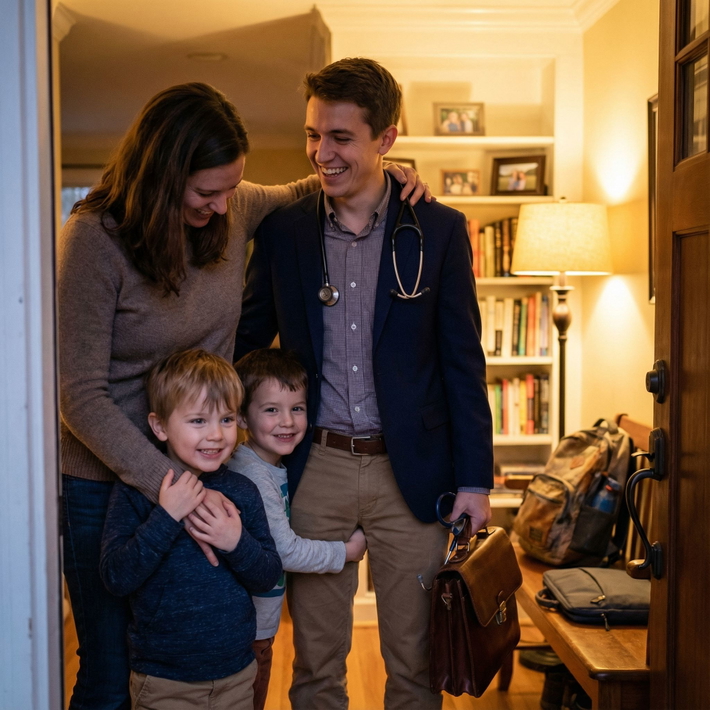
Call months don’t just make healthy eating harder. They dismantle it.
That’s the part nobody says out loud when they’re giving polished wellness talks or handing out another PDF about “mindful nutrition.” I’ll tell you what really happens. Your diet doesn’t fall apart on call because you suddenly become lazy, undisciplined, or weak. It falls apart because call strips away the exact conditions that make decent eating possible in the first place: predictable time, mental bandwidth, access to food, and enough sleep to make rational choices.
I’ve watched residents start a call month with color-coded meal prep containers, good intentions, and the same smug optimism people have on January 2. By the second week, the containers are gone, the cafeteria is closed, the pager is exploding, and dinner is peanut butter crackers inhaled standing at a workstation while signing out a septic patient. That’s the real workflow. Eating becomes reactive, not planned, because the schedule is built around patient care, not meals. Always has been.
So let’s be honest about the thesis here. The problem is not your willpower. The problem is a brutal mismatch between hospital workflow and human physiology. You are trying to run a body with basic biological needs inside a system that rewards ignoring them. That never ends well.
What actually changes during call: the hidden mechanics behind diet failure
When residents say, “I don’t know why I eat so badly on call,” I usually do know why. It’s not mysterious. It’s mechanical.
First, call destroys rhythm. Normal eating depends on cues. You get hungry around expected times, you sit down long enough to notice it, you eat, you feel full, and your brain logs that the need has been handled. Call shreds that sequence. A page comes just as you’re about to eat. Then an admission. Then a family meeting. Then a rapid response. Your food sits there getting cold while your body gets the message that fuel is uncertain and stress is constant. By the time you finally can eat, you’re past hunger and into that ugly zone where you’ll consume whatever is fastest.
Second, sleep deprivation changes the game more than most people realize. This is not motivational-poster stuff. It’s neurobiology. When you’re short on sleep, cravings go up, impulse control goes down, and the reward value of fast carbs and sugary junk gets amplified. A stale blueberry muffin at 3 a.m. starts looking like a gift from heaven. That’s not because your standards disappeared. Your brain is tired and looking for efficient energy. The vending machine wins because the vending machine is easy.
Third, the hospital food environment is terrible after hours. Not mildly inconvenient. Terrible. Daytime hospitals love advertising healthy options. Overnight is another country. The salad bar is gone. The grill is closed. The “fresh” sandwich has been in plastic long enough to qualify for fellowship. If something remotely healthy exists, it usually requires time, microwaving, waiting, or a walk to another building you absolutely do not have time for. Meanwhile cookies are free in the nurses’ station, pizza appears in conference rooms, and somebody’s family brought donuts. Convenience is king, and convenience rarely looks like grilled salmon and vegetables.
Then there’s stress physiology. Cortisol. Adrenaline. Cognitive overload. You’re not just busy; you’re in sustained low-grade fight-or-flight. In that state, people don’t make elegant food choices. They reach for quick energy, salt, sugar, and anything that demands zero thought. Again, this is normal. Human. Predictable.
And here’s the insider truth faculty don’t always say clearly: the system often quietly rewards the resident who ignores basic needs the longest. The trainee who postpones eating, delays peeing, and pushes through exhaustion gets labeled “dedicated.” That culture is changing at the margins, but not enough. So residents internalize the wrong lesson. They think eating is a luxury break rather than maintenance for cognitive performance. That’s bad medicine masquerading as professionalism.
The three diet traps residents fall into
Most call-month diet failures follow the same script.
Trap one is the classic all-day starvation followed by midnight scavenging. You skip breakfast because sign-out ran long. Lunch never happens because the admissions hit. At 11:47 p.m., you find yourself eating two granola bars, cold fries, and whatever crackers are left in the call room. Then you wonder why you feel awful. Because your body doesn’t appreciate being ignored for twelve hours and then flooded with random calories. Shocking, I know.
Trap two is “I’m going to eat clean on call.” Admirable. Also usually detached from reality. Residents imagine they’ll have leisurely moments for salads, balanced bowls, or carefully portioned meals during a 14-hour stretch full of pages, procedures, and unpredictable interruptions. That’s fantasy planning. Office-worker diet strategy does not belong in emergency-response scheduling. If your nutrition plan requires ideal conditions, it is not a real plan.
Trap three is the post-call overcorrection. After a rough stretch, people get disgusted with themselves and swing into restriction mode. “I ate junk all night, so I’ll just fast today” or “I need to detox.” No. That move is dumb and it backfires. You’re already depleted, dehydrated, and sleep-fragmented. Adding more restriction usually sets up another rebound binge later, plus more fatigue, more irritability, and another day of bad decisions.
What ties all three traps together? Residents are trying to impose a normal-life diet onto an abnormal-life schedule. That’s the mistake. Call requires a field-expedient strategy, not a purity strategy.
What to do instead: the call-proof nutrition strategy
Now for the part that actually works.
You need what I call a minimum viable nutrition plan. Not your best diet. Not your dream diet. The smallest repeatable system that keeps you from spiraling. On call, the goal is simple: prevent the sequence of skipping, crashing, and bingeing. If you do that, you’re already winning.
Start with anchor eating instead of perfect meal timing. Stop pretending meals will happen at civilized hours. Build three anchors instead. One substantial pre-call meal. One portable mid-shift option. One recovery meal after the shift. That’s it. If you get more than that, great. But those three anchors create a floor under your energy.
Your pre-call meal should be boring in the best way. Protein, fiber, carbs, fluid. Something that actually holds you. Eggs and toast with fruit. Rice, chicken, and vegetables. Greek yogurt, oats, berries, and nuts if you’re in a hurry. The point is not culinary artistry. The point is buying yourself a few hours before the hospital starts taking pieces out of you.
Then pack your mid-shift options like someone who knows the hospital is not coming to save you. Because it isn’t. Decision fatigue is real. If you wait until 9 p.m. to decide what to eat, the decision has already been made for you by stress, convenience, and whatever is left in the vending machine.
Pack food that survives neglect. Food you can eat in two minutes or less. Food that still works if it gets warm, sits in your bag, or gets delayed. Protein bars that you actually like, not the cardboard ones you bought because they looked healthy. Greek yogurt. Nuts. Jerky. Fruit that doesn’t bruise instantly. Peanut butter packets. Turkey sandwiches. Soup in a thermos. Cottage cheese if you can keep it cold. Shelf-stable milk or protein shakes. Crackers with hummus. A banana and almonds. Nothing glamorous. Very effective.
And label your food mentally by role. One item is your “eat before rounds get ugly” snack. One is your “I have ninety seconds between pages” option. One is your emergency backup if the whole shift goes sideways. This matters because tired people don’t just get hungry; they get stupid about logistics. I’ve seen residents carry excellent food all day and never touch it because it was buried under papers in the bottom of the bag. Put it where you can’t ignore it. Outer pocket. Top shelf in the team room fridge. Front of your backpack. Make the right choice frictionless.
Hydration deserves its own blunt paragraph. A shocking number of residents think they’re hungry when they’re really dehydrated, underslept, and running on coffee. Coffee is not hydration. Four coffees and no water is how you end up jittery, headachy, and angrier than necessary. Carry a water bottle. Refill it on purpose. Not because hydration is trendy. Because your brain works better when you do the obvious maintenance.
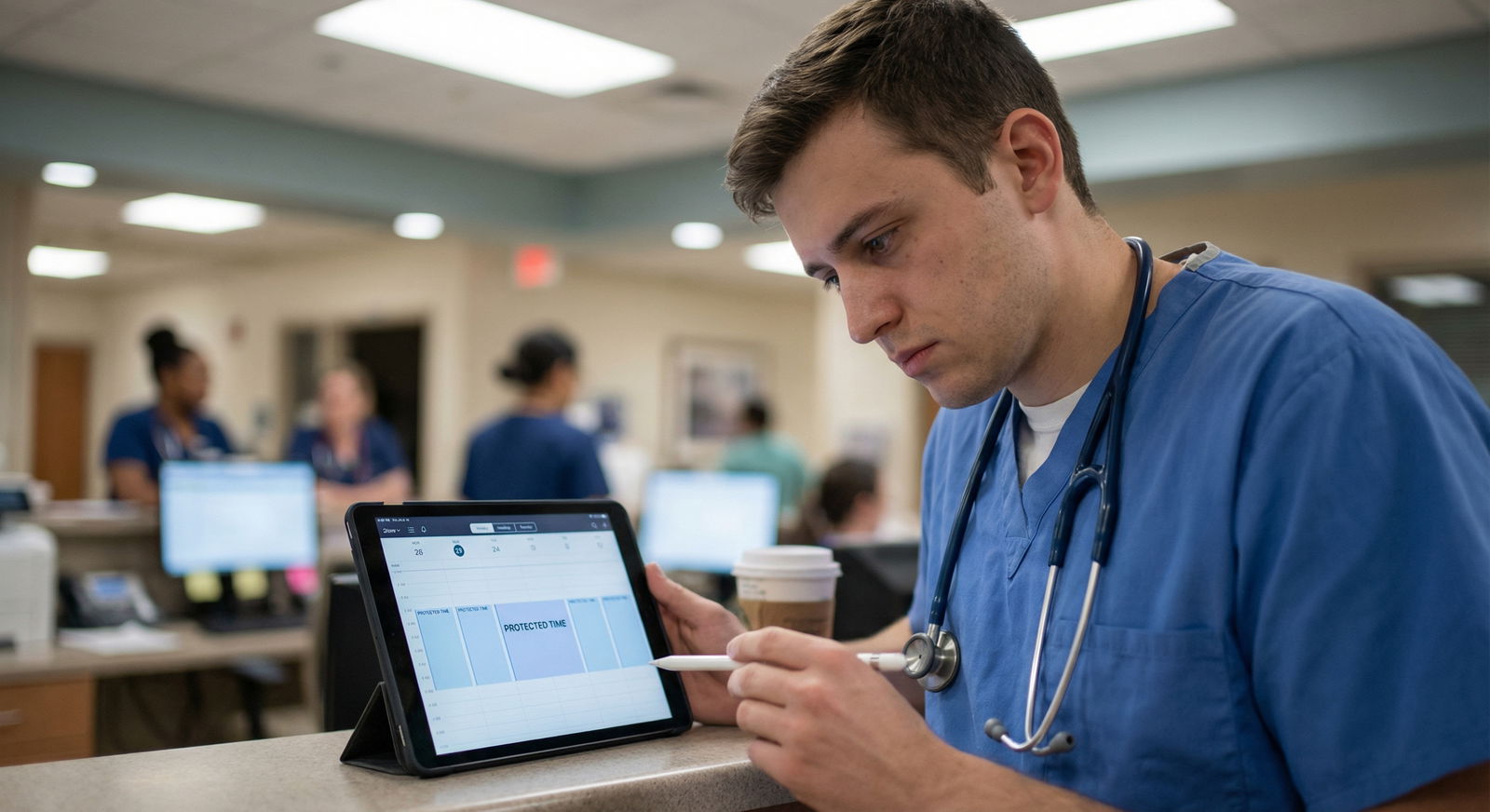
Another secret from watching high-functioning residents: the best ones lower the standard on call without abandoning it. They don’t insist on perfect macros, organic produce, and home-cooked beauty. They protect the basics. Protein. Fiber when possible. Regular fuel. Water. Backup calories. They understand that preserving function is better than chasing purity.
This is also where people get tripped up by nutrition content online. Social media is full of advice built for influencers with ring lights, free afternoons, and emotional support smoothie bowls. That advice is mostly useless at 2 a.m. while you’re trying to place orders and admit your sixth patient. Your call nutrition plan should look a little inelegant. Good. If it works in real life, that’s superior to a photogenic plan that collapses on contact with medicine.
So ask one question before each call shift: what food can I realistically consume even if the day goes badly? Build around that answer. Not around fantasy.
How to survive post-call without wrecking the rest of the week
Post-call is where residents often do the most damage.
They stumble home exhausted, dehydrated, overstimulated, and vaguely disgusted by what they ate overnight. Then they decide to “be good” by not eating, overexercising, or trying to erase the previous 24 hours. Bad move. Post-call is not cleanup time. It’s stabilization time.
Eat a simple recovery meal. Nothing heroic. Something easy on the stomach with carbs, protein, and fluid. Toast and eggs. Rice and soup. Yogurt with fruit. A sandwich and water. Then get some daylight if you can. Five or ten minutes by a window or outside helps more than people think. A brief walk is fine. A punishment workout is not.
The cravings after call are often emotional and neurological before they are truly metabolic. You’re not just hungry. You’re depleted. Your brain wants comfort, reward, and relief. If you treat that with shame, you usually end up making it worse. If you treat it with structure, you recover faster.
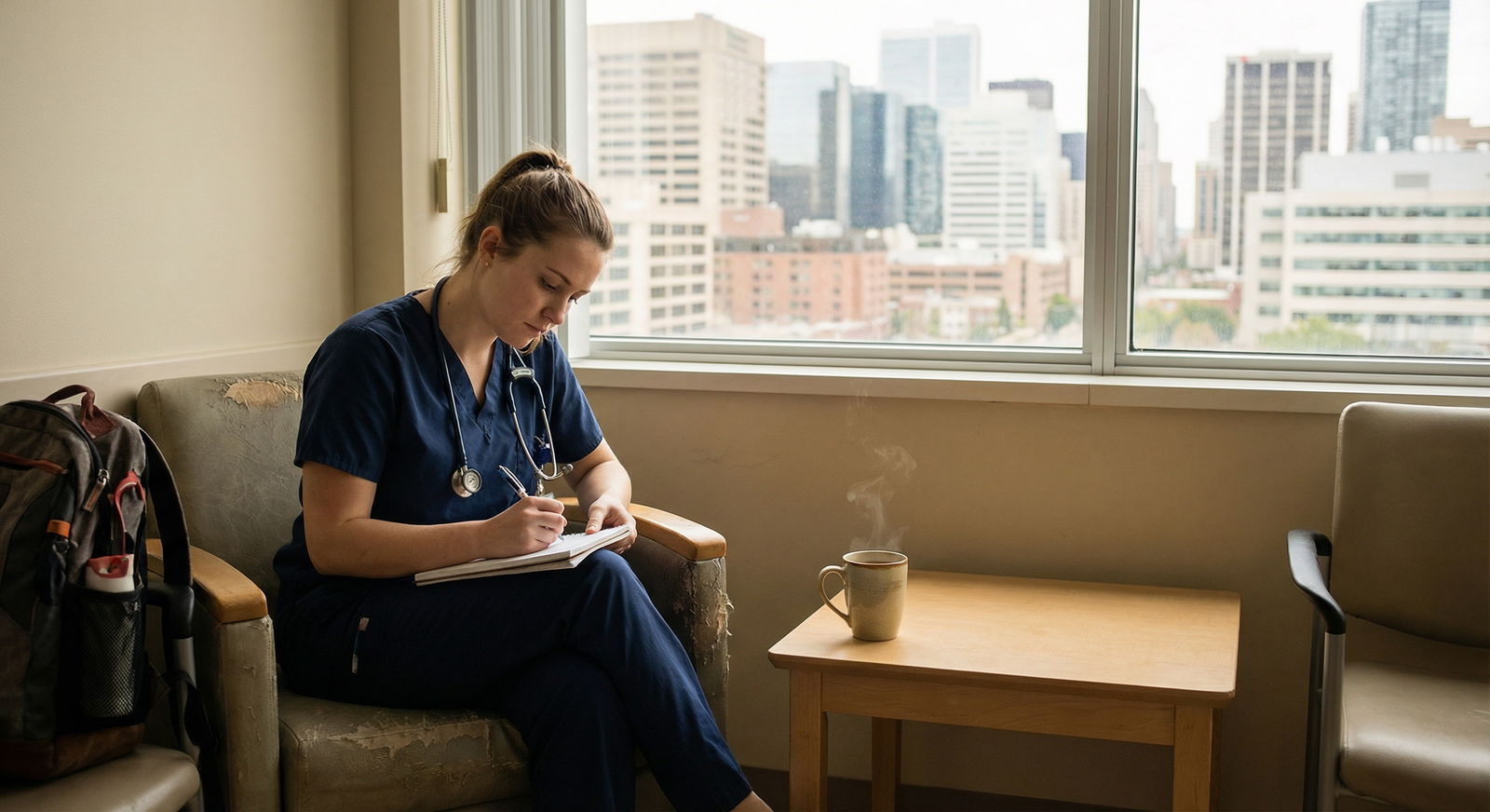
The residents who handle call months best don’t chase redemption after every ugly shift. They reset. They hydrate, eat something decent, sleep, and return to normal patterns quickly. That controlled recovery day prevents the classic cycle: overeating, guilt, restriction, another crash, repeat. Less drama. More consistency.
Closing: the real win is resilience, not perfection
Here’s the standard I want you to use during call months: did your eating protect your energy, your mood, and your ability to function?
That’s the metric. Not whether every meal was ideal. Not whether you avoided every cookie in the workroom. Not whether your diet app thinks you had a virtuous day. Call months are not a clean laboratory. They’re controlled chaos. You need a system built for chaos.
A few strategic habits make a huge difference. Eat before call. Carry portable protein and backup calories. Drink water on purpose. Stop using restriction as punishment after hard shifts. That alone will spare you most of the crash-and-binge misery that makes call feel even more brutal than it already is.
And here’s the good news. You do not have to leave call season feeling like all your good habits died. Most don’t. They just need to be simplified, hardened, and made repeatable. Aim for resilient, not perfect. That’s how you come out of call months with more control than you thought possible.