
Clinical volunteering is one of the most powerful ways to explore medical careers, confirm your commitment to patient care, and develop core skills long before you wear a white coat. Done well, it becomes far more than “checking a box” for applications—it shapes how you think, how you communicate, and how you show up as a future healthcare professional.
This expanded guide walks you through how to navigate clinical volunteering strategically, so you gain meaningful experience, stand out in applications, and grow as a compassionate, competent future clinician.
Understanding Clinical Volunteering and Its Role in Medical Careers
Clinical volunteering is more than simply being present in a hospital or clinic. It is your first real immersion into the world where healthcare professionals work, patients seek help, and complex systems come together to deliver care.
What Is Clinical Volunteering?
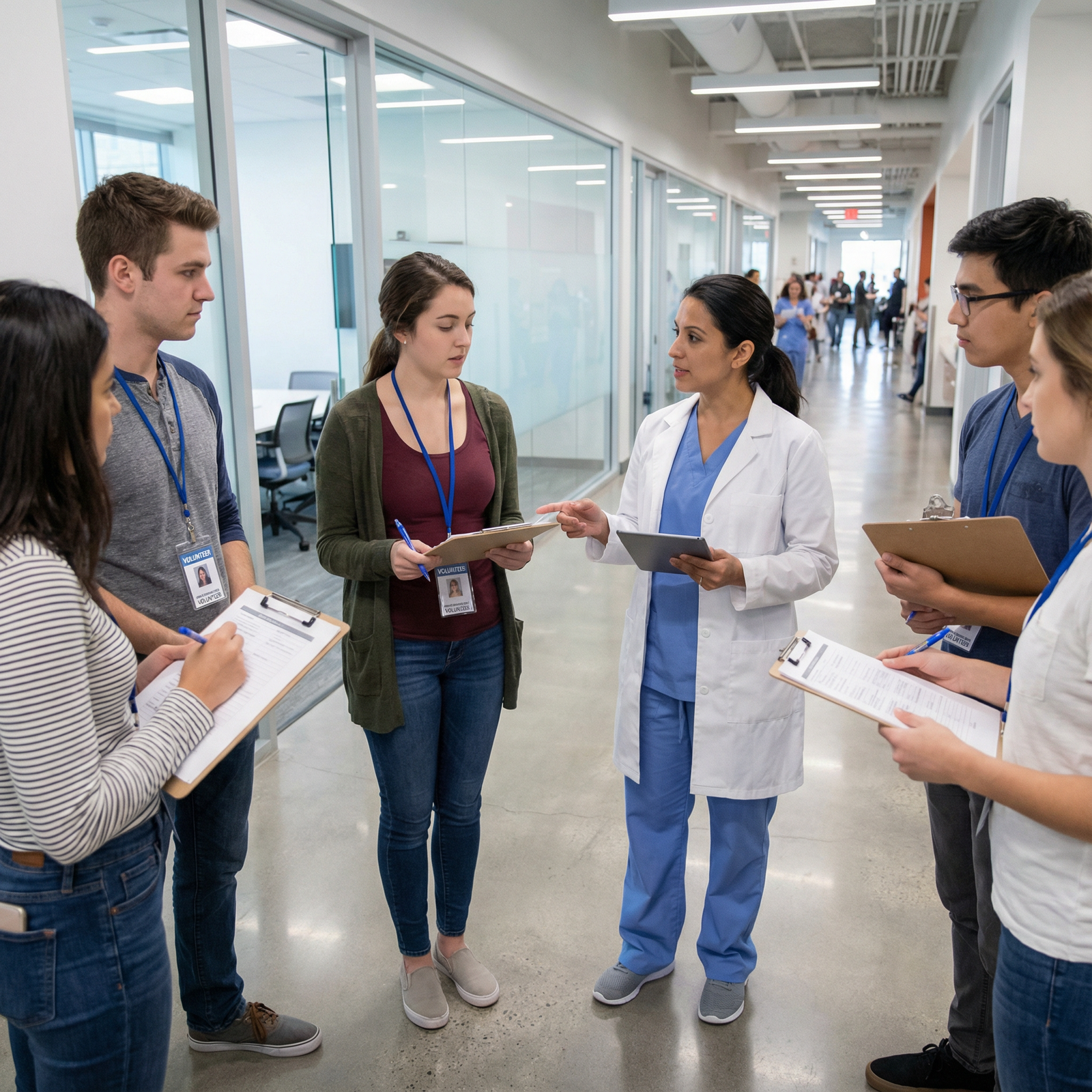
Clinical volunteering refers to unpaid roles in healthcare environments where you support patient care indirectly or directly, under appropriate supervision. You are not practicing medicine—but you are part of a care team.
Common clinical volunteering settings include:
- Hospitals (inpatient units, emergency departments, outpatient departments)
- Outpatient clinics (primary care, specialty clinics, free/low-cost clinics)
- Community health centers and public health departments
- Long-term care facilities (nursing homes, rehabilitation centers, hospice)
- Non-profit organizations that provide medical, mobile, or outreach services
Typical volunteer roles may include:
- Escorting patients to appointments or imaging
- Assisting with patient check-in, forms, and wayfinding
- Stocking supplies and preparing rooms
- Offering comfort measures (blankets, water, conversation)
- Helping with translation if you are qualified and designated to do so
- Supporting health education or outreach events
You won’t be diagnosing or prescribing—but you will be watching real medicine in action and learning how healthcare professionals think and behave.
Why Clinical Volunteering Is Essential for Aspiring Healthcare Professionals
For premeds and early medical students, clinical volunteering is one of the clearest signals to admissions committees that you understand what you are signing up for—and that you’ve chosen this path with your eyes open.
1. Authentic Exposure to Patient Care
No textbook or YouTube video matches:
- Hearing code calls overhead
- Watching how a nurse calms an anxious family
- Seeing the pace of a night shift in the ED
- Observing how physicians communicate difficult news
This exposure helps you answer key questions honestly:
Do I enjoy being around patients? Can I handle illness, suffering, and uncertainty? Do I feel energized by this environment—or drained?
2. Critical Skill Development
Clinical volunteering is a powerful lab for soft skill development, which is crucial across all medical careers:
- Communication: Introduce yourself, explain processes in plain language, interact with distressed patients.
- Empathy and cultural humility: Work with diverse populations, learn to listen, avoid assumptions.
- Teamwork: Coordinate with nurses, physicians, techs, social workers, and administrative staff.
- Professionalism: Protect privacy, follow protocols, show reliability and integrity.
- Adaptability and problem-solving: Handle unexpected situations (e.g., a lost patient, a sudden delay in care).
These are exactly the qualities schools probe during interviews and personal statements.
3. Building a Professional Network in Healthcare
Volunteering places you shoulder-to-shoulder with:
- Physicians and residents
- Nurses and advanced practice providers
- Social workers, pharmacists, therapists
- Administrators and coordinators
Over time, as they see your reliability and curiosity, they may:
- Allow you to observe procedures or rounds
- Share career advice and personal stories
- Offer shadowing opportunities
- Write strong, specific letters of recommendation
4. Strengthening Your Application Profile
Clinical volunteering is one of the clearest indicators of:
- Commitment to medicine
- Service orientation
- Resilience and consistency
Admissions readers quickly notice when applicants have:
- Sustained volunteering over months or years
- Increasing responsibility over time
- Clear reflection on what they learned
5. Personal Growth and Clarifying Your Path
You may enter thinking you want to be a surgeon and leave passionate about palliative care. Or you might discover you prefer public health over direct patient care. Both outcomes are good.
Clinical volunteering helps you:
- Understand the realities of medicine—not TV dramatizations
- Process your reactions to illness, death, and suffering
- Clarify which specialties or environments fit your strengths and values
- Decide whether medicine is truly the right calling
Setting Yourself Up for Success: Before You Start Volunteering
The most successful volunteers don’t just “sign up and show up.” They approach clinical volunteering with intention.
1. Clarify Your Goals and Expectations
Before applying, ask yourself:
- Why am I doing clinical volunteering now?
- Explore medicine vs. confirm my commitment?
- Strengthen a weak area in my application?
- Gain exposure to a specific population (e.g., pediatrics, geriatrics)?
- What type of experience am I hoping for?
- high patient contact vs. more observational
- Fast-paced ED vs. longitudinal primary care
- Urban hospital vs. community clinic
- What constraints do I have?
- Transportation? Class schedule? Work obligations?
- Comfort level with different patient populations?
Write these down. Your answers will help you:
- Choose the right setting
- Communicate your goals clearly to coordinators
- Later reflect and articulate what you gained
2. Research and Select the Right Clinical Volunteering Opportunities
Not all clinical volunteering is the same. Two students can both “volunteer at a hospital” and have completely different experiences.
Where to Look
Hospital volunteer offices
Most larger hospitals have structured volunteer programs with:- Application cycles
- Interviews or orientations
- Defined roles for students (e.g., patient transport, unit helper)
Free and community clinics
Especially valuable for:- Serving uninsured/underinsured populations
- Seeing social determinants of health up close
- Opportunities for translation, health education, and advocacy
Long-term care and hospice facilities Great for:
- Building sustained relationships with patients
- Practicing communication around chronic illness and end-of-life issues
Mobile clinics and outreach programs Ideal if you’re interested in:
- Public health
- Underserved populations
- Community-based care
Student-run clinics (for premedical and early medical students where available) Provide structured roles for students with clear supervision and training.
What to Consider When Comparing Options
Ask yourself:
How much patient interaction is there?
Some roles are mostly transport or stocking; others involve significant patient contact.Is there room for growth?
Can volunteers take on more responsibility after some time?What is the minimum commitment?
Many programs require 3–4 hours/week for at least 3–6 months.What support is available?
Are there orientations, trainings, or opportunities to debrief challenging experiences?
Whenever possible, talk with current or former volunteers to get an honest sense of what the day-to-day looks like.
3. Prepare Thoughtfully for the Application Process
Treat volunteer applications as seriously as job or internship applications.
Tailor Your Materials
Resume/CV
- Emphasize service, leadership, and teamwork
- Highlight any healthcare-related or people-facing experiences
- Include language skills—very valuable in clinical settings
Cover letter or short responses
- Be specific about why you want to volunteer in that setting
- Connect your goals to the organization’s mission
- Emphasize reliability, professionalism, and willingness to learn
Be Ready for Screening Processes
Many healthcare organizations require:
- Background checks
- Immunization records (MMR, Hep B, varicella, TB testing, flu/COVID vaccines depending on policies)
- HIPAA or privacy/confidentiality training
- Drug screening (in some systems)
Gather these early to avoid delays.
Follow Up Professionally
If you haven’t heard back in 1–2 weeks:
- Send a short, polite email:
- Reiterate your interest
- Ask about next steps or expected timelines
- If you get waitlisted, ask to be considered for future openings or other roles
Thriving as a Clinical Volunteer: Professionalism, Presence, and Participation
Once you’ve started, your daily behavior and attitude determine how much you learn and how others perceive you.
4. Show Up as a Professional from Day One
Remember: even as a volunteer, you are part of a healthcare team.
Dress, Demeanor, and Communication
Dress appropriately
- Follow dress codes precisely (scrubs vs. business casual, closed-toe shoes, minimal jewelry)
- Keep hair and nails neat; avoid strong fragrances
Be on time—early is better
- Aim to arrive 10–15 minutes before your shift
- Inform the coordinator ahead of time if you’re sick or can’t attend
Use professional communication
- Introduce yourself clearly: “Hi, my name is [Name]. I’m a volunteer working with [Unit]. How can I help?”
- Address staff and patients respectfully (Mr./Ms./Dr. unless invited otherwise)
- Avoid slang or casual language in clinical spaces
Protect Privacy and Boundaries
- Never share patient information (names, diagnoses, stories) outside the clinical setting—even anonymously.
- Never photograph patients, charts, or clinical spaces without explicit institutional permission.
- Do not add patients or staff to your personal social media.
- If a situation feels uncomfortable or outside your scope, step back and ask staff for guidance.
5. Engage Actively and Seek Meaningful Ways to Contribute
You might start with seemingly “small” tasks—transport, stocking, cleaning rooms—but how you handle these shapes future opportunities.
Be Proactive, Within Your Role
- Ask: “Is there anything else I can help with?” when you finish an assigned task.
- Learn common workflows—anticipate needs (e.g., restocking, room setup).
- Volunteer for extra shifts or special events when you can, especially health fairs, screenings, or outreach days.
Learn From Every Interaction
When appropriate and not disruptive, ask staff:
- “How did you decide on this treatment?”
- “What do you enjoy most about your role?”
- “What skills do you think are most important for someone entering medicine?”
Observe:
- How providers deliver bad news or explain complex conditions
- How nurses prioritize tasks under pressure
- How teams communicate during emergencies
Always prioritize patient comfort and team workflow: if people are busy, wait for calmer moments to ask questions.
6. Build Strong Relationships and Find Mentors
Clinical volunteering is one of the best environments to build authentic professional relationships.
Connecting With Staff
- Learn and remember names of nurses, techs, physicians, and support staff.
- Thank people who take time to teach you.
- Show consistency—be the volunteer people know they can rely on.
Once you’ve been around for a while and built trust:
- Express your interest in their specialty or career path.
- Ask if they’d be open to a brief conversation about their journey.
- Later, if appropriate, you can ask for shadowing or a letter of recommendation.
Seeking Feedback and Growth
- Periodically ask your supervisor:
- “How am I doing?”
- “Are there ways I could be more helpful to the team?”
- “Are there additional responsibilities I could take on?”
Feedback—both positive and constructive—is invaluable for your development as a future healthcare professional.
Making It Count: Reflection, Documentation, and Long-Term Impact
Without reflection and documentation, clinical volunteering can blur into “hours logged” rather than transformation experienced.
7. Reflect Deeply on Your Clinical Volunteering Experiences
Reflection turns experience into insight—and later, into compelling personal statements and interview answers.
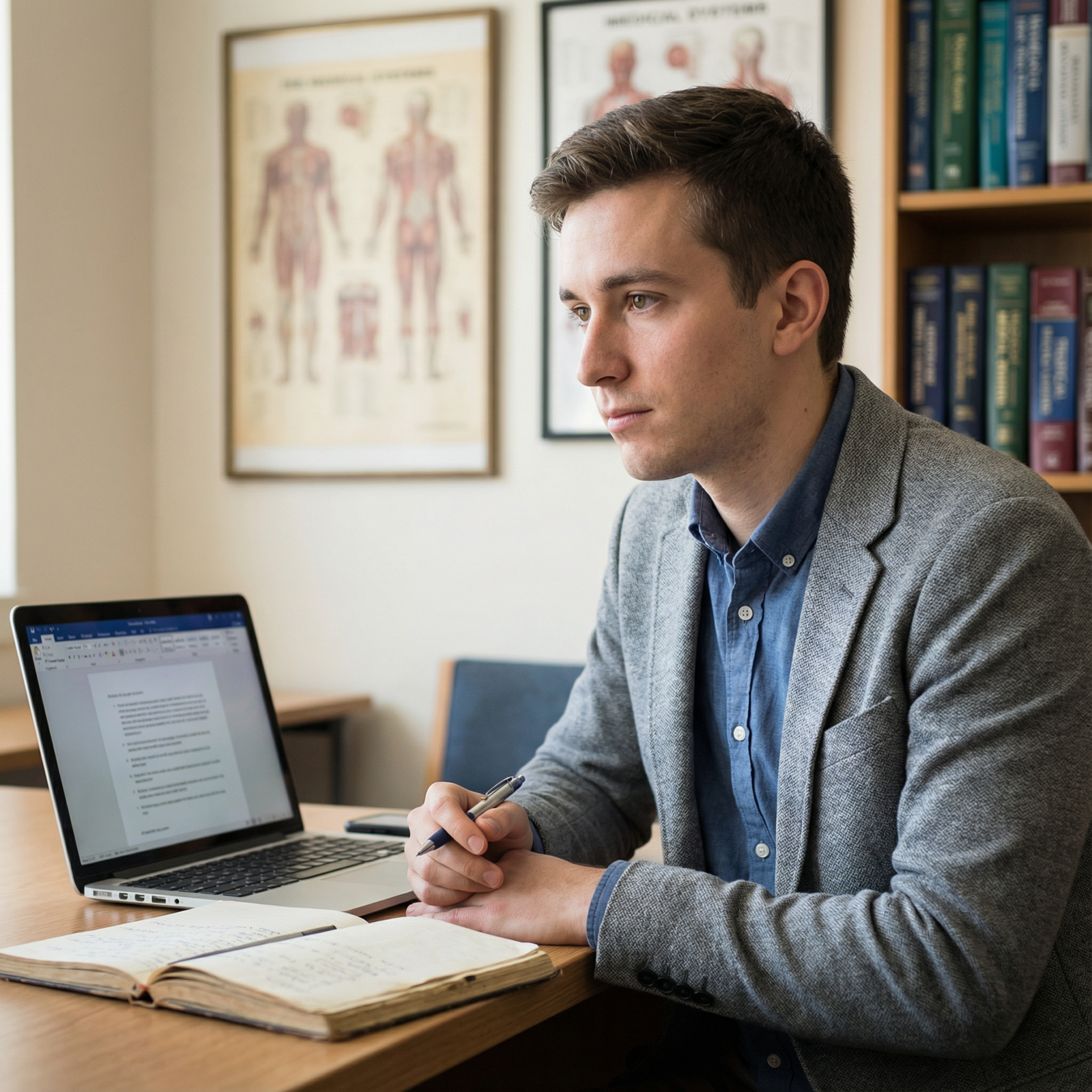
Start a Clinical Reflection Journal
After each shift (or at least weekly), write down:
- A brief summary of what you did
- One or two patient interactions that stood out (without identifying details)
- Your emotional reactions—what felt inspiring, uncomfortable, surprising
- Questions that arose about systems, ethics, or communication
- Skills you practiced (listening, empathy, conflict resolution)
You can structure reflections using prompts like:
- “One moment that changed how I see patient care was…”
- “I realized I need to work on…”
- “A time I saw excellent team communication was when…”
This journal becomes a goldmine when applying for medical school or residency. You can pull real, specific stories that demonstrate your growth and insight.
Process Difficult Experiences
Clinical environments expose you to suffering, death, and systemic challenges. It’s normal to feel:
- Sadness or grief
- Frustration with system limitations
- Uncertainty about your reactions
Use healthy outlets:
- Talk with trusted mentors, peers, or supervisors
- Attend debriefing sessions if offered
- Reflect privately and, if needed, seek mental health support
Learning to process these experiences now will serve you throughout your career.
8. Stay Open, Flexible, and Willing to Pivot
Your path through clinical volunteering doesn’t have to be linear.
Embrace Unexpected Opportunities
You might:
- Start in transport and get invited to help with patient satisfaction surveys
- Volunteer at a free clinic and discover an interest in public health
- Assist in a nursing home and develop a passion for geriatrics
Say “yes” when appropriate to new roles, trainings, or events—even if they’re slightly outside your initial interests.
Know When to Transition
If an experience consistently feels:
- Misaligned with your goals
- Logistically unsustainable
- Emotionally draining without offsetting growth
Consider:
- Talking with your coordinator about adjusting your role or schedule
- Exploring a different volunteer site that better fits your interests and constraints
- Gradually transitioning while maintaining professionalism and giving notice
It’s better to have fewer, richer experiences than many shallow, disconnected ones.
9. Meticulously Track Your Hours and Experiences
Accurate documentation is essential for applications and for recognizing your own growth.
Keep a Running Log
Use a spreadsheet, app, or notebook to record:
- Date and duration of each shift
- Location and role
- Supervisor’s name and contact information
- Brief notes on what you did or learned
Later, this information helps you complete:
- AMCAS/AACOMAS/TMDSAS clinical experience sections
- Medical school secondary essays
- Scholarship or program applications
Build Toward Strong Letters of Recommendation
Over months of consistent, engaged volunteering:
- Identify supervisors or clinicians who know you well
- Ask early if they’d feel comfortable writing a strong letter of recommendation
- Provide them with:
- Your CV
- A short statement of your goals
- Specific experiences you valued in their setting
Letters from clinical supervisors who can speak to your professionalism, empathy, and growth are often more impactful than generic letters from distant professors.
Real-World Stories: How Clinical Volunteering Shapes Medical Careers
Sarah: Discovering a Passion for Pediatrics
Sarah spent two summers volunteering on a pediatric inpatient floor:
- At first, she focused on small tasks—delivering toys, reading stories, bringing snacks.
- Over time, she built rapport with nurses and pediatric attendings.
- She watched how clinicians tailored communication to children and their parents.
- A pediatrician noticed her consistency and invited her to shadow and later wrote a detailed recommendation letter.
By the time she applied to medical school, Sarah could clearly articulate:
- Why pediatrics resonated with her values
- Specific stories of comforting anxious families
- How she saw herself as a future pediatrician
Her clinical volunteering wasn’t just a bullet point—it was the narrative backbone of her application and interviews.
Kevin: Pivoting From Research to Family Medicine
Kevin started in a basic science research lab, expecting it would confirm his career trajectory. Instead, he missed real-time interaction with people.
He transitioned to volunteering at a community health clinic:
- He helped with patient intake and health education handouts.
- He worked closely with patients managing diabetes and hypertension.
- He saw the importance of continuity of care and long-term relationships.
Through this experience, he realized:
- He valued sustained relationships over episodic hospital encounters.
- Primary care and family medicine aligned more with his strengths.
His clinical volunteering validated his shift in career goals and helped him explain this pivot convincingly to admissions committees and, later, residency programs.
FAQs About Clinical Volunteering for Premeds and Early Medical Students
1. How many clinical volunteering hours do I need for medical school?
There is no universal cutoff, but competitive applicants often have at least 100–150 hours of genuine clinical exposure, and many have more. Admissions committees care more about:
- Consistency (e.g., 3–4 hours/week for a year)
- Depth of involvement and responsibility
- Reflection and insight—not just total hours
A smaller number of well-reflected, longitudinal experiences is better than a large number of scattered, shallow ones.
2. What should I prioritize: clinical volunteering, shadowing, or research?
All three can be valuable, but their purposes differ:
- Clinical volunteering: Active participation, service, skill development, and teamwork.
- Shadowing: Observing physician decision-making and workflows more closely.
- Research: Demonstrating curiosity, critical thinking, and scientific engagement.
For aspiring healthcare professionals, you generally need some of each, but for confirming your interest in direct patient care, clinical volunteering and shadowing are most crucial. Balance them based on your goals and the strengths/weaknesses of your current profile.
3. Can I count my medical scribing or paid clinical job as “clinical experience”?
Yes. Paid roles like scribing, medical assistant positions, EMT work, CNA jobs, or phlebotomy are excellent forms of clinical experience and often provide more responsibility. For applications, you’ll typically categorize them as employment rather than volunteering, but they serve a similar purpose in demonstrating:
- Comfort in clinical environments
- Direct patient exposure
- Collaboration with healthcare teams
4. What if my clinical volunteering experience is mostly non-clinical tasks?
Many entry-level roles involve:
- Stocking supplies
- Transporting patients
- Cleaning rooms
- Delivering meals
These tasks are still part of the clinical environment. To increase the clinical richness of your experience:
- Be present and observant when you’re in patient rooms or near care interactions.
- Politely ask staff if there are any opportunities to observe (without interfering).
- Demonstrate reliability—over time, you may be trusted with more interactive roles.
If, after a fair trial period, your role remains purely logistical with no prospect for patient contact, consider adding another clinical volunteering role that offers more interaction.
5. How should I talk about clinical volunteering in my personal statement or interviews?
Focus on specific stories that illustrate growth, insight, or impact:
- Describe a memorable patient interaction (without identifying details).
- Explain what you learned about:
- Communication
- Ethics
- Teamwork
- Healthcare disparities
- Show how the experience changed:
- The way you view patients
- Your understanding of the physician’s role
- Your commitment to serving others
Avoid generic statements like “I enjoyed helping people.” Instead, share concrete examples that demonstrate who you are becoming as a future healthcare professional.
Clinical volunteering can be one of the most transformative parts of your journey toward a medical career—if you approach it intentionally. By clarifying your goals, choosing thoughtful opportunities, showing up professionally, reflecting deeply, and building relationships, you turn “hours” into experience, growth, and a clearer sense of purpose in medicine.