
Last fall, a sophomore premed landed in Barcelona for her dream study-abroad semester. Two weeks in, she got an email from a clinical volunteering program back home: “We can’t hold your spot if you’re gone for 4 months.” Her excitement about tapas and weekend trips crashed into a single fear: “Is this semester going to hurt my chances of getting into med school?”
If you’re in that tension right now—wanting real global experience but terrified of losing clinical exposure—you are not overreacting. But this is absolutely manageable if you treat study abroad like a planned “clinical pivot,” not a four‑month disappearance.
(See also: Handling a Toxic Clinical Volunteer Environment as a Pre‑Med for strategies on managing clinical roles.)
Let’s walk through how to do that, step by step, before you leave, while you’re away, and in the months after you come back.
Step 1: Diagnose Your Situation Before You Commit
Before you even sign the study-abroad paperwork, you need a clear picture of where you stand clinically. Think like an admissions committee looking at your file.
Ask yourself, and be brutally honest:
- How many hours of direct clinical exposure do you have right now?
- Shadowing
- Hospital volunteering
- Free clinic work
- Hospice, EMT, medical assistant, CNA, etc.
- Are those hours consistent (e.g., 3–4 hours/week over a year) or bunched (e.g., 120 hours in one summer then nothing)?
- What stage are you in?
- Early premed (freshman/sophomore)
- Late premed applying in 6–18 months
- Current med student (MS1/MS2) thinking about an international semester/rotation
Different situations require different strategies.
If you’re an early premed (freshman or early sophomore)
You have the most flexibility. Med schools are looking for a pattern by the time you apply, not perfection by year two.
Situation:
- You have little or no clinical exposure yet.
What to do before going abroad:
- Aim to establish at least one of these:
- 40–60 hours of hospital volunteering over a semester
- A consistent weekly role at a free clinic for 3–4 months
- 20–40 hours of shadowing with one or two physicians
The point is not to rack up massive hours; it is to show you have truly started engaging with medicine before you leave.
If you can walk into junior year saying, “I started volunteering in a clinic my sophomore spring, studied abroad that fall, then picked back up and deepened my clinical involvement,” that sounds intentional and mature.
If you’re applying in 1–2 years (late sophomore/junior)
Your margin is narrower.
Situation:
- You’re targeting an application cycle within 12–24 months.
- You’re considering study abroad during the year or summer before you apply.
Here, you must think in timelines, not just hours.
- Pull up your likely application year (e.g., submitting AMCAS June 2026).
- Count backward:
- When will you take the MCAT?
- When will you need your strongest clinical experiences to be ongoing?
If your clinical experiences are light and you’re planning a full semester abroad right before your application year, you need to be much more deliberate:
- You probably need significant clinical work both before and after the semester.
- You’ll want at least one clinical role that continues across that study-abroad gap (even if paused).
If your file would look like: “100 hours sophomore year, then 4 months abroad junior fall, then nothing clinical until senior spring,” that’s a weak story. Fix it now with planning.
If you’re a med student considering an international semester/rotation
Now the question shifts a bit.
Med schools are behind you, but residency programs and clinical competency are ahead.
Your key questions:
- How will this semester affect:
- Step/Level study timelines?
- Required clerkships?
- Your narrative for why you’re pursuing an international experience?
You’re not in as much danger of “lacking clinical exposure” in absolute terms—your whole degree is clinical—but you are at risk of looking scattered or delaying key milestones. You’ll want to tie the international time clearly to your specialty interests or long‑term goals.
Step 2: Set a Clear Clinical Strategy Before You Leave
Once you know your situation, you can design a plan. Think of your study-abroad semester as the middle chapter in a three-part clinical story:
- Before
- During
- After
You want a through-line that makes sense on a med school or residency application.
Before you go: Build a stable clinical “anchor”
You need at least one experience that:
- Starts before you leave
- Has the potential to continue when you return
- Has a supervisor who can later write a letter describing your commitment over time
Concretely, that might be:
- A hospital volunteering program where you’re already 3–6 months in
- A long-term role at a student-run free clinic
- A job as a medical assistant/scribe/EMT you plan to return to
Action steps 3–4 months before departure:
Meet with your clinical supervisor.
Say something like:“I’m planning a one-semester study-abroad experience in the fall. This work is really important to me, and I’d like to pause while I’m abroad and return to the same role when I get back. Is that possible in your program?”
Ask about program rules.
- Some hospital volunteer programs will hold your place for a semester.
- Others will make you re-apply. If that’s the case, note their timelines so there’s no gap after you return.
Communicate your long game.
When your supervisor understands that you’re not “ditching” the work, they’re more likely to speak well of you later and accommodate the pause.
Step 3: Maximize Clinical-Relevant Value While Abroad (Without Breaking Laws)
Here’s the hard truth: In most countries, you will not be allowed to do hands-on clinical care as a foreign undergraduate or non‑licensed visitor. And you should not try to circumvent this.
Your goal is not to “sneak” clinical procedures. Your goal is to stay clinically adjacent and build global health insight that complements your premed story.
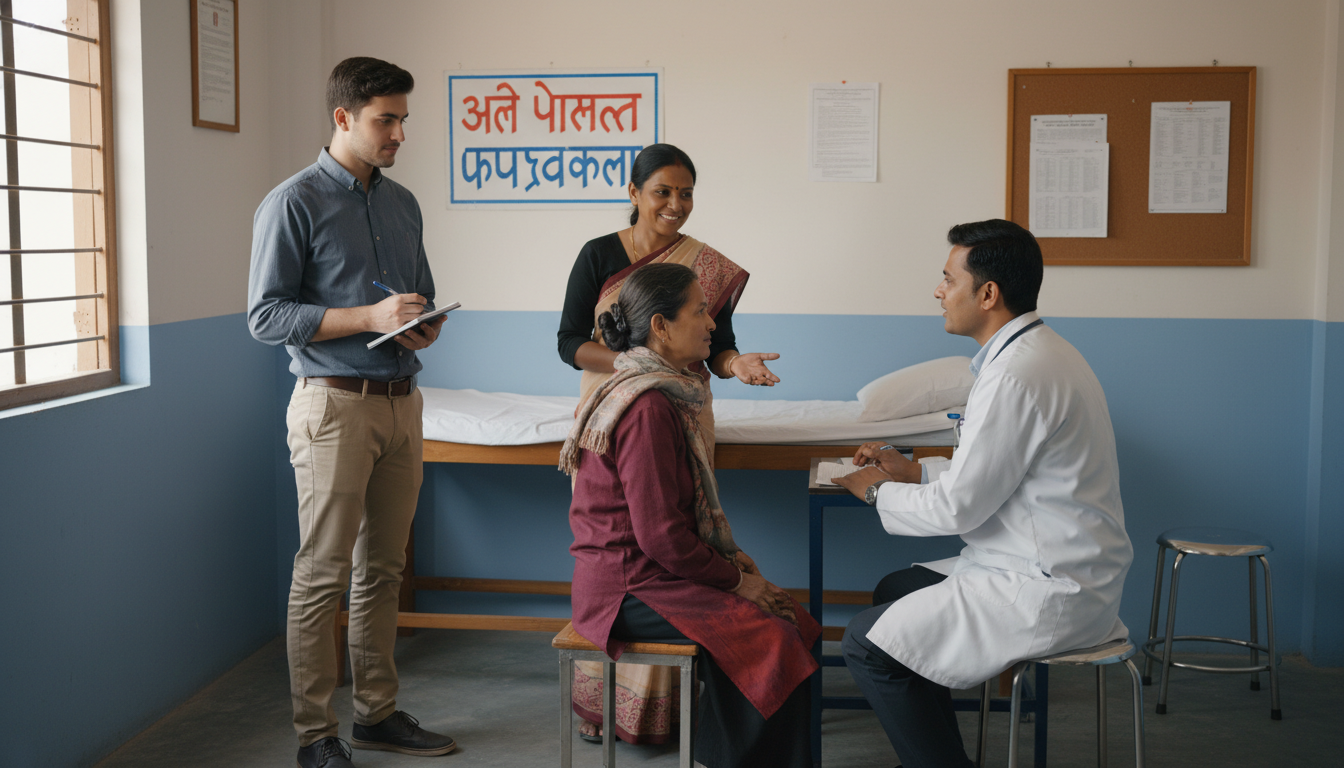
Step 3A: Clarify what’s legal and ethical where you’re going
Before you assume you can shadow or volunteer in a clinic abroad:
- Check your study-abroad program office: Some have pre-vetted clinical or public health opportunities.
- Ask your home premed advising office or dean:
- Are there known, reputable programs in your destination country?
- Are there any “do not touch this” organizations they specifically warn against?
- Look up local regulations:
- Many countries have strict privacy and licensing rules.
- What’s considered harmless “shadowing” in the U.S. can be illegal elsewhere.
Be especially cautious of programs that advertise:
- “Hands-on surgery experience for premeds”
- “Practice medicine abroad without a license”
- “You will be doing procedures doctors do”
Those are red flags both ethically and for your application. Admissions committees know these programs; they will not be impressed.
Step 3B: Target legitimate health-related roles
Think in terms of health systems and patient context, not just stethoscopes.
Here are realistic, legal, and valuable things you can do abroad:
Hospital or clinic observation only (true shadowing)
If allowed, you may be able to:- Observe patient flow
- Sit in on team meetings or rounds
- See how different specialties operate
You should:
- Get explicit permission from both the institution and the study-abroad program
- Follow strict privacy rules (no photos, no social media posts about patients, no identifying details)
Public health or community health projects
Examples:- Working with a local NGO on vaccination campaigns (logistics, not injections)
- Helping with health education workshops (after proper training and under supervision)
- Doing non-clinical work in maternal-child health programs
Research with a global or clinical angle
You might join:- A public health research project through the university abroad
- A qualitative study on patient access, health beliefs, or system barriers
Even if it’s not direct clinical work, you can connect it to your understanding of patient care systems.
Language and cultural immersion with medical relevance
If you’re in a Spanish-speaking country and plan to work with Spanish-speaking patients in the U.S., then:- Intensive language classes
- Homestays
- Community involvement
All of these feed directly into your future ability to communicate with patients.
Step 3C: Document your experiences like a clinician-in-training
Do not just “live it and forget it.” You won’t remember the details later when you’re writing secondaries.
Set up a simple system:
- Once a week, jot down:
- 1–2 patient situations you observed (de-identified)
- 1 health system difference you noticed vs. the U.S.
- 1 thing that challenged your assumptions about medicine, ethics, or access
Your entry might look like:
Week 6 – Santiago
Observed a primary care clinic that sees walk-in patients with no appointments. Watched a physician spend 30 minutes explaining diabetes to a patient with no insurance and limited literacy. Struck by how much time was devoted to education despite limited resources. Made me rethink how I’d approach chronic disease in a U.S. safety-net clinic.
Later, this becomes gold for secondaries like, “Describe an experience that changed your understanding of health care.”
Step 4: Maintain a Thread of Clinical Identity While Abroad
You don’t have to “disappear” from your clinical life just because you’re in another time zone.
Here’s how to keep that thread alive.
Option 1: Light, remote clinical or health-related commitments
Depending on your schedule and time difference, you might be able to do:
Remote patient navigation or support work
Some hospitals or non-profits have roles like:- Making check-in calls
- Helping with appointment reminders
- Performing non-clinical outreach under supervision
Remote scribing
A few scribe companies offer remote work. If you’re already trained before leaving, continuing a few hours per week could maintain continuity.Health education content creation
For example:- Creating or translating patient education materials for a clinic you previously volunteered at
- Helping a local public health department (abroad) with English-language materials
Caveat: Do not overload yourself. You’re abroad to live fully, not to recreate your U.S. schedule by Zoom. Think 2–4 hours per week at most.
Option 2: Maintain relationships, not just roles
Even if you can’t do clinical work abroad:
- Email your home clinical mentor/supervisor once or twice during the semester:
- Share one or two interesting health care observations from abroad.
- Express that you’re looking forward to returning to the role.
This does three things:
- Keeps you on their radar for when you come back.
- Shows maturity and long-term thinking.
- Gives you great material when requesting a letter later: “You saw my commitment pre- and post-study abroad, and I shared what I was learning while away.”
Step 5: Re-Enter with a Clear Clinical Plan—Before You Board the Flight Home
The most dangerous period for your clinical trajectory is often the 3–6 months after you return. You’re jet-lagged, readjusting, maybe behind in coursework, and it’s easy to say, “I’ll restart volunteering later.”
That “later” becomes a year, and suddenly you’re an applicant with a big clinical gap.

So you need to lock in your post-return plan before you leave or while you’re still abroad.
Step 5A: Put dates on your calendar now
Work backward from:
- Your flight home
- Start of next semester
- Application timelines (if relevant)
Then commit to:
- A specific week you’ll re-start clinical volunteering or work.
- A specific number of hours/week you’ll aim for, written down.
Example:
“I land January 5. Spring semester starts January 15. I will re-start volunteer shifts the week of January 22, 4 hours/week, in the outpatient oncology clinic.”
That’s no longer a vague wish; it’s a plan.
Step 5B: Re-contact your previous clinical sites
Ideally 4–8 weeks before you return, send emails like:
Subject: Returning from Study Abroad – Volunteer Re-Start
Dear [Name],
I hope you’re well. I’ve been studying abroad this semester in [City], and I’m returning to campus on [Date]. I really valued my time volunteering in [Unit/Clinic] last year and would love to resume that role (or a similar one) starting [Week].
Could you let me know what steps I should take to re-activate my status or if I need to re-apply?
Thank you again for the opportunity and for your guidance.
Best,
[Your Name]
You want to avoid coming home and learning, “Our next volunteer orientation is in three months.” If that’s likely, look for backup clinical options now.
Step 5C: If your old role is gone, pivot quickly
Sometimes programs:
- Shut down
- Change coordinators
- Change eligibility criteria
If your old clinical foothold disappears, do not spend months mourning it.
Instead:
Within the first two weeks back, identify three alternative clinical sites:
- Another hospital volunteer program
- A free clinic
- A hospice or nursing home role
- A medical scribe position
- EMT training or CNA work if feasible
Apply immediately to all three.
This isn’t overkill. Timelines vary, spots open randomly, and you want options.
Your story can still be strong if you show:
- Consistent clinical involvement across college
- A clear, quick pivot when one opportunity closed
Step 6: Integrate Study Abroad into Your Clinical Narrative
Med schools and residencies do not just count hours; they read for coherent, thoughtful narratives.
A study-abroad semester can either look like:
- A random detour that interrupted your clinical commitment, or
- A deliberate chapter that expanded your understanding of patients, systems, and health.
You control which one it is by how you talk about it.
When writing about it (personal statement, secondaries, interviews):
Avoid:
- “I went abroad to travel and have fun, and then I came back and restarted premed stuff.”
- Overly romanticized “saving” patients or communities abroad.
- Vague global-health buzzwords with no real reflection.
Aim for:
- Specific observations: “In Lyon, I saw how primary care physicians coordinated with social workers at the same clinic, which made me rethink fragmentation in U.S. care.”
- Humility: “I wasn’t allowed to provide direct clinical care, and that was appropriate. I focused on listening and understanding how patients navigated the system.”
- Connection to your post-return choices: “When I came back, I sought out a role at a community health center serving immigrant patients, because I wanted to apply some of what I’d seen in [country] to my local context.”
You’re showing that:
- You respect boundaries and ethics.
- You used the experience to deepen, not distract from, your path to medicine.
- You came back and did something with what you learned.
Special Situations and How to Handle Them
Situation: You already have low clinical hours and you’re leaving soon
If your application is within two years and you have, say, <50 hours of clinical exposure, and you’re about to lose a semester:
You have to compress and focus.
Before you leave:
- Try to secure an intensive clinical experience (e.g., 8–10 hours/week for at least one semester, or a summer with 20+ hours/week).
- Prioritize roles that will let you continue later (scribe jobs, clinic volunteering).
While abroad:
- Pursue health-related experiences where possible and document well.
- Do not stress if direct clinical exposure is limited; work on insight and reflection.
After you return:
- Treat the next 12–18 months as your clinical ramp-up period.
- Aim for sustained, weekly exposure, not just a burst.
Then, when asked about the “gap” in clinical work during interviews, you can say:
“I knew going abroad would mean less direct clinical exposure for one semester, so I intentionally increased my involvement before and substantially after that period. While abroad, I focused on understanding health systems and patient experiences in a different context.”
Situation: You’re a med student considering an international semester/rotation
Focus on:
Alignment with your specialty interests:
- Pediatrics? A rotation in a pediatric hospital abroad.
- Family medicine? Community clinics or rural health rotations.
Timing relative to exams:
- Don’t derail Step 1 or 2/Level exams with poor timing.
Accreditation and approval:
- Make sure the rotation is approved by your med school.
- Get clarity about how it appears on your transcript.
Your story becomes:
“I completed my core clerkships at home, then pursued a 4-week internal medicine rotation in [country] focusing on [e.g., infectious disease in low-resource settings], which strengthened my interest in [field] and my understanding of [specific issue].”
Your Next Step Today
Open your calendar and pick the exact semester you’re considering for study abroad. Then, right beneath it, sketch a three-part timeline: “Clinical Before,” “Abroad,” and “Clinical After.” Under each, write down at least one concrete action: a role to start or deepen, a health-related opportunity to explore abroad, and the week you’ll restart clinical work when you return. That single page turns your study-abroad semester from a risky gap into a powerful, intentional part of your path to medicine.