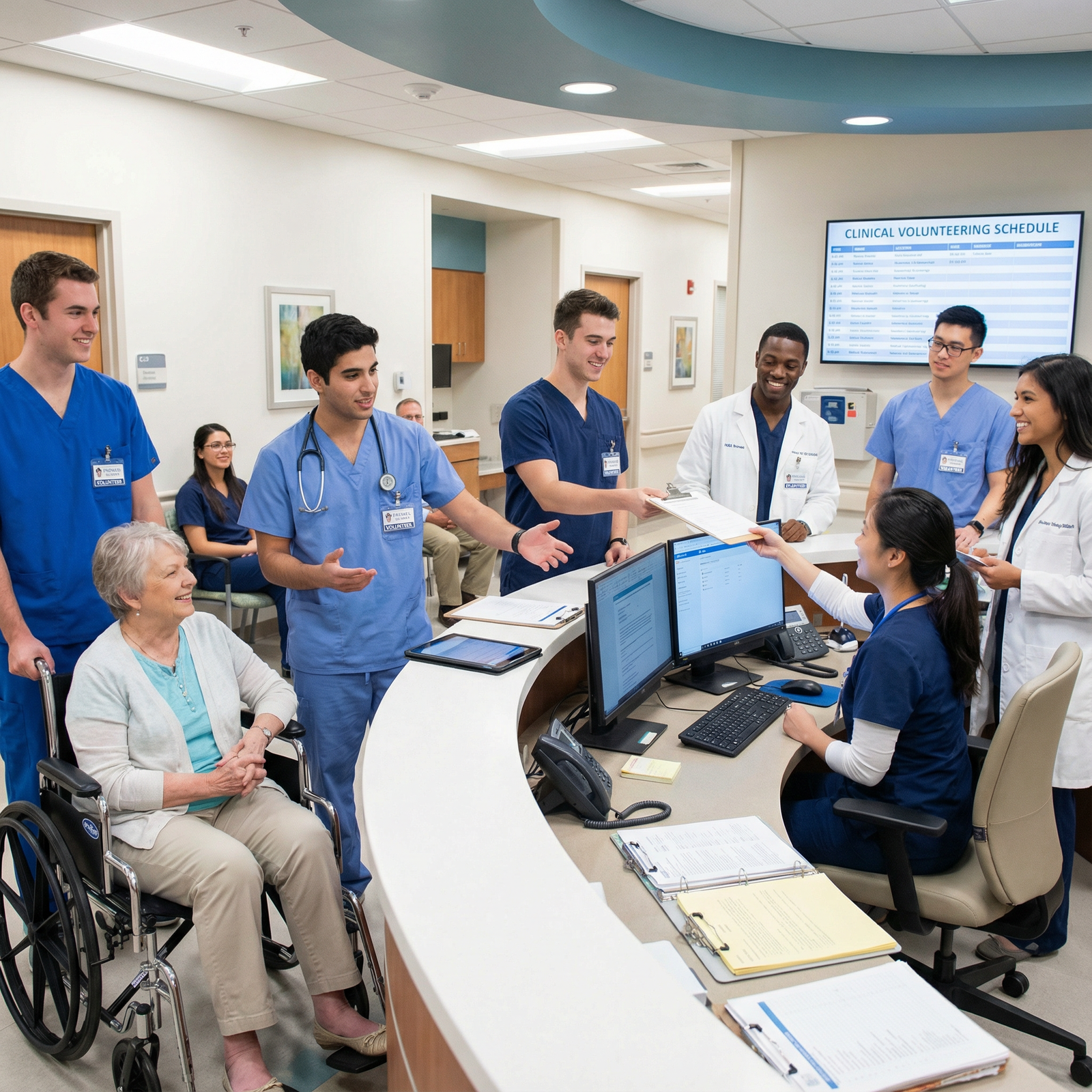
Clinical Volunteering: A Game Changer for Aspiring Medical Professionals
Introduction: Why Clinical Volunteering Matters Now More Than Ever
For students pursuing medicine, academic excellence and high test scores are only part of the story. Admissions committees and residency programs increasingly want to see evidence that you understand the realities of patient care, can function on a healthcare team, and are committed to service. Clinical volunteering sits at the intersection of all three.
Clinical volunteering is often the first sustained, meaningful exposure an aspiring physician has to real patients, real illness, and real healthcare systems. Done thoughtfully, it can:
- Clarify whether a healthcare career is truly the right path for you
- Build foundational skills in communication, professionalism, and cultural humility
- Strengthen your medical school or PA school application dramatically
- Provide powerful stories and insights for personal statements and interviews
This expanded guide will walk you through what clinical volunteering really is, why it is such a powerful tool in medical education and healthcare career development, how to choose and maximize volunteer opportunities, and what admissions committees are actually looking for in your experiences.
Understanding Clinical Volunteering in Healthcare Settings
Clinical volunteering is more than simply “helping out at a hospital.” It refers to unpaid roles within healthcare environments where you contribute to patient care, support staff, or community health initiatives, all under appropriate supervision.
What Counts as Clinical Volunteering?
In the context of premed and medical school preparation, clinical volunteering usually involves:
- Working in settings where patients are actively receiving care
- Having some level of contact with patients or their families
- Supporting the delivery of healthcare services, even if in a non-clinical support role
While specific tasks might be non-medical, the setting and proximity to patient care make the experience clinically relevant. Examples include:
- Escorting patients to appointments in a hospital
- Assisting with intake forms in a community health clinic
- Serving as a volunteer in an emergency department waiting room
- Supporting staff in a hospice or nursing home
This is distinct from general community service (e.g., tutoring, food banks). Both matter, but clinical volunteering gives you direct insight into healthcare systems and patient care.
Major Types of Clinical Volunteer Opportunities
Hospital Volunteering
- Roles: Unit helpers, patient transport, front desk greeters, emergency department volunteers, pediatric playroom assistants
- Typical Tasks: Bringing water or blankets, stocking supplies, helping with directions, providing companionship, basic administrative tasks
- Why It’s Valuable: Offers a broad view of hospital operations, exposure to interdisciplinary teams, and experience with acute and chronic illness.
Community Health Clinics and Free Clinics
- Settings: Federally Qualified Health Centers (FQHCs), free clinics, student-run clinics, mobile clinics
- Typical Tasks: Intake and registration, translating, vitals (if permitted and trained), health education materials, appointment reminders
- Why It’s Valuable: High exposure to underserved and vulnerable populations; excellent for learning about social determinants of health and health equity.
Research and Health Education Programs
- Settings: Academic medical centers, public health departments, nonprofit organizations
- Typical Tasks: Data collection, patient surveys, helping run health fairs or screening events, creating educational materials
- Why It’s Valuable: Bridges clinical care with public health and research; great for understanding how evidence informs practice and how preventive care works.
Nursing Homes, Assisted Living, and Hospice Care
- Roles: Activity assistants, visitor companions, family support volunteers
- Typical Tasks: Reading to residents, helping with recreational activities, providing companionship, supporting families, non-clinical comfort measures
- Why It’s Valuable: Deep exposure to chronic illness, aging, death and dying, and long-term patient relationships; powerful for learning empathy, patience, and communication.
Global Health and International Medical Missions
- Settings: Short-term medical brigades, long-term NGO projects, telehealth outreach
- Typical Tasks: Clinic support, logistics, translation, community health outreach, health education
- Why It’s Valuable: Exposure to different healthcare systems, resource-limited environments, and cultural contexts of care.
- Important Caveat: Ethical global health work must avoid “voluntourism,” respect local expertise, and follow strict scope-of-practice boundaries.
Each of these experiences can significantly strengthen your understanding of medicine, but the best portfolio often includes depth in at least one setting plus breadth across different populations or systems.
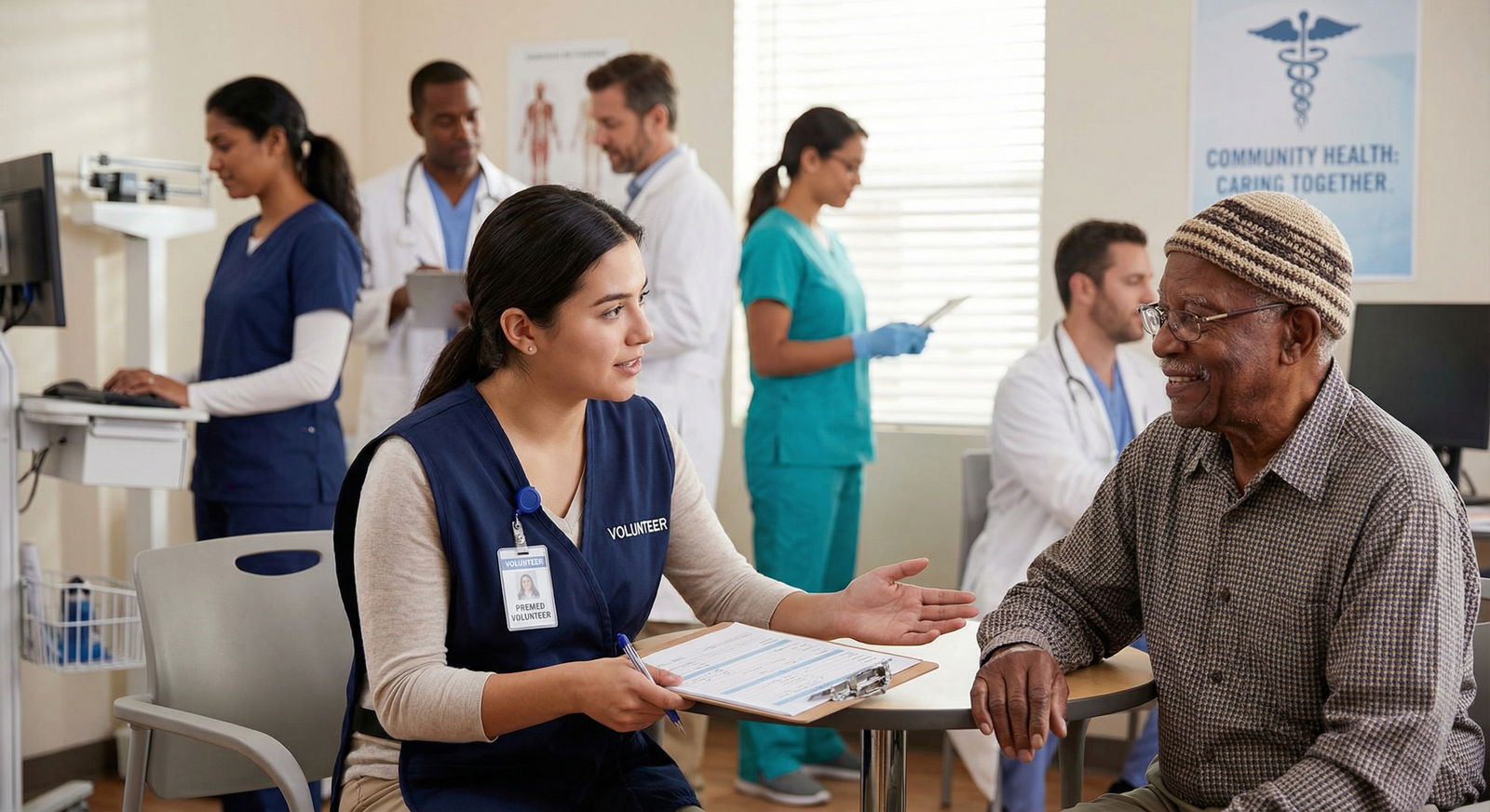
Why Clinical Volunteering Is Essential for Future Healthcare Professionals
1. Firsthand Exposure to Patient Care and the Realities of Medicine
Textbooks can teach you about diseases, but only patient contact teaches you what it feels like to sit with someone who is scared, in pain, confused, or grieving.
As a clinical volunteer, you may:
- Comfort a nervous patient waiting for surgery
- Help a family member navigate a complex hospital corridor
- Observe how nurses, physicians, and allied health professionals coordinate care
- Listen as patients describe barriers like cost, transportation, or language
These moments help you answer critical questions:
- Can I handle the emotional intensity of patient care?
- Do I feel energized, not drained, by being in a clinical environment?
- Am I drawn to acute care, primary care, geriatrics, pediatrics, or something else?
Real-World Example:
Emily, a premed student, began as an administrative volunteer in a community clinic, primarily checking patients in and organizing charts. When a bilingual volunteer left, she was invited to help with patient support for Spanish-speaking patients. Over time, she:
- Practiced explaining forms in plain language
- Observed how providers discussed diagnoses and treatment plans
- Learned to advocate gently for patients who seemed confused or hesitant
By the time she applied to medical school, she had rich, specific stories of how she helped bridge communication gaps and saw firsthand the impact of trust in the patient–provider relationship.
2. Core Skill Development for Healthcare Careers
Clinical volunteering is a powerful, low-stakes environment to build the skills you’ll rely on for the rest of your career in medicine.
Key skills developed include:
Communication Skills
- Translating complex information into understandable language
- Using open-ended questions and active listening
- Communicating respectfully with patients of different ages, backgrounds, and literacy levels
Teamwork and Interprofessional Collaboration
- Working with nurses, social workers, techs, physicians, and administrators
- Learning professional etiquette, chain of command, and when/how to ask for help
- Understanding that high-quality patient care is a team effort, not a solo performance
Problem-Solving and Adaptability
- Handling unexpected situations (e.g., a distressed family member, a missing chart, a language barrier)
- Thinking on your feet while staying calm and professional
- Learning to operate in fast-paced environments like emergency departments
Cultural Humility and Sensitivity
- Recognizing how culture, language, religion, and socioeconomic status impact health beliefs and decisions
- Avoiding assumptions and instead asking patients about their preferences and perspectives
- Reflecting on your own biases and how they may influence interactions
These are the same competencies measured in multiple mini-interviews (MMIs), assessed in clinical clerkships, and valued in residency applications.
3. Bringing Medical Education to Life
Clinical volunteering transforms abstract academic content into lived experience.
- Pathophysiology becomes real when you assist a patient living with congestive heart failure who can’t climb one flight of stairs.
- Pharmacology becomes meaningful when you learn why patients may skip medications due to side effects or cost.
- Medical ethics comes alive when you see informed consent discussions or end-of-life care conversations in real time.
Applied Example:
A volunteer who regularly observes in the operating room or endoscopy suite may later find it easier to understand anatomy, anesthesia, and perioperative care because they have “mental pictures” attached to these concepts. This makes studying more efficient and helps in personal statements (e.g., describing how seeing a surgery impacted your understanding of the human body and teamwork).
4. Networking, Mentorship, and Letters of Recommendation
Hospitals and clinics are full of potential mentors: physicians, residents, nurses, PAs, NPs, social workers, and administrators. Clinical volunteering gives you a legitimate reason to be in those spaces and, over time, to build authentic relationships.
You can:
- Ask clinicians how they chose their specialty
- Learn about different healthcare careers (medicine, PA, nursing, PT, OT, etc.)
- Request opportunities to shadow when appropriate
- Seek guidance on coursework, applications, or gap-year decisions
Case Study: James in the Emergency Department
James volunteered in an emergency department for over a year. By consistently showing up, being reliable, and maintaining a positive attitude, he built trust with the staff. Eventually:
- Physicians invited him to observe procedures during his off-hours
- A charge nurse became an informal mentor, sharing insights on trauma care and team dynamics
- Two attending physicians, impressed by his professionalism, wrote detailed letters of recommendation highlighting his commitment, maturity, and fit for a healthcare career
These letters stood out in his application because they were specific, personal, and based on long-term observation — something that’s only possible with sustained volunteering.
5. Personal Growth, Resilience, and Professional Identity Formation
Clinical volunteering often challenges you emotionally and intellectually. You may:
- Witness suffering, death, or family conflict
- Encounter ethical dilemmas or system-level barriers to care
- Recognize your own limits in what you can do as a volunteer
These experiences can be uncomfortable, but they are critical for building:
- Resilience: Learning to process intense experiences in healthy ways and still show up for the next shift
- Professionalism: Understanding boundaries, confidentiality, and the responsibilities of being part of a care team
- Purpose and Motivation: Reconnecting with why you chose this path on difficult days in your academic journey
Volunteering also allows you to explore whether a career in healthcare truly aligns with who you are, before investing years and significant financial resources into training.
6. Strengthening Your Medical School or PA School Application
Admissions committees frequently ask:
- Does this applicant understand what a career in medicine entails?
- Have they demonstrated a sustained commitment to service and patient care?
- How have they grown from their experiences?
Clinical volunteering helps you answer “yes” with evidence. It can:
- Populate the “most meaningful experiences” section of your AMCAS or AACOMAS application
- Provide rich examples for secondaries with prompts like “Describe a clinical experience that shaped your desire to pursue medicine”
- Demonstrate longitudinal commitment — for example, 2–3 years volunteering at the same clinic, taking on increasing responsibility over time
While there’s no official “required” number of hours, quality and reflection matter more than raw quantity. Many successful applicants have:
- 150–300+ hours of clinical volunteering or clinical employment (e.g., as a scribe, EMT, or CNA)
- Clear, thoughtful takeaways they can articulate in writing and interviews
- Evidence of impact, such as process improvements, leadership, or patient advocacy within their volunteer role
How to Find and Maximize Clinical Volunteer Opportunities
1. Finding Clinical Volunteering Roles That Fit Your Goals
Where to Look:
- Hospital volunteer departments (check hospital websites; many have formal programs)
- Community health centers, free clinics, and student-run clinics
- University pre-health advising offices or premed clubs
- Public health departments and nonprofit organizations
- National or regional volunteer platforms and databases
- Professors, physicians you’ve shadowed, or mentors who can connect you with programs
When researching, pay attention to:
- Minimum time commitment (e.g., 3–4 hours per week for 6–12 months)
- Required training, immunizations, or background checks
- Patient contact level (ask specifically how much interaction volunteers have with patients)
- Schedule flexibility and compatibility with your coursework or job
2. Seek a Mix of Breadth and Depth
Try to balance:
- Depth: At least one long-term role where you stay for a year or more, allowing you to grow, build relationships, and perhaps take on leadership
- Breadth: A few different settings (e.g., hospital, community clinic, nursing home) to experience diverse patient populations and systems
This combination helps you:
- Avoid “checkbox volunteering” where you hop briefly between too many roles
- Gain enough experience in each environment to form meaningful insights
- Speak credibly about various aspects of the healthcare system
3. Take Initiative Within Your Role (While Respecting Boundaries)
Within the scope of your position and institutional policies:
- Volunteer for additional training (e.g., patient ambassador programs, interpreter certification, BLS certification)
- Ask supervisors if there are projects you can help with (e.g., patient satisfaction surveys, organizing patient education materials, improving clinic flow)
- Be proactive about small tasks that make staff lives easier — they are noticed and appreciated
Always remember:
- You are not a clinician; never perform tasks outside your training or authorization
- Patient privacy (HIPAA) and professionalism are non-negotiable
- When in doubt, ask a supervisor before taking on new responsibilities
4. Reflect Intentionally on Each Experience
Reflection is what turns hours into insight. Strategies include:
- Journaling after shifts: Note a memorable patient encounter, something that surprised you, and one thing you learned about healthcare or yourself
- Periodic self-check-ins: Every 1–2 months, ask:
- What have I learned about patient care?
- How has this changed my view of medicine?
- What skills am I developing?
- Connecting to future goals: Consider how your experiences reinforce or reshape your interest in specific specialties, populations, or research topics
These reflections become the raw material for:
- Personal statements
- Secondary essays
- Multiple Mini Interview (MMI) responses
- Scholarship or program applications
5. Build and Nurture Your Network
During your volunteering:
- Learn names and roles of the people you work with
- Express genuine curiosity about others’ career paths
- Ask for feedback on your performance and areas for growth
- When you’re nearing the end of a role, ask mentors if they’d be comfortable writing a letter of recommendation — and offer a CV and summary of your contributions
Approach networking as relationship-building, not transaction-seeking. Authentic curiosity and consistent reliability go a long way.
6. Stay Consistent and Professional
Long-term commitment is often more impressive than scattered short-term experiences. To demonstrate professionalism:
- Show up on time, every time
- Communicate promptly if you’re sick or unable to attend
- Follow dress codes and confidentiality rules
- Treat your volunteer role as seriously as a paid job
This not only benefits patients and staff, but also builds your professional reputation — which can translate into strong references and potential job or shadowing opportunities.

Frequently Asked Questions (FAQs) About Clinical Volunteering
1. How can I find good clinical volunteering opportunities as a premed or early medical student?
Start with:
- The volunteer services or community outreach pages on local hospital and clinic websites
- Your university’s pre-health advising office or premed club, which often maintains lists of local sites
- Free clinics, FQHCs, or student-run clinics associated with medical schools
- Public health departments or nonprofits that run health screening events
When you find a program, email or call the designated contact, introduce yourself as a premed/health professions student, and ask specifically about roles that involve patient contact.
2. Do I need prior medical training or certifications to volunteer in clinical settings?
Most entry-level clinical volunteer roles do not require prior medical training, but they may require:
- Hospital or clinic orientation and training sessions
- Background checks and TB testing
- Vaccinations (e.g., influenza, COVID, hepatitis B, MMR, varicella)
- HIPAA or privacy training
Some roles (e.g., taking vital signs, serving as an EMT, CNA, or medical assistant) do require certifications or formal training, but these are typically paid, employed roles rather than standard volunteer positions. If you’re interested in more hands-on work later, consider earning certifications during a gap year.
3. How many hours of clinical volunteering do I need for medical school?
There is no universal minimum, but successful applicants commonly have:
- At least 150–300 hours of clinical exposure (volunteering and/or paid clinical work)
- Longitudinal involvement (e.g., at least 6–12 months in one or more settings)
What matters more than a single number is that you can clearly demonstrate:
- Consistent engagement rather than last-minute hour accumulation
- Deep reflection on what you learned about patient care and the healthcare system
- Confirmation that you understand the realities — and challenges — of a healthcare career
4. Can I balance clinical volunteering with a heavy academic schedule or job?
Yes, if you plan strategically and are honest about your capacity.
Tips:
- Start with 3–4 hours per week and adjust as needed
- Choose locations convenient to your home, school, or work
- Avoid overcommitting during exam-heavy periods; it’s better to do fewer hours consistently than to start and then quit abruptly
- Communicate clearly with volunteer coordinators about your schedule and any changes
Many programs understand that students are balancing multiple responsibilities and are willing to work with you if you are proactive and professional.
5. Does virtual or remote clinical volunteering count?
After the COVID-19 pandemic, some clinical and public health programs incorporated virtual elements, such as:
- Telehealth support (e.g., helping patients access portals or connect to video visits)
- Remote patient education or follow-up calls under supervision
- Virtual health coaching or navigation programs
These experiences can still be valuable and clinically relevant if:
- You are interacting with patients or supporting patient care
- You are supervised by healthcare professionals
- You can articulate what you learned about the healthcare system and patient needs
However, most admissions committees still expect some in-person clinical exposure so that you experience the sensory, emotional, and interpersonal realities of in-person patient care.
By engaging intentionally in clinical volunteering, reflecting on your experiences, and building meaningful relationships, you can transform these opportunities into a powerful foundation for your future in medicine. Clinical volunteering is not just a box to check — it is one of the most important steps in developing into a compassionate, competent, and insightful healthcare professional.