
This is one of those tiny CV questions that can turn into a 2 a.m. spiral. You stare at your research section, look at that abstract you worked hard on, and think: if I list this too strongly, am I basically lying? But if I list it too modestly, am I sabotaging myself?
I get why this feels loaded. Residency applications make people weird. Suddenly everyone starts massaging language, stretching categories, and acting like a poster at a regional meeting is spiritually equivalent to a New England Journal paper. It's not. And that's exactly where people get into trouble.
The fear is real: what if an interviewer asks, "Was this actually published?" What if your CV says one thing, ERAS says another, and now you look slippery? What if a faculty member who actually does research spots the inflation immediately? I've seen applicants tie themselves in knots over this because they know they did real work, but they also know that calling an abstract a "publication" can sound deceptively polished.
Here's the clean answer: an abstract is not the same thing as a full paper. It may represent meaningful scholarship. It may even come from excellent work. But it is still a different thing. Different format, different level of detail, different review process, different implication.
And honestly, the people reading your application can tell when someone is trying to make a small research item look bigger than it is. That's the part applicants should worry about, not that they have an abstract, but that they describe it badly. Overclaiming is what gets you "caught." Accurate labeling is what keeps you safe.
The Anxiety: Why an Abstract Feels Like a Paper on Your CV
An abstract feels dangerously close to a paper because, emotionally, you poured a lot into it. Maybe you collected the data, cleaned the spreadsheet, made the poster, stood by it for two hours while one distracted attending asked a vague question about methodology, and then got an email saying the abstract was accepted. So of course part of your brain says: this counts. This is research. This should sound impressive.
And it does count. Just not in the way people sometimes hope.
The problem is that "counts" and "is a paper" are not the same statement. Applicants blur those lines because they're scared of looking thin. That's understandable. You see other CVs with long research sections and start wondering whether everyone else is quietly upgrading their abstracts into "publications" while you sit there trying to be honest and looking less accomplished. That paranoia is common. Also poisonous.
Here's the blunt version: if you list an abstract like it's a manuscript, you are taking an unnecessary credibility risk. A lot of interviewers won't care. But the ones who do care really do care. And they can tell the difference fast. Especially if they've published themselves. Especially if they ask one follow-up question and realize your "publication" was actually a conference submission with a 250-word summary.
That's the nightmare scenario applicants imagine, being exposed, sounding evasive, looking dishonest. I understand the fear because it's not irrational. Overclaiming small research items is one of the easiest ways to make an otherwise strong application feel padded. And padded applications make people suspicious.
So yes, your anxiety has a point. But the fix is simple: describe the work exactly as it is. No upgrading. No strategic vagueness. No cute formatting tricks.
What an Abstract Is, and What It Is Not
An abstract, in residency application language, is usually a brief summary of a project that was submitted to a conference, meeting, or academic event. It might lead to a poster presentation. It might lead to an oral presentation. It might appear in an abstract booklet, meeting program, or conference proceedings. Sometimes it's indexed somewhere. Sometimes it lives and dies in a PDF no one reads again. Brutal, but true.
A conference abstract can reflect a completed study, preliminary findings, interim analysis, a quality improvement project, a case report, or one slice of a larger project. That's normal. It doesn't mean the work is fake or low quality. It just means the abstract is a short-form research product, not a full manuscript.
What it is not: it is not automatically a peer-reviewed full paper. It is not the same as a published manuscript. It does not prove that a journal accepted the study. And it absolutely should not be presented as though it carries the same weight as a completed article unless it truly was published in proceedings or an abstract journal and you label it that way.
This is where applicants get tripped up. They think, "Well, my abstract was accepted, so technically it was published somewhere." Maybe. Maybe not. And "somewhere" is doing a lot of dishonest work in that sentence. A conference acceptance email is not a journal publication. A poster title in a meeting program is not a manuscript. Don't let panic talk you into fuzzy language.
How to List an Abstract Safely on Your CV and Residency Application
The safest rule is boring, and boring is good here: label the item by what it actually is.
If it was a poster, call it a Poster Presentation. If it was an oral talk, call it an Oral Presentation. If it was an abstract accepted to a meeting, call it an Abstract or Conference Abstract. If it was published in proceedings, say Published Abstract or Abstract published in conference proceedings.
Do not casually dump these under "Publications" unless they genuinely meet that category in your application system or CV structure and are clearly labeled as abstracts/proceedings rather than full papers. A cleaner approach is usually separate headings. Something like:
- Peer-Reviewed Publications
- Abstracts
- Poster Presentations
- Oral Presentations
That structure protects you. It tells the truth before anyone has to ask.
A solid abstract or presentation entry usually includes the authors, title, meeting name, location, date, and presentation type. For example:
Patel R, Nguyen T, Smith J. Outcomes of a student-run hypertension screening initiative in an urban clinic. Poster presentation at: Society of General Internal Medicine Annual Meeting; Boston, MA; May 2025.
Or:
Lopez A, Chen M, Rivera D. Predictors of readmission after COPD exacerbation. Abstract accepted for oral presentation at: American College of Chest Physicians Annual Meeting; Honolulu, HI; October 2025.
If it was only submitted and not yet accepted, say that plainly if your application system even allows it. Personally, I'm conservative here. "Submitted" is fine only when it's true and only if the section permits works in progress. If acceptance is pending, don't write like it's already on the program. That's exactly the kind of wording people regret later.
Status matters, and the clean labels are:
- Submitted
- Accepted
- Presented
- Published in proceedings
Those words are enough. You do not need to decorate them.
One of the dumbest mistakes I see is applicants listing the same project twice in inflated ways, once as an "abstract publication" and again as a "research paper," when there is no paper. Another common mess: listing a poster under presentations and then duplicating the exact same citation under publications without making clear that the "publication" is only the meeting abstract. That starts to look like résumé stuffing fast.
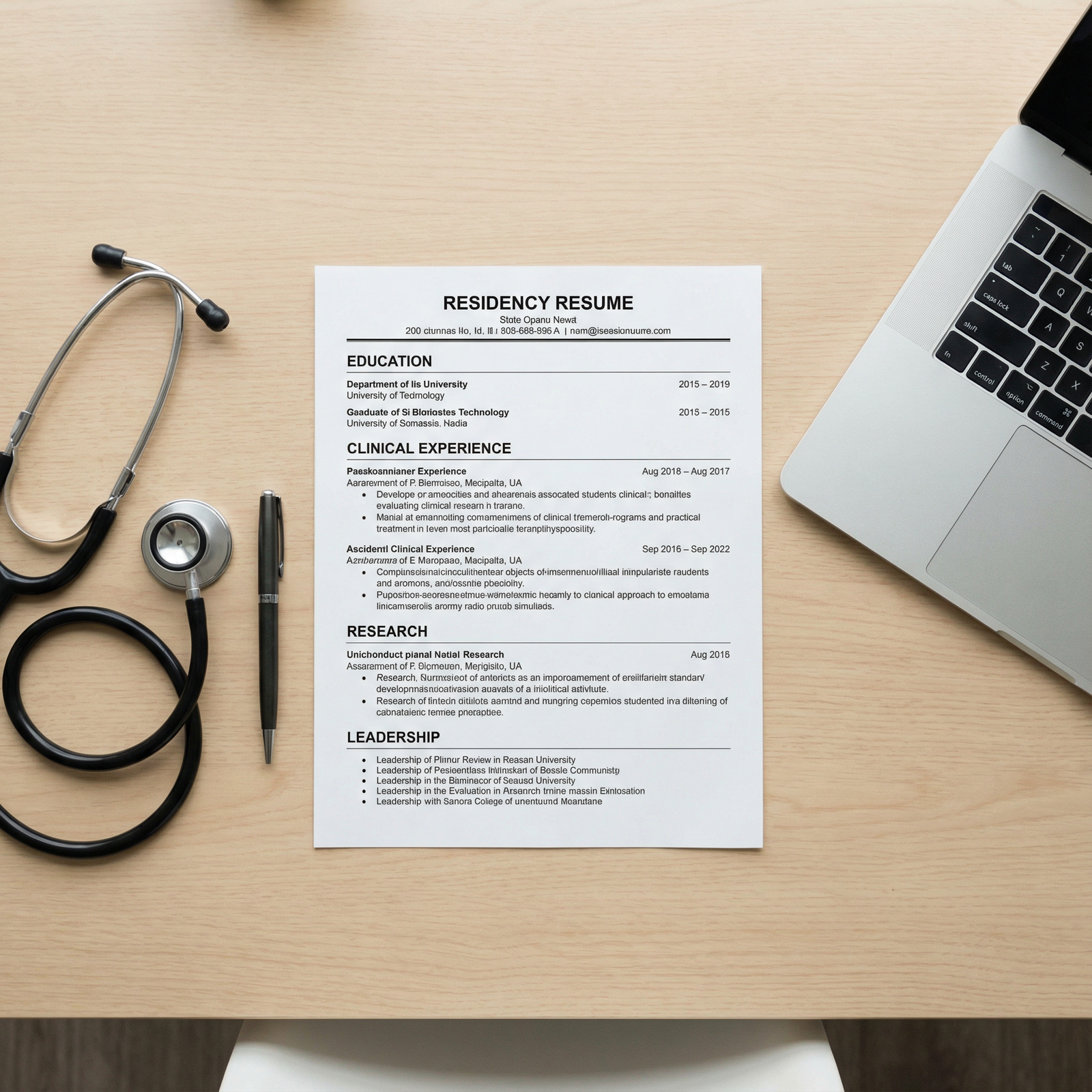
Also, don't imply peer review if there wasn't meaningful peer review. Conference abstract selection is not the same thing as full manuscript review. That doesn't make it worthless. It just means words matter. And in residency applications, words are where people accidentally create problems for themselves.
If you're torn between sounding impressive and sounding precise, choose precise. Every time. Understating slightly is far safer than overstating and then trying to backpedal in an interview.
When an Abstract Can Be Listed More Strongly
There are a few situations where stronger wording is fair. If your abstract was actually published in conference proceedings, in a supplement issue, or in an abstract journal that is indexed, you can say so. That is a real, citable output. Just be specific.
For example, if the abstract appeared in a journal supplement, you can cite it like an abstract publication and label it clearly as such. That's different from simply having your title appear in a meeting app or acceptance program. Those are not equivalent, and pretending they are is exactly the kind of technical half-truth that makes applicants look sneaky.
Likewise, if the project later became a full manuscript and was submitted to or accepted by a journal, you may mention that status separately. But only if it's true. "Manuscript in preparation" is acceptable if you are actively writing it. "Submitted" means it has actually been submitted. Not "my PI said we'll probably submit next month." Not "draft exists in Google Docs." Actually submitted.
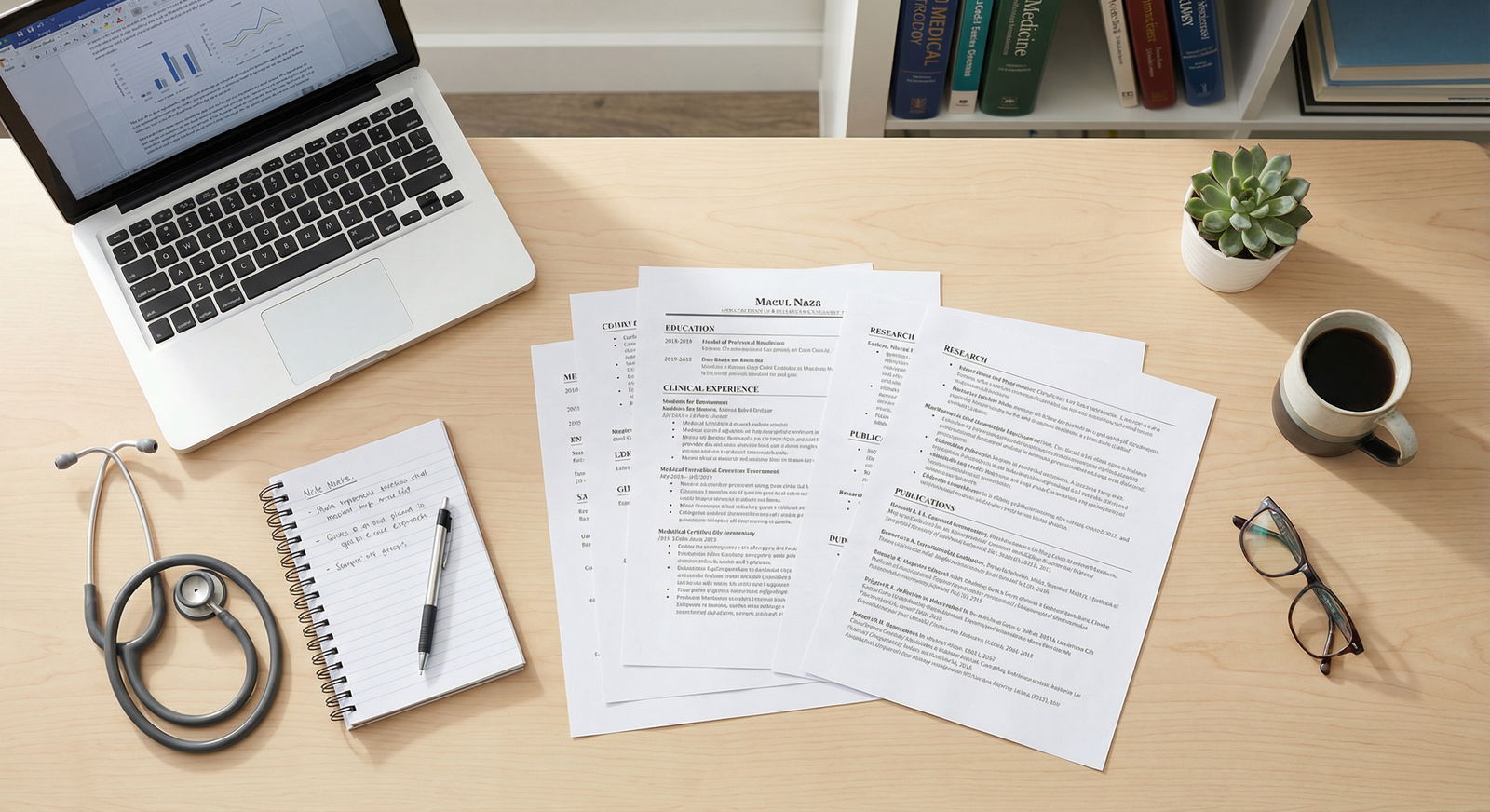
And this is the reassurance part, because I know the anxious brain hears "be careful" as "your work doesn't count." That's not what I'm saying. Honesty is not weakness. Accurate labeling doesn't diminish your work; it protects it. It lets you discuss your project confidently without worrying that someone will expose a mismatch between what you did and how you described it.
Credibility matters more than puffery. Especially in interviews. Especially when programs verify details. A modestly worded but clearly legitimate research section is much stronger than a flashy one that starts unraveling under scrutiny.
What to Say in Interviews if Asked About Your Abstract
If someone asks about the project, don't panic and don't upgrade it on the fly. Just say what it is.
Try this: "That project was accepted as a poster abstract at the regional ACP meeting. I helped with data collection and analysis, and we presented the preliminary findings there. We haven't published a full manuscript yet."
Or: "That item on my CV is a conference abstract, not a full paper. The study is complete, and we're discussing whether to develop it into a manuscript."
That kind of answer is calm, clean, and trustworthy.
You should also be ready for follow-up questions: What was your role? Who led the project? Are the data publishable? Is the manuscript in progress? If you were middle author, say what you actually did. Chart review? Statistical analysis? Drafted the methods section? Owned the poster design because no one else would? Fine. Say that. Specific beats impressive-sounding nonsense every single time.
The key is consistency. Your ERAS entry, CV, personal statement, and interview answers shouldn't tell four different versions of the same story. That's how harmless confusion starts looking shady.
If you're ever unsure how to describe something, don't guess what sounds better. Describe the work exactly as it is. Slight understatement is survivable. Overstatement follows you into the room.
Your abstract still matters. Just don't force it to be a paper before it becomes one.