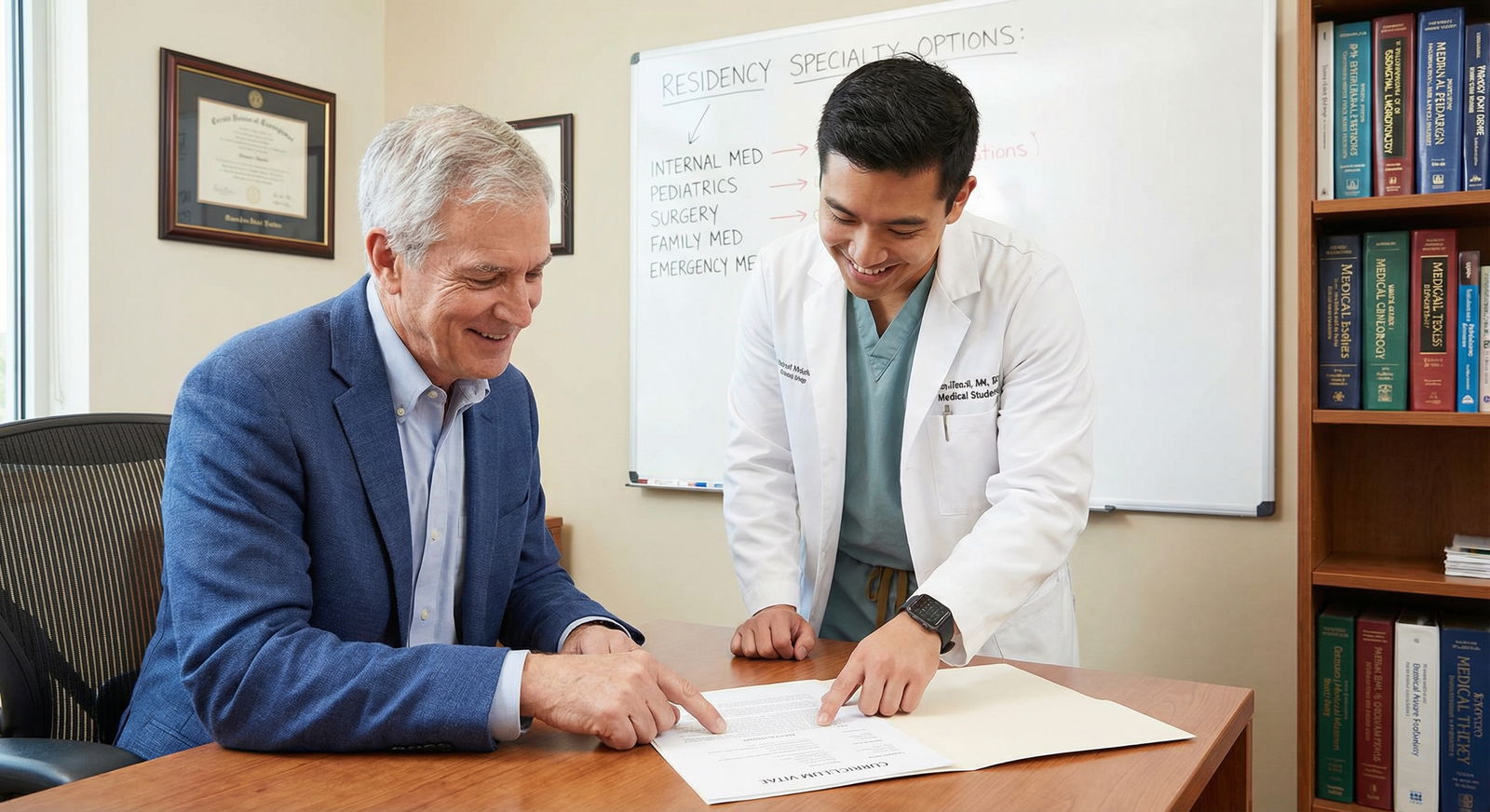
The way most med students handle their CV is wrong. They treat it like a one-time assignment, not a living document directly tied to getting interviews and matching.
You’re asking the right question: how often should you update your CV during med school and residency? The real answer isn’t “once a year” or “right before ERAS.” That’s how you end up at 1 a.m. trying to remember what poster you presented and who the co-authors were.
Here’s the practical, no-BS version.
The Short Answer: Frequency by Phase
Let me give you the blunt summary first, then we’ll dig in.
| Training Phase | Minimum Frequency | Ideal Frequency |
|---|---|---|
| Preclinical MS1–MS2 | Every 3–4 months | After each new activity |
| Clinical MS3 | Every 1–2 months | After each rotation/award |
| MS4 (before ERAS) | Monthly | As things happen (real-time) |
| Residency (PGY1–PGY3+) | Every 6 months | After each major milestone |
| Fellowship/job search year | Every 3 months | After each new accomplishment |
If you want a rule you can tape to your wall:
Update your CV whenever something new happens that you might talk about in an interview.
That’s the real rule.
Why You Can’t Treat Your CV Like a Once-a-Year Thing
Your CV isn’t just a list for ERAS. It’s the backbone for:
- ERAS application
- Visiting rotations and VSLO
- Scholarship and award applications
- Research positions and letters of recommendation
- Resident leadership roles, chief resident applications
- Fellowships and attending jobs later
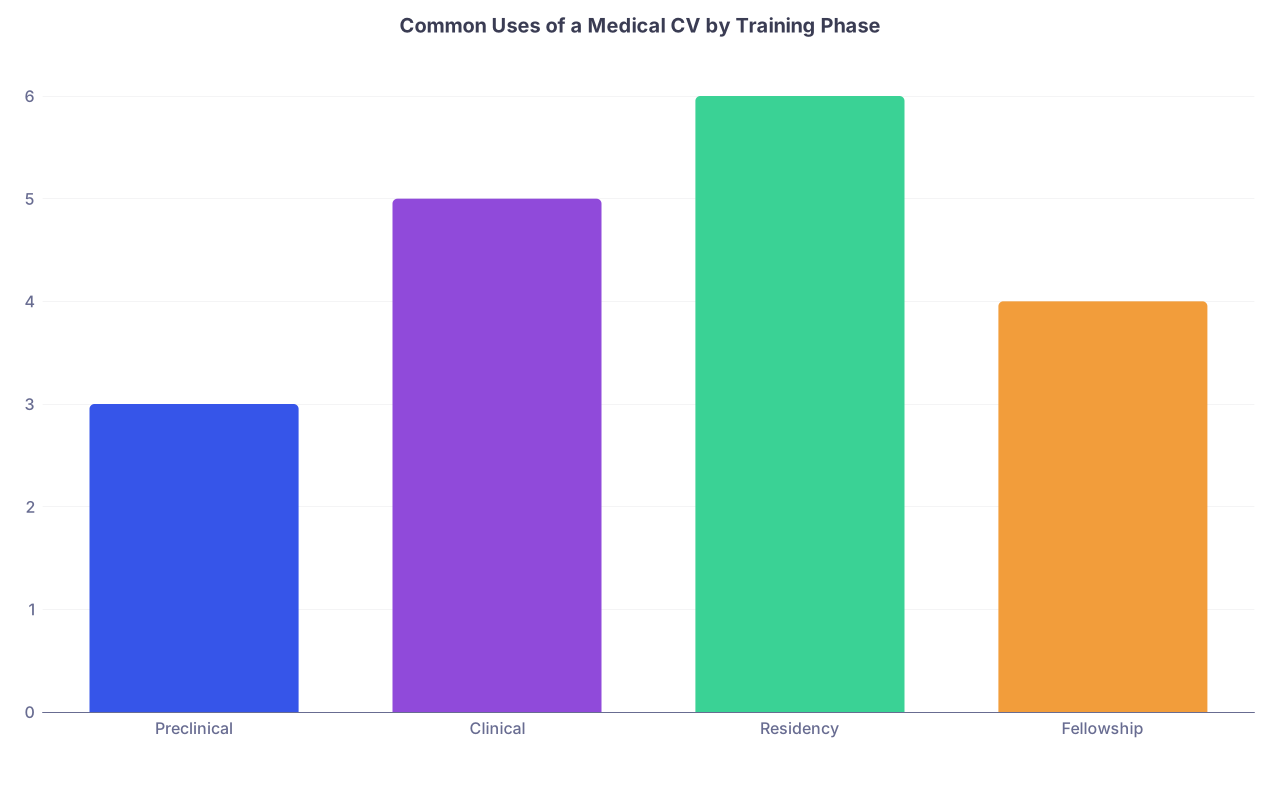
| Category | Value |
|---|---|
| Preclinical | 3 |
| Clinical | 5 |
| Residency | 6 |
| Fellowship | 4 |
Here’s what I’ve seen over and over:
A student applies for a competitive sub-internship. The department says, “Send us your CV.” They don’t have one. They throw one together in 48 hours. It’s incomplete, sloppy, and clearly rushed. That first impression sticks.
Same thing before ERAS: people sitting there trying to remember:
- The exact title of the QI project from MS2
- The date of that regional conference
- Whether they were 3rd or 4th author on a poster
You won’t remember this accurately two years later. You just won’t. That’s why you update frequently: you’re protecting your future self.
Med School: How Often to Update (Phase by Phase)
Preclinical Years (MS1–MS2)
This is where most people get lazy. “I’m not applying for anything yet, I’ll do it later.” Bad idea.
You should update your CV:
- Minimum: Every 3–4 months
- Better: Right after every meaningful new thing
What counts as “meaningful”?
- Joining a longitudinal clinic or free clinic
- Taking on a leadership position (class rep, committee, interest group officer)
- Starting research (even if it’s not published yet)
- Getting any award, scholarship, or recognition
- Significant volunteering (not a one-off event)
So if you:
- Start research in March
- Join a student-run clinic in April
- Become treasurer of a specialty interest group in June
You should have 3 small updates, not one giant “catch-up” six months later.
Clinical Years (MS3)
During MS3 you’re actually doing things programs care a lot about. You’re also busy and exhausted, which is why people stop updating. Don’t.
Update frequency:
- Minimum: Every 1–2 months
- Ideal: After every rotation where something changed
What might change after a rotation?
- You got a clinical evaluation award or “outstanding student” recognition
- You presented a case or teaching session
- You joined a research or QI project with that team
- You added meaningful teaching/mentoring (tutoring juniors, anatomy TA, etc.)
Right after you finish a rotation is the best time to capture details:
- Attending names
- Project titles
- Specific responsibilities
- Dates (month/year)
I’d literally keep a simple habit: on the last weekend of each rotation, open your CV and:
- Add any new activities
- Fix the end date on that rotation
- Jot 1–2 bullet points so you’ll remember what you actually did
Ten minutes. Done.
MS4 and ERAS: Now Your CV Actually Matters
MS4 is different. Your CV is no longer theoretical. It feeds directly into ERAS and interview conversations.
Before Sub-Is and Away Rotations
By late MS3 / early MS4 when you’re applying for:
- Away rotations (VSLO)
- Home sub-internships in your chosen field
- Early scholarships or awards in your specialty
Your CV must be:
- Current within the last 4–6 weeks
- Clean and consistent (no random formatting, no different styles of dates)
- Aligned with what’s about to go into ERAS
This is when I recommend a full, line-by-line pass on your CV:
- Remove old high school fluff
- Condense early undergrad stuff unless it’s truly impressive or relevant
- Make sure all research is up to date: submitted, accepted, published, or presented
Leading Up to ERAS Submission
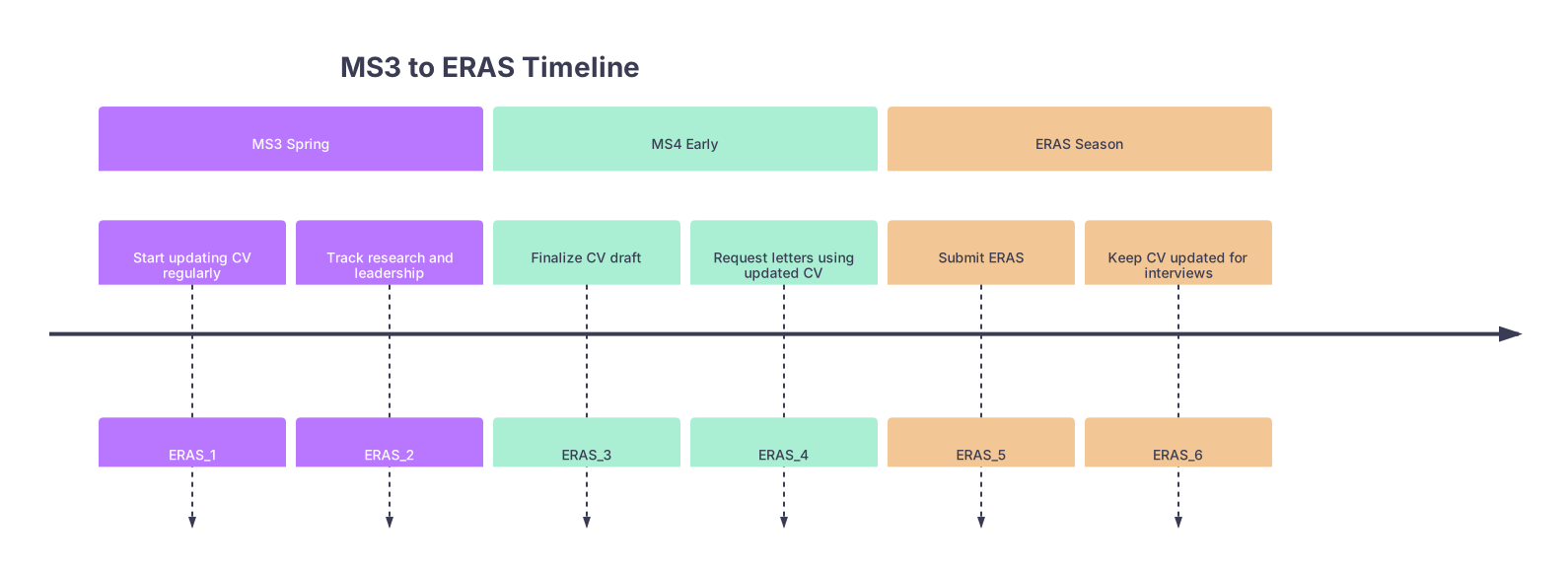
| Period | Event |
|---|---|
| MS3 Spring - Start updating CV regularly | ERAS_1 |
| MS3 Spring - Track research and leadership | ERAS_2 |
| MS4 Early - Finalize CV draft | ERAS_3 |
| MS4 Early - Request letters using updated CV | ERAS_4 |
| ERAS Season - Submit ERAS | ERAS_5 |
| ERAS Season - Keep CV updated for interviews | ERAS_6 |
Once you’re within 2–3 months of ERAS opening:
- Update your CV monthly
- And any time something “ERAS-worthy” happens:
- Abstract accepted
- Publication online or in print
- New leadership role
- New award or recognition
You’ll use this CV to:
- Fill out ERAS with accurate data
- Send to letter writers so they don’t forget what you’ve done
- Hand to faculty who might advocate for you
If your CV is 8 months out of date, your letters will be too.
Residency: Different Phase, Same Principle
Once you match, people get complacent. Don’t. You’re not done with your CV; you’re just in a new season.
PGY1–PGY3+: How Often to Update
Realistically:
- Minimum: Every 6 months
- Ideal: After each major milestone
What counts as “major” in residency?
- New roles:
- Chief resident
- Committee membership
- Program rep for something
- Scholarly work:
- Poster or oral presentations
- Publications, book chapters, online curricula
- QI projects with defined outcomes
- Teaching:
- Regular small-group teaching
- Med student or resident lecture series
- Simulation or skills teaching roles
- Awards:
- Teaching awards
- Resident of the month/year
- Patient care recognition awards
Residency goes fast and blurs together. Twelve months later you won’t remember when that M&M presentation happened or what exactly you presented at ACP.
So yes, as a resident, still treat your CV as a live document.
What to Update Every Time (So You Don’t Miss Stuff)
Whenever you sit down for a CV update, run this quick mental checklist:
Education and Training
- New rotations, electives, or tracks?
- Any degrees, certificates, or formal courses?
Research and Publications
- New submissions?
- Status changes: submitted → accepted → published
- Abstracts, posters, oral presentations
Leadership and Service
- New positions (with start dates)
- Specific projects or outcomes you led
Teaching
- Formal roles (TA, tutor, lecturer)
- Regular teaching series (e.g., morning report, bootcamps)
Awards and Honors
- Anything with a title and date goes here
- Departmental, institutional, or national
Skills and Certifications
- BLS/ACLS renewal
- Point-of-care ultrasound course
- Procedural courses or certifications
That’s what you scan for every time. It’s the same structure whether you’re MS1 or PGY3; the content just matures.
How to Make Updating Fast (So You Actually Do It)
The trick is to make this painless. If it’s a 2-hour chore, you’ll avoid it.
Here’s what works well:
1. Keep a “CV Scratchpad” Document
Make a simple running document or note (Google Doc, Notion, Apple Notes, whatever):
- Title it: “CV Inbox – Stuff to Add”
- Every time something happens:
- Jot down: title, date, who was involved, 1–2 key details
- Don’t worry about perfect wording, just capture the facts
Then, when you do your real CV update, you’re not trying to remember anything. You’re just transcribing.
2. Use One Master CV, Many Versions
You should have one long master CV that has everything:
- All research
- All talks, including small invited lectures
- All roles, even short term
Then you create shorter versions when you need them:
- 1–2 page tailored CV for a specific specialty or program
- Teaching-focused CV for academic positions
So you’re not maintaining five documents. You’re maintaining one and exporting trimmed versions as needed.
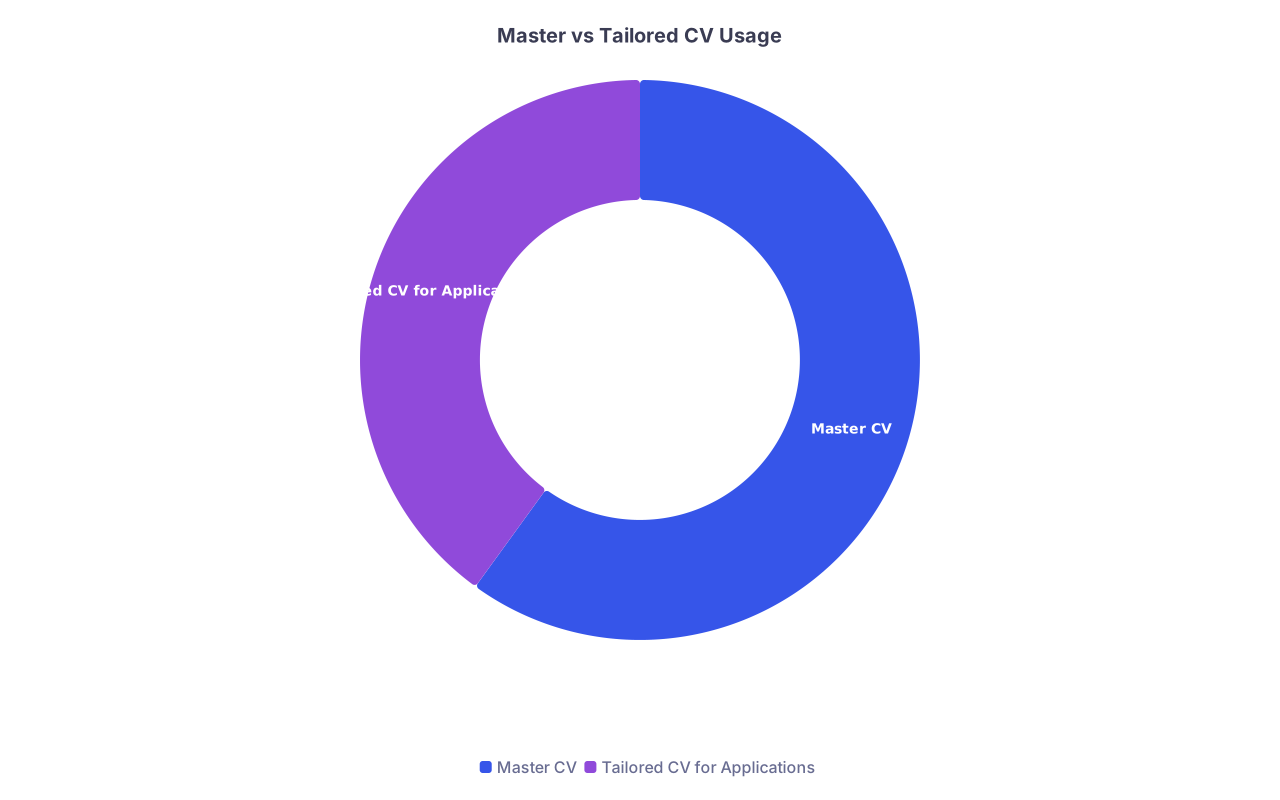
| Category | Value |
|---|---|
| Master CV | 60 |
| Tailored CV for Applications | 40 |
3. Tie Updates to Existing Routines
You’re more likely to stick to it if you attach it to something that already happens:
- End of each rotation
- End of each semester
- Start of each new academic year
- Before asking for any letter of recommendation
Make it: “Before I email someone for a letter, I update my CV.” Non-negotiable.
Signs You’re Not Updating Often Enough
If these sound familiar, you’re behind:
- You can’t remember the exact dates or titles of half your activities
- You have to dig through old emails to reconstruct your own history
- You’ve told people “I’ll send my CV” and then delayed because it’s a mess
- Your CV still has:
- High school activities
- Outdated contact info
- Inconsistent formatting and random bolding
Fix it once, then keep it maintained in small chunks.
How This Directly Affects Your Residency Application
Let’s connect this to what you actually care about: matching.
Regular CV updates help you:
- Fill ERAS quickly and accurately
No guessing on dates, no undercounting research or teaching. - Get stronger letters
You hand your letter writer a clean, updated CV → they write better and more specific letters. - Talk about your experiences clearly in interviews
You’ve been shaping and seeing your story over time, not just cramming it together a week before interview season. - Avoid omissions that hurt you
Yes, people forget whole posters, leadership roles, and awards when they only do a last-minute rebuild.
Programs aren’t impressed by volume alone. They want:
- Clear trajectory
- Sustained commitment
- Evidence that you follow through
A well-maintained CV shows that pattern better than a last-minute one.
Example: What “Good” Looks Like Over Time
Let me walk you through how this plays out if you actually follow the update schedule.
Early Med School (MS1–2)
Your CV starts pretty thin. Mostly undergrad stuff, one or two new activities. That’s fine.
You add:
- New research project with a PI
- Free clinic volunteering
- An interest group leadership role
- A scholarship you win at the end of MS2
By end of MS2, your CV looks coherent and serious.
Clinical Years (MS3)
You keep updating every rotation:
- Honors in Pediatrics gets added under “Awards”
- You give a short talk to med students → “Teaching Experience”
- You join a QI project on reducing readmissions → “QI and Projects”
By early MS4, your CV clearly tells a story: “This person is steadily building in X specialty, teaching, and research.”
Residency
In PGY1 and PGY2, you:
- Present a poster at a national conference
- Get a teaching award from med students
- Help run a resident-led curriculum
Each time, you drop the details into your CV within a week or two. Now, when fellowship or attending applications hit, you’re not scrambling. You’re simply trimming down your master CV to fit the new context.
Bottom Line: How Often Should You Update?
Let’s compress this into something you can actually remember and use.
Update frequency changes with your phase.
- Preclinical: every 3–4 months (or after each new major activity)
- Clinical MS3: every 1–2 months, especially after rotations
- MS4/ERAS: monthly or whenever something notable happens
- Residency: at least every 6 months, plus after big milestones
Your real rule of thumb: If you’d mention it in an interview or on ERAS, add it to your CV within a week.
Make it easy on yourself.
Keep a “CV scratchpad,” maintain one master CV, and tie updates to natural checkpoints like end of rotations or before asking for letters.
Do this, and your CV stops being a chore and starts being what it should be: a clear, accurate record that actually helps you match where you want to go.