
Should Hobbies and Interests Go on a Residency CV—And Which Ones?
What do program directors really think when they see “Netflix, travel, and hanging out with friends” under hobbies on a residency CV?
Let me answer the main question first: yes, hobbies and interests absolutely should go on a residency CV—if you choose the right ones and present them the right way. Done well, they can help you get interviews and make you memorable. Done poorly, they can make you look generic, unserious, or even risky.
Let’s walk through what actually helps you and what quietly hurts you.
Why Hobbies and Interests Matter More Than You Think
Program directors are not scanning your hobbies to see if you’re “fun.” They’re looking for signals. Specifically:
- Are you a normal, well-rounded human being they’d want on their team at 3 a.m.?
- Do your interests suggest traits that predict success in residency?
- Will you fit with the culture of their program?
Here’s what well-chosen hobbies can signal:
- Discipline and persistence (long-distance running, serious music training, long-term language study)
- Teamwork and leadership (team sports, coaching, organizing events)
- Stress management and resilience (meditation, yoga, hiking, creative arts)
- Commitment and follow-through (multi-year involvement, progressing in skill level)
- Communication skills (improv, debate, teaching, podcasting)
- Alignment with their specialty or patient population (coaching youth sports for a pediatrics applicant, for example)
The big mistake: most applicants just throw in random, vague lines like “reading, hiking, cooking” with zero context. That does almost nothing for you.
Which Hobbies Belong on a Residency CV (And Which Don’t)
You should include hobbies. But not all hobbies deserve space on an application that might help decide your entire career.
Strong hobbies to include
Anything that shows real engagement, some level of achievement, or clear personal growth is fair game.
Examples that usually work well:
Endurance or structured physical activities
Distance running, triathlons, martial arts, regular strength training, yoga practice, rock climbing, dance classes.
These signal discipline, consistency, and stress management.Team sports
Soccer, basketball, volleyball, ultimate frisbee, rec leagues, coaching youth teams.
Good for teamwork and communication. Especially strong if you’ve done it for years.Creative pursuits
Piano/violin/guitar with performances, singing in a choir, theater, painting with exhibits, photography with a portfolio, creative writing with publications.
Shows dedication and the ability to commit outside medicine.Structured intellectual interests
Chess, languages, programming, competitive gaming with organized teams, debate, book clubs with specific focus.
Emphasize the structure, not “I like scrolling Reddit and playing random mobile games.”Service-related hobbies
Regular volunteering, mentoring, coaching, organizing community events, leading groups.
These tie nicely to “service” and patient care.Practical, hands-on hobbies
Woodworking, car repair, baking with events or sales, gardening with tangible projects.
These can be memorable and suggest patience and attention to detail.
Key point: you don’t need to be elite or award-winning. But you do need to be specific and show that it’s real, sustained, and meaningful.
Weak or risky hobbies to avoid (or heavily reframe)
Some things are better left off, or at least reframed very carefully.
I generally recommend avoiding or being cautious with:
Vague generic fillers
“Watching movies, listening to music, traveling, hanging out with friends.”
Everyone does these. They tell the reader nothing about you.Controversial or polarizing activities
Intense political activism, gun-related hobbies, anything that can trigger strong reactions.
You have no idea who’s reading your file.Potentially risky image
“Clubbing, partying, bar hopping, extreme drinking culture” – even as a joke.
Just do not.Anything that sounds time-consuming and concerning
Competitive world travel blogs, 30-hour/week streaming, etc. You don’t want PDs wondering if you’ll have time for residency.Very niche / internet-only hobby with zero context
If it needs a 5-minute explanation just to sound normal, think twice. If you include it, ground it in recognizable skills (teamwork, leadership, consistency).
How Many Hobbies Should You List—and Where?
You’re not writing a dating profile. You’re filling in a strategic piece of your professional story.
How many?
Ideal range: 3–6 well-chosen, specific hobbies or interests.
Fewer than 3 can make you seem one-dimensional. More than 6 starts to look like you had nothing better to fill space with.
Where to put them
On a residency CV (PDF you might email or upload):
Create a clearly labeled section near the end:
Interests & Activities or Hobbies and Interests
On ERAS (which is what matters more):
Use the “Hobbies and Interests” text box. Same principles apply: specific, concise, meaningful.
Exactly How to Phrase Hobbies So They Help You
This is where most people blow it. The format matters.
Bad:
“Running, cooking, travel, music”
Better:
“Distance running – completed three half-marathons; currently training for a full marathon.”
Basic rule: use 1 short line per hobby. Include:
- What the hobby is
- Level of involvement / duration
- Any concrete milestones, achievements, or structures
Here are before-and-after examples:
Reading
- Weak: “Reading”
- Strong: “Reading contemporary nonfiction, particularly medical history and behavioral economics.”
Sports
- Weak: “Basketball”
- Strong: “Recreational basketball – weekly league play and occasional local tournaments.”
Music
- Weak: “Piano”
- Strong: “Classical piano – 12 years of formal training; perform occasionally at community events.”
Volunteering
- Weak: “Volunteering”
- Strong: “Weekly volunteer coach for middle school soccer team for 3 seasons.”
Hiking
- Weak: “Hiking and outdoors”
- Strong: “Hiking and backpacking – multi-day trips in [region]; often used as time for reflection and stress management.”
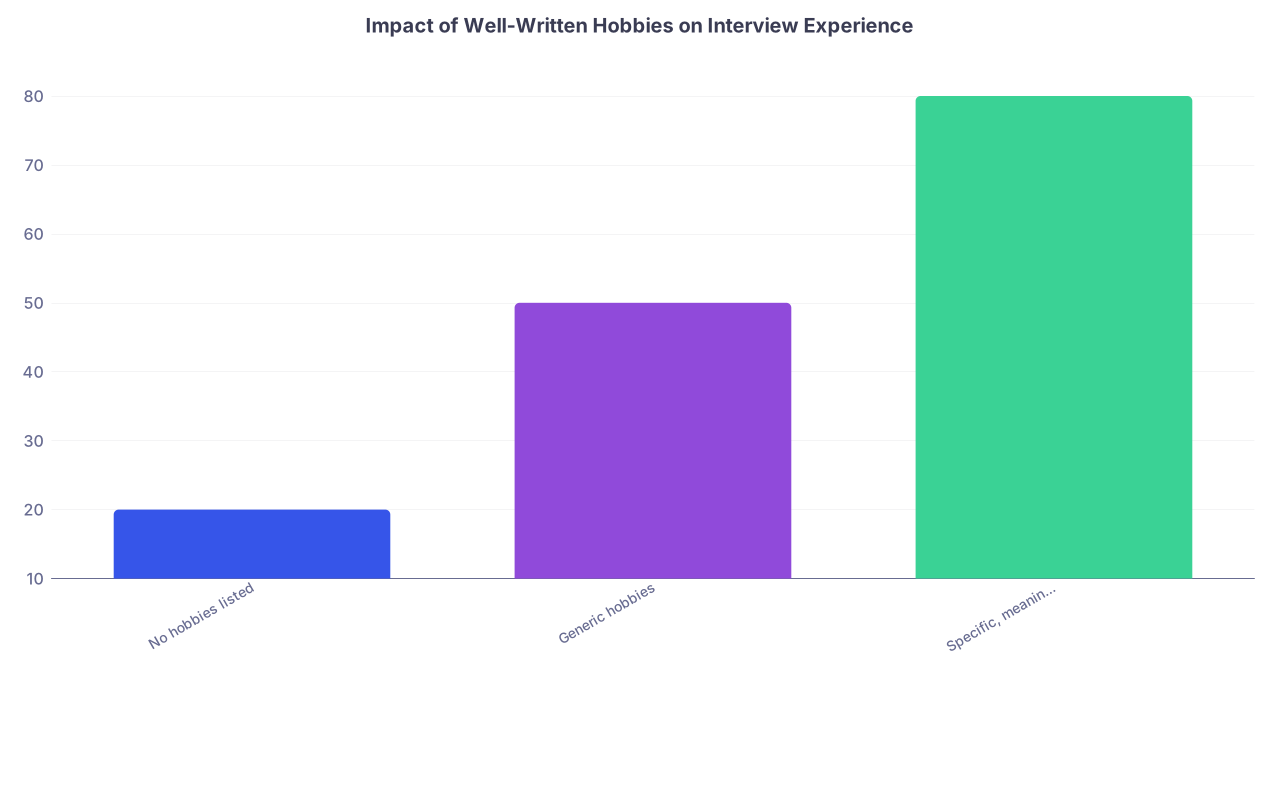
| Category | Value |
|---|---|
| No hobbies listed | 20 |
| Generic hobbies | 50 |
| Specific, meaningful hobbies | 80 |
Interpretation: Programs are far more likely to remember and ask about you if your hobbies are detailed and specific. I’ve watched entire interview days where 80% of the “I really liked that applicant” comments started with: “The one who runs ultramarathons…” or “The one who plays jazz sax.”
How Programs Actually Use Hobbies in Interviews
Here’s what really happens behind the scenes.
Interviewers often:
- Scan your file 1–2 minutes before you walk in
- Look for:
- Something interesting to start small talk
- A potential point of connection (same sport, same city, same language)
- Evidence that you’re balanced and not burnt out already
If you give them nothing, they default to boring, high-pressure questions about research or grades. If you give them good hooks, you change the entire tone of the conversation.
Examples of hooks that work:
- “I saw you’ve coached high school debate—tell me about that.”
- “You mentioned woodworking; what kind of projects do you do?”
- “You run half-marathons—how do you keep that going during busy rotations?”
Now flip it. If you list something you can’t back up, you’re in trouble.
If you write “Fluent in Spanish; enjoy Spanish literature” and then freeze when someone asks in Spanish how your day is going? You just tanked your credibility.
Same idea with “competitive gaming” when you can’t describe a team environment, or “meditation” when you can’t name a practice you actually do.
Rule: if it’s on your application, you must be ready to talk about it intelligently for 3–5 minutes.
Which Hobbies Work Best for Different Specialties?
You don’t need to “theme” your entire life around your specialty, but some interests fit naturally with certain fields.
| Specialty | Example Strong Hobbies |
|---|---|
| Internal Med | Distance running, book clubs, chess |
| Surgery | Woodworking, endurance sports, yoga |
| Pediatrics | Youth coaching, choir, crafting |
| EM | Rock climbing, team sports, first aid |
| Psych | Writing, meditation, improv |
Do you have to match? No. A surgeon who bakes sourdough and plays cello is still perfectly compelling. But if you happen to have activities that align nicely with your target specialty, highlight them confidently.
Common Mistakes—and How to Fix Them Fast
Here’s what I see over and over in residency applications:
The “everything and nothing” list
“Travel, fitness, movies, reading, music, spending time with friends.”
Fix: Cut to 3–5 and make each one specific and real.The “med robot” with no hobbies listed
You look like you do nothing but study. That’s not reassuring.
Fix: Dig into what you actually do on your rare off-hours. Something is there—podcasts, walking, cooking, rec sports, whatever. Clarify and shape it.The overcompensation list
Twelve different “passions,” none with clear depth.
Fix: Choose the 3–6 that best show sustained involvement and story potential.The red-flag hobby
Anything that looks reckless, unstable, or likely to interfere with training.
Fix: Either cut it or reframe it around discipline, safety, team, or structure. If you can’t, leave it off.The “I made this up last night” problem
Don’t invent hobbies. Interviewers notice when your eyes go blank at your own CV.
Fix: Be honest. Real and small beats fake and flashy every time.

| Step | Description |
|---|---|
| Step 1 | Consider a hobby |
| Step 2 | Probably skip |
| Step 3 | Can explain for 3 minutes? |
| Step 4 | Reframe or skip |
| Step 5 | Include on CV |
| Step 6 | Real and ongoing? |
| Step 7 | Shows positive traits? |
| Step 8 | Controversial or risky? |
How to Rewrite Your Hobbies Section in 10 Minutes
Here’s a quick, concrete process:
Brain dump
Take 3 minutes and list everything you actually do outside medicine. No filter.Cross off
Remove anything:- You haven’t done in the last 12–18 months
- You’d dread being asked about
- That sounds risky or controversial
Choose 3–6
Keep the ones that:- You enjoy talking about
- Show discipline, commitment, or connection
- Are somewhat specific (not “I like shows”)
Turn each into 1 line
Use this formula:
[Hobby] – [frequency or duration] + [any structure/achievement/role]Example:
“Rock climbing – climb 1–2 times per week at a local gym; enjoy solving difficult bouldering problems.”Read it like a PD
Ask:- Does this sound like a real, grounded person?
- Can I imagine asking them about any one of these?
- Does anything raise a concern?
If it passes that check, you’re done.
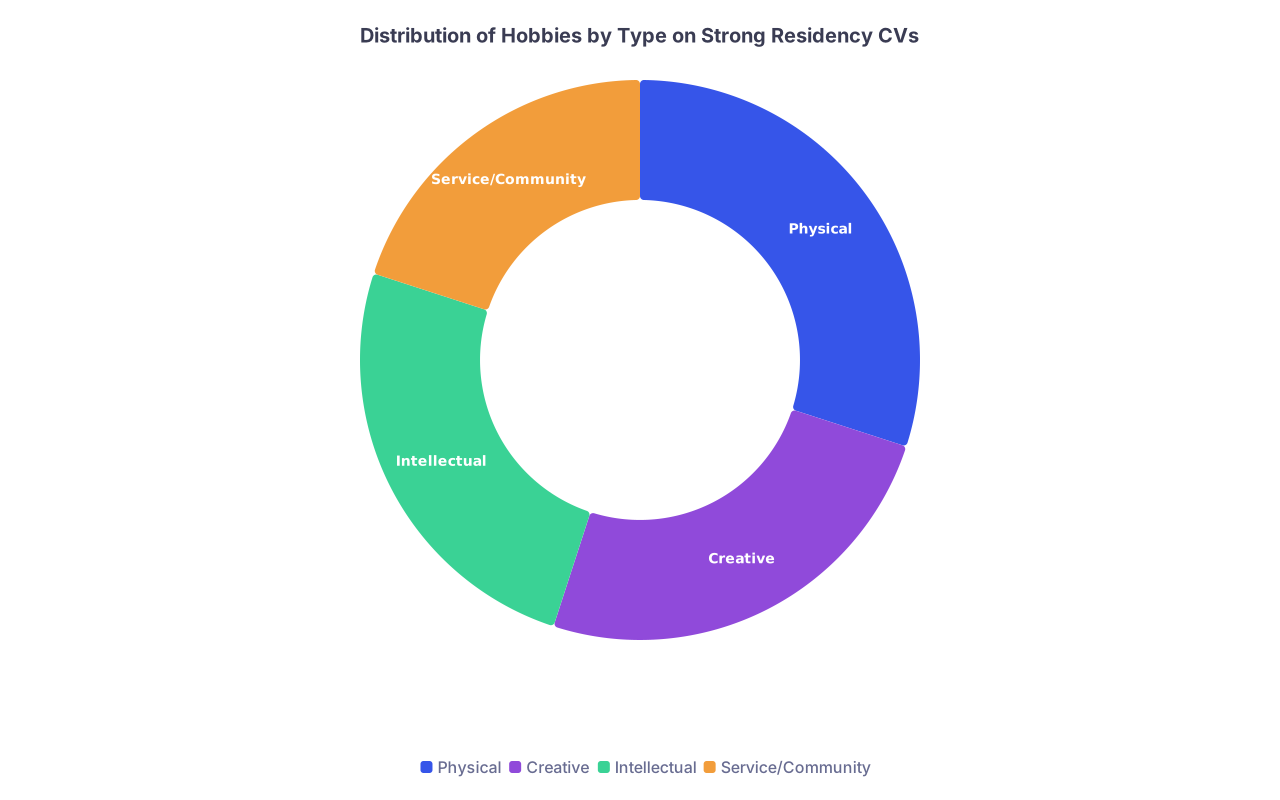
| Category | Value |
|---|---|
| Physical | 30 |
| Creative | 25 |
| Intellectual | 25 |
| Service/Community | 20 |
Well-balanced applicants often have a mix: one physical, one creative or intellectual, one community-focused. You don’t need all categories, but a spread looks good.
FAQ: Hobbies and Interests on Residency CVs
1. What if I genuinely do not have any hobbies?
You do. You just do not label them as “hobbies.” Think about:
- What you do with free time on a Sunday
- What podcasts you actually listen to consistently
- Any regular movement: walks, light workouts, yoga videos
- Any media you engage with in a focused way (not “scrolling TikTok”) Then choose the ones that show some repeat behavior and turn them into focused, honest lines.
2. Should I include religious activities as hobbies?
Be cautious. If your religious activity is a huge and stable part of your life (e.g., “teach weekly youth group for 4 years”), you can include it framed around teaching, mentoring, or community-building. But you don’t need to highlight religious identity unless you want to. Never lie, but you can choose what you emphasize.
3. Can I list social media, YouTube, or streaming as hobbies?
Not as “I watch a lot of Netflix.” If you run a structured channel, podcast, or serious content project—that’s different and can be very strong if you present it as media production, education, or communication. Passive consumption doesn’t help you.
4. How do I handle intense or risky hobbies like mountaineering or skydiving?
These can impress or worry people. If they’re central to who you are and you can frame them around planning, safety, risk management, and discipline, you may include them. But know some programs will quietly see “risk of injury during training.” When in doubt, pick safer, equally representative interests.
5. Should my hobbies match my personal statement or specialty choice?
They don’t have to, but when they naturally align, it’s powerful. A pediatrics applicant who coaches youth sports or teaches music to kids—great synergy. Do not fabricate alignment. But if you have it, highlight it confidently and consistently across your CV, ERAS, and interviews.
Open your current CV or ERAS application right now and scroll to “Hobbies and Interests.” If it’s a vague list or an empty box, take 10 minutes to replace it with 3–6 specific, real, and conversation-worthy hobbies. That small change can make you the applicant they actually remember on ranking day.