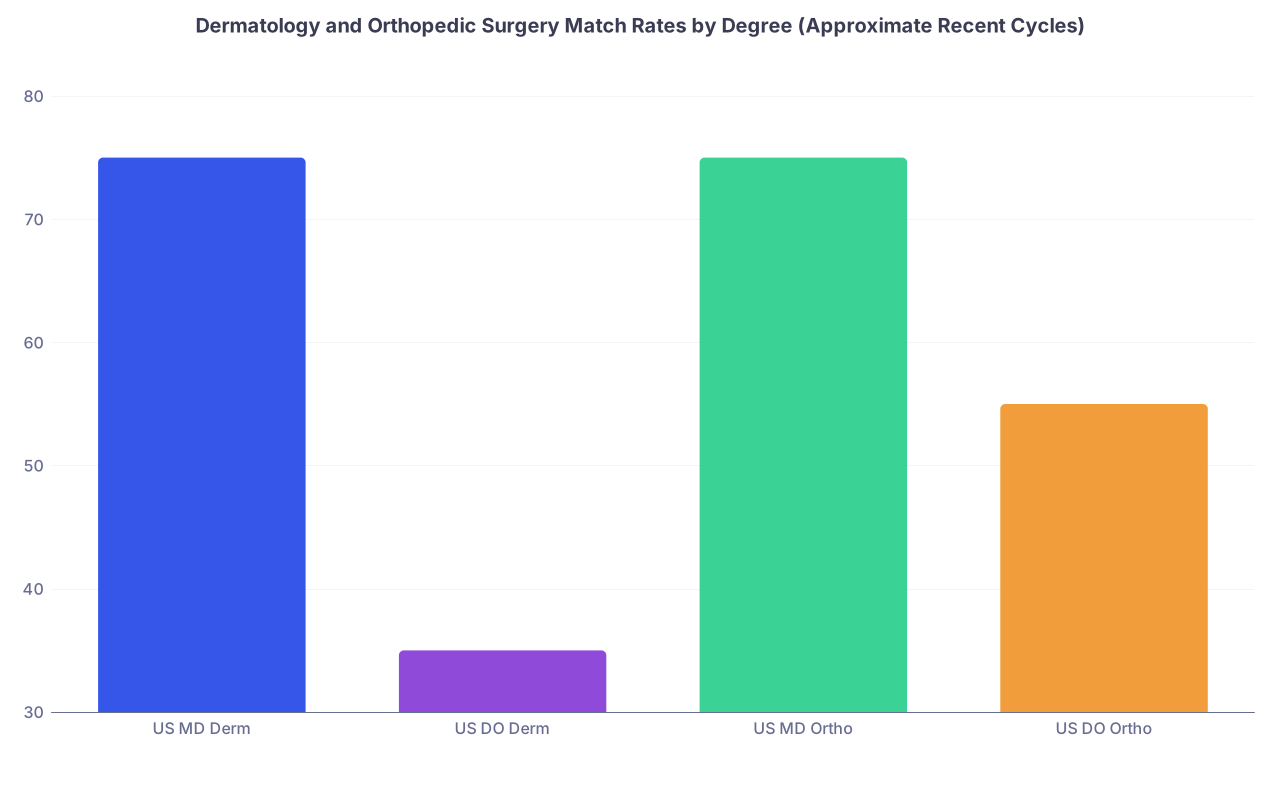
Here's the myth I keep hearing: "DO invites are fewer, so the 2026 game is rigged."
Neat story. Wrong story.
The lazy version of this debate pretends fellowship invites are handed out by degree label first and everything else second. That's not what the evidence shows, and it's definitely not how real selection works on the ground. Programs screen for specialty competitiveness, residency performance, letters, research relevance, institutional support, and fit. Degree can matter at the margins. Sure. But people routinely exaggerate it into destiny because that's emotionally satisfying and analytically sloppy.
And let's be honest about the data. There is no magical public spreadsheet showing fellowship invitation rates by DO vs MD across every specialty and every cycle. If someone claims they know the exact "invite penalty," they're usually reverse-engineering certainty from anecdotes, forum posts, and vibes. Bad method. We have to use proxy evidence: match trends, specialty competitiveness, accreditation-era outcomes, board performance context, and what recruiters actually reward.
This article is about the 2026 planning horizon. Fellowship invites. Not just match outcomes. And especially the specialties where people obsess over invites online: internal medicine subspecialties like cardiology, GI, pulm/CCM, endocrine, rheumatology, nephrology, and friends.
What data exists, and what doesn't
Let's kill the first bad assumption: there is no single, complete, public dataset that directly reports DO vs MD fellowship invitation rates across programs. None. So if you're looking for a universal table saying "DO applicants get X% fewer interviews in cardiology in 2026," stop. That table doesn't exist.
What we do have is indirect but useful. NRMP and specialty-level match data can show who ultimately matches, how competitive a field is, and how applicant pools shift over time. We also have program-level clues: research expectations, board pass culture, institutional prestige effects, and the very obvious reality that some fellowships behave like academic auditions while others recruit more pragmatically.
That's enough to form a serious view. Not enough to fake precision.
The biggest trap here is anecdote inflation. One applicant posts, "I had strong scores and only got three invites as a DO." Another says, "My MD classmate got twelve." People read that and decide they've discovered structural truth. No, they've discovered two CVs they don't fully understand. Missing variables everywhere. Letter quality. Research fit. home program advocacy. Geographic restrictions. Program list quality. Even whether the personal statement sounded like a human wrote it or a compliance committee did.
I've seen this repeatedly. The applicant blames degree bias, then you look closer and find generic letters, thin subspecialty scholarship, and a scattershot list of programs that didn't fit their training environment. The degree becomes the headline because it's simple. Real causation usually isn't.
So here's the usable takeaway: degree status is one variable, but it rarely bulldozes fit and competitiveness across the board. If your application sends strong specialty-specific signals, programs notice. If it doesn't, "DO vs MD" becomes a convenient explanation for a weaker package.
The contrarian core: invites are driven more by specialty and fit than by the letters after your name
This is the part applicants don't love, because it means you have less excuse and more responsibility.
Fellowship recruitment is mostly signal interpretation. Programs are asking: can this resident thrive in our clinical environment, contribute academically if needed, fit our culture, and make us look smart for picking them? They aren't conducting a philosophy seminar on degree pathways. They're scanning for evidence.
That evidence comes in clusters. Residency performance. Chief or leadership roles. Letter specificity. Research relevance. Procedural readiness where applicable. Institutional reputation. Advocacy from faculty who are known to the reviewing program. The whole package.
Why does the degree myth persist? Because degree can be tangled up with access. A student or resident from a less research-heavy pathway may have fewer polished mentors, fewer subspecialty projects, and fewer famous names writing letters. That's real. But that's not the same as saying the fellowship committee sees "DO" and throws the application in the trash. Sometimes bias exists. No point pretending otherwise. But in most cases, what looks like a degree effect is mediated through visibility and signal strength.
Competitive specialties magnify this. GI, cardiology, and pulm/CCM often demand denser evidence: publications that actually relate to the field, letters from people whose judgment programs trust, and residency environments that prove you've been tested. In those settings, applicants misread a signal arms race as pure degree discrimination. Not the same thing.
And yes, bucket-stage review matters. Some applications get read more closely because the program recognizes the institution, the writer, or the research lane. That's where strategy matters. You can improve your odds by becoming legible to the programs you want. Better letters. Better-fit scholarship. Cleaner narrative. Smarter program targeting. Degree alone doesn't do that. You do.
What 2020-2025 trends suggest for 2026
Forecasting 2026 requires humility. But not paralysis.
The best proxy is recent specialty competitiveness. Match outcomes from the last several cycles tell you which fields are tightening, which are staying broadly accessible, and which increasingly reward applicants with academic polish. Fellowship invites are upstream of match results, but the same selective pressures apply. If a specialty is getting more crowded and more research-heavy, the invite filter usually hardens before applicants fully notice.
There's also a selectivity lag. Fellowship invites in 2026 will reflect residents who've been building their profiles for the last one to two years. That means current norms in research production, mentorship intensity, and institutional branding matter now, not after ERAS opens.
The likely pattern for 2026? Academic-heavy pipelines will continue to reward coherent scholarship and credible mentorship networks. That means GI, cardiology, and pulm/CCM remain especially sensitive to research and letters. Endocrinology, rheumatology, and nephrology often leave more room for clinically strong applicants without huge publication counts, though fit still matters and local program culture can swing a lot.
The myth-busting bottom line: if you've entered the right ecosystem and built visible specialty signals, the DO vs MD label becomes less predictive than applicants assume. Not irrelevant. Just overrated.
The real differences that affect invites, and how to close them
The immutable-gap myth is nonsense.
The biggest differences between many DO and MD applicants aren't about innate talent. They're about infrastructure. Access to subspecialty mentors. Opportunities for meaningful research. Rotations that put you in front of the right faculty. Letters that say something concrete instead of "pleasant resident, works hard."
That's fixable. Not magically. But fixable.
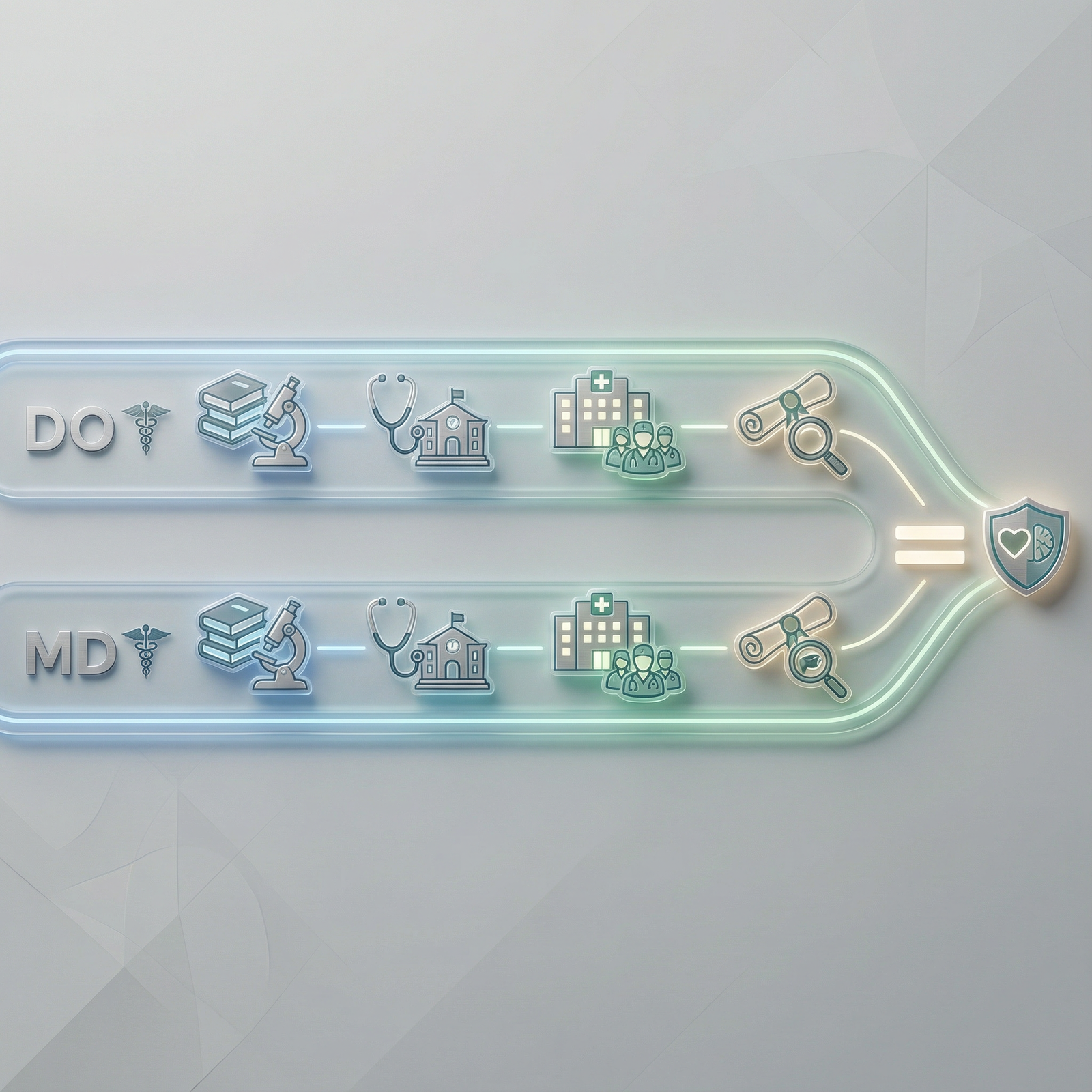
If you want better invites in 2026, engineer better signals. Get specialty-specific letters that mention real behavior: procedural judgment, consult quality, ownership, teaching, reliability under pressure. Generic praise is worthless. I mean it. "Excellent resident" is filler. "Independently synthesized complex hemodynamics on overnight CCU call and altered management appropriately" gets remembered.
Same with research. More publications is not automatically better. Ten random abstracts spread across unrelated topics can lose to two strong projects in the actual fellowship domain you're applying to. Programs care about trajectory. Relevance. The sense that you're already walking toward their field, not stumbling into it at the last minute because your board scores didn't love your first choice.
Targeted observerships, away experiences where allowed, QI work, case reports that connect to your specialty story, and visible continuity of interest all help. This isn't glamorous. It is effective.
Case-style scenarios: when degree seems to matter, and when it's mostly noise
Scenario A: a DO resident at a research-active IM program has strong cardiology mentorship, two relevant manuscripts, good conference presence, and letters from faculty who say specific things. That applicant often lands interviews in the same basic range as similarly competitive MD peers. I've seen it. Repeatedly. The application is legible and credible.
Scenario B: a clinically excellent applicant has weak letter specificity and almost no specialty-relevant scholarship. They blame the degree when invites are sparse. Wrong diagnosis. The file simply doesn't answer the committee's question: why this fellowship, and why now?
Scenario C: a highly academic GI program leans toward applicants with polished research portfolios. An MD applicant from a big-name center may get more traction out of the gate. True. But the mechanism isn't mystical. It's network visibility, mentor credibility, and academic output. A DO applicant can replicate a lot of that with the right mentorship and sustained productivity, though it takes planning and usually more hustle.
Scenario D: a community-focused endocrinology or nephrology fellowship cares more about reliability, fit, and clinical strength than prestige theater. In those settings, the grand DO-versus-MD narrative often collapses. Fast. Programs want someone solid, teachable, and likely to thrive.
That's the pattern people miss. Degree matters most when other signals are ambiguous or when the field is extremely status-sensitive. When your package is strong and coherent, the degree story gets smaller.
What to do now for 2026
Before you assume a DO penalty, do an audit. Ruthless, not emotional.
Are your letters detailed, specialty-specific, and comparative? Is your research relevant or just present? Have you built relationships with mentors early enough that they can actually advocate for you? Does your CV tell a coherent subspecialty story? Can you explain your fit to different program types without sounding canned?
Timing matters too. Ask for letters early. Not "whenever they have time." Early. Give writers a brag sheet with procedures, projects, presentations, and moments they actually witnessed. Submit as early as feasible. Follow up professionally, not desperately. Programs review in waves, and late completeness quietly kills momentum.
Silence from programs is not proof of degree bias. Usually it's one of three things: your signals weren't strong enough, your application didn't align with the program's mission, or your list was poorly constructed. Widening the net can help, but don't apply like a lottery addict. More programs only helps if the list includes realistic fits.
The smart approach is realistic optimism. Build a balanced list. Preserve mission-fit. Don't over-concentrate on a tiny set of prestige programs and then decide the entire system is anti-DO when that narrow strategy backfires. That's not analysis. That's ego with a spreadsheet.
Summary: degree isn't destiny, but signals are
Here's what the data actually says. There is no comprehensive public dataset proving a universal DO fellowship invite penalty across specialties. What we can see, consistently, is that invitations track specialty competitiveness and measurable signals far better than degree label alone.
Degree can affect access and visibility. That's real. But it's not an automatic ceiling. The applicants who do best in 2026 will be the ones who stop arguing with the myth and start strengthening the file: specific letters, relevant scholarship, strong residency performance, and smart program selection. Fear is lazy. Signal-building works.