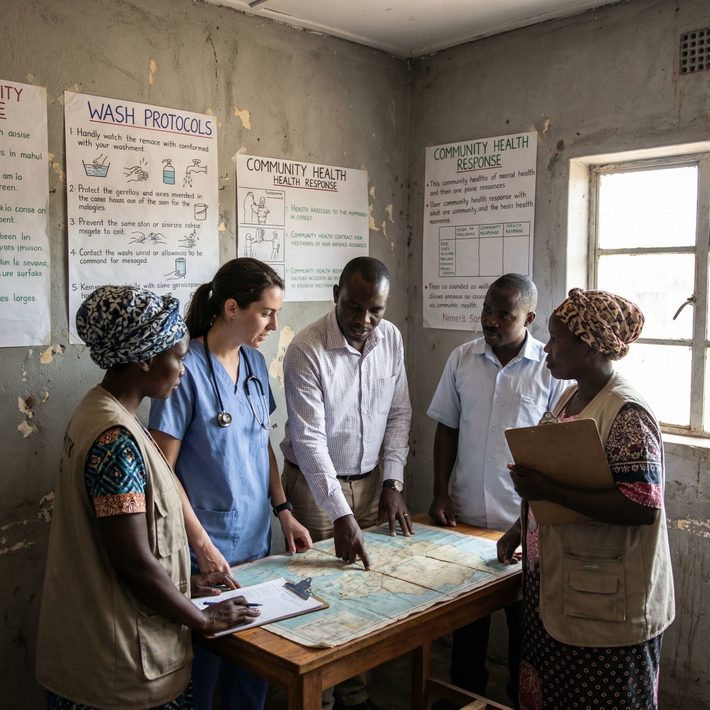
You matched into a top residency program, but you have a persistent itch that a US tertiary care hospital cannot scratch. You want to serve abroad.
Here is what usually happens next: a well-meaning resident packs a duffel bag, buys a ticket to Guatemala or Tanzania, spends two weeks placing IVs or taking blood pressures, takes twenty photos for social media, and flies back to their PGY-2 schedule feeling like a humanitarian hero.
That is not global health. That is voluntourism with a stethoscope.
If you want to build a career, or even a legitimate elective, in global health, you must drop the savior complex immediately. Global health is not a destination. It is an academic, clinical, and public health discipline that demands the exact same rigor, ethics, and strategic planning as surgical oncology or interventional cardiology.
If you are facing the crossroads between a high-intensity US residency and international service, here is how you handle the situation without blowing up your training or harming the communities you claim to help.
This article is for educational purposes only. It is not financial advice, not legal advice, and not tax advice. Figures vary by individual circumstances, consult a qualified professional before acting.
The Crossroads: When US Residency Meets Global Service
The conflict hits hardest during your PGY-1 or PGY-2 year. You are drowning in electronic health record documentation and discharge summaries. Meanwhile, you read about outbreaks, humanitarian crises, or structural health disparities abroad and think, That is where I am actually needed.
Hold on.
Your clinical skills right now are half-baked. An intern in a US program operating without attending supervision is a liability in Boston, and you are just as much of a liability in Kampala.
THE REALITY CHECK:
Your immediate job is acquiring clinical competence.
Your long-term job is leveraging that competence for systemic impact.
Do not confuse the two.
When you look at international clinical service during residency, recognize the tension:
- The Immediate Need: Your desire to gain low-resource clinical experience and deliver hands-on care.
- The Long-Term Goal: Sustainable capacity building, making sure the clinic runs better after you leave than while you were there.
The Situation Handler rule here is simple: Do not book a flight until you have built a strategy that protects your residency standing, your medical license, and the host institution.
You need to know your program's moonlighting and elective policies, ABMS board requirements regarding out-of-country rotations, and malpractice coverage boundaries before you even look at a travel immunizations clinic.
Mapping Your Path: From Rotation to Career
Stop treating global health as a side project. View it as a lens through which you frame your entire medical career.
You do not need to quit your academic trajectory to work globally. You need to align your residency electives with established institutional partnerships.
The Three Main Entry Points
- US-Based Global Health (The Underserved Local Strategy): You do not need a passport to practice global health. Working at a Federally Qualified Health Center (FQHC), an asylum clinic, or a native reservation clinic teaches you low-resource medicine, language skills, and cross-cultural care while keeping you firmly within US legal frameworks.
- International Observerships & Clinical Electives: These must be structured through bilateral institutional agreements (e.g., AMPATH in Kenya, Partners In Health in Haiti/Rwanda). You are there to learn their system, shadow local physicians, and support their workflow, not to run the ICU.
- Implementation Science & Field Research: If you have a background in epidemiology or biostatistics, this is where you deliver the highest leverage. Collecting quality data on local interventions drives real funding and policy changes.
The Residency Timeline
If you want an international rotation during residency, start planning at least 12 to 18 months in advance.
- Year 1 (Foundation): Establish baseline clinical competence in your core specialty. Identify mentors in your department who hold active global health grants.
- Year 2 (Logistics & Approval): Submit formal proposals to your Graduate Medical Education (GME) office. Secure ACGME approval if required for out-of-country training credit. Secure travel funding.
- Year 3+ (Execution & Next Steps): Complete the rotation. Publish co-authored work with host partners. Apply for Global Health fellowships (e.g., HEAL Initiative, Fogarty Global Health Fellows) or academic faculty positions with protected global time.
The Logistics of Impact: Funding and Safety
Good intentions do not cover airfare, and they certainly do not cover an emergency air ambulance when you contract severe dengue fever in a rural outpost.
Following the Money
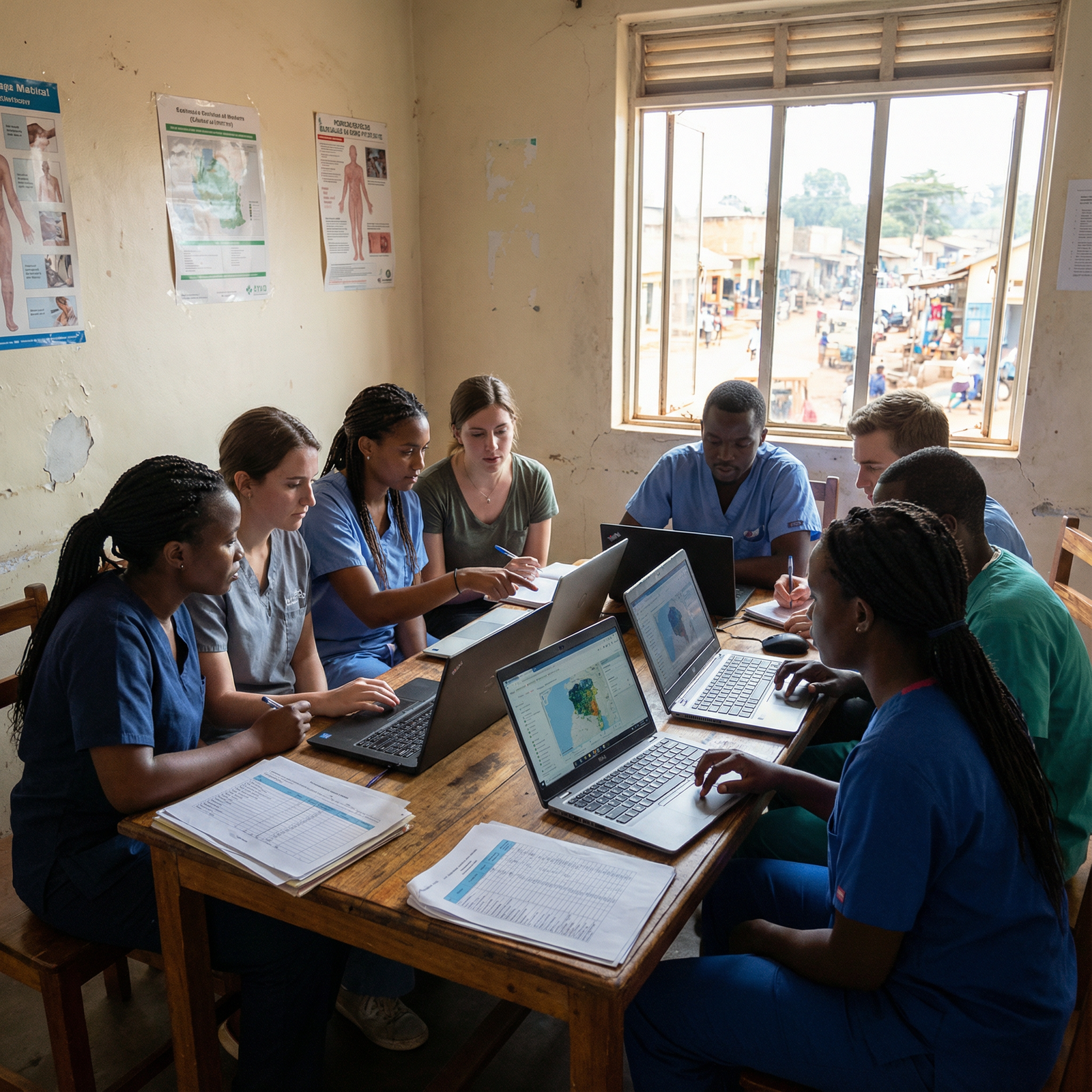
Most residency programs do not hand out $5,000 stipends for residents to travel. Expect to hunt for internal department grants, institutional global health center awards, or external funding like the Benjamin H. Kean Travel Fellowship in Tropical Medicine.
If you are paying entirely out of pocket for a commercial program that promises "hands-on surgical experience in two weeks," you are paying for voluntourism. Walk away.
Navigating Safety and Legalities
When evaluating an international site, analyze these four non-negotiable logistical anchors:
- Malpractice and Licensure: Does your US residency program's malpractice policy cover you outside the country? (Spoiler: usually, it does not.) You need formal temporary licensure in the host country and explicit liability coverage.
- Medical Evacuation Insurance: You need a standalone policy (e.g., SOS International or Medjet) that covers emergency air repatriation. If you perforate your appendix in a village three hours from an airstrip, your regular health insurance will not get a jet to you.
- State Department Warnings and Local Contacts: Monitor travel advisories, but rely more heavily on real-time intelligence from local host institution leads.
- Scope of Practice: The golden rule: If you are not credentialed to perform a procedure independently in your US hospital, you cannot legally or ethically perform it abroad. Period. Do not practice on vulnerable populations in developing nations simply because nobody is stopping you.
Data-Driven Decisions: Where the Opportunities Are
Global health funding is moving away from short-term disaster relief drops and toward Health Systems Strengthening (HSS). Major grantmakers, including the Fogarty International Center at the NIH, the Bill & Melinda Gates Foundation, and USAID, fund long-term infrastructure, workforce training, and sustainable supply chains.
If you want a durable career, build expertise in areas where the global disease burden meets severe systemic shortages:
- Non-Communicable Diseases (NCDs): Cardiovascular disease, diabetes, and hypertension are skyrocketing across middle- and low-income countries. The world needs systems to manage chronic disease, not just acute infection control.
- Maternal and Child Health (MCH): High-impact interventions here yield the highest return on investment in global public health metrics.
- Surgical and Anesthesia Capacity: "Global Surgery" is now a recognized, data-backed academic field. Programs like the Lancet Commission on Global Surgery have laid out clear roadmaps for scaling safe surgical care.
- Infectious Disease Surveillance: HIV, TB, and Malaria remain critical, but pandemic preparedness and antimicrobial resistance tracking are driving fresh funding streams.
Choose your target based on host community priorities, not personal curiosity. Look for programs with trackable clinical outcomes, like measurable reductions in 30-day post-op mortality or improved viral suppression rates, and strong evidence of local mentorship.
The Long Game: Sustainability and "Do No Harm"
I've seen residents return from abroad boasting about how many chest tubes they placed without attending supervision. That isn't professional growth; it's exploitation.
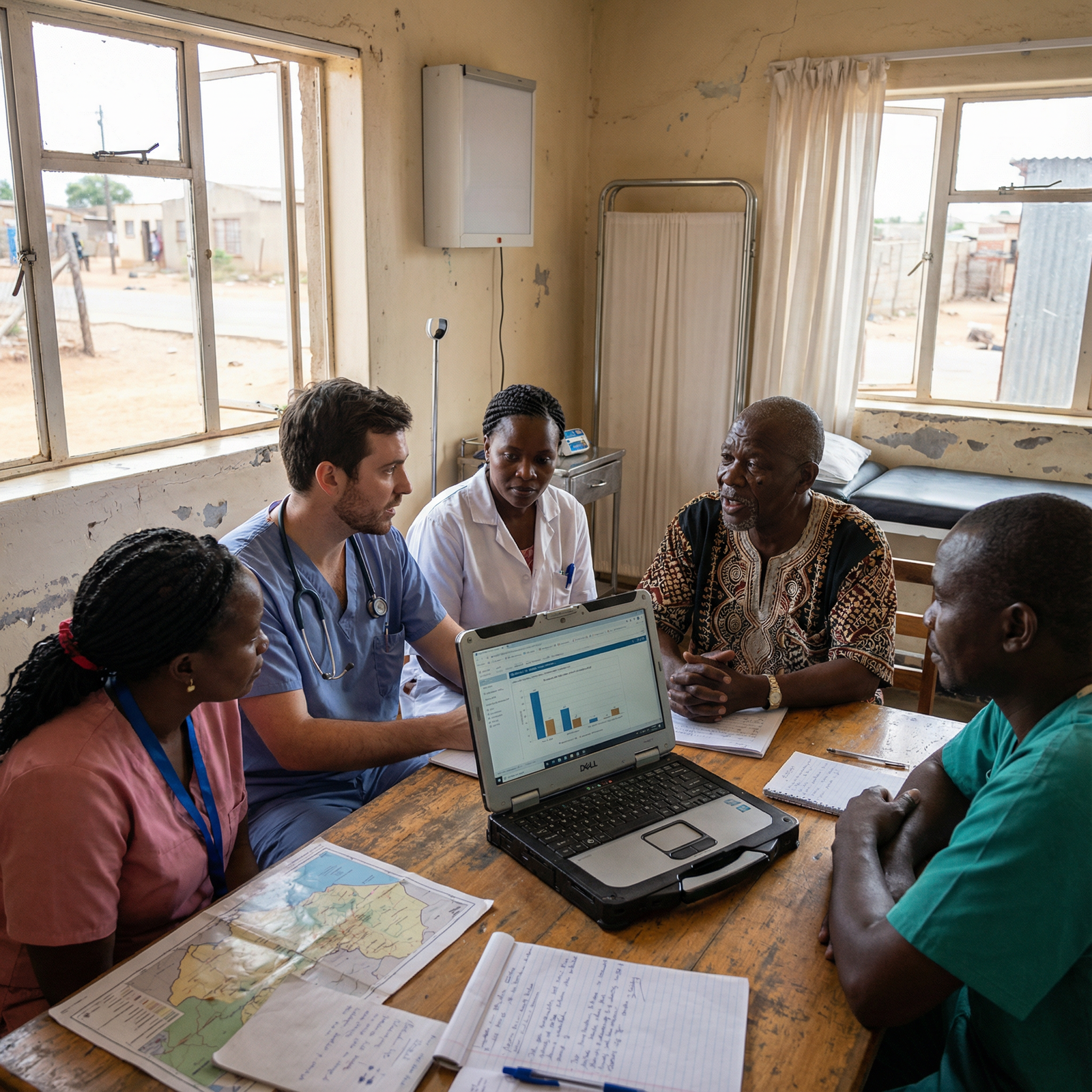
If you leave a clinic after two weeks and the local staff are stuck dealing with complications from procedures you performed incorrectly, you didn't help. You created a mess for local providers to clean up.
The Ethics Checklist for Global Health Service
- Are local clinicians included as lead and senior authors on research papers? If a project mines data from patients in LMICs but only lists American authors, it is scientific colonialism.
- Is the project requested by the local leadership? Never show up with a solution to a problem the local team hasn't identified as a priority.
- What happens when you leave? If your presence creates a temporary peak in patient care that collapses the day your flight takes off, your project design is flawed.
- Are you training local healthcare workers? True impact means passing skills to local nurses, community health workers, and clinical officers so they no longer need you.
Your goal is to make yourself redundant. If you build a system, train a team, and hand over the keys to local leadership, you've done global health right.
Key Takeaways
- Global health is an academic discipline, not a vacation. Approach it with the same rigor, planning, and ethical standards you apply to your core specialty training.
- Start early. Secure GME approval, funding, travel insurance, and host country medical licensure 12 to 18 months before stepping foot on a plane.
- Never breach your scope of practice. If you cannot perform a procedure unsupervised in your home institution, do not attempt it on patients abroad.
- Focus on capacity building over clinical heroics. Invest in health systems strengthening, local staff education, and sustainable interventions that survive long after you return home.