
I’ve Never Worked Abroad—Will Programs Take My Global Health Interest Seriously?
What if they look at your application, see “no trips abroad,” and just quietly roll their eyes at your “global health interest” and move on?
That’s the fear, right?
You check other people’s CVs: Uganda this, Peru that, “summer in Rwanda,” “research in Haiti.”
And you’ve…never left your country for anything remotely academic. Maybe never left your state.
And now you’re wondering: am I already disqualified from being taken seriously in global health?
Let me be blunt: no, you’re not disqualified.
But yes, there are ways you can sound fake, shallow, or “Instagram global health” if you’re not careful.
Let’s untangle this.
What Programs Actually Look For When You Say “Global Health”
They are not hunting for a passport stamp collection. They’re hunting for substance.
Most serious global health faculty I’ve met care about three things way more than your travel record:
- Do you understand global health is more than “medical tourism”?
- Do you show sustained commitment to underserved populations (anywhere)?
- Do you show basic humility and awareness of power, privilege, and ethics?
You can do all three without ever boarding a plane.
Here’s the ugly truth:
Plenty of people have worked abroad and still aren’t taken seriously because:
- They went on a 2‑week “mission trip,” took photos holding babies, and called it global health.
- They did unsupervised procedures abroad they’d never be allowed to do at home.
- They talk about “helping the poor” with zero awareness of colonialism, local systems, or sustainability.
Programs see this constantly. It’s not rare. It’s the norm.
So no, lack of international experience does not automatically put you behind these people. In many ways, you’re safer. You haven’t picked up the bad habits.
How To Make Your Global Health Interest Sound Real (Even Without Going Abroad)
If you don’t have international experience, you need something else: depth.
Not fake-depth like “I love learning about other cultures.” Actual, specific, grounded things you’ve already done or thought through.
1. Anchor your interest to real experiences you do have
Look at what you’ve already done. There’s probably more “global” there than you think:
- Worked with refugees or asylum seekers in your city
- Volunteered at a free clinic that serves migrant workers
- Helped with language interpretation or health education for non‑English speakers
- Participated in research about TB, HIV, maternal mortality, health systems, or health equity
- Advocacy with organizations on issues like access to medicines, climate and health, or vaccine equity
Programs don’t care if the patient was in Nairobi or in a safety‑net clinic in your own zip code. They care whether you’ve:
- Shown up consistently
- Reflected on what you saw
- Understood the structural issues beneath “this person is sick”
If you write:
“I haven’t yet had the opportunity to work abroad, but my work with recently resettled Afghan families at our local clinic has forced me to confront the same questions around power, language, and access that sit at the center of global health,”
that reads much more serious than:
“I’ve always wanted to travel and experience different cultures.”
One is thoughtful. One is vacation copy.
2. Show you understand what global health actually is
This is where most people blow it.
Global health is not: “medicine but more exotic.”
It’s: power, politics, systems, history, ethics. It’s who gets care and why. It’s colonization and debt and supply chains and WHO guidelines and task‑shifting and health workforce drain.
You don’t need to sound like a PhD. But you do need to show some awareness.
Signal that you’ve done your homework:
- Mention specific issues: “task‑shifting to community health workers,” “brain drain of health workers,” “vertical vs horizontal programs,” “decolonizing global health,” “WHO Essential Medicines List,” “national health insurance schemes.”
- Reference authors, books, or talks you’ve actually read: Paul Farmer, Joia Mukherjee, Madhukar Pai, “Reimagining Global Health,” “Mountains Beyond Mountains,” pieces from The Lancet Global Health.
Even one or two specific references make you stand out from the vague “I want to help the world” crowd.
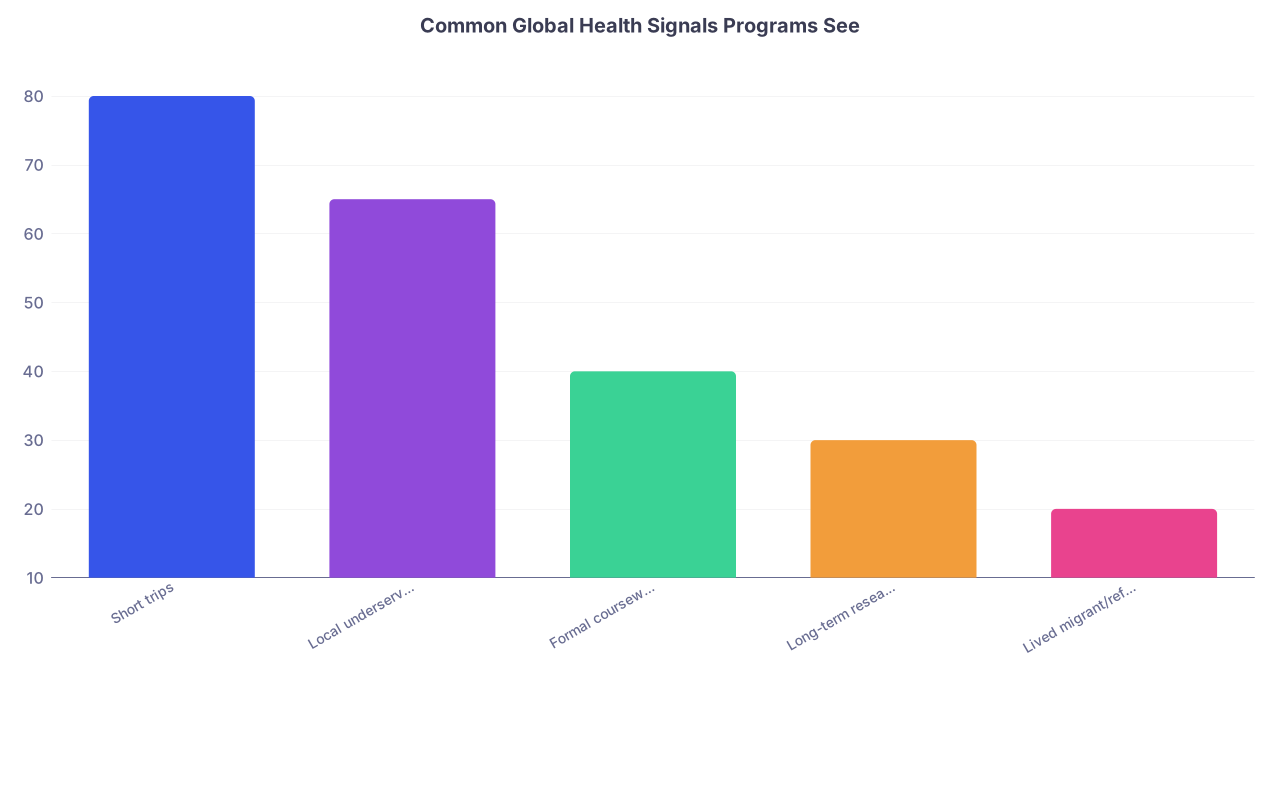
| Category | Value |
|---|---|
| Short trips | 80 |
| Local underserved work | 65 |
| Formal coursework | 40 |
| Long-term research | 30 |
| Lived migrant/refugee experience | 20 |
Simple point: almost everyone has “short trips” these days. Much fewer have real depth. You can compete in the depth category.
The Ethics Question You’re Afraid They’ll Ask
You’re worried someone is going to look you in the eye (or in your personal statement) and say:
“If you care so much about global health, why haven’t you actually gone anywhere?”
Here’s how you handle that without sounding defensive or fake.
1. Be honest about constraints
There are a lot of very normal reasons you haven’t worked abroad:
- Money. Those “global health electives” are expensive. Plane tickets, housing, time off work.
- Family responsibilities. Caregiving duties, needing to stay physically close to home.
- Visa issues. If you’re an immigrant or on certain visas, travel is not trivial.
- Opportunity. Your school or region may not have established, ethical global health partnerships.
You’re allowed to say that. Directly.
Something like:
“I haven’t had the chance to participate in an international elective yet. Financial limitations and family responsibilities meant I needed to stay local during summers. That’s part of why I focused on global health issues in my own city instead—working with refugee families and learning about health systems and access barriers from that perspective.”
That sounds human. Programs get it. Many faculty had similar constraints as students.
What doesn’t work:
Pretending you chose not to go abroad because you’re “too busy,” or, worse, ignoring the question and hoping they don’t notice.
2. Show you’ve thought about the ethics of how you’d go abroad
This is where you can actually outshine some people with international experience.
If you can talk intelligently about concerns like:
- Not doing procedures you’re not trained for just because “it’s allowed there”
- Working within long‑term partnerships instead of random one‑off trips
- Respecting local expertise, guidelines, and health workers
- Avoiding saviorism and the “hero narrative”
…you’re already operating at a more mature level than lots of folks with picture-perfect Instagram feeds and ethically messy experiences.
You can literally say:
“If I’m fortunate enough to participate in international work during residency, I want to do so through long‑term, bidirectional partnerships where local clinicians set the priorities. I’m very aware of the ethical concerns around short‑term trainees doing more than they’re trained for and I want to avoid contributing to that dynamic.”
Programs love this. It tells them you’re not going to be that intern trying to do C‑sections on your first day in a rural hospital because “it’s global health.”

| Step | Description |
|---|---|
| Step 1 | Local Underserved Work |
| Step 2 | Global Health Coursework |
| Step 3 | Research on Global Issues |
| Step 4 | Advocacy and Policy |
| Step 5 | Residency With Global Track |
| Step 6 | Ethical International Work Later |
The point of that little map: you are not “behind.” You’re just at an earlier step on a perfectly valid route.
Concrete Ways To Build a Credible Global Health Profile Right Now
Let’s say you have zero international work and minimal local “global-ish” experience. You’re starting almost from scratch. Is it over?
No. It just means you need to be deliberate.
Here are realistic, non‑fantasy things you can do in the next 6–12 months that actually matter.
1. Do serious local work with global relevance
Look intentionally for:
- Refugee health clinics
- Migrant farmworker clinics
- TB, HIV, or STI clinics
- Homeless outreach programs with high immigrant populations
- Language‑specific health hotlines
- Legal-medical partnerships (for asylum evaluations, for example)
Show up consistently. Weekly or monthly. Over many months. That’s what signals commitment.
And in your application, connect the dots:
“Through working at our city’s refugee clinic, I saw how global conflicts and migration policies shape the pathology we see in a US exam room. That experience is what pushed me toward global health systems work.”
2. Take actual coursework or certificate programs
If your school has:
- Global health electives
- Public health/global health tracks
- Ethics courses focused on international work
- MPH or global health certificate options
Use them. These are concrete, formal pieces you can list.
If you don’t have access to those, you can still:
- Complete online courses (Coursera, edX) from reputable institutions on global health, health systems, or epidemiology
- Join journal clubs focused on global health
Then don’t just list them. Reflect on them:
“A course on health systems in low resource settings reframed my interest from ‘doing missions’ to understanding financing, workforce, and policy.”
3. Get involved in research that touches global issues
You don’t need to be working in Malawi to do global health research.
Look for:
- Faculty doing work on infectious diseases common in low‑ and middle‑income countries
- Projects on implementation science, health equity, or health systems
- Retrospective chart reviews on immigrant health, language barriers, or access issues
- Collaborations with international partners (even if your role is remote)
Be honest about your role (don’t oversell “research assistant” as if you ran the entire project), but even modest involvement shows you’re moving beyond vibes into actual scholarship.
4. Join organizations actually doing something
Student or trainee groups tied to:
- Global health equity
- Human rights in medicine
- Climate and health
- Decolonizing global health
Not just as “member number 144 on the listserv.” Actually helping plan events, run journal clubs, or organize speakers.
Name concrete actions in your application:
“Co‑organized a panel on decolonizing global health with speakers from Kenya and India, which challenged my assumptions about who should lead global health agendas.”
That’s the kind of line that sticks with reviewers.
| Activity Type | Local Example |
|---|---|
| Clinical | Refugee or immigrant health clinic |
| Research | Study on TB outcomes in migrant groups |
| Advocacy | Campaign for language access in hospitals |
| Education | Teaching health literacy to new arrivals |
| Systems/Policy | Project on insurance access for undocumented patients |
How To Talk About “Global Health Interest” Without Sounding Shallow
You’re right to be nervous here. A lot of people sound terrible when they try to do this.
Avoid these red-flag phrases
If your statement says things like:
- “I want to help poor people in other countries.”
- “I’ve always wanted to travel.”
- “Global health would let me see the world while practicing medicine.”
- “I want to save lives where they need it most.”
You sound like every cliché they’ve learned to distrust.
Try instead:
- Talk about systems, not just suffering: “I’m interested in how supply chains, financing, and workforce training impact access to essential medicines.”
- Talk about humility, not heroism: “I want to work alongside local clinicians and learn from health systems that do more with fewer resources.”
- Talk about long‑term engagement, not 2‑week stints: “My goal is to build a career that allows repeated, sustained work with the same partners, rather than one‑off trips.”
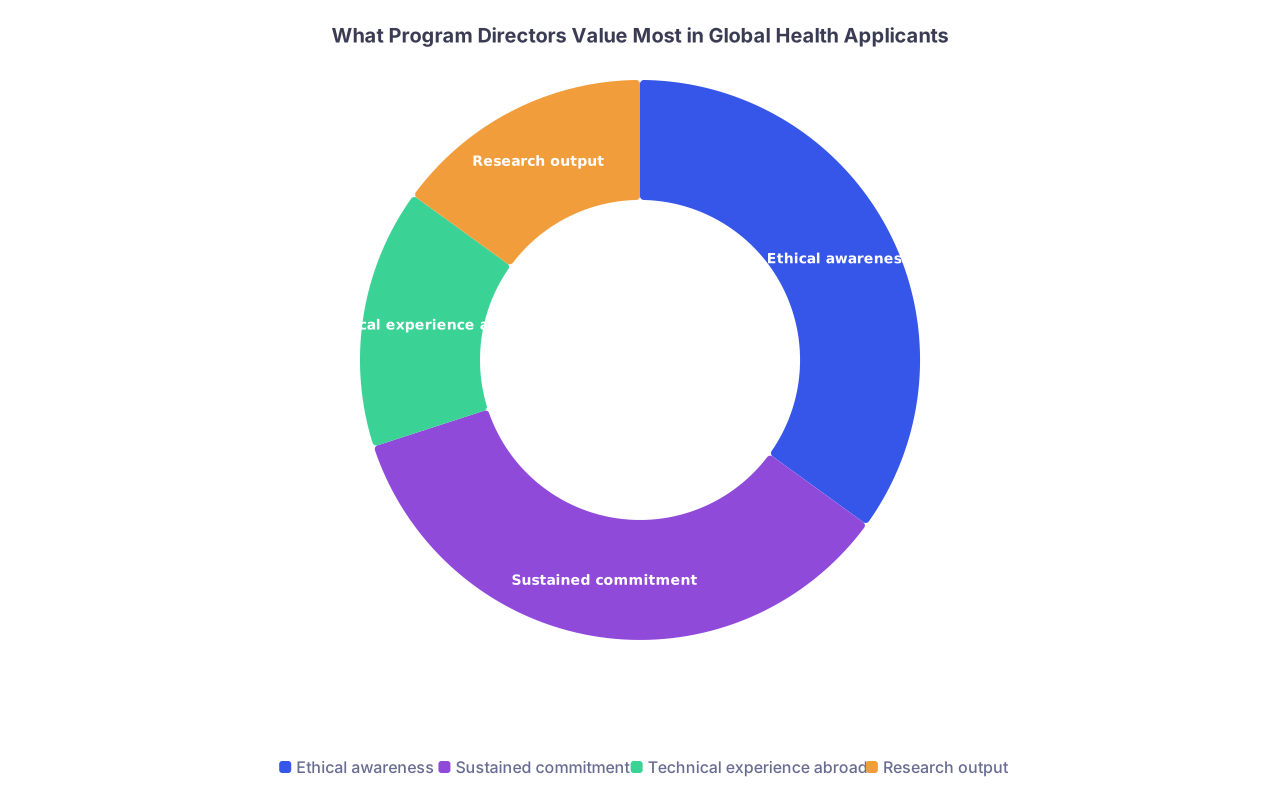
| Category | Value |
|---|---|
| Ethical awareness | 35 |
| Sustained commitment | 35 |
| Technical experience abroad | 15 |
| Research output | 15 |
That’s obviously approximate, but the point stands: ethics + commitment beat raw “I went abroad once.”
The Worst-Case Scenario You’re Imagining (And What Actually Happens)
You’re picturing this:
Committee sees “global health interest.”
They flip to your experiences.
No international work. They scoff.
“Disingenuous. Next applicant.”
That…is not how this usually goes.
More realistic scenario:
They see “global health interest.”
They check:
- Did this person actually do anything remotely related?
- Do they understand basic global health concepts?
- Are they thoughtful about ethics?
- Does their story feel consistent and believable?
If:
- You have some track record (even purely local),
- You can talk about it intelligently,
- You’re clear about why you haven’t been abroad yet,
- And you have a realistic plan to build that experience during training,
they’ll take you seriously. Even if you’ve never had a passport.
What does hurt you is pretending to be something you’re not.
So don’t try to sound like you’ve done fieldwork when you haven’t. Don’t pad your CV with vaguely worded “global outreach” things that are actually just one‑day fairs. They can tell.
You’re better off saying:
“My global health work so far has been entirely local, focused on our city’s refugee population. I’m hoping residency will give me the structure and mentorship to extend that work to international partnerships in a way that’s ethical and sustainable.”
That is honest, believable, and aligns with what most programs actually offer: training + mentorship, not instant hero status.
FAQ (Exactly 4 Questions)
1. Will programs think I’m less committed to global health if I’ve never worked abroad?
Not automatically. They’ll think you’re less committed if you have no sustained experiences, no local work with underserved populations, no coursework, and no evidence you’ve thought about ethics or systems. If you’ve consistently worked with marginalized groups locally and can articulate how that connects to global health, you’ll often come across as more grounded than someone who did one flashy trip.
2. Should I rush to do a short international trip before applying, just to “check the box”?
Honestly? No. A last‑minute, random 2‑week trip screams “CV padding,” and if it’s poorly structured or ethically sketchy, it can actually hurt you. You’re better off deepening local work, taking a serious global health course, or joining a meaningful research/advocacy project. Programs would rather see substance than a rushed stamp in your passport.
3. How do I answer in an interview if they ask why I haven’t done international work?
Be straightforward. Briefly explain any real constraints (financial, family, visa, lack of structured programs), then pivot to what you have done and what you’ve learned. End with how you plan to engage in global health moving forward, emphasizing ethics and partnership. The key is to avoid sounding defensive or ashamed; you’re making intentional choices within real limits, not making excuses.
4. Can I still aim for a global health–focused residency track with no prior work abroad?
Yes, as long as the rest of your profile shows real interest and effort: local underserved work, relevant coursework, maybe research or advocacy tied to global issues. Many global health tracks expect to train you from your current level; they don’t require you to show up already “fully formed.” What they want to avoid is people chasing the brand name of “global health” without any evidence they’ve thought about what that actually means.
Open your CV or activities list right now and circle every experience that touches underserved populations, migration, language barriers, health equity, or systems. Then ask yourself: how can I deepen one of those in the next three months?


