
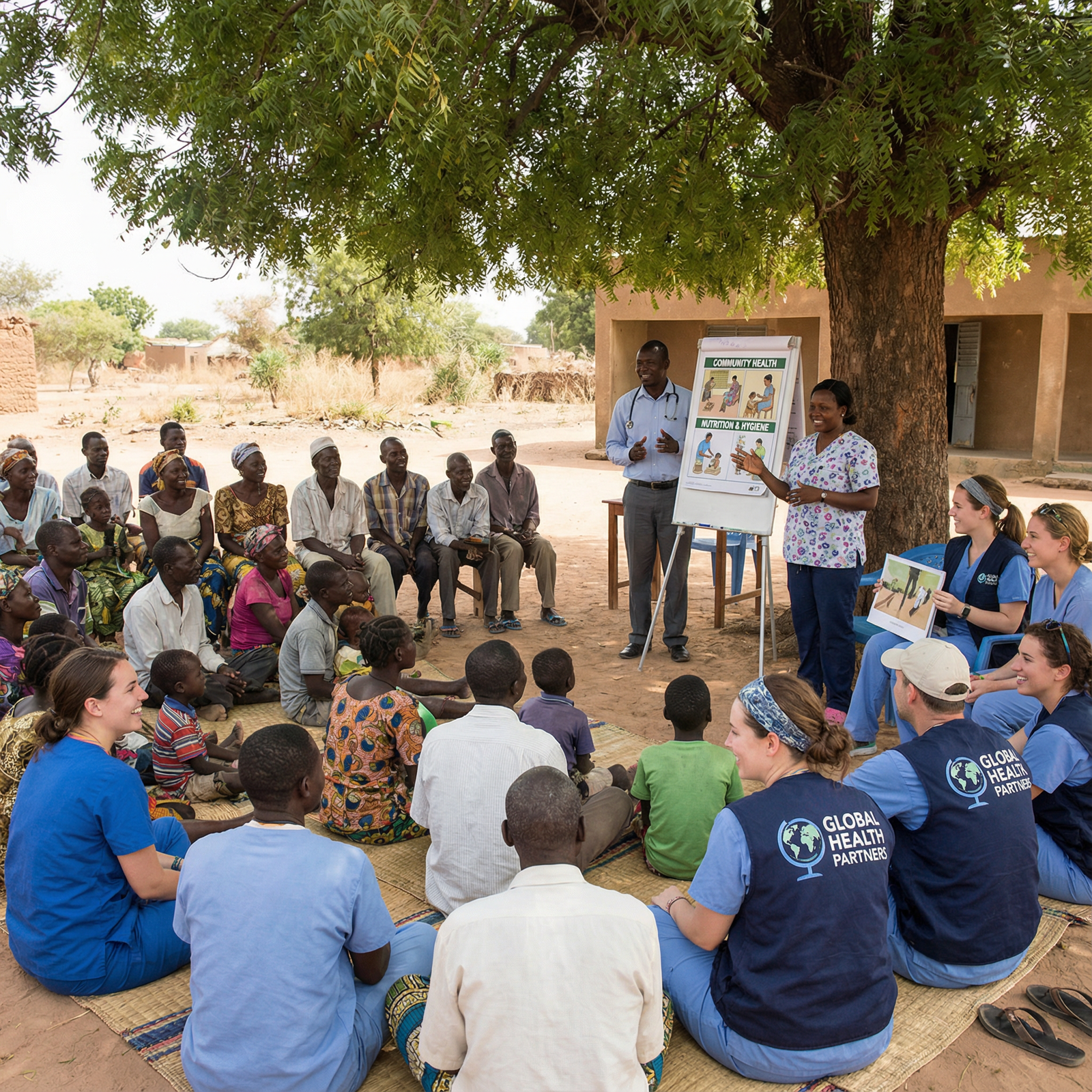
The worst global health careers start with a random spring-break trip and an Instagram post. The best ones start with a four–year plan.
You’re not just trying to “go abroad.” You’re building judgment, ethics, skills, and credibility. That does not happen by accident or in one summer.
Here’s your M1–M4 global health timeline—what to do, when to do it, and what to avoid at each stage.
Big-Picture 4‑Year Global Health Roadmap
At this point you should see your four years as a series of phases, not isolated trips.
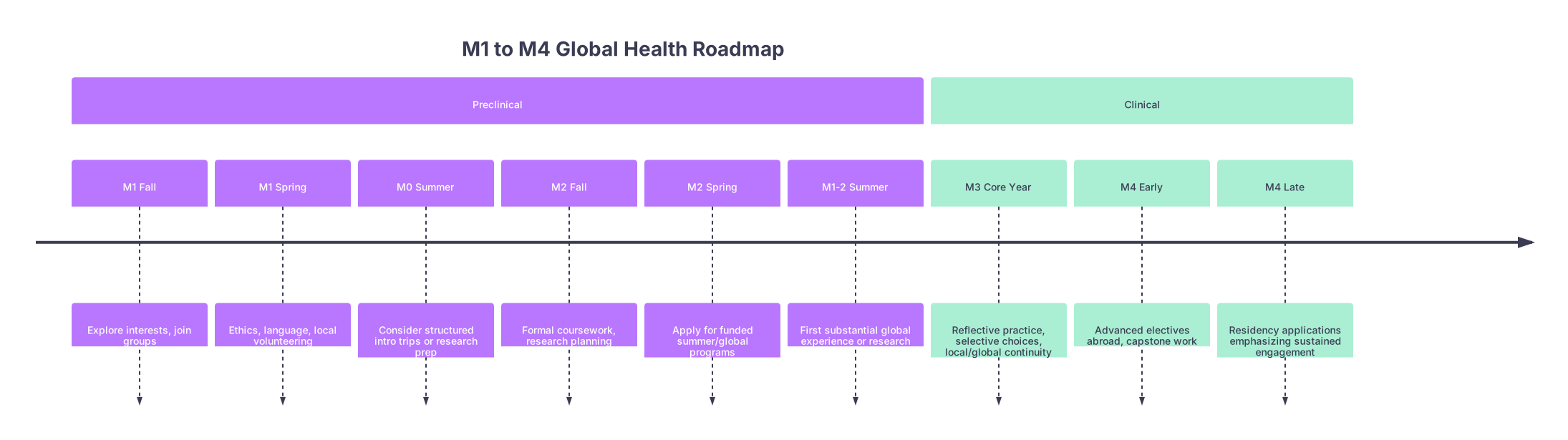
| Period | Event |
|---|---|
| Preclinical - M1 Fall | Explore interests, join groups |
| Preclinical - M1 Spring | Ethics, language, local volunteering |
| Preclinical - M0 Summer | Consider structured intro trips or research prep |
| Preclinical - M2 Fall | Formal coursework, research planning |
| Preclinical - M2 Spring | Apply for funded summer/global programs |
| Preclinical - M1-2 Summer | First substantial global experience or research |
| Clinical - M3 Core Year | Reflective practice, selective choices, local/global continuity |
| Clinical - M4 Early | Advanced electives abroad, capstone work |
| Clinical - M4 Late | Residency applications emphasizing sustained engagement |
Here’s how it breaks down, semester by semester, with specific moves.
M1: Exploration, Foundations, and Saying “No” to Bad Trips
M1 Fall (Months 1–4): Orientation, Not Action Hero
At this point you should observe more than you act.
Your goals:
- Figure out if you’re serious about global health or just curious.
- Learn enough ethics to avoid harmful “medical voluntourism.”
- Start building relevant skills (language, cultural humility, research literacy).
By October–November you should:
- Join:
- Global health or global surgery student group.
- AMSA global health, Physicians for Human Rights, or similar chapter if present.
- Attend:
- Any global health lecture series or noon conferences.
- Talks from faculty who actually work long-term in global health (pay attention to what they criticize).
- Begin:
- 1 language relevant to where you might work (Spanish is the default for most US students; French, Portuguese, or regional languages as appropriate).
Red flags to avoid now:
- Trips advertising that you will:
- “Provide medical care” as an M1.
- “Perform procedures” or “assist in surgery” with basically zero supervision.
- Programs that:
- Can’t name their local partner.
- Don’t describe longitudinal relationships.
- Emphasize photo‑ops over learning.
If the flyer looks like a mission trip brochure with stethoscopes, walk away.
M1 Fall Skills Checklist
By winter break, you should have:
- Read at least one solid global health book:
- “Reimagining Global Health” (Farmer et al.) or
- “Global Health 101” (Skolnik).
- Completed:
- Your institution’s research ethics training (CITI or equivalent).
- Identified:
- 2–3 faculty who seem serious about global health (global surgery, ID, health systems, refugee care, etc.).
Start tracking these people. Who do they collaborate with? Where? For how long?
M1 Spring (Months 5–9): Early Local Engagement + Ethics
At this point you should test your interest locally before booking plane tickets.
January–March: Commit to consistent local work
- Choose one of these and show up regularly:
- Refugee/immigrant clinic.
- Free clinic serving uninsured populations.
- Medical–legal partnership with migrant groups.
- Community health program with CHWs, promotoras, etc.
Your job is not to “save” anyone. Your job is to:
- Listen.
- Learn how systems fail patients.
- Understand structural barriers: language, transportation, documentation, insurance.
February–April: Formalize your ethics base You should:
- Take or audit:
- Any offered seminar on global health ethics, colonialism in medicine, power dynamics.
- Read:
- Articles critiquing global health electives and short-term missions.
- Write:
- A one-page reflection: “Why am I interested in global health, and what risks do my interests pose to partner communities?”
If you can’t answer that honestly, you’re not ready to go abroad.
- A one-page reflection: “Why am I interested in global health, and what risks do my interests pose to partner communities?”
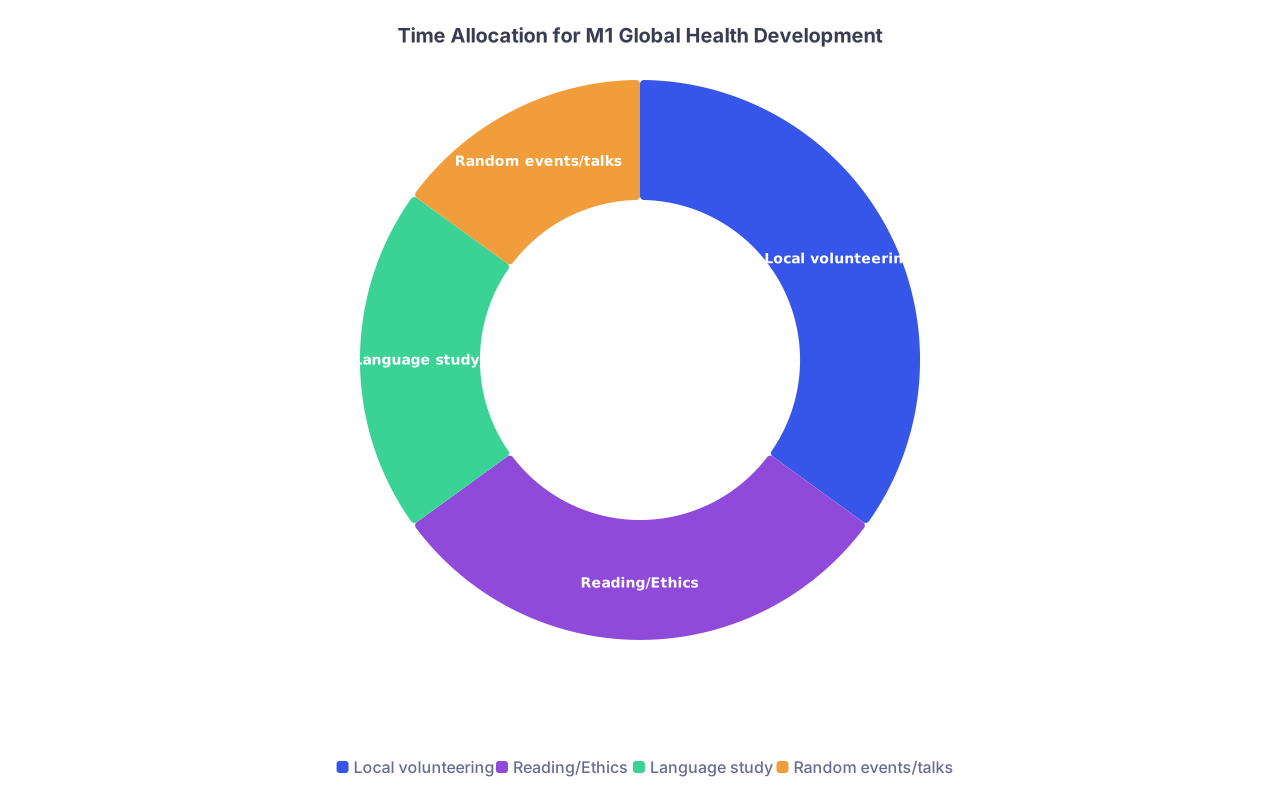
| Category | Value |
|---|---|
| Local volunteering | 35 |
| Reading/Ethics | 30 |
| Language study | 20 |
| Random events/talks | 15 |
M0 (Pre‑Matriculation) or Summer After M1: The First “Real” Step
This is where most people screw it up. They chase a short trip with a sexy destination. You’re aiming for structured learning, not a stamp in your passport.
At this point you should decide: introductory exposure vs. research foundation vs. language immersion. Not all three.
Option A: Structured Intro Global Health Program (Good if you’re early & curious)
Look for:
- 4–8 week programs run by your school or trusted partners.
- Clear:
- Learning objectives (systems, culture, history),
- Scope of practice,
- Faculty supervision.
- Strong local partner who:
- Has been there longer than your dean,
- Co-designs the curriculum,
- Leads major parts of the teaching.
You should not:
- Be its main “care provider.”
- Start IVs, do pelvic exams, “assist surgery” as primary learner.
- Prescribe anything.
Good signs:
- You spend a lot of time shadowing, observing system workflows, and participating in teaching conferences.
- You have pre‑departure training on:
- Safety,
- Ethics,
- Cultural context,
- Power imbalances.
Option B: Research Setup Summer (Good if you want an academic global health path)
If you’re aiming at global health research (epidemiology, implementation science, policy):
By March–April of M1 you should:
- Email 3–5 faculty with:
- A short intro (who you are, year, interest).
- 2–3 sentences on why their work specifically interests you.
- A concrete ask:
“I’m hoping to get involved with an ongoing project this summer in any capacity—chart review, data cleaning, lit review, etc.”
- Target:
- Already-funded projects.
- IRB-approved work.
- Longstanding partnerships (not new “this summer only” projects).
Summer deliverables you should aim for:
- 1–2 abstracts or poster submissions (even internal).
- One small piece of a larger project where you’re the workhorse, not the PI.
Option C: Language or Cultural Immersion (Underestimated but powerful)
If your med school is in the US and you’re serious about Latin America, for example:
- 6–8 weeks Spanish immersion > 2‑week “global health” shadowing.
- Combine:
- Language school in the morning,
- Local NGO volunteering in the afternoon (non-clinical).
M2: Deepening Knowledge, First Real Deliverables, and Strategic Summer
M2 is about turning vague enthusiasm into tangible work and a coherent narrative.
M2 Fall (Months 1–4 of M2): Structure and Alignment
At this point you should:
- Choose a focus area, even if it evolves:
- Global surgery, maternal health, TB/HIV, refugee health, health systems, planetary health, etc.
- Align your work:
- Global health elective or certificate, if your school offers it.
- Select research or advocacy tied to that focus.
By mid‑fall you should:
- Have:
- A regular slot on an ongoing project (weekly meetings, tasks).
- Be:
- Collecting data, writing lit reviews, or helping with analysis.
You’re moving from “I show up at talks” to:
“I work with Dr. X and a team in country Y on Z project.”
M2 Spring (Months 5–9): Planning the Big Pre‑Clinical Summer
This is usually your last long, flexible summer. Don’t waste it.
At this point, your main tasks:
Decide your summer priority
- Option 1: Substantial field time with a long-term partner site.
- Option 2: High‑yield global health research with clear outputs.
- Option 3: Combined clinical‑research elective (if your school supports).
Apply early to structured programs (deadlines often Dec–Feb):
- Fogarty Global Health programs (for some schools).
- Institution‑specific global health fellowships.
- Well‑structured NGO or academic partnerships.
Lock in funding by March–April
- School global health travel funds.
- Specialty societies (e.g., global surgery, ID, EM) often fund electives.
| Path Type | Duration | Primary Goal | Typical Output |
|---|---|---|---|
| Field Elective | 4–8 wks | Clinical exposure | Reflection, contacts |
| Research Block | 8–12 wks | Data & analysis | Abstract, poster |
| Hybrid (Clin+Res) | 8–10 wks | Skills + scholarship | Draft manuscript |
Non‑negotiables before you travel:
- Pre‑departure training completed.
- Clear description of your scope of practice in writing.
- Supervisor (local + home institution) identified.
- Housing, safety, and emergency plans clarified.
M3: Clinical Reality Check and Ethical Practice
Once you’re on the wards, your global health lens either sharpens or disappears. M3 is where you stop theorizing and see inequity up close—locally.
M3 Core Clerkship Year: Practice, Reflection, Integration
At this point you should:
- Apply your global health thinking to every rotation, not just “global health electives.”
On Internal Medicine:
- Look for: health literacy issues, language barriers, unaffordable meds.
- Ask (quietly, to residents/attendings):
“What happens to this patient after discharge? What barriers do they face?”
On OB/GYN or Peds:
- Notice:
- Who declines care and why.
- Transportation and childcare issues.
- Insurance gaps.
On EM:
- Ask:
- How many are here because primary care access is broken?
- What public health failures show up at 3 a.m.?
You’re building pattern recognition for structural problems—the same ones you’ll see abroad, just with different accents and currencies.
Mid‑M3: Decide on Next‑Level Global Health During M4
By the second half of M3 (spring-ish), you should:
- Decide:
- Do you want an M4 global health elective abroad?
- Or will you lean into local/global & research instead?
- Talk to:
- Your school’s global health director.
- Residents/fellows in your intended specialty who did global work as students.
You should, by this point, be able to describe:
- Your focus area in 1–2 sentences.
- The main ethical concerns you’ve seen or wrestled with.
- At least one specific community or site you’ve worked with for more than a few weeks total.
If you can’t, you’re still in the dabbling phase. That’s fine—but don’t try to package it as “deep commitment” on your residency application.
M4: Capstone, Electives, and Preparing for Residency Applications
M4 is where your choices start to matter for your future training path.
Early M4 (Before ERAS Submission): Build the Capstone, Not the Highlight Reel
At this point you should focus on one of these as your capstone:
Advanced Global Health Elective Abroad (Clinical)
- Requirements:
- You’re clinically competent enough not to be a liability.
- The site knows exactly what M4s can and cannot do.
- Longstanding relationship between institutions.
- Your role:
- Function roughly at the level of a supervised sub‑intern.
- Focus on learning systems, resource constraints, team dynamics.
- Avoid “heroics” and stick to what you’d be allowed to do at home.
- Requirements:
Research/Scholarly Product
- Ideal if:
- You’ve been on a project since M1/M2.
- You can now:
- Co‑author a paper,
- Present at a conference,
- Write a case study or curriculum.
- By ERAS time, you should have:
- At least one tangible product (poster, oral, manuscript in progress) linked to global or local/global work.
- Ideal if:
Systems / Policy / Ethics Project
- Could be:
- Curriculum design for future students.
- Evaluation of your school’s global electives.
- Policy analysis on migration, climate, or access to care.
- Could be:
Whatever you pick, it should connect clearly to:
- Your M1–M3 experiences.
- The residency specialty you’re applying into.
ERAS & Interview Season: How to Talk About Global Health Without Sounding Naive
By the time you submit ERAS, you should be able to answer:
“Tell me about your global health experiences.”
- Chronological, coherent story:
- M1: Exploration & ethics.
- M2: First project or structured program.
- M3: Clinical reflections and local integration.
- M4: Capstone (elective, research, or systems project).
- Chronological, coherent story:
“How do you think about the ethics of short‑term work abroad?” You should be ready to say things like:
- “I’m cautious about short-term trips where learners do unsupervised procedures.”
- “I prioritize partnerships where local clinicians and communities define needs and lead the work.”
- “I see global and local health as the same fight against structural inequity.”
“How will you continue this in residency?”
- Name:
- Programs with established global tracks or partnerships you’re targeting.
- Specific skills you want to develop (ultrasound, obstetrics, HIV care, quality improvement, etc.).
- Emphasize:
- You’re not just chasing travel—you’re building clinical and systems expertise that will be valuable anywhere.
- Name:
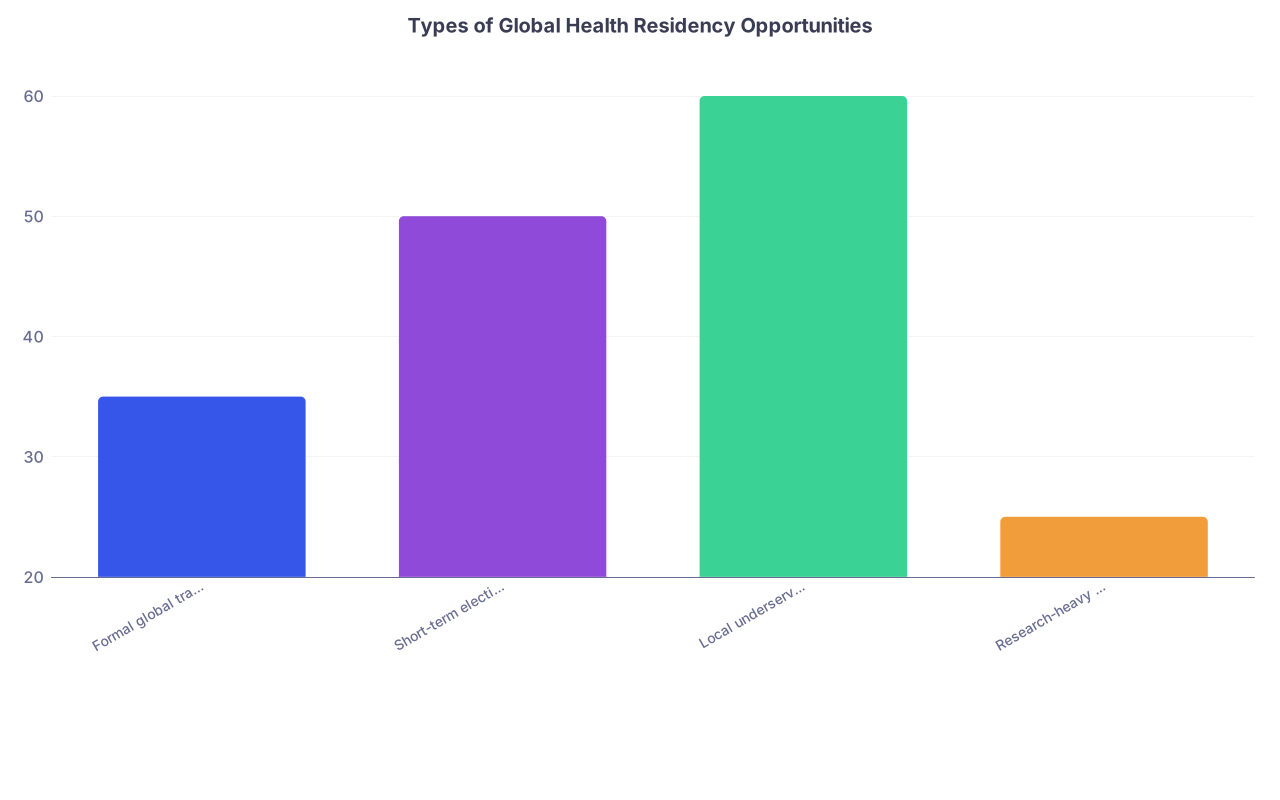
| Category | Value |
|---|---|
| Formal global track | 35 |
| Short-term electives | 50 |
| Local underserved focus | 60 |
| Research-heavy programs | 25 |
Year‑by‑Year Quick Checklist
Here’s the compressed version so you can see where you’re on track or behind.
M1 – Foundation & Filters
At this point you should:
- Join at least one global health–related group.
- Start or deepen one relevant language.
- Read at least one serious global health book.
- Complete research ethics training.
- Say no to any program that wants you doing unsupervised clinical work.
M1 Summer – Intro or Setup
You should:
- Choose one main focus: intro program, research starter, or language immersion.
- Work with a site or mentor with a track record, not a brand-new, one‑off trip.
- Come away with either:
- Concrete learning & reflection, or
- A clear role on an ongoing project.
M2 – Depth & Deliverables
You should:
- Pick a preliminary focus area (subject to evolution).
- Attach yourself to a project that has data, IRB, and real timelines.
- Plan a serious preclinical summer with funding and defined scope.
- Complete pre‑departure preparation if going abroad.
M3 – Integration & Reflection
You should:
- Use every rotation to sharpen your structural lens.
- Maintain some continuity with your global/local project (even if minimal).
- Decide if you want an M4 global elective or research block.
- Start identifying residency programs with real (not token) global options.
M4 – Capstone & Transition
You should:
- Complete one capstone experience that ties your story together.
- Have at least one scholarly product from your global/local work.
- Be able to discuss global health ethics, partnership, and sustainability clearly.
- Align your residency choices with your actual track record, not your fantasy version.
Today, do one simple thing: open your calendar and block 30 minutes this week to email two potential global health mentors with a short, specific note about your interests and year. That single step starts the four‑year plan instead of another aimless “I’d like to do global health someday.”


