

Educational disclaimer: This article is for educational purposes only and is not financial, legal, tax, or investment advice. Please consult qualified professionals for guidance specific to your situation. Application fees, travel decisions, document choices, timing strategies, and program-selection decisions can have financial and legal consequences. Please consult ERAS, ECFMG, and your medical school for specific application guidance.
You're not just "a little behind."
If your IMG application is late, you may already be outside the first serious review wave. That matters. A lot. Programs don't sit around waiting for your final polished version of greatness. They screen what's available, send interview invites in batches, and start filling calendar space fast. Miss that early visibility and you're not competing from the same starting line anymore.
I've seen this happen over and over: ERAS is half-ready, one LoR is still missing, the MSPE is delayed, an exam score hasn't posted, ECFMG pieces are incomplete, and the applicant keeps saying, "I just need a few more days." Those few days are expensive. Not in money. In opportunity.
So let's call the situation what it is. Damage control.
At this point you should stop chasing the ideal application and start building the fastest realistic version of a reviewable one. Complete beats elegant. Submitted beats endlessly revised. A strong-enough file in the system now is worth far more than a perfect file sitting on your laptop while programs move on.
Problem: Your IMG Application Is Late, and Programs May Already Be Screening
A late IMG application usually means one of five things:
- Your ERAS application isn't submitted yet
- Your LoRs are still pending
- Your MSPE or transcript isn't uploaded
- Your exam score or ECFMG verification is delayed
- Your program list isn't finalized, so you haven't applied while programs are already reviewing
That's the practical definition. Not theory. Not vibes. Actual missing pieces that keep your file from being seen the way it needs to be seen.
And here's the ugly truth: programs may not care why it's late. They care whether they can review it today. If your file looks incomplete, many won't pause their process and wait for your life to settle down. They move to the next application.
At this point you should switch mental gears. You are no longer in "build the strongest possible portfolio" mode. You are in "recover position before review windows narrow further" mode. Different strategy. Different timeline. Different standards.
Step 1: Audit What Is Missing in the Next 24 Hours
Your first move is not editing your personal statement for the ninth time. Your first move is a brutally honest file audit.
In the next 24 hours, make one master list and label every item:
- Complete
- Pending
- Blocked
Your audit should include:
- ERAS profile
- Personal statement
- CV/experiences
- Photo
- LoRs
- MSPE
- Medical school transcript
- USMLE/COMLEX scores, if applicable
- ECFMG certification/verification status
- Program list
At this point you should identify the single biggest bottleneck. One thing usually controls the timeline more than everything else. Maybe it's a delayed LoR from a U.S. attending. Maybe ECFMG status hasn't updated. Maybe your score release is the gating issue. That's your critical path. Treat it like one.
Use this triage rule:
- Can I fix this today? Example: finalize photo, clean up ERAS entries, upload documents already in hand.
- Can I request or escalate this today? Example: send a direct LoR reminder, call your dean's office, contact ECFMG support.
- Will this not change submission status today? Example: a score release that simply won't happen in 24 hours. Stop staring at it. Move on.
That last category matters. Late applicants waste absurd amounts of time obsessing over things that cannot move today. Dumb mistake. Don't do it.
Step 2: Rebuild Your Timeline Around the Next Review Window
Now stop thinking in vague weekly goals. "I'll try to finish by next week" is how late applications become dead applications.
At this point you should map today's date against the next realistic review window. Ask:
- Are programs already downloading and screening?
- Are interview invites already going out?
- How long will ERAS, ECFMG, or document processing take?
- Which updates will still matter if posted 3, 5, or 7 days from now?
Every lost week shrinks your odds. That's not motivational drama. That's how application volume works.
So rebuild your schedule day by day:
Day 1
- Audit everything
- Finalize what's immediately fixable
- Send all missing document requests
- Lock a minimum viable program list
Day 2
- Submit ERAS if the file is reviewable
- Follow up on bottlenecks
- Verify assignment of documents to programs
Day 3-4
- Track uploads
- Update program targeting
- Prepare concise communication for pending materials if needed
Day 5-7
- Recheck status
- Add programs strategically if still appropriate
- Continue professional follow-up
The main rule here: submit what is ready now. Don't wait for every piece to become ideal. A good application submitted in the current review window beats a better application submitted after programs have mentally moved on.
Step 3: Fix the Highest-Impact Items First
Not all tasks deserve equal attention. Late applicants often get busy instead of effective. They tweak formatting. Rewrite one paragraph. Debate one adjective in the personal statement. Meanwhile the actual file is still blocked.
Wrong priority.
At this point you should sequence work by impact:
- ECFMG certification or verification status
- ERAS submission
- Personal statement finalization
- LoR follow-up and assignment
- Transcript/MSPE tracking
- Program list refinement
If your certification is unresolved, or your letters are missing, that's where your energy goes. Not into fancy phrasing. Not into polishing the margins of your CV like it's a museum piece.
Use direct escalation language. Short. Specific. Professional.
For recommenders:
- State the exact letter needed
- Include the upload method or portal details
- Give a real deadline
- Say when you'll follow up
For school offices:
- Ask whether the document has been released
- Confirm the destination and status
- Request an estimated upload timeline
- Follow up if there's no response within 24 hours
You are not being annoying. You are managing a time-sensitive professional process. There's a difference.
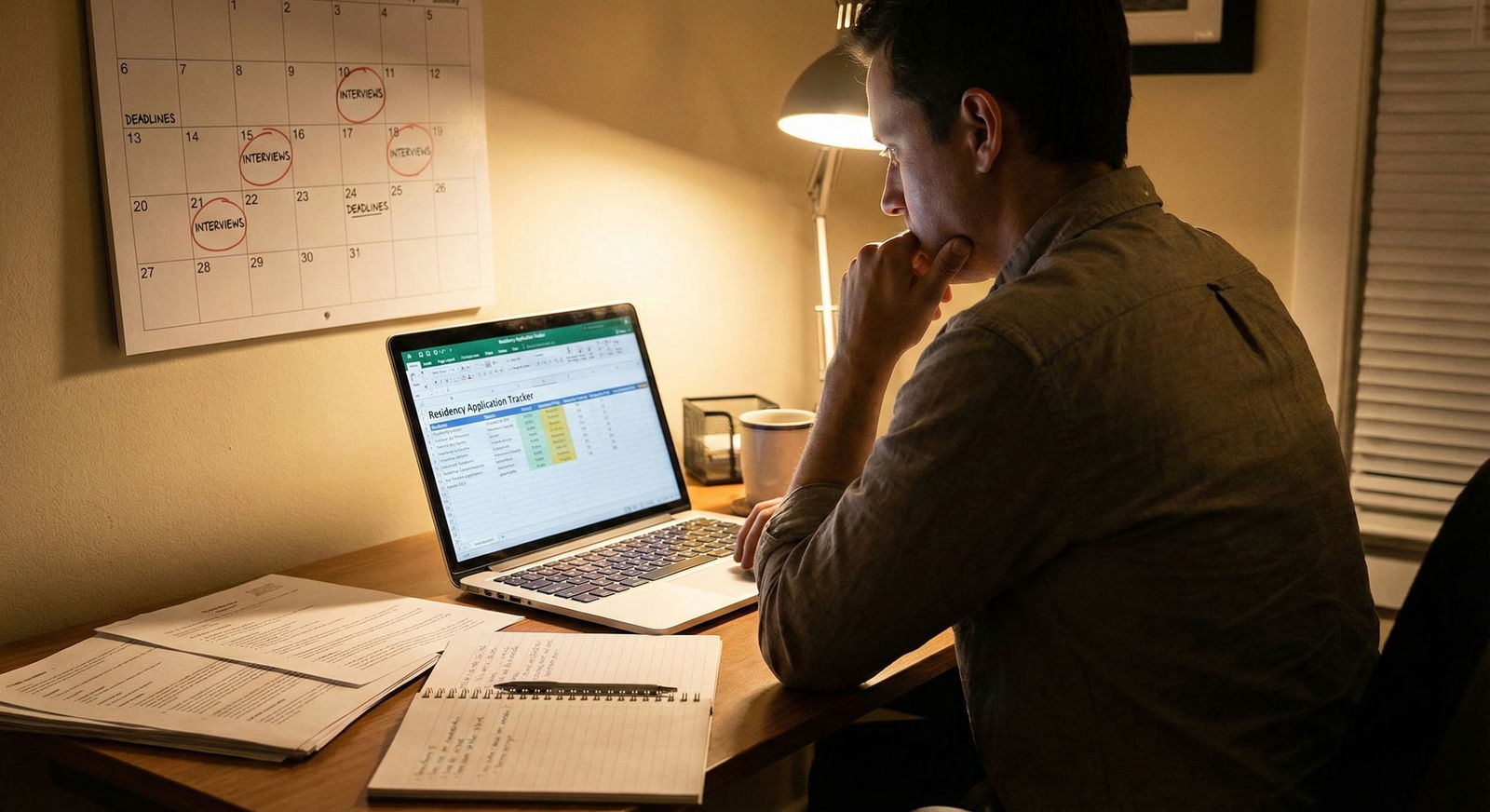
Step 4: Submit a Strong Enough Application Today
"Strong enough" is the standard now.
That means your application is:
- Complete enough to be reviewed
- Accurate
- Professionally written
- Strategically targeted
It does not mean endlessly perfected.
At this point you should submit the components that are ready and stop creating delay by over-editing. I've seen applicants lose three full days rewriting a personal statement that was already perfectly acceptable. That's self-sabotage dressed up as standards.
Use this final pre-submit checklist:
- Personal data is correct
- Exam information and IDs are correct
- Personal statement is assigned correctly
- CV entries are complete and consistent
- Photo is uploaded
- LoRs are assigned where available
- Program list is checked one last time
- ERAS certification/sign-off is complete
Then submit.
Not tomorrow night. Not after one more revision spiral. Today.
Step 5: Communicate Proactively With Programs and Recommenders
Silence kills late applications.
At this point you should send focused, professional messages to the people holding up your file. No long emotional explanations. No apology essay. Just clarity.
For letter writers, your message should include:
- Gratitude
- The exact letter request
- The submission method
- The deadline
- A one-line note that your application is already being finalized
For institutions, send a similarly direct note:
- Which document is pending
- Whether it has been released
- Where it needs to go
- When you need confirmation
If appropriate, you may also prepare a brief update to programs once key materials are submitted or updated. Keep it simple:
- You have applied
- Your file has been updated or is in final processing
- You remain very interested in the program
Don't sound defensive. Don't overshare. Late applicants sometimes write emails like they're confessing a crime. Stop that. You're providing a professional status update.
Step 6: Protect the Next 7 Days With a Daily Recovery Schedule
The next week matters more than the last month.
At this point you should operate on a daily recovery schedule, not random bursts of panic. I want structure.
Your 7-day late-application recovery rhythm
Morning
- Check ERAS/ECFMG/document status
- Send follow-up emails
- Make any necessary calls
Midday
- Complete application edits that directly affect submission
- Upload or assign newly arrived materials
Afternoon
- Verify submission status
- Recheck program assignments
- Update tracking sheet
Evening
- Review program list
- Prepare next-day follow-ups
- Log what changed today
Work in focused 2-3 hour blocks. End each day with a checklist. If you don't write down what was completed, tasks disappear into stress and repetition.
Also build a fallback plan every day:
- If the LoR doesn't arrive, who gets called?
- If the transcript is still missing, what office gets escalated?
- If one item stays blocked, what other task moves forward instead?
That's how you keep momentum. Late applicants stall because one document stalls. Don't let one delay freeze the whole operation.
Step 7: Avoid the Mistakes That Keep Late IMG Files Unread
Here are the mistakes that quietly bury late IMG applications:
- Missing ECFMG-related status when programs filter aggressively
- Applying to the wrong programs based on unrealistic or outdated filters
- Overexpanding the list instead of targeting smartly
- Passive follow-up with recommenders or school offices
- Inconsistent details across ERAS, PS, and supporting documents
- Waiting for perfection before submitting
At this point you should narrow your focus to programs that are still realistically reviewing IMG applicants or that historically send interviews later. Throwing applications everywhere at the last minute is not strategy. It's panic purchasing.
Also, check consistency. One mismatch in dates, one missing assignment, one wrong document selection, those are the kinds of dumb administrative errors that make a late file even easier to ignore.
The recovery mindset is simple:
- Move fast
- Track everything
- Follow up relentlessly
- Protect every remaining day
You do not need a flawless late application. You need a visible one, a complete enough one, and a well-managed one.
Summary
A late IMG application timeline is salvageable only if you act like the clock matters. Because it does.
Here's the order:
- Audit everything in 24 hours
- Identify the true bottleneck
- Rebuild your plan around the next review window
- Fix high-impact items first
- Submit a strong-enough application now
- Communicate clearly and professionally
- Run the next 7 days like a recovery sprint
At this point you should trade perfection for speed. Submit what's ready. Escalate what's missing. Align every task to the next realistic chance of being reviewed.
That's the whole game now. Not fantasy. Execution.


